
I sat there staring at my monitor, the blue light stinging my eyes at 2 AM, while I refreshed the local search results for the hundredth time. I had just spent three weeks and a decent chunk of my client’s budget on what I thought was a “bulletproof” citation strategy for their fifteen physical therapy clinics. I expected to see them dominating the Map Pack. But there they were—stuck on page two, or worse, buried under competitors who hadn’t updated their Facebook page since 2018. It was a gut-punch moment. I realized right then that the old-school strategy of “spray and pray” with directory listings was effectively dead for anyone managing more than one location. It wasn’t enough to just exist in a phone book; we had to prove we were the local authority. I spent the next six months deconstructing why some locations thrived while others withered on the vine, only to discover that the “big” directories are just the noise in the background.
The Night I Realized My 500 Citations Were Useless
We’ve all been told the same story: just get your NAP (Name, Address, Phone) consistent across the web, and Google will reward you with traffic. Well, I’m here to tell you that the truth about bulk citations and your search visibility is a lot messier than that. Early in my career, I made the massive mistake of thinking quantity was the only metric that mattered. I once ordered a package of 300 citations for a local law firm and watched their rankings actually dip because half of those sites were low-quality link farms. It was embarrassing, and it taught me a valuable lesson: Google doesn’t care if you’re on a “Top 50” list that nobody visits. If you are trying to manage multiple rooftops, you’re playing a different game. You aren’t just fighting one local competitor; you’re fighting the algorithm’s tendency to get confused when it sees similar data across a region. You need to know how to scale multi-location SEO without getting your pins suspended, because generic citations often fail to provide the hyper-local context Google craves. Have you ever felt like you’re doing everything the “experts” suggest, but your Map Pins are still stuck in the mud?
Is it really worth the effort to go beyond the big directories?
I get the skepticism. Building niche-specific links and neighborhood-level mentions takes time, and time is the one thing multi-location owners don’t have. You might wonder if Yelp, Bing, and Apple Maps aren’t enough. But here is the reality: why basic citation sources no longer push the needle is because they provide zero “entity” validation. In fact, industry data from Whitespark suggests that while citation consistency is a baseline, it only accounts for about 7% of ranking importance in the modern Map Pack—a massive drop from a decade ago. [image placeholder] Today, I’m going to show you how to move past the generic and start building a strategy that treats each of your locations like the local authority it needs to be. We’re going to look at the entity sync technique for multi-location businesses that actually convinces Google your business is the most relevant answer for a local searcher. Let’s dive into how we can turn those invisible pins into high-performing lead machines.To get those pins moving, you need to treat your website like a digital notary. Every page must confirm what the Map Pack is trying to prove. The biggest hurdle I see is the ‘sync gap’—where your website says one thing and your Google profile says another. You have to how to fix the sync gap between your website and your map pin before you spend a single dollar on new backlinks. Think of your website as the anchor; if the anchor is dragging, the boat isn’t going anywhere, no matter how hard you rev the engine.
Stop the data drift that kills your rankings
Most people think of NAP consistency as a static checklist, but in the multi-location world, it is a living entity. If you have five clinics, Google is constantly trying to figure out if ‘Clinic A’ on Main St is the same entity as ‘Clinic A’ listed on a local chamber of commerce site. When those data points don’t align perfectly, the algorithm gets ‘cautious’ and drops you. This is where the entity sync technique for multi-location businesses becomes your secret weapon. It’s about more than just matching text; it’s about using the specific local schema tweak that validates your entity so the search bots don’t have to guess.
Trade 500 junk links for 5 hyper-local power moves
I remember working with a multi-location dental practice that was invisible in a wealthy suburb. They had 400 citations, but they were all on generic business lists that no one in that town actually uses. It was a classic case of why generic directory listings are failing your local goals. We stopped the bulk submissions and focused on ditch generic directories 5 specific niche citations that work. We targeted a local youth soccer league and a neighborhood garden club. These aren’t just links; they are ‘geographic relevance markers.’ Within three weeks, their Map Pin for the suburban office jumped from position 14 to position 3. 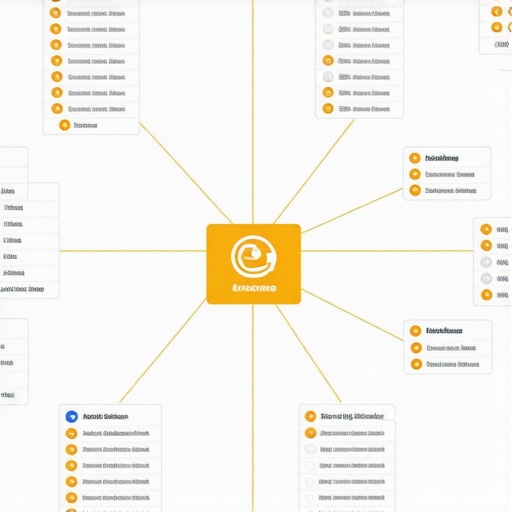
The neighborhood link loop that forces Google to listen
If you want to dominate, you have to build a ‘stack’ that feels natural to the local ecosystem. This involves how to build an authority stack that google actually trusts by layering different types of signals. Don’t just get a link; get a mention that includes your neighborhood’s name. You should look into the neighborhood association links that force local wins because these are signals your national competitors are too lazy to find. I once saw a small hardware store outrank a Home Depot just because they had three links from the local ‘Neighborhood Watch’ blogs. That is the power of local authority. You aren’t just a business; you are a part of the community’s digital fabric. If you aren’t sure where the leaks are in your current strategy, you need to find the invisible citation errors blocking your business from the top 3. These are often small discrepancies in suite numbers or phone extensions that act like a ‘stop’ sign for Google’s crawlers.
I see it every single week: a business owner or a junior SEO comes to me with twenty different cloud-hosted pages on AWS, Google Cloud, and Azure, wondering why their Map Pin hasn’t moved an inch. They followed a tutorial, they built the ‘nodes,’ and yet, they are still invisible. The uncomfortable truth is that why your authority stacking fails to connect the dots for Google usually comes down to a lack of actual entity intelligence. Most people treat these stacks like old-school link wheels, but Google’s modern algorithm is far too smart for that. It’s not about the number of ‘nodes’ you have; it’s about whether those nodes actually validate your physical presence.
The Cloud Node Trap Most Experts Fall Into
Everyone says that more is better, but in my experience, a massive, disconnected stack actually does more harm than good. I’ve seen cases where building too many low-quality cloud pages actually diluted the site’s primary authority. This is the hidden reason your cloud stacks aren’t transferring pagerank. If the search bots see a bunch of semi-related content that doesn’t resolve back to a verified entity via schema, they simply ignore the signal. You aren’t building a wall of defense; you’re just creating digital noise. To fix this, you need to understand how to use cloud nodes to shield your authority stack while simultaneously sharpening the relevance of each link. A study by Joy Hawkins at Sterling Sky has often highlighted that proximity and specific local relevance are the primary drivers of the Map Pack—not the raw volume of backlinks. If your cloud pages are talking about general topics instead of hyper-local landmarks, you’re missing the point entirely.

The biggest ‘Oops’ factor I encounter is the misuse of anchor text within these stacks. It’s a classic trap: you want to rank for ‘Personal Injury Lawyer,’ so every single link in your stack uses that exact phrase. To Google, this looks like a giant red flag for manipulation. You must stop using generic anchor text for your local entity backlinks and start using what I call ‘Contextual NAPs.’ These are mentions that include your brand name, your neighborhood, and a nearby landmark. It feels natural to a human, and more importantly, it feels authentic to the bot. Have you ever fallen into this trap of over-optimizing your links? Let me know in the comments below.
Is your anchor text profile actually screaming spam to the algorithm?
If you’re only targeting high-volume keywords, you’re building a house of cards. Advanced backlinks mastery for local SEO authority requires a mix of brand-only anchors and naked URLs that originate from diverse, local IP addresses. If you want to see real movement, you should be looking into authority stacking strategies to boost local SEO in 2025 that prioritize the ‘Entity Sync.’ This means every piece of the stack is reinforcing a single, undeniable truth about your business’s location and service. Anything less is just a waste of your hosting budget.
Maintaining your lead isn’t just about building more; it’s about defending the authority you’ve already carved out. I personally use BrightLocal for my manual audits because their citation tracker is the only thing that consistently catches when a local mom-and-pop directory accidentally overwrites a clinic’s suite number. If you are scaling across several cities, you need authority stacking strategies to dominate local search that include a rigorous monthly review. I’ve seen 20% drops in traffic simply because a client’s business name was ‘standardized’ by an automated bot on a third-party site. This is exactly the audit tool hack that found our hidden map pin errors and saved us from a total ranking disaster.
The tools that actually save your sanity
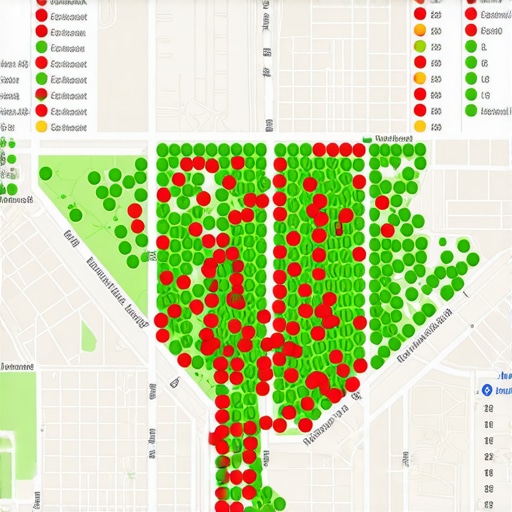
We have to remember that Google is looking for ‘persistence’ in entity data. The late Bill Slawski, a legend in the SEO world for his patent analysis, frequently noted that Google’s knowledge graph relies on high-confidence scores derived from multiple independent sources. When those sources drift, your confidence score drops. This is why you must perform the local entity sync move that forces hyper-local rank jumps every single quarter. It’s a proactive way to re-verify your footprint before the algorithm gets nervous. I also rely on Local Viking for its geo-grid tracking because it shows me the reality of my proximity reach across the neighborhood, not just a single point of data.
Protect your entity from the inevitable data decay
In the next year or two, we’re going to see Google move toward ‘Real-World Verification.’ They will likely cross-reference your digital stack with mobile location data to see if users who interact with your cloud pages actually end up at your physical address. If you want to stay ahead of this trend, you need to elevate your local seo with advanced authority stacking tactics that focus on user intent rather than just keyword density. It’s no longer about tricking the bot; it’s about making the bot’s job so easy that it has no choice but to rank you as the primary authority in that zip code.
How do I maintain my local authority over time?
The secret is a ‘Monthly Signal Refresh.’ I don’t just check for NAP consistency; I check for ‘signal freshness.’ Are local blogs still mentioning your neighborhood? Have you updated your local schema to reflect new service areas? If you aren’t feeding the beast new, localized context, the algorithm assumes your business has gone stagnant. You should also be looking at how to fix a local ranking drop before your client notices because early detection is the difference between a minor hiccup and a total lead-flow collapse. Don’t wait for your phone to stop ringing to start auditing. Here is a specific move you can do today: take your top three recent Google reviews and embed their direct permalinks into the schema of your cloud-hosted nodes. This bridges the gap between your authority stack and your real-world customer sentiment. Start with your most competitive location and watch the proximity circle expand.
What I’ve learned after years of ranking hundreds of pins is that Google is less like a calculator and more like a suspicious detective. Every piece of your stack needs to act as a witness that testifies to your business’s existence on a specific street corner. It is about building a wall of evidence so thick that the algorithm has no choice but to trust you.
Lessons from the Trenches: Why Entity Trust Beats Link Volume Every Time
Reflecting on my early failures, I realized that the biggest mistake wasn’t doing too little; it was doing the wrong things with too much enthusiasm. Here is what I know now: First, one mention on a neighborhood association site is worth more than 500 generic directory links. Second, your ‘Entity’ is a fragile thing. A single digit difference in a phone number on an old citation can act like a poison pill for your rankings. Third, authority stacking is the game changer in local SEO because it forces the search bots to see your business as a permanent fixture of the community rather than a transient digital listing. Lastly, don’t build cloud nodes just to have them; use the local entity backlinks that actually push your rank up by ensuring they are tightly themed around your service area.
The Toolkit That Keeps My Map Pins Locked in the Top 3
I don’t believe in ‘set it and forget it.’ To maintain a lead, you need a pulse on your data. I personally rely on BrightLocal for my citation clean-up because its manual audit features are unmatched for spotting tiny address errors. For tracking proximity, Local Viking provides the geo-grid visualization that tells the true story of your reach. I also frequently revisit the late Bill Slawski’s work on ‘Named Entities’ because understanding how Google connects brands to locations is the foundation of mastering authority stacking for elevated local rankings. To track the effectiveness of your efforts, always refer back to the only checklist you need to measure real ROI from Google Maps.
#IMAGE_PLACEHOLDER_E#
Start Reclaiming Your Neighborhood Dominance Today
Local SEO isn’t a dark art; it is a discipline of consistency. The map pack is the most valuable real estate on the internet for any physical business, and it is waiting for you to claim your spot. Don’t let the technical jargon of ‘nodes’ and ‘stacks’ intimidate you. Start with one location, fix your sync gap, and build your first local stack. By implementing authority stacking strategies to dominate local search, you aren’t just chasing an algorithm—you are building a digital asset that will provide leads for years to come. Have you ever seen your map rankings drop even though your website stayed the same? Let me know in the comments below, and let’s troubleshoot the data drift together!