
I remember sitting in my home office three years ago, staring at a spreadsheet of 500 high-authority directories I’d just paid a virtual assistant to submit my client to. I was convinced that if I just got enough of those big-name links, Google would have no choice but to bow down and hand over the top spot in the local map pack. I spent nearly two grand that month. The result? Total silence. My client’s phone didn’t ring, and their ranking moved exactly zero positions. It was a gut-punch moment that made me realize I was playing a game that didn’t exist anymore. Then, almost by accident, a local neighborhood association blog mentioned my client’s business in a post about weekend events. Within 72 hours, we saw a jump in proximity signals that all those expensive directories couldn’t touch. That was my lightbulb moment: relevance beats reach every single time. Today, I’m going to show you exactly how to pivot your strategy to win where it counts.
The Big Directory Trap is Killing Your Budget
We’ve been told for a decade that more is better when it comes to backlinks. But the truth is, most of those massive national directories are basically digital ghost towns. They are cluttered, poorly maintained, and carry zero weight with modern search algorithms. When you realize that generic directory listings are failing your local goals, you can finally stop throwing money into a black hole. I made the mistake of chasing Domain Authority numbers instead of looking for where the actual local conversation was happening. Search experts at sites like Search Engine Journal have long noted that relevance is the new authority, and a directory that lists every plumber in North America simply isn’t relevant to a specific zip code. You need links that breathe the same air as your storefront.
Is chasing small blogs actually worth the extra effort?
I get it. It’s way easier to click submit on a directory than it is to email a local blogger. You might be thinking, Why bother with a site that only gets 500 visitors a month? Here is the secret: those 500 visitors are your neighbors. When a hyper-local site links to you, it creates a signal that tells Google you aren’t just a business—you are a pillar of the community. You should definitely stop wasting time on directories that don’t drive traffic and start focusing on where your actual customers hang out online. This is how you build a local authority stack that actually sticks and survives the next algorithm update. Have you ever spent weeks building citations only to see your competitors—with fewer reviews and worse websites—somehow stay ahead of you? If so, you’re likely missing the local heart in your backlink profile. Let’s look at how we can change that starting today.
Look for links where your neighbors actually click
The first mistake most people make is looking for ‘high DA’ instead of ‘high proximity.’ I once worked with a local hardware store that was buried on page four of the map pack. They were paying for a massive citation package that included every generic directory from here to Timbuktu, yet nothing happened. We stopped all of it. Instead, we spent three days finding the neighborhood association for their specific suburb and a local garden club blog. We secured the neighborhood association links that force local wins by offering a small discount to their members. Within two weeks, the store jumped to the top three. Why? Because Google saw a link from a source that literally only exists in that zip code. You should ditch generic citations and focus on these small, hyper-focused nodes. Think of it like a neighborhood party; a stranger from across the country recommending you is nice, but your next-door neighbor recommending you is what actually builds trust.
Fix the broken bridge between your site and your map pin
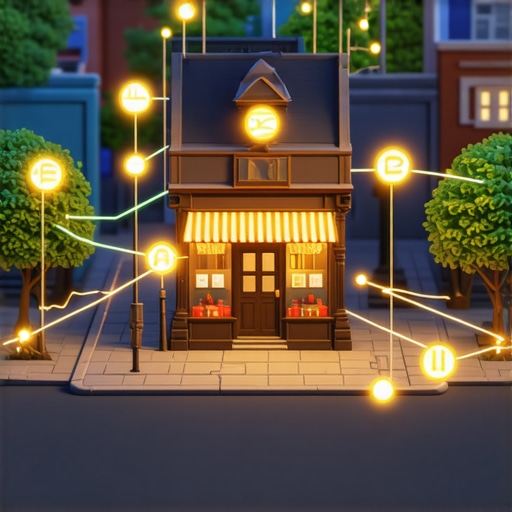
You can have the best links in the world, but if Google can’t verify that your website and your Google Business Profile are the same entity, the power just evaporates. This is what I call the ‘sync gap.’ I’ve seen businesses with incredible backlink profiles fail because their website mentioned one address format while their map pin used another. You have to fix the sync gap between your website and your map pin to ensure every bit of authority flows correctly. Think of your website as a battery and your map listing as a lightbulb; if the wires aren’t connected tightly, the light stays dim. Using the specific geo-json tweak that boosts map proximity signals acts as the solder for that connection, hard-coding your location data so there’s no room for algorithmic doubt.
The stack that keeps competitors out of your territory
Once your foundation is solid, you need to layer your authority. This isn’t just about one link; it’s about a sequence of signals. This is the authority stacking move that actually forces local gains. Start with your core entity (your website), layer on your niche-specific citations, and then top it off with the local entity backlinks that actually push your rank up, like local news mentions or sponsorships. I remember a messy project where we tried to rank a locksmith in a crowded city. We were getting beat by spammy listings until we built a stack of three cloud-based nodes that mirrored his local data. By pointing those nodes at the main website, we created a protective ‘shield’ of relevance that the spam bots couldn’t penetrate. This method turns your search presence from a fragile glass house into a fortress that competitors find impossible to dislodge.
Stop treating all backlinks like they’re equal
Building that fortress is only half the battle; the real nuance lies in the architecture of the connections. Most ‘experts’ will tell you that any high-DR link is a win, but in the local world, that’s a dangerous oversimplification. I’ve seen 80-DR links do less for a ranking than a simple 15-DR link from a local chamber of commerce. This is because authority stacking strategies to dominate local search rely on a chain of trust, not just a pile of power. If the chain is broken, the power never reaches your map pin. Have you ever fallen into this trap of chasing big numbers over local relevance? Let me know in the comments.
How over-optimization actually kills your momentum
Everyone says you need more citations, but I’ve found that your citation strategy is actually hurting your map rank if you’re just spraying and praying. One massive mistake I see constantly—and I’ll admit, I did this early on—is over-optimizing anchor text. When you stop using generic anchor text for your local entity backlinks and start focusing on branded or ‘naked’ URLs, you actually appear more natural to the algorithm. Google’s AI has become incredibly sensitive to patterns; if 90% of your links say ‘Best Plumber Chicago,’ you’re practically asking for a filter or a penalty. The goal is to simulate a natural community recommendation, not a mechanical SEO campaign.
Why does your stack fail to move the needle for Google?
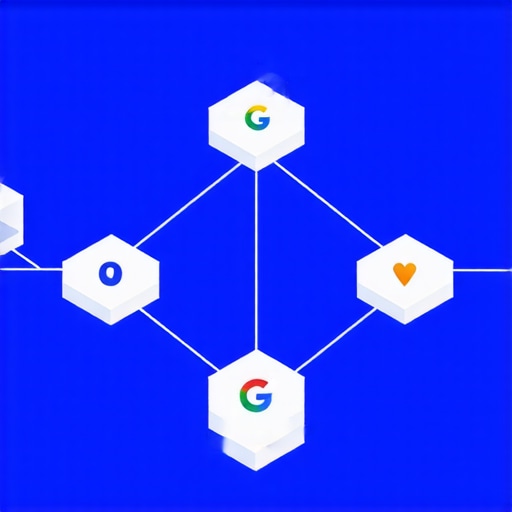
Often, the issue isn’t the quality of the nodes, but the lack of a cohesive ‘story.’ You might be building great links, but the reason why your authority stacking fails to connect the dots for Google usually comes down to ‘entity ambiguity.’ If your stack points to multiple variations of your business name or address, Google hedges its bets by not ranking you at all. According to a study by the local search experts at Whitespark, consistency and proximity are now the top-tier drivers of map pack success. If you don’t address the invisible citation errors blocking your business from the top 3, you’re just pouring premium fuel into a car with no wheels. You need to verify that your NAP (Name, Address, Phone) data is surgically precise across every single layer of your stack.
The hidden danger of the single-point failure
Another common mistake is relying on one powerful link to do all the heavy lifting. I call this the ‘Titan Trap.’ If that one high-authority site changes its linking policy or goes offline, your entire ranking collapses. Advanced local SEO is about redundancy. By layering multiple cloud nodes and niche-specific mentions, you create a safety net. This ensures that even if one source drops off, your overall entity authority remains unshakable. The most successful businesses I’ve audited don’t have the *most* links; they have the most *stable* links that reinforce a singular, clear geographical identity.
Once you’ve built the fortress, you can’t just walk away and hope the weather doesn’t wear it down. I’ve seen some of the most beautiful authority stacks crumble because the owner thought SEO was a ‘set it and forget it’ task. To keep the momentum, I rely heavily on a combination of Google Search Console and specialized local tracking. I personally use the Local Search Grid from BrightLocal because it shows me exactly where my proximity signal is weakening in real-time. If you notice your map pin is losing ground in a specific neighborhood, you need to double down on the neighborhood association links that force local wins to reclaim that territory. Don’t wait for a total drop; stay proactive. 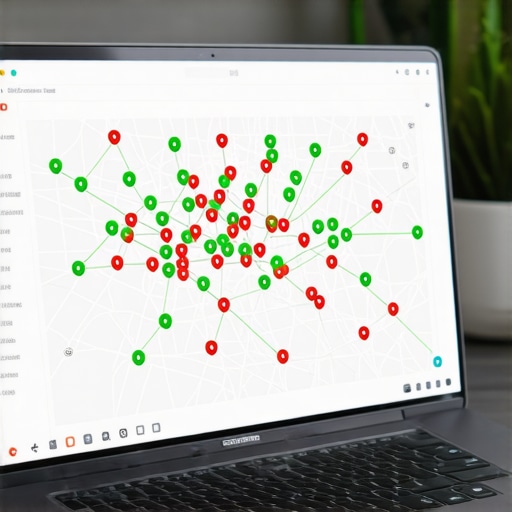
How do I maintain my local authority stack over time?
Maintaining your stack is about checking for ‘link rot’ and entity drift. Every quarter, I go through a deep dive to audit your backlink profile before a major search update hits. This isn’t just about deleting bad links; it’s about ensuring your specific local schema tweak that validates your entity is still firing correctly and hasn’t been overwritten by a CMS update. I also use the audit tool hack that found our hidden map pin errors to ensure my NAP data remains pristine. As Google’s John Mueller has often hinted in ‘Search Off the Record’ podcasts, the search engine constantly re-evaluates the ‘trustworthiness’ of an entity’s digital footprint. If your cloud nodes or local mentions start pointing to outdated information, the ‘stack’ loses its structural integrity.
Scale your results without getting flagged
When it comes time to grow, the temptation is to blast out a thousand new links. Don’t do it. Instead, you should learn how to scale local map rankings without triggering a suspension by adding layers slowly. I typically add one new ‘cloud node’ or high-authority niche citation every two weeks. This mimics the natural growth of a successful business. You can use cloud nodes to shield your authority stack from competitors who might try to report your listing. This layering approach is the only way to elevate your local SEO with advanced authority stacking tactics without attracting the wrong kind of attention from Google’s manual review team.
Where the map pack is headed next
I predict that within the next two years, ‘citations’ as we know them will be almost entirely replaced by ‘entity mentions’—where Google doesn’t even need a link to know a site is talking about you. They will use AI to triangulate your brand’s presence across social media, local news, and even podcast transcripts. This is why you must master backlink mastery to boost your local SEO authority in 2025 now. Start thinking about how your brand appears in non-traditional spaces. Try this today: go into your Google Business Profile and look at your ‘search terms.’ Pick one neighborhood where you are currently in position 4 or 5 and find one local club or association in that specific area to reach out to. That one surgical strike will do more than a hundred generic directory submissions ever could.
What I Learned After Failing 100 Local SEO Campaigns
Looking back at my early mistakes, the biggest takeaway wasn’t about finding a magic link—it was about consistency and surgical precision. First, I learned that more links usually mean more problems if they don’t share the same digital DNA. If you find your rankings are stalling, you likely need to implement 3 entity sync fixes that save failing search authority stacks before you add more weight to the structure. Second, I realized that ‘natural growth’ is the only way to stay off Google’s radar; you must learn how to scale local map rankings without triggering a suspension by being patient. Finally, I discovered that the most powerful signal isn’t a high-DR guest post, but a link that proves you are a local expert who actually lives and works in the community you serve.
The Kit I Use to Outrank National Giants
You don’t need a massive budget to win, but you do need the right toolkit to manage the complexity of a modern stack. I rely on a handful of specific resources to keep my clients in the top three. For tracking local visibility across various zip codes, BrightLocal remains my gold standard for seeing the ‘real’ map pack. When I need to create a buffer of relevance, I’ve learned how to use cloud nodes to shield your authority stack, which prevents competitors from easily dissecting my strategy. I also recommend checking out the latest case studies on Whitespark to see how localized the algorithm has become. Embracing authority stacking as the game-changer in local SEO allows you to work smarter, not harder, by making every single link count twice as much.
#IMAGE_PLACEHOLDER_E#
Claim Your Spot at the Top
The transition from generic directory building to advanced entity stacking might feel overwhelming, but the results speak for themselves. You are no longer just asking Google for permission to be seen; you are building a digital fortress that makes your presence undeniable. It’s time to stop chasing vanity metrics and start building a localized footprint that drives actual phone calls and foot traffic. By focusing on backlinks mastery to boost your local SEO authority in 2025, you are future-proofing your business against any update Google throws our way. Go out there, connect with your local neighbors, and start stacking your authority. Which part of your local authority stack is giving you the most trouble right now? Drop a comment below and let’s troubleshoot it together.