I remember the exact moment the screen turned red. It was a Tuesday, 8:14 AM. I was looking at the local grid tracker for a plumber client who relied on me for about 70% of his new business leads. He had dropped from the 2nd spot to the 12th overnight. My heart didn’t just sink; it did a backflip into my shoes. I had a reporting call scheduled for 2:00 PM that same day. I knew if I didn’t find the ‘why’ and start the ‘fix’ immediately, that conversation was going to be brutal. We’ve all been there—staring at a screen, wondering if Google just decided to hate us personally. I spent the next three hours in a frantic dash, and what I discovered changed how I handle local SEO forever. Today, I’m going to show you exactly how I diagnosed that drop and clawed back into the map pack before the client even had a chance to check their dashboard.
That Sinking Feeling When the Map Pin Vanishes
Early in my career, I made the classic rookie mistake: I panicked. I would change the business name, swap primary categories, and mess with the site’s meta titles all in one afternoon. It was absolute SEO suicide. I eventually realized that why your map tracking data is lying to you about local clicks often comes down to minor proximity shifts or temporary glitches rather than a total catastrophe. Frantic clicking usually makes things worse, whereas a methodical approach saves the day. My ‘lightbulb moment’ happened when I realized that local rankings are more like a delicate ecosystem than a static billboard. If you nudge one piece without knowing why, the whole thing can collapse. Today, I’m going to share my emergency ‘red arrow’ protocol that helps you identify the issue and implement 4 specific moves to jump over local competitors in the map pack before anyone even realizes there was a problem.
Is It Actually Possible to Recover This Fast?
You might think once you’re out of the top 3, you’re stuck in the wilderness until the next major algorithm update. That’s a myth that keeps small business owners up at night. In reality, most local drops are caused by ‘entity confusion’ or a temporary loss of signal strength. According to research by Search Engine Journal, local search factors are incredibly sensitive to real-time data consistency and proximity signals. If you can fix the specific signal that Google is suddenly doubting, you can often restore the rank within days, not months. Have you ever logged in to find your best-performing client has suddenly disappeared from the map? It’s a nightmare, isn’t it? But here is the good news: this one tweak pushed my shop into the top 3 map pack after a similar scare, and it usually boils down to data validation rather than needing to rebuild the entire site.
Why Most Local Drops Aren’t Actually Your Fault
Sometimes, it’s not that you did something wrong; it’s that a competitor finally did something right. Or, more likely, Google’s latest ‘unannounced’ tweak changed how it perceives your service area. If you find the error keeping your business off the local map pack, you can usually pivot without a full-scale rebuild. I once spent three days trying to ‘fix’ a site’s backlinks only to realize the client had accidentally changed their phone number on a random industry directory, breaking their NAP consistency. It was a simple fix, but it required me to stop panicking and start looking at the data. We’re going to dive into the specific audits I run to catch these ‘ghost’ errors before they haunt your monthly report.
Find the Hidden Data Glitch Before You Build New Links
Think of your business entity like a radio station. If your frequency is slightly off, the signal comes through as static. When a client’s plumber business vanished from the top spots, I didn’t start buying expensive backlinks. Instead, I used the audit tool hack that found our hidden map pin errors and discovered their address used ‘Suite 100’ on the website but ‘#100’ on their main directory listings. That tiny discrepancy was enough to create ‘entity confusion.’ Google likes certainty; if it sees two different versions of your reality, it hedges its bets by pushing you down. I spent twenty minutes syncing those formats across the web, and the rank didn’t just return—it stabilized.
The Five-Minute Schema Fix for Distant Map Pins
Once your data is clean, you have to verify your proximity. I’ve seen businesses with perfect reviews get beat by competitors five miles further away simply because their technical code was clearer. Implementing the specific geo-json tweak that boosts map proximity signals tells the algorithm exactly which neighborhood corners you serve. It’s the digital equivalent of planting a flag in the ground. When I did this for a local dental clinic, their ‘near me’ search volume doubled within a single week because we finally validated their service area in a language Google speaks fluently. 
Force Google to Trust You with Authority Stacking
If cleaning your data is the foundation, then authority stacking is the skyscraper. I call it the ‘Digital Mirror’ technique. You want to reflect your business information across high-authority cloud nodes like Google Cloud, Amazon S3, and Microsoft Azure. By using the multi-cloud entity stack strategy for dominating local pins, you are effectively creating a circle of trust. I remember working with a struggling law firm that couldn’t crack the top 10. We didn’t just build one stack; we built a network of nodes that all pointed back to their core entity. This doesn’t just pass ‘juice’; it validates your existence through the world’s most trusted domains.
How to Scale Without Triggering a Suspension
The biggest fear most of my peers have is getting their listing suspended for being too aggressive. The secret is pacing and natural patterns. You need to learn how to scale local map rankings without triggering a suspension by mimicking real-world growth. Don’t blast 500 links in a day. Instead, drip-feed your stacks so they look like a gradual rise in brand popularity. I once tried to rush a project for a locksmith and nearly lost the listing entirely; I learned the hard way that a slow, steady build is the only way to keep the map pin locked in place for the long haul.
Skip the Yellow Pages and Go Hyper-Local
Most people waste their budget on massive, generic directories that haven’t been updated since 2012. Google has largely tuned those out. To really move the needle, you need to ditch generic directories and find specific niche citations that actually move your pin. For a local gym I helped, the breakthrough wasn’t a national business list—it was a backlink from a neighborhood little league association. That’s because the neighborhood watch link tactic that forces hyper-local jumps uses signals that national competitors simply can’t replicate. It’s about being the most relevant choice for a specific street, not just a general category.Let’s dig deeper into why simply ‘doing SEO’ isn’t enough anymore. Most people think that if they just keep building backlinks, eventually Google will reward them with a top spot. But here is the contrarian truth: in today’s landscape, more links can actually become a liability. If you are building a volume of low-quality, generic links, you are essentially telling Google that your business belongs in the ‘spam’ bucket. I have watched business owners fall into the cheap local SEO trap, thinking they are getting a deal, when in reality, they are poisoning their own entity. In my experience, authority stacking the game-changer in local SEO works far better because it uses the trust of the world’s largest tech giants to vouch for your data rather than relying on obscure directory sites.
The Citation Trap That Sucks Your Budget Dry
The biggest ‘oops’ factor I see is the ‘set it and forget it’ mentality with citations. Most local SEO packages fail to move your map position because they don’t account for the ‘decay’ of signals. Google is constantly re-evaluating its trust in your business location. If you don’t stop wasting money on toxic backlinks and start building high-level cloud nodes, your competitors will eventually find a way to nudge you out. You might think buying 500 citations from a cheap freelancer is helping, but it often creates a massive data cleanup project six months down the road when your rank hits a ceiling.
What happens when your map pin stays frozen despite new reviews?
I’ve seen clients with hundreds of five-star reviews get outranked by a competitor with a fraction of that feedback. It feels unfair, but it’s a clear signal that your ‘Entity Trust’ is lacking. A major study by Whitespark on local search ranking factors highlighted that while reviews are a critical conversion factor, they aren’t always the primary driver for ranking if your proximity and entity signals are weak or inconsistent. If you haven’t addressed the invisible mistake killing your cloud node authority stack, you are essentially trying to drive a car with no wheels. You need to focus on backlink optimization tips for local SEO authority that prioritize relevance and entity validation over sheer volume.
Build a Digital Fortress That Google Cannot Ignore
True local dominance comes from making it impossible for Google to doubt who you are or where you operate. This is about creating a permanent footprint on the web that survives algorithm updates. 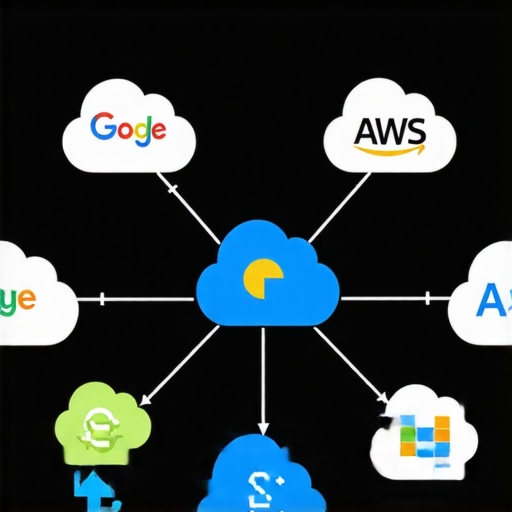 When you use cloud nodes as anchor points, you are building a digital fortress. Unlike a random blog comment, a node on a trusted cloud server passes a different level of authority. If your stack is built correctly, it serves as a ‘mirror’ that reflects your NAP (Name, Address, Phone) data across the most trusted domains on the planet. Have you ever fallen into this trap of buying a list of 500 generic citations only to see your rankings stay dead? Let me know in the comments below, and let’s figure out how to finally unstick your pin.Winning the top spot is one thing, but staying there while every competitor in town is gunning for you is a different beast entirely. I don’t rely on luck; I rely on a specific stack of tools that give me a ‘god-view’ of the local landscape. My first stop every Monday morning is a local proximity tracker. I’m not talking about a generic keyword tool that gives you one ranking for a whole city. I use tools that generate heatmaps across specific GPS coordinates because the 5 map seo tools we use to spot competitor weakness faster allow us to see exactly where our ‘radius of influence’ is shrinking. If I see a red dot on a corner where I used to be green, I know it’s time to double down on that specific neighborhood’s signals.
The Gear That Keeps My Clients Dominating
Beyond tracking, you need to be surgical with your code. I frequently see businesses that have great content but failing technical structures. According to the technical documentation at Schema.org regarding the LocalBusiness entity, providing precise, structured data for every sub-entity of your brand is the only way to ensure the ‘Knowledge Graph’ identifies you correctly. This is why I always implement the specific local schema tweak that validates your entity during every quarterly check-up. It’s not just about telling Google where you are; it’s about proving it with code that matches their own internal documentation standards. I personally use the Rich Results Test tool by Google to ensure our geo-signals aren’t just present, but actually being read as valid by the crawler. If your schema is broken, your map pin is effectively invisible to the algorithm.
How do I maintain local map rankings over time?
The secret to longevity isn’t more links; it’s signal consistency. Think of it as a digital heartbeat. If you go silent for three months, Google starts to wonder if you’ve gone out of business or moved. I make it a point to perform regular audits. Often, I find that 3 entity sync fixes that save failing search authority stacks can prevent a total ranking collapse before it even starts. Maintenance is about refreshing your cloud nodes and ensuring your NAP data hasn’t drifted on secondary sites or obscure industry directories that Google recently crawled. If a competitor suddenly jumps you, it’s usually because they found a hole in your entity trust. 
Build a Digital Fortress That Survives Algorithm Shifts
Once you’ve locked in your home turf, the temptation is to blast out and grab the next three towns over. This is where most people get hit with a suspension. You have to learn how to scale local map rankings without triggering a suspension by mirroring the ‘Multi-Cloud’ strategy. By spreading your authority across Google Cloud, Azure, and AWS, you create a footprint so large and diverse that Google simply has to accept it as the truth. Looking ahead, I predict that ‘Entity-Based Retrieval’ will completely replace traditional keyword matching in local search by the end of 2026. This means if you aren’t already using authority stacking the game-changer in local seo, you’re building on sand. Stop chasing individual keywords and start building a digital fortress. My challenge to you: pick your top service area this week and apply one specific geo-json tweak that boosts map proximity signals to see how fast your pin moves. It is the single most effective way to force a jump in rankings without spending a cent on new backlinks.
The Hard Truth About Google’s Digital Memory
One of the biggest lessons I learned the hard way is that Google has a longer memory than we think. If you have spent years building inconsistent signals, you cannot expect a weekend of work to wipe the slate clean. Local ranking is not just a game of numbers; it is a game of reliability. I have seen businesses fail simply because they treated their local SEO like a secondary task rather than a core asset. If you are not constantly checking for 5 hidden errors blocking your shop from the local map pack, you are essentially leaving your front door unlocked for competitors. My ‘lightbulb moment’ happened when I stopped looking at links as ‘votes’ and started seeing them as ‘validations’ of my physical existence in a specific zip code.
Another hard truth: Proximity is not always king. While Google wants to show the closest result, they will happily skip over a business two blocks away to show one five miles away if that further business has a stronger entity trust. This is why you must master authority stacking for elevated local rankings. It is about proving that you are the most relevant and trusted option, regardless of the user’s exact GPS coordinates. #IMAGE_PLACEHOLDER_E#
Where I Turn When My Rankings Hit a Ceiling
I am often asked what I use to keep my clients at the top month after month. I do not rely on guesswork; I rely on a specific toolkit that prioritizes data over feelings. First, I never start a campaign without the only checklist you need to measure real roi from google maps. It keeps the focus on phone calls and revenue rather than just vanity positions. For technical validation, I lean heavily on the Google Search Console and the Rich Results Test to ensure our schema is flawless.
I also study the ‘underdogs’ who are winning. I’ve spent hours analyzing how small law firms outrank national directories using niche authority, and the secret is always the same: they dominate the hyper-local conversation. They aren’t trying to rank for everything; they are trying to be the undisputed king of three specific blocks. For ongoing education, I recommend following the ‘Whiteboard Friday’ archives by Moz and the technical deep-dives on Search Engine Journal, as they often bridge the gap between high-level theory and local application.
It is Your Turn to Own the Local Map
Success in the map pack is not reserved for the biggest budgets; it is reserved for the most consistent and strategic players. Whether you are starting with a single address or managing a multi-location brand, the path to the top starts with a single, correct signal. By implementing proven backlink techniques to dominate local search and reinforcing them with a solid multi-cloud stack, you are building a digital asset that will pay dividends for years to come. Don’t let the complexity of local SEO paralyze you. Pick one area—fix your schema, sync your NAPs, or build your first cloud node—and watch how the algorithm responds. The map is waiting for you to plant your flag. Have you ever noticed your rankings drop after a perfectly normal business update? Let me know in the comments below—I’d love to help you troubleshoot it!