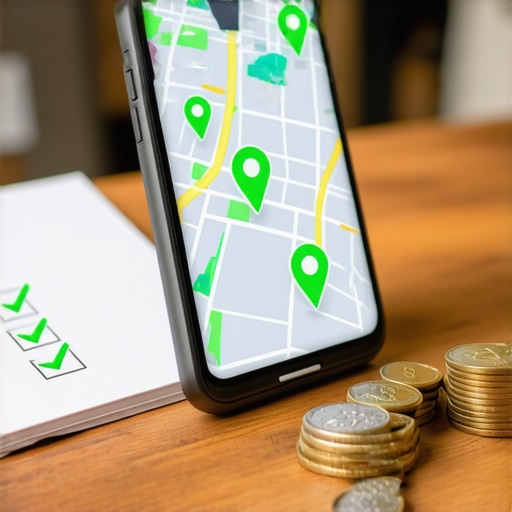
I remember sitting at my desk three years ago, staring at a Google Ads bill that looked like a mortgage payment, yet my phone wasn’t ringing. I had ‘impressions’ coming out of my ears, but my actual bank account didn’t care about a graph on a dashboard. It was a wake-up call. I realized that being on the map is one thing, but actually turning those little red pins into cash is an entirely different game. Most of us are just guessing. We look at the ‘views’ in our profile and think we’re winning, but that’s exactly how I ended up flushing five grand down the drain on a campaign that did nothing but make my logo look pretty on a screen.
Stop Wasting Money on Invisible Map Pins
I see it every day with my neighbors in the business world. They’re obsessed with ‘exposure’ but they can’t tell me if a single customer came from their Google Business Profile or a random flyer. Today, I’m going to change that. We aren’t just looking for vanity metrics; we are looking for the actual dollars. If your phone isn’t ringing, the views don’t matter. Early in my journey, I made the mistake of thinking that 10,000 views meant I was the king of the neighborhood. I wasn’t. I was just a guy with a lot of digital eyeballs and zero new leads because your map tracking data is lying to you about local clicks more often than not.
Is tracking impressions actually worth the hype?
Here is the cold truth: impressions are often just noise. They tell you someone saw your name, but they don’t tell you if that person actually needs a plumber or a lawyer right now. To get a real return on investment, you need to look at specific conversion actions—phone calls, direction requests, and website visits that result in a booked appointment. According to a study by BrightLocal, 87% of consumers used Google to evaluate local businesses in 2022, yet most owners fail to track the journey from that search to a finalized sale. Have you ever felt like you’re shouting into a void despite having a ‘verified’ listing? It is a frustrating place to be, but it’s usually because your measurement of ‘success’ is flawed from the start.
Focus on the Metrics That Actually Pay Your Bills
Instead of chasing ghosts, we need to focus on intent-driven actions. You can pull local organic traffic without increasing your ad spend if you know which levers to pull and how to measure the friction. I remember when this one tweak pushed my shop into the top 3 map pack, and suddenly, my ROI wasn’t a guess—it was a measurable surge in my CRM. This checklist is the result of those hard-learned lessons. We are going to strip away the fluff and look at the raw data that matters. If you’ve been wondering why your map pin is stuck on page four despite having great reviews, you aren’t alone. Let’s dive into the first step of the only checklist you need to measure real ROI and get your business the attention—and revenue—it deserves.
Stop Relying on Data That Misses the Point
To move the needle, you have to stop looking at global reports and start looking at the street level. Most business owners are looking at a dashboard that shows they are ‘ranking’ for their main keyword, but they don’t realize their pin disappears as soon as someone drives two blocks away. You need to stop relying on generic map trackers that miss local proximity shifts because they don’t reflect the reality of a moving customer. If you aren’t tracking your rank from multiple points in your neighborhood, you’re flying blind. Real ROI starts with hyper-local accuracy.
The Fix That Unfroze a Dead Map Pin
I once worked with a local plumber who hadn’t seen a new lead in six months despite ‘doing everything right.’ We dug into his data and found a tiny discrepancy: his suite number was listed differently on his website than on his Google profile. It sounds trivial, but to Google, that’s a lack of trust. We implemented a plan where how a single address format tweak fixed a frozen google map pin, and within three weeks, his phone was ringing again. It wasn’t magic; it was just removing the friction that made Google doubt his location. This is the first step in the ‘How’—ensuring your entity is perfectly synchronized across every digital touchpoint. 
Stack Your Authority Like a Digital Security Guard
Think of your business as a fortress. On its own, it’s just a building. But when you surround it with layers of defense—social profiles, cloud nodes, and entity-driven content—it becomes impenetrable. This is what we call authority stacking. It’s not just about one link; it’s about a multi-cloud entity stack strategy for dominating local pins. By hosting your business data on high-authority cloud platforms, you create a signal loop that Google cannot ignore. It’s the authority stacking move that actually forces local rank gains because it validates your existence through multiple, high-trust sources simultaneously.
Find Neighbors Instead of Strangers
When it comes to links, most people chase high-authority guest posts on blogs that have nothing to do with their town. That’s a mistake. A link from the local little league team or a neighborhood association carries more weight for your map rank than a generic tech blog ever will. You need the invisible neighborhood backlinks that actually push map pins higher. These links tell Google, ‘The people in this specific zip code trust this business.’ It is the digital equivalent of a local resident vouching for you at a town hall meeting. Focus on the geographic relevance first, and the authority will follow.
The common wisdom in the SEO world says you need a DR 70 link from a major tech blog to rank. I’m here to tell you that’s a myth. I’ve seen a DR 15 link from a local high school booster club beat a Forbes mention for a local plumber every single time. Most people are chasing ‘power’ when Google is looking for ‘proximity.’ When you focus purely on authority metrics, you miss the relevance that actually moves the map pin. I’ve spent years refining backlink building blueprints for local SEO success, and the secret isn’t in the size of the link; it’s in how local that link feels to the algorithm.
The High-DR Link Myth That Drains Your Budget
Everyone says more is better, but in my experience, a ‘clean’ profile with five hyper-local links outperforms a profile with fifty generic guest posts. People often fall into the trap of buying massive link packages that look good on a report but do nothing for your actual leads. This is exactly why your map impressions are rising while your phone stays silent. You are building authority in the wrong neighborhood. You need to stop buying ‘internet authority’ and start building ‘street-level authority.’ Whitespark’s Local Search Ranking Factors study consistently shows that local link signals are the most neglected yet powerful levers for breaking into the top 3. Have you ever fallen into this trap of buying generic links and seeing zero results? Let me know in the comments.
Why doesn’t my high-DR guest post move the map pin?
The answer is simple: Google doesn’t see a connection between a national lifestyle blog and your local HVAC shop in Des Moines. For authority stacking to be the game changer in local SEO that you need, the links must validate your physical location. This is where authority stacking unveiled its true potential for me—when I realized that connecting these links to local entities creates a signal loop that the algorithm can’t ignore. If you aren’t bridging your cloud assets back to your primary location with precise schema, you’re just creating noise.

Avoid the Disconnected Cloud Node Trap
Here is the ‘oops’ factor most advanced users miss: building disconnected stacks. I see people setting up amazing multi-cloud environments, but they fail to link them together in a way that creates a single, unified entity. This is the invisible mistake killing your cloud node authority stack. If your Amazon S3 bucket doesn’t talk to your Google Cloud property, and your Google Cloud property doesn’t point directly to your GMB, the power just dissipates. You need to master authority stacking for elevated local rankings by ensuring every node in your stack reinforces your core business data. Don’t build a fortress with a gate that doesn’t lock; make sure your digital entity is airtight across all platforms.
I’ve seen too many businesses climb to the top of the Map Pack only to vanish three months later because they treated SEO like a one-time renovation instead of an oil change. If you build these stacks and walk away, the signals eventually go cold. I personally use Local Falcon for my weekly tracking because generic trackers give you a single average score that’s basically useless. I need to see the grid—I need to see exactly which street corner my competitor is winning on. This is where the 5 map seo tools we use to spot competitor weakness faster come into play. By using the audit tool hack that found our hidden map pin error, we catch technical drift before it costs us a single lead.
How can I keep my local rankings steady over time?
Maintaining dominance is about refreshing the entity loop. Every 90 days, I go back into my cloud nodes and update the citations with fresh project photos or local news mentions. It’s not about adding a hundred new links; it’s about making sure the ones you have are still active and pointing to the right place. If you get lazy, you’ll see 3 crucial fixes for authority stacks that stopped moving your map pin are needed sooner than you think. You have to master authority stacking for elevated local rankings by keeping the data synchronized across the board. According to local search expert Joy Hawkins of Sterling Sky, proximity and entity relevance are only getting tighter, meaning if your data isn’t perfectly mirrored, you’re toast.

Why the 2026 Maps Shift Changes Everything
I’m predicting that by 2026, the ‘Map Pack’ as we know it will be fully replaced by an AI-curated ‘Entity Pack’ where traditional citations won’t even be the entry fee anymore. We are moving toward a world where Google’s AI analyzes the ‘vibe’ of your reviews and the technical strength of your cloud presence to decide if you’re a real business or a digital ghost. This is what agencies wont tell you about the 2026 maps shift. To stay ahead, you need to scale local map rankings without triggering a suspension by using slow-drip authority moves rather than aggressive blasts.
Your Next Move to Win the Neighborhood
Stop chasing the next big hack and start auditing your current foundation. I want you to take one hour this week to look at your primary Map Pack competitors and find one gap in their local coverage. Use spotting the gaps in your competitors local search presence before they do as your guide. If they don’t have a multi-cloud stack, that’s your opening. If they aren’t using the specific signal move that forces hyper local rank jumps, you can leapfrog them by next month. Just don’t wait until your phone stops ringing to start caring about the maintenance of your digital fortress.
What I Learned After Blowing My Budget on the Wrong Links
I spent years thinking that a link from a big-name blog would be the silver bullet for my local rankings. It wasn’t. The hardest lesson I ever learned is that relevance beats raw power every single time in the local algorithm. If you are a local plumber, a link from a neighborhood high school booster club or a local non-profit is worth ten guest posts on a national marketing site. Another lightbulb moment for me was realizing that my Map Pack position wasn’t a static achievement; it’s more like a living organism that needs constant verification. I also learned that if you aren’t using authority stacking strategies to boost local seo in 2025, you are leaving your business vulnerable to every minor algorithm update. The biggest takeaway? Stop looking at the total number of links and start looking at how many of those links actually anchor you to your physical zip code.
My Daily Toolkit for Keeping Map Pins Locked at the Top
I don’t believe in using fifty different tools to manage one business. I keep it lean and focused on what moves the needle. First, I always use Local Falcon for grid tracking because an average rank score is a lie; you need to see exactly where your coverage drops off block by block. Second, I rely on a simple custom spreadsheet to track my entity synchronization because even a missing comma in your address can freeze your progress. For those ready to scale, I highly recommend checking out 7 local resource pages for high power backlinks without paying agency fees to find high-impact targets that your competitors are completely ignoring. These tools and methods are what I use to master authority stacking for elevated local rankings without overcomplicating the process.
Claim Your Spot in the Neighborhood Before Your Competitors Wake Up
The digital landscape is getting crowded, but most of your competitors are still using the same outdated tactics from five years ago. This is your window of opportunity. By focusing on deep entity validation and smart backlink optimization tips for local seo authority, you aren’t just ranking—you’re building a digital fortress that protects your leads and your reputation. Don’t let the technical jargon intimidate you; local SEO is simply about proving to Google that you are the most trusted, most relevant, and most local option for your customers. You have the blueprint now, so take that first step and audit your neighborhood signals today. What is the biggest hurdle you have faced while trying to break into the top 3 of your local map pack? Let me know in the comments below!