
I’ll never forget that Tuesday morning back in 2021 when I sat staring at a glowing Google Business Profile dashboard. The numbers were staggering—ten thousand impressions in a single month! I felt like a local celebrity. But when I looked at my actual call log? Crickets. Not a single lead had come in from those thousands of eyes. I was winning the data game but losing the rent game, and it was a gut-punch of a realization. It turns out, I was suffering from what I now call Ghost Impressions, where your business shows up on a map for people who have zero intention of ever driving to your front door because you’re ranking for the wrong reasons.
Stop Falling for the Impression Trap and Start Getting Found by Real Humans
Most of the advice out there tells you to just rank higher, but ranking for the wrong keywords or in the wrong neighborhood is a fast track to nowhere. I wasted thousands on those low-cost local SEO packages that promised the moon but only delivered empty data points. Today, I’m going to show you exactly how to bridge the gap between being seen and getting called. We’re going to look at why your map tracking data might be lying to you and how to fix the specific signals that actually force a customer to pick up the phone. It’s about moving from generic visibility to conversion-focused authority.
Is all this Map SEO just a vanity metric?
I get it. You’re skeptical. You’ve probably tried standard directory listings and saw the needles barely move. You might even feel like Google is just pushing you toward paid ads. But the reality is that the local map pack is still the most powerful lead generator on the planet—if you know how to talk to the algorithm. According to research by BrightLocal, businesses with complete and optimized profiles are 70% more likely to attract location visits. The traffic is there; you just aren’t capturing it yet. Have you ever sat there, refreshing your dashboard, wondering why those thousands of views aren’t turning into actual dollars in your bank account? It’s a frustrating loop I’ve been in more times than I’d like to admit. One of my biggest early blunders was ignoring neighborhood-specific signals. I was trying to rank for a whole city when I should have been dominating the three blocks around my shop. Once I shifted my focus to local entity backlinks and stopped obsessing over raw impression counts, everything changed. Now, let’s look at the tactical shifts that actually move the needle.
Fix Your Digital Identity Before You Buy Another Link
Think of your Google Business Profile as a digital storefront. If the address on your license doesn’t match the address on your lease, the bank won’t give you a loan. Google works the same way. One of the most common reasons businesses get stuck is a validation error that happens behind the scenes. I remember working with a local plumber who was frustrated because his competitors—who had fewer reviews—were constantly outranking him. It turned out his JSON-LD data was a mess, sending conflicting signals to Google’s nodes. We applied the specific local schema tweak that validates your entity for Google, and within two weeks, his map pin jumped from the second page to the top three. It wasn’t about getting more links; it was about making the ones he had actually count. You have to ensure your entity is verified through fixing the schema error that keeps Google from verifying your location accurately.
Build a Megaphone with Multi-Cloud Authority Stacking
Once your foundation is solid, you need to turn up the volume. Standard directory listings are like a whisper in a crowded room. To be heard, you need an authority stack. This is like building a series of high-authority mirrors that all reflect back to your main business profile. I used to think a few Yelp or Yellow Pages links were enough, but the game has changed. Now, we use 3 specific multi-cloud stacks that actually move stuck map pins by spreading your business data across diverse, high-authority cloud platforms. This creates a web of trust that Google can’t ignore. When you utilize authority stacking as the game-changer in local SEO, you aren’t just hoping for a rank increase; you are forcing the algorithm to recognize your relevance across the entire web. 
Stop Chasing Global Links and Start Dominating Your Block
The biggest mistake I see is business owners buying links from massive national sites that have zero connection to their city. It’s like trying to get a recommendation for a local pizza joint from someone in a different country. It doesn’t carry weight. Instead, you should be looking for the invisible neighborhood backlinks that actually push map pins higher. These are the links from local little league teams, neighborhood blogs, or even the local library. I once spent months trying to get a high-DA tech link for a law firm, only to see a massive rank jump after getting a single link from a local historical society. This is the heart of backlinks mastery to boost your local SEO authority in 2025. Focus on your immediate surroundings.
Reviews Aren’t Just for Social Proof Anymore
Most people treat reviews as a way to look good to customers, but they are also a goldmine for SEO signals. If you are just saying ‘Thanks for the review!’ you are wasting prime real estate. You need to stop writing generic review replies and start using these sentiment signals that tell Google exactly what services you performed and where. Mentioning the specific neighborhood and the service in your reply acts as a fresh relevancy signal. Use the trust signal fix that actually drives more Google Business Profile calls by encouraging customers to mention specific keywords naturally in their feedback. This bridges the gap between being a ‘ghost’ impression and a trusted local authority.Let’s dig deeper into the actual mechanics of why these strategies often fail for the uninitiated. Most experts will tell you to hunt for the highest authority links possible, but I’ve found that chasing raw power without context is a massive mistake. In my experience, a link from a DA 10 local high school football team’s page is often more impactful for a local plumber than a DA 80 link from a generic tech blog. This is because Google’s local algorithm is hyper-fixated on geographic entities. When you miss this, you’re just building noise rather than authority. To avoid this, you need to master authority stacking for elevated local rankings by focusing on clusters of hyper-local relevance rather than just raw domain metrics. One specific ‘oops’ factor to watch for is the fragmentation of your digital footprint. If your multi-cloud nodes aren’t properly synced, you will run into the technical wall of why your multi-cloud stacks fail to connect with local search nodes. This disconnect tells Google that your business data might not be as legitimate as your schema suggests, leading to a suppressed map pin. 
Avoid the Fragmentation Trap
When you create multiple layers of authority, the consistency of your entity data is non-negotiable. I once worked with a law firm that lost its top spot because their cloud-based backlinks used a slightly different phone number format than their main Google Business Profile. Google’s AI nodes couldn’t reconcile the data, and their trust score plummeted despite having ‘great’ links. This is where authority stacking strategies to boost local SEO in 2025 come into play—they aren’t just about quantity, but about creating a perfectly mirrored reflection of your business across the web. If your mirrors are cracked, the reflection Google sees is distorted.
How do you scale your local reach without looking like a bot to Google?
The secret lies in gradual, diversified signal building. A study by Whitespark on local search ranking factors confirms that while backlinks are a top driver for local organic results, the quality and ‘localness’ of those links are what move the map pin. If you’re scaling, you must ensure every layer reinforces your physical location. I’ve seen businesses get flagged for using identical geo-optimized text across fifty sites in one day—that is a digital footprint you simply can’t hide. Instead, focus on how to use backlinks effectively to enhance local search presence by varying anchor text and including local landmarks that humans actually recognize. Sometimes, even a hidden map embed tweak that validates your business location is the only difference between a ghost impression and a verified lead. Have you ever fallen into the trap of buying high DA links only to see your rankings stay frozen? Let me know in the comments below.
Stop the slide before it starts
I used to think that once I hit the top three, the job was done and I could coast on the momentum. I was wrong. Local SEO is more like a treadmill than a ladder; if you stop moving, the algorithm eventually pulls you back. Maintenance is where the real pros separate themselves from the amateurs who just buy a few links and pray. Every month, I perform a deep dive using the audit tool hack that found our hidden map pin errors during a particularly nasty ranking drop last year. If you aren’t looking at your entity’s health regularly, you are flying blind. You need to know how to audit your backlink profile before a major search update hits, because Google loves to pull the rug out from under businesses that have become complacent.
How do I keep my map rankings from sliding over time?
The secret to longevity is constant, incremental signal building. You shouldn’t be dropping 50 links in one day; you should be building a steady drumbeat of relevance. I personally focus on backlink optimization tips for local SEO authority that emphasize quality over raw volume. As Joy Hawkins, a leading voice in local search at Sterling Sky, has frequently noted, the ‘Vicinity’ logic means your physical location is a heavy factor, but your brand’s digital prominence is what allows you to ‘stretch’ your ranking area. To maintain this, I use the 5 map SEO tools we use to spot competitor weakness faster, which helps me see if a new rival is trying to out-stack me in a specific neighborhood. 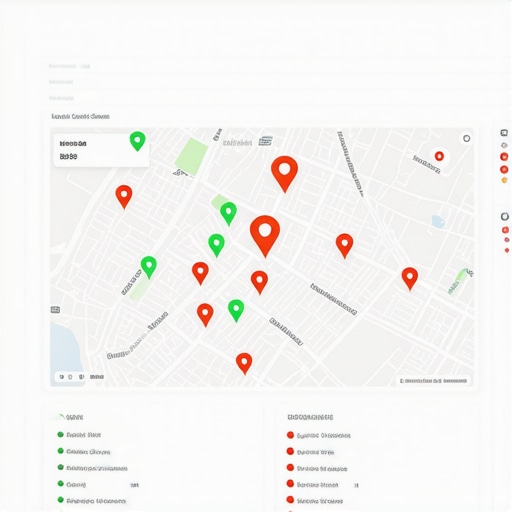
Where the map pack is heading by 2026
If you think the current landscape is competitive, just wait. We are moving toward a world where AI-driven ‘Search Generative Experience’ (SGE) will prioritize entities with the cleanest, most interconnected data. This is why I am so aggressive about elevating your local SEO with advanced authority stacking tactics right now. You are essentially future-proofing your business. I’ve spent a lot of time researching what agencies won’t tell you about the 2026 maps shift, and it all points back to one thing: entity verification. If Google can’t verify exactly who you are and where you serve via a multi-cloud presence, you will be replaced by a business that can. For those looking to grow, you must implement the strategic move to scale local map rankings without triggering a suspension. Don’t just blast out new locations; build the authority first. My best advice? Take ten minutes today and run a search for your main keyword from a different neighborhood. If you aren’t there, your stack is leaking. Try the audit hack I mentioned earlier—it’s the fastest way to find the cracks in your foundation before the next update breaks them wide open.
What I Finally Learned After Burning Five Figures on Shady Links
The most painful lesson I ever learned was that Google cares more about context than raw power. I used to think a link from a big tech site would save me, but I was wrong. I realized that proximity is the ultimate ranking factor. You can’t fake being a part of a community. I discovered that authority stacking unveiled the hidden power for local SEO by creating a digital footprint that matches the physical reality of my business. It’s not about the sheer number of links; it’s about the geographic weight they carry. If your links don’t smell like your city, Google won’t let you lead the pack.
- Don’t chase high DA scores if the site has no local relevance.
- Frequency of updates to your profile signals “life” to the algorithm.
- One local library link is worth fifty generic directory submissions.
The Gear That Keeps My Map Pins Glued to the Top
I don’t fly blind anymore. To stay ahead, I rely on a specific set of tools that cut through the noise. First, I always have a local grid tracker open to see how rankings shift block-by-block. Second, I use the only checklist you need to measure real ROI from Google Maps to ensure I’m not just chasing vanity metrics. I also highly recommend diving into BrightLocal’s yearly consumer survey—it’s the bible for understanding how real humans interact with your profile. Finally, mastering proven backlink techniques to dominate local search has been my secret weapon for out-maneuvering larger franchises with deeper pockets.
#IMAGE_PLACEHOLDER_E#
Stop Watching Your Competitors Take Your Customers
You’ve seen the data, you’ve felt the frustration of the ‘ghost impression’ trap, and now you have the blueprint to fix it. The map pack isn’t some mystical lottery; it’s a reflection of digital authority. By implementing authority stacking and focusing on hyper-local signals, you are claiming your territory in the digital world. Don’t wait for another algorithm update to force your hand. Start building your multi-cloud presence today and turn those silent dashboards into a ringing phone. You have the tools, the strategy, and the insight to dominate your local market. Have you ever seen your impressions climb while your phone stays silent? Let me know your story in the comments below.