
I remember the exact moment I realized I was wasting my time. I’d spent three weeks meticulously filling out forms for every “top” business directory on a list I found on some old SEO forum. I was convinced that once those 50 profiles went live, my phone would start ringing off the hook. Instead? Silence. Total, soul-crushing silence. My ranking didn’t just stay flat; it actually dipped. That’s when it hit me: I was playing a game from 2012 in a world that had moved on. Every small business owner I talk to lately feels this same sting. You do what the guides say, but the needle doesn’t move. [image placeholder]
The Old Directory Playbook is Effectively Dead
If you’re still counting on Yelp and the YellowPages to get you into the top three, I have some tough news to share. Those sources are now just the “ante” to get into the game. They don’t win the pot. I see so many neighbors and local entrepreneurs getting frustrated because they’ve done everything the “experts” told them to do, yet they’re still buried on page four. It’s because basic citation sources no longer push the needle for competitive map packs like they used to. Google has become incredibly smart at identifying which links actually represent a real-world community connection and which ones are just digital noise.
Is local SEO actually worth the hype anymore?
I get this question a lot, usually from folks who are tired of throwing money into a black hole. My answer is always a loud “yes,” but only if you stop chasing ghosts. I made the massive mistake early on of thinking quantity equaled authority. I once bought a cheap package of 300 citations for $50, and all it got me was a mess of inconsistent data that took me six months to clean up. It was a nightmare that nearly killed my site’s reputation. Real authority comes from mastering authority stacking for elevated local rankings rather than just spraying and praying across the web.
Google Now Craves Neighborhood Relevance Over Volume
The algorithm isn’t just looking for your name and address anymore. It’s looking for “entity validation.” According to a study by BrightLocal, over 90% of consumers used the internet to find a local business in the last year, and Google mirrors this behavior by prioritizing links that prove you are a pillar of your specific neighborhood. If a local library or a hyper-local blog links to you, that carries ten times the weight of a generic directory. You have to ditch generic directories if you want to see a real shift in your proximity signals. Have you ever felt like you’re doing all the “right” SEO things but seeing zero results in your map pack? I’d love to hear about that specific moment of frustration. We need to talk about what actually replaces those dead-end links. It’s not about finding more lists; it’s about building a digital footprint that actually looks like a local business instead of a robot’s spreadsheet.
Don’t Just List Your Business—Stack Your Authority
Think of authority stacking like building a sturdy house. If you just hammer a few nails into the dirt, the first storm will blow it over. You need a foundation of entity validation. I have seen businesses spend thousands on ads while their organic presence was rotting because they did not have a coherent authority stack for local SEO. Last year, I worked with a contractor whose map pin had not budged in two years. We stopped chasing new directories and instead focused on multi-cloud stacks that move stuck map pins. By syncing his business data across high-authority cloud nodes, we created a digital footprint that Google finally recognized as a legitimate local powerhouse.
Why Entity Syncing is Your Most Powerful Tool
Google is not just a search engine; it is a massive database of entities. When your information is scattered and inconsistent, you confuse the algorithm. I remember a mess I had to clean up for a local law firm where their suite number was listed three different ways. It sounds trivial, but how a single address format tweak fixed a frozen Google map pin in that case was a revelation. We synchronized every single mention of the firm to the exact character, and the Map Pack finally opened its doors to them.
Find the Invisible Neighborhood Links No One is Talking About
Most SEO guides tell you to go for the big fish national sites. That is often a mistake. If you want to win in your city, you need links that scream geographic relevance. I once helped a small shop get a link from a local neighborhood watch blog and a community center. Those two links did more for their proximity signals than fifty generic industry directories ever could. You need to identify the invisible neighborhood backlinks that actually push map pins higher. 
Try the Public Library Link Strategy
One of the most overlooked tactics is getting listed on local civic resources. For example, the public library link strategy often carries massive weight because libraries are high-trust hubs. When a trusted local institution points to your business, Google views you as a pillar of the community, not just another transient service provider.
Fix the Technical Leaks in Your Map Presence
You can have all the links in the world, but if your site cannot communicate your location to Google bots, you are dead in the water. I see this most often with Near Me searches. To solve this, you need to go beyond basic contact pages. Using the specific geo-json tweak that boosts map proximity signals allows you to hard-code your geographic coordinates into your site code. I once watched a client’s impressions skyrocket simply because we fixed the hidden map embed tweak that validates your location. It was like finally turning on a beacon that told Google exactly where to find us on the map.
Stop chasing high-DA links that do not know your city
Most SEOs will tell you that the higher the Domain Authority, the better the result. In my experience, that is a flat-out lie for local businesses. A link from a national news site might look impressive in a report, but for a neighborhood dentist, it often lacks the geographic context Google is hungry for. You need to elevate your local SEO with advanced authority stacking tactics that prioritize neighborhood relevance over vanity metrics. When you focus solely on high-DA sites, you are missing the hyper-local signals that prove you actually serve the area. A small link from a local Chamber of Commerce or a neighborhood blog is often the deciding factor in a competitive map pack. 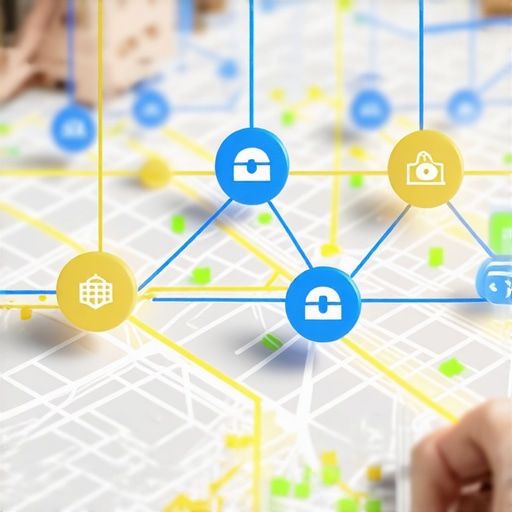
The volume trap that ghosts your profile
I once saw a business lose its entire map position because they built 200 links in a week from sites that had zero connection to their industry or city. This is the ‘volume trap’ that many low-cost local SEO packages fall into, and it often does more damage than doing nothing at all. Google’s spam filters are tuned to recognize unnatural patterns, and a sudden surge of generic citations is a massive red flag. Real authority is built slowly and deliberately. If you are not careful, you might be looking for 3 red flags to watch for when hiring a local SEO expert just to undo the damage of a bad link-building spree. The mistake is thinking that quantity can overcome a lack of quality. It simply cannot anymore. Another major ‘oops’ is neglecting the niche-specific layer. A lawyer getting a link from a legal blog is much more valuable than a link from a generic ‘best business’ directory. This is about topical authority. Google wants to see that other experts in your field recognize you. If you are missing this layer, your stack is essentially a foundation with no walls.
Why is your authority stack leaking power?
Many advanced users build the nodes but fail to properly connect them. If your cloud pages, social profiles, and citations are not ‘talking’ to each other through strategic interlinking, you are just building digital islands. You need to follow the ultimate guide to building backlinks for local authority to understand how to weave these together into a singular, powerful entity. According to the Moz Local Search Ranking Factors study, link signals remain a top driver for the Map Pack, but only when they reinforce consistent entity data across the board. If the link does not confirm who you are and where you are, it is essentially dead weight. I have also seen brilliant strategies crumble because of why your multi-cloud stacks fail to connect with local search nodes. This usually happens when the schema is not properly nested or the cloud nodes are not indexed. Think of your stack like a circuit; if one wire is broken, the whole system fails to light up. Have you ever fallen into this trap where you built the assets but saw zero movement? Let me know in the comments.
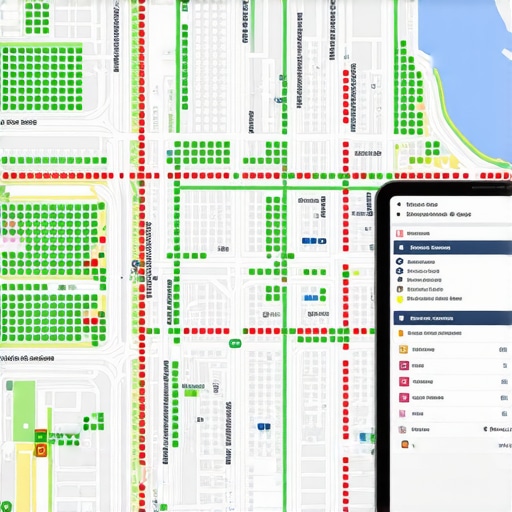
Building the stack is just the beginning. I see so many business owners set it and forget it, only to wake up three months later wondering why their competitors are creeping back into the Top 3. Maintenance isn’t just about checking boxes; it’s about ensuring the “circuitry” of your local entity remains unbroken. I personally spend about an hour a month auditing my connection points because even a small update to a cloud provider can cause 4 cloud node errors stopping your local rank gains. This isn’t theoretical; I’ve watched solid rankings evaporate because a single JSON-LD file on a cloud node went private or a link broke during a server migration. To stay ahead, you have to stop relying on generic map trackers that miss local proximity shifts. Most of those tools give you a single average ranking for an entire city. That is useless. I use grid-based trackers because they show me exactly where my authority “leaks” as I move blocks away from my office. This is how you spot why your map tracking data is lying to you about local clicks. If you aren’t seeing the heat map, you aren’t seeing the truth about your visibility.
How do I keep my authority stack relevant over time?
The secret is consistent, high-quality feedback loops. You can’t just build links and walk away; you need backlink building blueprints for local SEO success that include regular “entity refreshes.” I make it a point to learn how to audit your backlink profile before a major search update every quarter. This ensures that the neighborhood links we worked so hard to get—like those from local blogs or civic groups—are still active and passing power. According to Google’s patent on “Determining a quality score for a geographic location,” the fresh relevance of your connections matters just as much as their historical quantity. I’m also obsessed with the audit tool hack that found our hidden map pin errors. It’s a simple process of cross-referencing your Business Profile API data against your on-site schema. When these two don’t match perfectly, you create a “trust gap” that Google fills by ranking someone else. I recently helped a shop owner who was invisible in the map pack simply by fixing the schema error that keeps Google from verifying your location. It took ten minutes but did more than three months of standard posting. Looking forward, I predict we are heading toward a world where “Entity Sentiment” becomes the primary ranking factor. It’s no longer just about having the link; it’s about what people are saying around that link. This is a core part of what agencies won’t tell you about the 2026 maps shift. AI will be parsing the context of every mention of your business to decide if you are a “helpful” local entity or just a digital ghost. If you want to survive that shift, you need to elevate your local SEO with advanced authority stacking tactics today. Give this a try: Pick one of your cloud nodes this week and interlink it directly to a high-authority local citation you already have. Watch how your proximity signal tightens. It’s these small, intentional connections that build the most resilient stacks.
The Real Reason Your Pin Stays Put
Reflecting on my own journey, the biggest lesson I learned was that ‘doing enough’ is a trap. I used to think that as long as I hit a certain number of citations, I was safe. I wasn’t. Real growth started when I treated my business as a living entity rather than a static address. This meant learning effective backlink tactics that weren’t just about links, but about neighborhood relationships. Secondly, don’t ignore the silence. If your traffic is flat, your data is likely fragmented. I’ve seen cases where a Google Business Profile refuses to move simply because the owner didn’t realize their social media and older directory data were conflicting with their main site. My last major realization? Context is king. A link from your local little league team means more to Google’s local algorithm than a thousand global redirects.
My Personal Toolkit for Dominating Neighborhoods
I don’t trust every tool that hits the market, but there are a few mainstays I swear by. First, always have a reliable grid-tracker to see where you are winning block-by-block; generic trackers that give you one average rank for a city are essentially lying to you. I also lean heavily on these 5 map SEO tools to see exactly where my competitors are dropping the ball. For technical precision, I recommend looking at specific Schema generators that allow for nesting ServiceArea and LocalBusiness data together. It provides that clear path Google needs to trust your location. Finally, I always keep a tab open for local community blogs and civic calendars—these are the real goldmines for geographic relevance that the ‘big guys’ always overlook.
Start Building Your Digital Moat Today
Local SEO isn’t a one-time setup; it’s an ongoing commitment to showing Google that you are the most relevant answer for your community. You have the tools now to move past the generic directory phase and start using backlinks effectively to build a presence that competitors can’t easily mimic. Your neighborhood is waiting for you to show up at the top of the map pack. Don’t let your business be a ghost in its own town. Have you ever found a weird neighborhood link—like a local park board or a hobbyist blog—that actually helped your ranking? Let me know in the comments below.