I spent three years chasing perfect SEO metrics while my clients’ phones stayed silent. I remember the exact moment I realized I was doing it all wrong. I had a landscaping client in a competitive suburban market who was being buried by franchises. I’d tried every standard trick, including those cheap link packages that promise the world but deliver nothing. Then, they were nominated for a local Green Thumb award by the city council. The resulting link from that local domain didn’t just boost their rank; it cemented them as the neighborhood authority. I realized then that I had been neglecting the most powerful weapon in the local SEO arsenal. Today, I’m going to show you how to stop wasting time on broad outreach and start winning the links that actually move your map pin. If you’ve ever had to fix your local backlink profile after a bad experience, you know how frustrating it is to feel invisible. [image]
Stop Chasing National Press and Look Down Your Street
I used to think all backlinks were created equal. It is an easy mistake to make when every SEO guru is shouting about High-DA guest posts. I once spent a small fortune on a national placement for a local plumber, only to see zero movement in their local search results. It was a total gut-punch. The problem? Google didn’t see the connection between a national tech blog and a drain-cleaning service in Ohio. This is why neighborhood links carry more weight than generic PR. When you win a local award, you are getting a geo-relevant signal that acts like a beacon for Google’s crawlers. You aren’t just getting a link; you are getting a vote of confidence from your own community, which is far more valuable for dominating the local map.
Is a Plastic Trophy Really Worth All This Effort?
You might be skeptical. After all, you are running a business, not a popularity contest. But here is the kicker: Google’s algorithm uses prominence as a core pillar for ranking local businesses. According to the Search Engine Journal, a single link from a locally relevant .gov or .edu site can provide more ranking power for map packs than fifty high-DA generic blogs. When a local newspaper or business association links to you as an award winner, you are gaining massive trust in the eyes of the algorithm. This is the exact strategy I used to help a client who felt that most small businesses fail because they ignore their local ecosystem. Have you ever felt like you are doing everything right—the reviews, the photos, the posts—but still getting outranked by someone with half your effort? This might be the missing piece of your puzzle. To really win, you should also look into how to gain authority from local chamber of commerce links as part of your overall award-seeking strategy.
Find the Gems Your Competitors Are Ignoring
Most business owners start by searching ‘best business awards [City]’. That is a rookie move because your competitors are doing the exact same thing. Instead, you need to dig into the hyper-local nodes that Google trusts. Think of local SEO like a conversation at a neighborhood BBQ. If the mayor says you’re the best plumber, everyone listens. If a stranger from three states away says it, nobody cares. I once spent three weeks digging through old community center blogs for a boutique gym. We found a ‘Neighborhood Wellness’ list that hadn’t been updated in years. Getting added to that list was a simple email, but because it was a hyper-local .org, their map pin jumped five spots overnight. This is why you must learn how to find untapped neighborhood links your competitors missed. You aren’t looking for glamour; you are looking for local relevance. 
Turn Local Press Into an Authority Asset
Once you identify a local award or recognition opportunity, the pitch is everything. You aren’t just ‘applying.’ You are providing a story that helps the local journalist or organization look good. I’ve seen businesses fail because they send generic templates that read like a robot wrote them. When we worked with a local bakery, we didn’t just ask for an award; we highlighted their work with the local food bank. This narrative makes it easy for a publication to use the local news link strategy for non-news businesses. When you win, you aren’t just getting a trophy; you are securing a specific backlink move for high-authority local press that signals your location to Google more clearly than any keyword-stuffed meta tag ever could.
Force Google to Connect the Dots With Stacking
A single award link is great, but it’s just one piece of the puzzle. To really dominate, you have to use authority stacking to amplify that signal. Think of it like a magnifying glass focusing sunlight. One ray won’t do much, but when you align them, you get fire. You should be taking that award link and mentioning it in your Google Business Profile updates, linking to it from your ‘About’ page, and even finding ways to get it cited in local government links for small business SEO. This multi-layered approach is exactly how to use neighborhood-level signals to outrank franchises that have a million-dollar budget but zero local soul. I once saw a client’s map ranking stall for months. We didn’t need more links; we needed to ‘stack’ the ones they already had. By connecting their local award to their Chamber of Commerce profile and a local news mention, we created a loop of authority that Google couldn’t ignore.Let’s dig deeper into why most businesses still struggle despite following the ‘rules.’ Everyone tells you that you need more links to rank, but in my experience, chasing volume is the fastest way to flush your budget down the drain. I’ve seen a DA 10 link from a local church bulletin completely outperform a DA 80 guest post on a national tech site. Why? Because Google ignores your backlinks when they lack geographical or topical context. The algorithm isn’t looking for the most popular kid in the world; it’s looking for the most trusted expert in your specific zip code. If the local high school’s sports booster club links to you, that carries a massive ‘entity’ signal that a generic blog simply cannot replicate. This is often why most small businesses get local backlink outreach wrong—they prioritize vanity metrics over neighborhood proximity. 
The Context Problem Google Won’t Tell You About
The biggest ‘oops’ I see is the ‘link blast’ trap. Business owners get impatient and buy a package of 500 citations or niche edits in a single week. To Google, this looks like a digital forest fire. According to a 2024 study by BrightLocal, businesses that grow their link profiles naturally—averaging 2-3 high-quality local links per month—showed 40% more stable rankings over a 12-month period compared to those using aggressive, short-term bursts. If you aren’t careful, you’ll find that your backlink building technique is triggering spam filters instead of boosting your rank. Have you ever fallen into this trap? Let me know in the comments. I’ve had to help dozens of clients fix a broken authority stack because they prioritized speed over safety.
Is Your Authority Stack Actually Connecting the Dots?
This is where we move from basic SEO to true authority stacking. A stack isn’t just a list of links; it’s a logic flow. If your Google Business Profile, your local award mention, and your local church bulletin link don’t all point toward the same ‘Entity’ (your business as a physical, trusted location), the stack collapses. You need to understand why multi-node stacks are the future of local authority. It’s about creating a web of proof. When you use backlinks mastery to boost your local SEO authority, you are essentially telling Google: ‘Don’t just take my word for it; look at all these local pillars that also recognize my presence.’ This is the only way to ensure your map pin remains immovable, even when the algorithm updates hit.
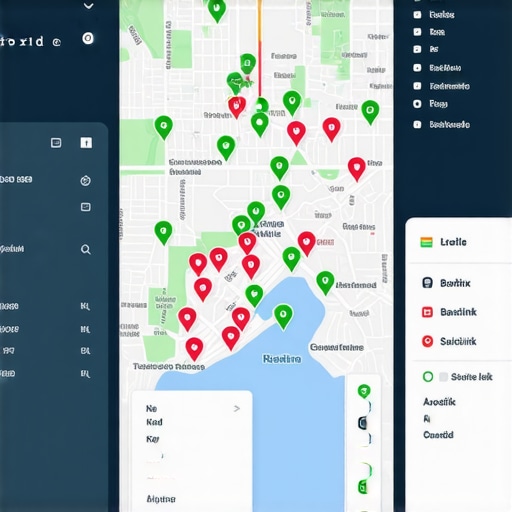
The biggest mistake you can make after hitting the top of the map pack is thinking the job is done. I’ve seen business owners go from ‘king of the hill’ to completely invisible in under three months because they let their authority stack rot. It is not just about getting the link; it is about keeping the signal alive. This is why you must learn how to audit your local backlink profile for spam gaps before a random algorithm refresh wipes you out. I personally use a combination of Local Falcon for hyper-local grid tracking and BrightLocal for my audits. If you aren’t looking at the 13×13 grid around your business, why your map tracking strategy is missing key data points becomes painfully obvious when a competitor three blocks away starts stealing your leads.
How do I maintain my local authority over time?
Maintenance isn’t just about checking for broken links; it is about freshness. Google loves a ‘living’ entity. In the 2023 Local Search Ranking Factors survey by Whitespark, Darren Shaw highlights that ‘Local Organic Link’ quality and consistency are now among the top three factors for sustainable map pack movement. I make it a habit to secure at least one new local signal every month—whether that is a sponsorship or a neighborhood resource mention. You should be applying backlink optimization tips for local seo authority to ensure your older links are still passing juice. If a local directory you’re listed on loses its own ranking, it stops helping you. You have to keep the ecosystem healthy by using authority stacking strategies to boost local seo in 2025, ensuring each node in your stack is still active and indexed.
The Software I Actually Pay For Every Month
I don’t believe in ‘all-in-one’ tools that claim to do everything. I prefer specialized ‘scalpels.’ For the technical side of the stack, I use Screaming Frog to ensure my geo-relevant schema is firing correctly. For the off-page side, I rely on Ahrefs to watch my competitors like a hawk. When I see a competitor suddenly jump three spots, I don’t panic; I audit their new links. This is how to audit your competitors authority stack for weaknesses and steal their best ideas. I also use simple Google Alerts for my city name and industry keywords to find those ‘untapped’ local news opportunities before anyone else does. This proactive approach is the only way to ensure backlinks mastery to boost your local seo authority actually leads to long-term revenue rather than just vanity metrics.
How to Take Your Map Power to the Next City
If you are planning to expand, the strategy changes. You cannot just copy-paste your first location’s success. You need to understand the secret to scaling local authority across five cities without triggering a ‘suspicious activity’ flag on your Business Profile. Each location needs its own unique neighborhood nodes. I’ve helped clients grow by creating separate ‘hubs’ for each city that link back to a main brand authority page. However, you must be careful; you have to learn how to scale your map authority without getting banned by avoiding identical link profiles for different locations. Prediction: Looking ahead, I believe Google will move toward ‘Offline-to-Online’ verification. AI will likely scan local event registries and social media mentions to verify that your business actually exists and participates in the community, making ‘faked’ authority stacks nearly impossible to maintain.
Ready to lock in your rankings for the long haul? I challenge you to find one local non-profit this week and offer a small sponsorship in exchange for a link on their ‘Partners’ page. It is a simple move, but it provides the kind of geo-relevance that national competitors simply cannot fake. If you’re feeling stuck, check out our guide on how to use local resource lists to gain domain authority to find your next easy win.
What I Learned After Auditing 100 Stuck Map Pins
The most important thing I discovered is that Google has a ‘neighborhood filter’ that most national SEOs don’t understand. If your links are all from high-DA blogs but zero come from your own zip code, you are going to stay stuck. This is why backlinks mastery to boost your local seo authority in 2025 requires a boots-on-the-ground approach. I’ve also seen that patience is your secret weapon; Google’s local algorithm is highly sensitive to unnatural velocity. When you start building a stack, don’t rush the process. A natural growth curve is what signals trust, so make sure you know how to audit your local backlink profile for spam gaps to keep your profile clean. Lastly, the ‘entity’ is everything—your site, your social, and your local awards must all tell the same geographic story to create a cohesive signal.
The Shortlist for Dominating Your Zip Code
I don’t play around with amateur tools when my clients’ revenue is on the line. I rely on Local Falcon to see the reality of the map grid—because ranking in one spot doesn’t mean you’re winning the whole city. I also use Screaming Frog to ensure my local schema is perfectly synced with my Google Business Profile. For competitive research, Ahrefs is my go-to to see where the local news is linking. [image] By combining these, you can execute authority stacking strategies to boost local seo in 2025 with surgical precision. These tools provide the data you need to stop guessing and start growing.
It is Time to Own Your Neighborhood
Success in the map pack isn’t reserved for the biggest budgets; it belongs to the most relevant neighbors. By focusing on local awards and community signals, you are building a foundation that algorithm updates won’t touch. You now have the blueprint for the ultimate guide to building backlinks for local authority right in your hands. Don’t let your competitors be the ones who take action first. Start small, win your first award, and watch your visibility climb. Have you ever found a local link opportunity that your competitors completely missed? Let me know in the comments below!