
I’ll never forget the sting of my first major SEO campaign for a local plumber friend. I spent three weeks crafting what I thought were the perfect emails to local bloggers and news sites, only to be met with deafening silence. It was a gut-punch. I was following the best practices I had read online, but I was failing miserably because I treated local business owners like numbers on a spreadsheet instead of real people in my town. This is exactly why most small businesses fail at local map prominence—they lose the human touch in favor of automation. Today, I’m going to show you how to stop being an outreach robot and start becoming a genuine local authority. We’re going to dismantle the bad habits that make your emails look like cheap link packages and replace them with a strategy that actually gets people to open their doors and their websites to you. [image]
I Used to Treat My Neighbors Like Data Points
My biggest mistake early on was thinking that because I was local, I was automatically owed a link. I would send these stiff, template-heavy emails that sounded more like a legal summons than a friendly hello. I didn’t realize that a link is a vote of trust, and you cannot demand trust from someone who doesn’t know your face or your brand. According to research by BrightLocal, nearly 98 percent of consumers read online reviews for local businesses, which proves that reputation is the currency of the local economy. When you reach out poorly, you are not just missing a backlink; you are actively damaging your reputation among the very people you want to work with. You need to focus on securing high authority neighborhood links that come from genuine connection rather than cold transactions. Have you ever sent out a batch of outreach emails and felt that sinking feeling when the only thing you received back was a notification that your message was marked as spam?
Is this whole outreach thing actually worth the headache?
I get it. You have a real business to run. You are out there fixing pipes, baking bread, or filing taxes, and you do not have time to play digital pen pal with every blogger in a fifty-mile radius. But the reality is that building local trust using targeted community outreach is the only sustainable way to beat the massive national brands that are trying to eat your lunch. They have the corporate budget, but you have the local zip code. We are going to use that home-field advantage to bypass the filters and get you the visibility you deserve.To win in the map pack, you have to think like a local politician running for mayor, not a data scientist looking at a screen. You need to identify the digital gatekeepers—those people in your city who already have the audience you want. I call this the Neighborhood Watch Method. Think of authority stacking like a neighborhood watch program. If one neighbor says you’re a good guy, it’s a nice gesture. But if the local church, the high school football booster club, and the neighborhood association all vouch for you, the local sheriff—Google—officially recognizes you as a pillar of the community. 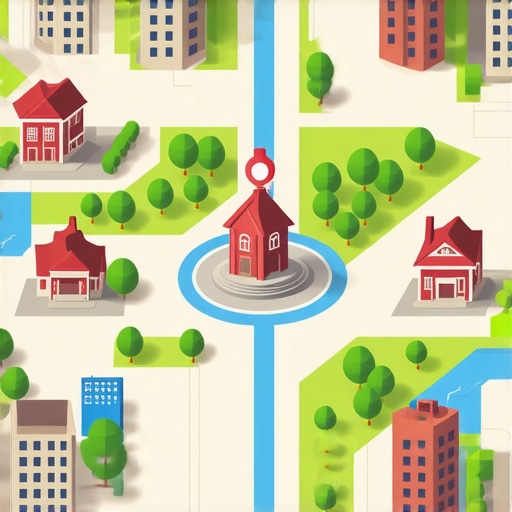
Identify the Digital Gatekeepers in Your Town
Step one is finding where the local conversation is already happening. You can how to use neighborhood directories to signal hyper relevance by looking for resource pages on local community center sites or even local library blogs. These aren’t just links; they are geographic anchors. When you get a link from a site that only talks about your specific city, you’re feeding Google the exact location data it needs to pin you to the top of the map pack. This is exactly why why high quality backlinks from small blogs beat big directories—they carry the scent of the local soil that national directories simply cannot replicate.
Turn Simple Mentions into Power Links
Step two involves applying proven backlink techniques to dominate local search that don’t involve begging or generic templates. I recently tried this with a small plumbing outfit that was struggling to gain traction. We stopped emailing for ‘backlinks’ and started offering to write ‘Winterizing Your Home’ guides for local real estate blogs. We weren’t asking for a favor; we were providing a free service to their readers. This shift in mindset is what separates the authority masters from the digital spammers. By providing value first, we secured high-authority mentions that doubled as trust signals for local customers.
The Neighborhood Watch Method for Map Dominance
Step three is the actual ‘stack.’ You don’t just want one link pointing to your home page. You want a multi-node structure that surrounds your business with relevance. This is where you use authority stacking the game changer in local seo to link your Google Business Profile to these local mentions, and then link those mentions back to each other. It creates a closed loop of local relevance that national brands can’t replicate because they don’t have the boots on the ground. Last year, I worked with a local bakery that was stuck on page two. Instead of buying a package, I looked for 4 local charity links that provide more value than big media. We reached out to a local pet shelter, donated some ‘dog-friendly’ cupcakes for an event, and got a mention on their ‘Paws and Pastries’ page. Within two weeks, the map pin jumped to the top three. It was a messy, non-technical move that produced more ROI than any fancy tool. For anyone in a competitive market, you eventually need the specific move for scaling map ranks in large cities. This involves finding local government or educational resource pages. These .gov and .edu links are the ultimate stamps of approval. Even a simple mention on a local ‘Small Business Saturday’ page on a city hall website can do more for your rankings than a dozen generic guest posts because it anchors your entity to the physical geography of the city council’s jurisdiction.Most people will tell you that ‘link juice’ is a universal currency. They’re wrong. In the world of the map pack, the currency isn’t just power; it’s proximity and relevance. I’ve seen businesses with massive backlink profiles get buried by a competitor who has five links from local community centers. This is often why your neighborhood links carry more weight than national pr because they provide geographic verification that a blog in another country simply cannot. If you are struggling with a stagnant rank, it’s likely why your authority stacking fails to connect the dots for google. You aren’t building a bridge; you’re building a neighborhood footprint.
Google Ranks Entities, Not Just Web Pages
To really win, you have to realize that why your local seo strategy needs a focus on entity authority is because Google treats your business as a singular concept, not just a URL. If your website says one thing but your local mentions say another, you create friction. This is the ‘oops’ factor I see most often: the orphaned stack. Many business owners hire a service to build cloud-based nodes, but they end up with a mess of disconnected pages. This is the hidden reason your cloud stacks aren’t transferring pagerank—there is no logical flow back to your primary map listing. You must learn how to use cloud-nodes to shield your authority stack while simultaneously funneling that power directly into your Google Business Profile.
Why does your map pin stay frozen even after building new links?
According to the Whitespark Local Search Ranking Factors study, the ‘quality and relevance of local links’ is a top-tier driver for map pack success. If you are building links but seeing no movement, you likely have a relevancy gap. You might be suffering from a ‘bad link’ hangover if you previously worked with a low-quality provider. In those cases, you need to know how to fix your local backlink profile after a bad agency has cluttered it with junk. 
Stop Building Orphaned Cloud Stacks
To move the needle, you need to elevate your local seo with advanced authority stacking tactics that focus on internal connectivity. Every link you build should support the other. It’s about creating a web of data that proves your business is the most relevant answer for a specific search in a specific zip code. Don’t just chase ‘High DA’ numbers. Use backlink-optimization-tips-for-local-seo-authority to ensure every anchor text and every surrounding paragraph screams your city’s name. Have you ever fallen into the trap of buying a ‘link package’ only to see your rankings drop or stall? Let me know in the comments below, and let’s troubleshoot your stack together.
The Gear That Keeps My Stacks Standing
I don’t believe in bloated SEO dashboards. Most of them are just eye candy for clients, but when it comes to the actual work, I rely on two things: precise tracking and clean documentation. I personally use Local Falcon for my grid tracking because it’s the only way to see if my how to use backlinks effectively to enhance local search presence is actually expanding my reach or just making me look good in my own office. If you aren’t looking at a heatmap, you’re flying blind. You might be ranking #1 at your storefront but invisible three blocks away. This is why I always preach how to scale your map authority without getting banned; it’s a slow burn of verifying your presence in every surrounding neighborhood, not a sprint of spamming links.
How do I keep my map rankings from falling over?
Maintenance is the part everyone ignores until their phone stops ringing. A stack is essentially a digital circuit; if one node goes offline or a link breaks, the whole flow of authority is interrupted. You need to perform a monthly ‘stack health check’ to ensure your nodes are still indexing and passing juice. I’ve seen businesses lose 40% of their traffic because of a simple map embed error thats costing your business daily leads that went unnoticed for months. If you’re seeing a dip, you must know how to fix a broken authority stack before it hurts your rank permanently. Google’s own Search Quality Evaluator Guidelines emphasize that local relevance is tied to consistent, helpful information, which means your stack must stay current with your actual business operations. #IMAGE_PLACE_HOLDER_D#
Google’s Future is All About Entity Proof
Looking ahead to 2025 and beyond, I predict that traditional backlink counts will matter even less while ‘Entity Proof’ will become the primary ranking factor. Google’s AI is getting better at cross-referencing your mentions across the web without needing a hyperlinked anchor. This means your backlink building blueprints for local seo success should focus on getting your business name and address mentioned on sites that Google already trusts as local authorities. It’s about building a digital footprint so heavy that the algorithm can’t ignore you. If you want to stay ahead, stop chasing metrics and start chasing local mentions that confirm your physical presence. Go audit your current stack right now—specifically, check your map embeds on your most powerful nodes. If they aren’t loading correctly or pointing to an old address, fix them today. That single move could be the difference between page two and the top three.
The Truth About Why Some Stacks Just Crumble
Looking back at my first few attempts at authority stacking the game changer in local seo, I realized I was trying to build a fortress on sand. I was so focused on the technical power of the links that I forgot the human element. One of the hardest lessons I learned is that a single link from a local elementary school fundraiser is worth more than ten “high DA” links from a random tech blog in another country. Your digital presence must reflect your physical presence. If you feel like your progress has plateaued, it’s often because of why your authority stacking fails to connect the dots for google. You have to ensure every node in your stack is explicitly tied to your local entity via schema and clear NAP (Name, Address, Phone) mentions. Connectivity is the secret sauce; an orphaned link is a wasted opportunity.
The Tools That Actually Earn Their Keep
I don’t suggest spending hundreds on software when you are just starting out, but a few key resources are non-negotiable. I always start with a deep dive into my rival’s strategy; learning how to audit your competitors authority stack for weaknesses is the fastest way to find low-hanging fruit in your city. For tracking your map movements, Local Falcon remains my go-to for its hyper-local grid views that show you exactly where your authority drops off. I also recommend keeping a simple, shared spreadsheet to manage your outreach efforts—consistency is more important than complexity here. Finally, always keep backlink-optimization-tips-for-local-seo-authority in your bookmarks to ensure every new link you earn is structured correctly from day one.
Own Your Digital Backyard
You don’t need a massive agency budget to dominate your local map pack. What you need is the willingness to show up where your neighbors are and the patience to build your digital authority piece by piece. Start today by reaching out to just one local charity or community board. When you master authority stacking for elevated local rankings, you aren’t just manipulating an algorithm; you are cementing your business as a permanent fixture in your community’s digital landscape. The map pack is waiting for its next local leader—why shouldn’t it be you? What is the one local organization in your town that everyone knows, but you haven’t reached out to yet? Let me know in the comments below!