
I remember sitting at my kitchen table, my third cup of coffee cold and forgotten, as I watched my website’s traffic fall off a cliff. I’d just “invested” $50 into a link-building package that promised a shortcut to the first page of Google. I felt like I’d found a secret cheat code. Instead, I woke up to a digital ghost town. It was a painful, expensive lesson that almost cost me my business, and it’s why I get so fired up when I see other small business owners falling for the same trap. I was naive. I thought the internet was a wild west where more was always better. I didn’t realize that Google was looking for authority, not just volume. I was flooding my site with noise when I should have been building a symphony. This realization didn’t come easily. It came through hours of reading forums and realizing that my competitors, who had fewer links but better ones, were the ones actually making money. We are going to stop the bleeding today. I’ll walk you through the logic of building a profile that stands the test of time.
Why That $49 SEO Deal is a Digital Landmine
When you’re trying to grow, every dollar feels like it needs to work double-time. So, when an email lands in your inbox promising a thousand backlinks for the price of a decent steak dinner, it’s hard to say no. I didn’t say no. I said yes, and I paid for it for months. The problem is that these packages are built on automated spam, not real relationships. They trigger every alarm bell Google has. If you’re already feeling the pinch, you might need to look into how to fix your local backlink profile after a bad agency. I’ve been there. It isn’t fun, but it is fixable. These cheap services often use what we call link farms—sites that exist for the sole purpose of selling links. They have zero real traffic and even less credibility. When Google sees your brand hanging out in these neighborhoods, it assumes you’re part of the problem.
Can a few bad links really sink my entire business?
It’s a fair question. You’d think a massive search engine wouldn’t care about one little site in a sea of billions. But Google’s entire reputation relies on showing quality results. According to research from Search Engine Journal, unnatural link profiles are the leading cause of manual penalties that can take months or even years to resolve. I learned that the hard way. I thought I was being smart, but I was just being reckless. Today, I want to show you how to build something that actually lasts—focusing on proven backlink techniques to dominate local search instead of the quick fix. We’re going to look at the specific 3-backlink-patterns-that-get-small-businesses-penalized so you can audit your own site before it’s too late. Have you ever felt that temptation to just buy the rank? Did you do it, or did your gut stop you just in time? Let’s talk about it. We’re moving away from the garbage and toward backlink optimization tips for local seo authority that won’t get you banned.I spent years thinking SEO was a volume game until I realized it’s actually a relevance game. If you’re a roofer in Austin, a link from a massive tech site in San Francisco is like a stranger in another country saying you’re a good guy—it’s nice, but it doesn’t help the locals trust you. You need to learn how to build a local authority stack that actually sticks by creating a web of trust within your own city.
Connect the Dots Before Google Does it for You
Imagine your digital presence as a series of connected points. If your Google Business Profile, your website, and your social media aren’t shouting the same message, Google gets confused. This is where the concept of stacking comes in. It’s not just about having a profile; it’s about ensuring how to use geo-relevant content to anchor your authority stack so that every signal points back to your physical location. I remember a messy project with a multi-region service brand where their pins were all over the place because they used different variations of their name on every platform. We had to apply the authority stack logic for multi-region service brands just to get the search engine to stop thinking they were three different companies. 
Why Your Neighbors Vouching for You Beats a National Magazine
I used to chase the big links. I thought a mention on a national news site was the holy grail. But for local search, that’s often just vanity. The truth is why your neighborhood links carry more weight than national pr. Think about it: a link from the local Little League or a neighborhood association tells Google you are an active, physical part of that specific community. It’s hyper-local relevance that national competitors can’t fake. I recall a client in a suburb of Chicago who was obsessed with getting a link from a big tech blog. We ignored that and instead got him on three local resource lists for high school football sponsors. Within two weeks, his map pin moved more than it had in two years because those links were geographically tied to his service area.
Clean Up the Messy Data Dragging You Down
Before you go out and build more, you have to look at what’s already broken. Most businesses I audit have what I call data drift. Their address is slightly different on Yelp than it is on their website. Their phone number changed three years ago but is still on an old directory. You need to know how to clean up messy citations without starting over because these tiny discrepancies act like anchors on your ranking. It’s like trying to run a race with your shoelaces tied together. I once spent an entire weekend manually fixing phone numbers for a dry cleaner whose ranking was stagnant. Once the data was uniform and synchronized across the web, his calls increased by 20% in a week without building a single new link. It’s about being precise, not just being loud.It’s easy to get obsessed with the visible metrics, but the real power moves happen in the shadows of the algorithm. Most SEO gurus will tell you that the business with the most reviews always wins. I’ve seen the opposite happen hundreds of times. You see, why your competitors are winning the map pack with fewer reviews usually comes down to the weight of the entities vouching for them. If a local celebrity or a long-standing community pillar mentions your brand, that single signal can outweigh twenty generic five-star ratings from accounts with no local history. Google is getting smarter at sniffing out thin authority. This is why I always argue that why your local seo strategy needs a focus on entity authority is the only way to stay relevant in 2025. You aren’t just a business; you’re an entity in a specific geographic web.
The Citation Trap That Smothers Your Growth
Everyone tells you to get on every directory possible. That’s actually terrible advice. In my experience, why your citation strategy is actually hurting your map rank is often due to noise—submitting your info to low-quality, irrelevant sites that Google has already flagged as junk. It dilutes your brand’s clarity. A study by Whitespark recently highlighted that while citations are still a factor, the quality and consistency of core local sites far outweigh the quantity of obscure directories. If you’re stuck, you might be suffering from the invisible citation errors blocking your business from the top 3. It’s better to have ten powerhouse links from your local Chamber of Commerce or neighborhood blogs than 200 links from a generic directory based in another hemisphere. 
Why does my map rank vanish three blocks away from my shop?
This is the Proximity Paradox. Many owners think a strong website should rank them across the whole city. But Google’s Opossum update and subsequent filters have tightened the leash on proximity. If you want to break out, you have to solve the proximity problem how to rank outside your immediate zip code by using geo-fenced authority signals. Another common mistake is thinking all stacks are created equal. I’ve seen people build massive cloud stacks that do nothing because they missed one technical detail. For instance, the hidden reason your cloud stacks arent transferring pagerank is usually a failure to properly interlink the nodes in a way that creates a closed loop of authority. It’s not just about stacking; it’s about mastering authority stacking for elevated local rankings so the power actually reaches your map pin. Have you ever fallen into the trap of more is better only to see your rankings stall? Let me know in the comments below.
Once you’ve put in the hard work of building your authority, the real challenge begins: keeping it. I’ve seen too many businesses climb to the top of the map pack only to vanish a month later because they thought SEO was a ‘set it and forget it’ task. It’s not. It’s a living organism that needs constant feeding. If you don’t keep an eye on the pulse, you’ll find that why your map tracking strategy is missing key data points can lead to a slow and painful decline in your visibility. I personally use specialized grid-tracking tools for this—it gives me a birds-eye view of how my pin is performing across every street corner, not just at my front door.
Stop Guessing and Start Measuring
You need to be clinical about your data. I don’t just look at ‘rankings’; I look at the sync between my website and the Google entity. As detailed in the official Google Search Central documentation for Structured Data, maintaining precise JSON-LD markup is non-negotiable for helping search engines connect your physical storefront to your digital footprint. If your code is messy, your authority is leaking. This is exactly how to sync your schema without breaking google search presence without causing a total rankings meltdown. I’ve spent countless hours in the validator tool ensuring that every comma is in the right place because, at this level, technical perfection is the baseline, not a bonus.
How do I maintain my authority stack over time?
Maintenance isn’t about building new links every day; it’s about verifying the ones you have. Every quarter, I audit my stack to ensure the nodes are still active and passing power. It’s about unlocking the power of authority stacking for top local seo results by refreshing the content on your cloud properties. Search engines love ‘freshness.’ A stack built in 2022 that hasn’t been touched is a stack that is losing its edge to a newer, hungrier competitor. I treat my digital nodes like physical assets—they need oiling, cleaning, and occasional upgrades to stay functional in the eyes of the algorithm.
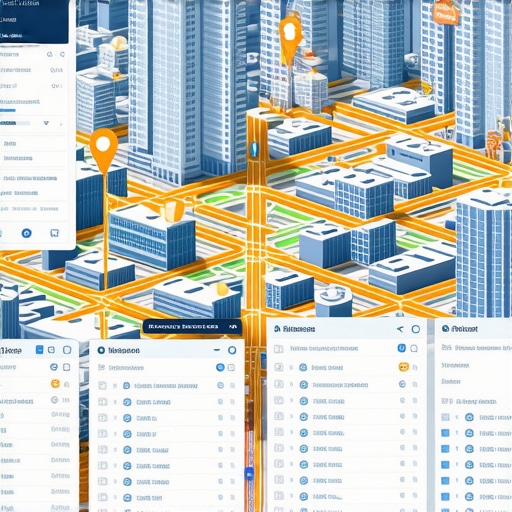
Future-Proof Your Rank with Shielded Nodes
I’m often asked where this is all going. In my view, the future of local search is moving toward ‘Entity-First’ indexing. Google won’t just look for your name; it will look for the strength of the shield around your brand. I’ve started using advanced techniques like how to use cloud nodes to shield your authority stack to create a buffer against algorithm updates. This ensures that even if one source of traffic dips, the entire house of cards doesn’t come tumbling down. This predictive approach is what separates the winners from those who are constantly reacting to the latest core update in a state of panic.
Growth Without the Risk of Suspension
If you’re ready to expand into new territories, don’t just copy-paste your strategy. You need to know how to scale multi-location seo without getting your pins suspended. This is where authority stacking strategies to dominate local search really shines for larger brands. You have to create unique geographic signals for every single location or you risk being flagged as spam. If you want a quick win today, I highly recommend trying the how we doubled calls with a single entity sync move. It’s the most effective way I’ve found to force Google to recognize your relevance across a wider area. Don’t wait for the map to update itself—take control of the signals you’re sending and watch the results follow.
I’ve spent a lot of time talking about technical nodes and data syncs, but there is one thing I’ve learned that no software can teach you. After a decade of watching businesses rise and fall in the local rankings, I’ve realized that Google isn’t just an algorithm; it acts more like a high-end neighborhood association. It doesn’t just care that you’re there; it cares about who you know and how consistently you show up. If you can master this mindset, you’ve already won half the battle.
The Day I Realized Google Thinks Like a Small Town Gossip
The biggest lightbulb moment for me wasn’t discovering a new tool; it was realizing that relevance is more valuable than raw power. I used to chase massive domain authority scores, but then I saw a small coffee shop outrank a national chain because they had deep, local roots. This is why I always say authority stacking is the game changer in local seo—it’s not about volume, it’s about creating a narrative of trust. I also learned that the smallest errors, like a mismatched suite number, are seen by Google as a lack of professionalism. It’s the digital equivalent of having a ‘Closed’ sign on your door during business hours. Finally, remember that the most powerful links often come from places your competitors are too lazy to look, which is the authority signal most local seos completely forget. You don’t need a thousand links; you need the three right ones from your own backyard.
The Minimalist Stack Toolkit I Use Every Morning
I don’t believe in overcomplicating things. If you want to keep your authority stack healthy, you only need a few core resources. First, I always keep a copy of my backlink building blueprints for local seo success nearby to ensure I’m not drifting back into old, bad habits. Second, I rely heavily on simple grid trackers like BrightLocal or Local Falcon to see how my map pin is behaving block-by-block. Third, I highly recommend keeping an eye on the official Google Search Central blog—not for the hype, but for the subtle shifts in how they define ‘Helpful Content.’ If you’re feeling stuck or overwhelmed, don’t hesitate to use my ultimate guide to building backlinks for local authority to reset your strategy. These aren’t just tools; they are the guardrails that prevent you from driving your business off a digital cliff.
#IMAGE_PLACEHOLDER_E#
Build Something That Outlasts the Next Update
The future of search belongs to those who build genuine local authority. It’s easy to get frustrated when a new core update rolls out and the maps shift, but if your foundation is built on the logic we’ve discussed, you have nothing to fear. You are no longer at the mercy of a single link or a lucky ranking; you are an established entity with a shield of nodes protecting your presence. If you ever find yourself falling behind, take a breath and learn how to fix a broken authority stack before it hurts your rank. The work you do today isn’t just for this month’s lead volume; it’s for the long-term survival of your brand in an increasingly crowded digital world. Go out there and start connecting those dots—your local community is waiting to find you.
What has been the single biggest hurdle you’ve faced when trying to rank in the map pack this year? Let me know in the comments below!