I remember the exact moment my heart dropped into my stomach. It was a rainy Tuesday, and I’d just refreshed my tracking tool only to find that my local ‘money’ keywords—the ones that paid my mortgage—had completely fallen off the first five pages of Google. I’d spent six months and nearly two thousand dollars on a ‘highly rated’ link-building service, thinking I was taking a shortcut to the top. Instead, I’d built a house of cards on a foundation of digital sand. That experience taught me a brutal lesson: if you don’t know how to spot the sharks in the local SEO water, you aren’t just wasting money; you’re actively sabotaging your future. Today, I want to make sure you never have to feel that same gut-punch of seeing your hard work disappear overnight. We are going to dive into the warning signs that I ignored, so you can build a presence that actually lasts. Have you ever noticed your rankings suddenly stall out even though you’re adding new links every month?
Watch Out for These Quality Gaps Before You Hand Over Your Credit Card
In my early days, I was obsessed with the number of links I could get for fifty bucks. I thought it was a simple math problem: more links equals higher rankings. But I quickly realized that the hidden danger of cheap link packages for small businesses is that they often come from networks that Google has already blacklisted. These providers promise thousands of directory submissions, but they usually end up being generic directory backlinks that are hurting your map rank rather than helping it. I’ve seen businesses get completely ‘ghosted’ by the map pack because they prioritized volume over geographic relevance. Real local SEO isn’t about being everywhere; it’s about being in the right neighborhood. [image] If you don’t take the time to audit your local backlink profile for spam gaps, you are essentially flying blind. According to a study by Ahrefs, 66.31% of pages have zero backlinks pointing to them, but even more importantly, having the wrong ones can trigger a manual penalty that takes years to recover from. I learned this the hard way when a client’s site was flagged for ‘unnatural link patterns’ just because we used a provider who reused the same five PBN sites for every local plumber in the tri-state area.
Is buying links actually worth the risk to your reputation?
I get asked this all the time over coffee. My answer is always the same: it depends on who you’re dealing with. If the seller can’t tell you exactly where the links are coming from or if they refuse to show you examples of local sites they’ve worked with, run the other way. You want to follow backlink building blueprints for local SEO success that focus on authenticity. It’s better to have three links from the local high school booster club and the neighborhood chamber of commerce than three thousand links from a server farm in a country you’ve never visited. We’re going to break down how to separate the real experts from the snake oil salesmen so you can invest your marketing budget with confidence.
Connect the Dots to Prove You Actually Exist
Think of your business identity as a digital birth certificate. If the details on that certificate are blurry or inconsistent, the government—or in this case, Google—simply won’t trust you. You have to start by validating your entity. This isn’t just about having a website; it’s about making sure your Name, Address, and Phone number (NAP) are identical across every single high-authority node you touch. I once worked with a boutique law firm in downtown Chicago that was completely invisible on the map despite having a beautiful website. We realized they were using ‘Suite 200’ on their website but ‘#200’ on their Google Business Profile. That tiny discrepancy was the specific nap error stopping your maps growth. Once we aligned those details and implemented how to sync your website metadata with your business profile, their visibility skyrocketed within two weeks. You need to understand why your local entity sync is failing to validate your data before you throw money at backlinks. If the foundation is cracked, no amount of paint will save the house.
Fix the Identity Clashes in Your Digital Paperwork
The next step is a deep dive into your on-page data. Google’s crawlers are looking for confirmation that you are exactly who you say you are and that you serve the area you claim. Most business owners ignore the metadata hidden in the code of their site, but that’s where the real magic happens. By making the specific on-page tweak that boosted our local visibility, we can create a direct link between your service pages and your map pin. This involves using how to use entity stacks to validate your business location, effectively creating a web of trust that surrounds your business. 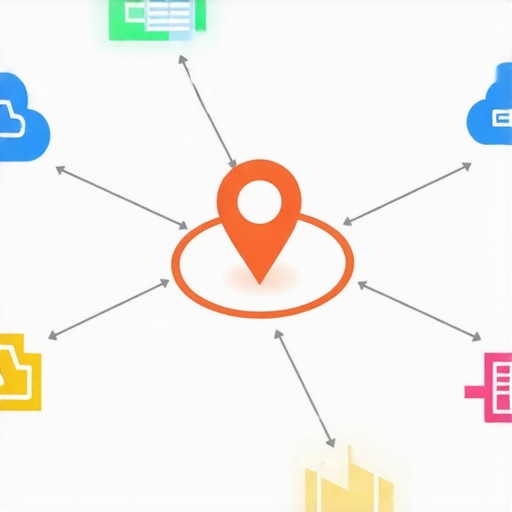
Construct Your Authority Stack Without Tripping Spam Alarms
Now we get into the heavy lifting: authority stacking: the game changer in local SEO. Imagine building a ladder where every rung is a high-authority asset like a Google Cloud site, a business social profile, or a local news mention. Each rung supports the one above it, pushing the authority all the way up to your main website and map pin. The trick is knowing how to map out your authority stack for maximum node power without making it look like a manufactured link farm. When I first tried this for a local roofer, I made the mistake of linking everything too quickly. I had to learn how to build an authority stack that doesn’t get flagged by the search filters. You want to mimic natural growth. This involves the map pack move that forces google to trust your service area by connecting these nodes in a logical, geographic sequence. Instead of a random jumble of links, you are building an organized, interconnected ecosystem that proves your dominance in your specific neighborhood.Let’s dig deeper. Most SEO gurus scream about ‘High DA’ guest posts as if they are the holy grail. They tell you to drop three hundred dollars on a generic tech blog link because the metrics look pretty. But here is the contrarian truth: Google doesn’t care about global prestige when a local customer is searching for a plumber in Des Moines. In my experience, why google ignores your backlinks the context problem is usually the biggest hurdle for businesses trying to crack the top three. If the site linking to you doesn’t have a geographic or niche-specific reason to do so, it’s just noise. You need backlinks mastery boost your local seo authority in 2025 by targeting hyper-local nodes instead of chasing vanity stats. 
Why Does My Map Pin Stay Stuck Despite High DA Links?
This is the advanced question I get from agency owners who are doing ‘everything right’ on paper. The answer usually lies in the architecture of your assets. You might have the power, but you lack the direction. This is the invisible mistake killing your cloud node authority stack performance—failing to link your nodes in a way that creates a ‘geo-relevance loop.’ According to the Whitespark Local Search Ranking Factors study, local signals are consistently rated as more critical for map pack visibility than raw link volume. If you aren’t using the specific logic behind multi-cloud map stacks to funnel that power toward your physical location, you’re essentially idling your engine in a Ferrari.
Avoid the Geographic Disconnect Trap
The ‘oops’ factor I see most often is the ‘Geographic Disconnect.’ This happens when a business builds an authority stack but fails to anchor it to real-world data. It’s not enough to just have links; you need master authority stacking for elevated local rankings by weaving in local landmarks, neighborhood names, and even proximity to competitors within your stack content. This isn’t just about SEO; it’s about proving to the algorithm that your entity is a permanent fixture in the community. Have you ever fallen into this trap of buying high-DA links only to see your map rankings go nowhere? Let me know in the comments.
Don’t Let Your Ranking Decay While You Sleep
Maintaining that momentum is where most people fail. They treat SEO like a sprint, but I’ve learned that the “set it and forget it” mindset is a death sentence for local rankings. I personally rely on the local data loop strategy for sustainable map rankings to ensure my assets stay fresh in Google’s eyes. Every month, I spend about twenty minutes using the local seo audit tool that actually finds map errors. I’m not just looking for broken links; I’m looking for ‘entity drift’ where my NAP data starts to lose its synchronization across the stack. If you aren’t actively monitoring the health of your nodes, you’re just waiting for the next update to wipe you out.
How do I keep my authority stack alive long-term?
The secret isn’t more links; it’s better maintenance of the ones you already have. I focus on how to build a authority stack that actually survives algorithm shifts by periodically updating the content within my cloud nodes. I treat my Google Cloud and S3 buckets like living, breathing assets. According to the official documentation on Schema.org regarding entity resolution, the ‘@id’ property is the most critical field for ensuring search engines can uniquely identify your business across the web. I make sure this ID is consistent across my entire stack. This level of technical detail is the specific logic behind multi-cloud map stacks that the average ‘SEO guy’ completely ignores.
The Future Is Multi-Node or Nothing
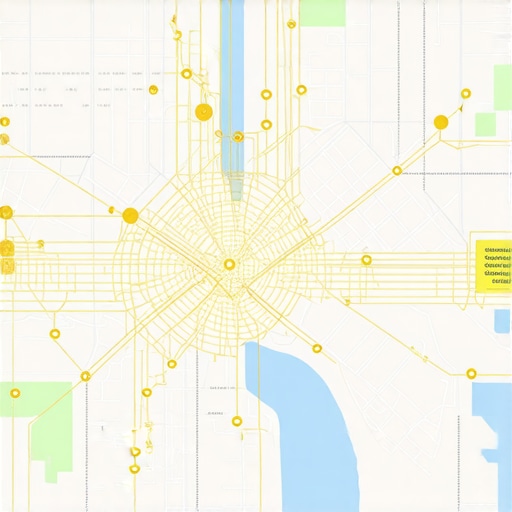
As we look toward 2025, the game is shifting away from single-source authority. Google’s Search Generative Experience is increasingly relying on multiple points of confirmation across the semantic web. This is why multi-node stacks are the future of local authority. If you only have one strong link, you have a single point of failure. If you have ten interconnected nodes, you have a fortress. For those of you in high-competition markets, the specific move for scaling map ranks in large cities involves creating geographically diverse nodes that cover the entire metropolitan area, not just your office address. I predict that within the next eighteen months, the ‘near me’ algorithm will prioritize entity breadth over raw proximity. My challenge to you: Go ahead and audit your top three cloud nodes tonight using the @id logic—it’s the fastest way to solidify your footprint before the next major core update hits.
The Brutal Reality of Local SEO That Most Agencies Hide
After years in the field, I’ve realized that the ‘secret sauce’ isn’t a secret at all—it’s just a lot of boring, precise work. My biggest lightbulb moment was discovering that Google’s local algorithm is actually quite fragile; it wants to trust you, but it’s terrified of being tricked. That’s why authority stacking unveiled the hidden power for local seo for me—it’s about providing so much corroborating evidence that the algorithm has no choice but to rank you. I also learned that why your authority stack fails to connect with local search nodes usually comes down to missing those tiny, hyper-local mentions that anchor your digital identity to a physical street corner. [image] Quality isn’t just about ‘Domain Authority’ (DA); it’s about geographical proximity and contextual relevance.
Resources I Use to Maintain a Competitive Edge
To stay ahead, you need more than just a tracking tool. I personally swear by the ultimate guide to building backlinks for local authority whenever I’m feeling stuck on link prospecting for a new client. For auditing, I don’t move a muscle without checking the local seo audit tool that actually finds map errors to catch those pesky NAP discrepancies that common scanners miss. I also recommend implementing the neighborhood watch link strategy for hyper local growth because it leverages community trust in a way that AI-generated guest posts never can. These are the foundations of every successful stack I build.
Take Control of Your Local Future Today
The local landscape is shifting, and while your competitors are chasing the latest ‘ranking hack,’ you now have the blueprint to build something truly sustainable. Don’t let the technical jargon intimidate you; start with one node, one stack, and one local link at a time. By achieving backlinks mastery boost your local seo authority in 2025, you aren’t just ranking for today—you’re securing your business’s presence for the long haul. Your hard work deserves to be the first thing your neighbors see when they need help. Have you ever felt like your map ranking was being ‘throttled’ even though you were doing everything by the book? Let me know in the comments below!