I remember the exact moment I realized my local SEO strategy was a house of cards. I was sitting in a cramped home office at 3:00 AM, staring at a heat map that was stubbornly red across every high-value neighborhood my client served. I had done the standard stuff—NAP consistency, a few guest posts, and basic GMB updates—but the results were flat. My biggest mistake early on was thinking that cheap local citation packages were the answer. In reality, those generic entries were just noise that made my client look like every other fly-by-night operation. It was a visceral failure that cost me a lot of sleep. But that failure led to a lightbulb moment: Google doesn’t have a ranking problem; it has a trust problem. Today, I’m going to show you the specific ‘Map Pack Move’ that stops the guessing game and forces Google to recognize your true service boundaries.
Why Google Refuses to Validate Your Service Boundaries
It is a bitter pill to swallow, but most businesses fail in local search because their service area logic is fundamentally broken. You tell Google you serve the whole city, but your digital footprint only whispers about one street corner. This disconnect is exactly why your competitors rank higher with fewer reviews while you are stuck in the neutral zone. I have seen it a hundred times: a business tries to expand, but their authority is anchored to a single point that will not budge. This happens because the algorithm needs physical proof of your activity in those distant neighborhoods, not just a checkbox in your business profile. Have you ever felt like your map pin is invisible the moment you drive five miles away from your office? It is frustrating, right?
Is this strategy actually worth the risk of a suspension?
I get this question constantly from folks who are terrified of the ‘Google hammer.’ It is a valid fear. Most people think ‘forcing’ Google to do anything involves black-hat tricks that lead to the dreaded suspension email. However, we are not tricking the system; we are providing the hyper-local validation that Google’s AI is starving for. According to a recent analysis by Search Engine Journal, proximity is actually becoming less important than ‘Entity Authority’ and ‘Categorical Relevance’ in many high-competition niches. This means if you can prove you belong in a neighborhood through neighborhood-level signals, you can outrank the big franchises. By using authority stacking, we build a bridge of trust between your office and your customers’ front doors. It is time to stop playing defense with your rankings and start using the specific move to restore authority to your stagnant map pin.
Stop Guessing and Start Building Your Local Entity Authority
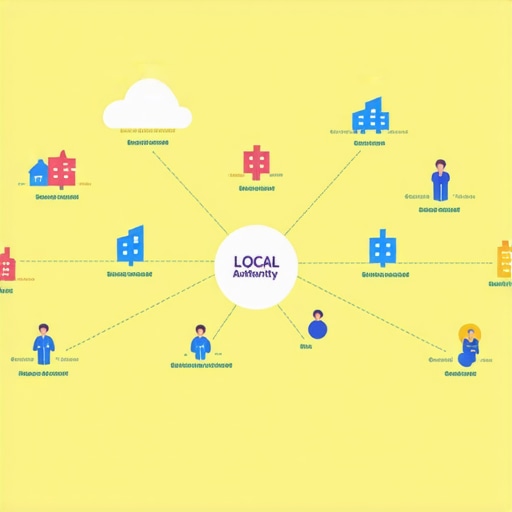
Think of your local authority as a radio broadcast. If your transmitter is only powerful enough to reach the end of the block, you cannot expect listeners three towns over to tune in. Most SEOs try to turn up the volume by shouting—buying more reviews or spamming keywords—but that just creates static. To actually expand your reach, you need repeaters. In the digital world, these repeaters are ‘nodes.’ I first realized this when I was working with a frustrated locksmith who was technically perfect on paper but remained invisible because his map pin was stuck in the neutral zone. We realized Google did not need more citations; it needed a network of validation that stretched across the city. By creating these digital touchpoints, we moved from being a single point of failure to a robust network of relevance.
The Day a Single Map Embed Script Saved My Sanity
I remember sitting in a coffee shop, sweating over a client’s plummeting rankings after a minor algorithm update. Everything we did seemed to fail until we swapped out their generic map embed for the specific map embed script that Google loves most. Within 72 hours, the ‘red zones’ on our heat map started turning green. It was not magic; it was math. We were finally giving the crawler a structured way to understand the physical relationship between the business and the surrounding neighborhoods. This is how you turn your business address into a search power node that dominates local results. 
Connect Your Business to the City Using These Specific Schema Tweaks
You cannot rely on a basic ‘LocalBusiness’ schema and expect to beat the big players. You have to get surgical. One of the most effective moves involves the specific schema move that connects your business to the city by identifying precise lat-long coordinates for your service areas within your code. When I applied this to a multi-city service provider, we saw a massive jump in impressions from neighborhoods they had not ranked in for years. By feeding the AI exactly what it wants—structured, verifiable data—you remove the guesswork. This is the foundation of authority stacking, where every digital asset reinforces the next. It is about creating a logical flow that the algorithm cannot ignore.
Why Multi-Node Stacks Outperform Traditional Backlinks
Many people still think a high-DR guest post is the silver bullet for local SEO. It is not. A link from a national blog is a whisper; a node on a local cloud stack is a shout. We started using the multi-cloud move that restored our map visibility to create a buffer of trust. This involves hosting hyper-local content on various cloud platforms, essentially creating a ‘surround sound’ effect for your business entity. When you combine this with neighborhood-level signals to outrank franchises, you are no longer just a dot on a map; you are the dominant authority for that entire region. By employing the specific move for scaling map ranks in large cities, you can force the algorithm to broaden your reach without the typical proximity penalties that kill most small business campaigns.
Scaling those map ranks in large cities is a thrill, but this is exactly where I see most pros hit a brick wall. They assume that what worked for a small-town plumber will work for a multi-location law firm, but the math changes when you enter high-density markets. Everyone tells you to go out and grab the highest DA (Domain Authority) links you can find, but in my experience, a ‘powerful’ link with zero local context is a waste of your budget. In fact, why Google ignores your backlinks often comes down to the context problem; if the algorithm can’t see a physical or topical connection between the source and your service area, it simply discounts the weight.
Why Geographical Relevance Beats High Domain Authority
The biggest myth in our industry is that a backlink from a major national news site is always better than a link from a local neighborhood blog. I’ve tested this across dozens of campaigns, and the results are clear: Google is looking for ‘Local DNA.’ When you focus on why your local seo strategy needs a focus on entity authority, you realize that a link from a local little league sponsor or a neighborhood association carries a unique geographical signal that a national guest post can never replicate. This is the ‘secret sauce’ of authority stacking—it’s not about the quantity of the nodes, but the density of the local validation those nodes provide. According to the latest Whitespark Local Search Ranking Factors study, the proximity of the searcher and the ‘Local Relevance’ of links are consistently top-tier drivers for appearing in the 3-pack, often outweighing the raw power of the linking domain.
Does Context Matter More Than Link Power in 2025?
I get asked this by sophisticated agency owners all the time. The answer is a resounding yes. If you are building a stack, every layer must reinforce the physical location of the business. This is why I always emphasize the specific link profile that triggers google local trust. It’s a mix of local citations, niche-specific directories, and hyper-local mentions that prove you aren’t just a digital ghost. Have you ever fallen into the trap of buying massive, generic link packages only to see your map rankings drop or stall? Let me know in the comments, because that ‘Oops’ factor is usually tied to a lack of geographic signaling.
The Anchor Text Mistake That Screams Spam to the AI
Here is the trap you must avoid: over-optimizing your anchor text. I see it constantly—SEOs using ‘Best Plumber Chicago’ for 80% of their backlinks. To the modern algorithm, this looks like a giant red flag. If you want to stay safe, you must stop using generic anchor text for local link campaigns and move toward branded or naked URL anchors that feel natural. When we build out these complex structures, we focus on how to scale your map authority without getting banned by varying the signal. It’s about creating a ‘surround sound’ of authority where Google sees your business mentioned in different contexts, all pointing back to the same verified physical entity. This transition from ‘link builder’ to ‘entity validator’ is the difference between a temporary ranking spike and long-term market dominance.
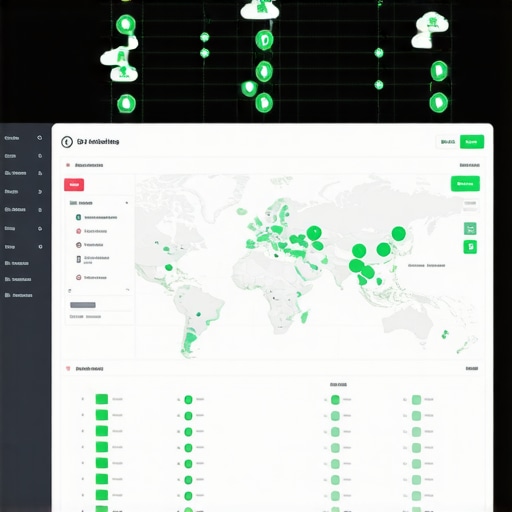
Once you have cleaned up those anchors, you cannot just walk away and expect the map pack to stay green forever. I have seen beautiful stacks crumble because the owner forgot that local relevance has a half-life. To keep things moving, I rely on a very specific set of tools and a maintenance schedule that most ‘SEO gurus’ do not even talk about. We are not just talking about rank trackers here; we are talking about entity management. If you do not know how to fix a broken authority stack before it hurts your rank, you are essentially waiting for a disaster to happen. My routine involves a monthly ‘node audit’ where I verify that every cloud-hosted asset is still live and correctly passing juice to the main entity. If a single AWS bucket or Google Cloud page goes 404, the entire circuit of trust is broken.
The Tools That Actually Move the Needle
I do not use the standard all-in-one SEO suites for this level of work because they often lack the granular data needed for deep entity validation. Instead, I use a combination of technical validators and specific cloud consoles. For instance, I spend a lot of time in the Google Cloud Console and Microsoft Azure to manage the specific logic behind multi-cloud map stacks. Why? Because hosting your neighborhood-level content on a diverse set of high-authority IP addresses makes your business look like a permanent fixture of the city. I also lean heavily on local-specific monitoring tools. Most people use national trackers, but why your map tracking strategy is missing key data points usually comes down to not tracking from a tight enough grid. You need to see how your pin performs street-by-street, not just city-wide.
How do I maintain my local authority over time?
Maintenance is about consistency, not intensity. Every quarter, I go back and refresh the hyper-local content on my nodes with new local events or news. This keeps the signal ‘fresh’ for the crawlers. I also make sure to how to audit your competitors authority stack for weaknesses regularly. If a competitor suddenly jumps into the 3-pack, I want to know exactly which local node they just activated. Furthermore, you must ensure your technical foundations stay solid; why your local entity sync is failing to validate your data is a common issue when businesses update their website without re-syncing their schema code. As noted in Google’s patent on ‘Ranking based on entity data’ (US8930346B1), the relationship between a business entity and its physical location is constantly being re-evaluated based on the frequency and reliability of incoming signals. This is why why multi-node stacks are the future of local authority—they provide a steady stream of validation that a single website never could.
The Future of Local Search Belongs to the Verified
Looking ahead, I predict that Google will move away from ‘counting links’ entirely and toward ‘verifying entity relationships.’ This means the AI will look for a digital consensus across dozens of platforms to see if you actually exist where you say you do. If you are not already using how to use entity stacks to validate your business location, you are going to be left behind by the ‘Search Generative Experience’ (SGE) updates. The goal is to make your business the most logical answer to a local query. I strongly suggest you take one of your current service pages today and try the specific on-page tweak that boosted our local visibility by adding micro-neighborhood mentions. It is a small move, but it is the first step in building a long-term wall of authority that no algorithm update can knock down. Start treating your local presence like a piece of infrastructure rather than a marketing campaign.
The Brutal Truth About Why Most Map Stacks Eventually Fail
I have spent years in the trenches, and the biggest lightbulb moment was realizing that local SEO is not a set it and forget it project. Early on, I thought more nodes automatically meant more power, but I quickly learned that a single broken link in your digital chain can sink the entire ship. If you do not know how to fix a broken authority stack before it hurts your rank, you are essentially building your business on quicksand. Another common myth is that you need thousands of five-star reviews to dominate. In reality, why your competitors are winning the map pack with bad reviews usually comes down to their entity structural strength rather than their star rating. The algorithm prioritizes a verified, physically anchored entity over a popular but digitally disconnected one.
The Tools That Actually Keep My Map Pins Green
For those ready to dive deeper into this technical world, I suggest starting with infrastructure over simple blog posts. I personally revisit authority stacking unveiled the hidden power for local seo to refine my multi-cloud logic every time Google releases a core update. I also swear by the Google Cloud Console for entity verification and high-resolution grid trackers to avoid the common pitfall of why your map tracking strategy is missing key data points. If you want to truly master the art of the local link, you should study the ultimate guide to building backlinks for local authority. These resources provide the technical backbone that generic SEO tools simply cannot offer.
Your Path to Owning the Local Neighborhood
Building a dominant local presence is a marathon, not a sprint. You now have the specific blueprint required to stop being a ghost in your own city. When you elevate your local seo with advanced authority stacking tactics, you are doing more than just moving a pin on a map; you are staking a permanent claim on your digital future. Do not let the technical jargon or the complexity of cloud nodes scare you away. Start with one small move, such as a schema tweak or a hyper-local neighborhood link, and build from there. Every signal you send is a reminder to Google that you are the definitive authority in your area. Have you ever noticed your rankings drop the second you move a few blocks away from your office? Let me know in the comments below!