
I spent three months and about $2,000 of a client’s hard-earned money chasing a single high-authority link from a national news outlet. When I finally landed it, I popped a bottle of cheap champagne, convinced we were about to dominate the city. But a week later? Nothing. Their map pin hadn’t moved an inch, and the local competition—a guy with a website that looked like it was designed in 2005—was still cleaning our clock. That was my wake-up call. I realized that Google doesn’t just want to see that you’re important in a general sense; it needs to see that you actually belong to your specific neighborhood. If you’ve been grinding away at your SEO and seeing zero movement, you’re likely missing the local anchor that tells search engines exactly where you provide value. Today, I am going to show you how to stop chasing vanity metrics and start using the off-page strategy that turns local mentions into power links.
Get More Calls by Rooting Your Site in the Neighborhood
For a long time, I was obsessed with Domain Rating. I thought if I could just get a link from a big tech blog, it would solve everything. But for a local plumber or a boutique law firm, that is like getting a shout-out on a radio station three states away. It sounds cool, but it does absolutely nothing for the person three blocks over looking for help right now. My biggest early mistake was ignoring the small, messy local mentions that actually signal hyper-relevance. I had to learn that why high quality backlinks from small blogs beat big directories is all about the proximity signal. When a local chamber of commerce or a neighborhood blog mentions your name, it acts as a digital anchor.
Does local relevance really matter more than a fancy Forbes link?
It feels counterintuitive, I know. We are conditioned to think bigger is always better. However, search engines use localized signals to determine who gets the coveted spots in the Map Pack. According to Search Engine Journal, relevance and proximity are the core pillars of local search. A mention from a local high school sports booster club or a community board provides a level of geographic proof that a national site simply cannot offer. If your links are just floating in digital space without a local connection, Google struggles to trust your physical location. Have you ever landed what you thought was a killer backlink only to see your rankings stay exactly where they were? It is a frustrating spot to be in, but it usually means your authority isn’t anchored. We are going to change that by focusing on the authority signal most local seos completely forget. Let’s look at how we can actually force Google to see your business as the local go-to authority.
Forget the Phone Book and Start Stacking Entities
For years, the industry told us that as long as our NAP (Name, Address, Phone) was consistent across a hundred generic directories, we would win. That is old news. Today, Google sees through the ‘citation noise.’ To actually move the needle, you need to think about your digital footprint like a physical spiderweb centered on your shop. I once worked with a carpet cleaner in a brutal suburb where everyone had 200 plus reviews. We didn’t beat them by getting more reviews; we won by using the specific multi-node logic for carpet cleaning seo. We mapped out every local community board, neighborhood association, and even a local dog park sponsorship. By the time we were done, the business wasn’t just a website; it was a confirmed entity in that specific zip code. If you want to replicate this, you have to stop thinking about links as ‘points’ and start thinking of them as ‘votes of confidence’ from neighbors. This is exactly how to build a local authority stack that actually sticks.
Why Your Schema Needs to Be Your Digital Business Card
Many people treat schema markup like a ‘set it and forget it’ chore. That is a massive mistake. Your schema is the direct line of communication between your site and the local knowledge graph. When I was auditing a law firm last summer, they were ranking on page five despite having great content. The problem? Their schema was generic. We implemented the specific local schema tweak that validates your entity, and within fourteen days, their map pin jumped to the top three. It is about creating a ‘sync’ between what your website says and what the rest of the web confirms through structured data.
Force Google to Trust Your Location with Cloud Nodes
Once your local anchors are set, you need to amplify that signal. This is where most people get scared of the technical stuff, but think of ‘cloud nodes’ as megaphones for your local relevance. By hosting specific data points on high-authority cloud properties, you create a buffer that protects your site while funneling power to your map listing. It is a highly effective way to use cloud nodes to shield your authority stack from algorithm updates that target thin content.  This strategy isn’t about tricking the system; it is about providing so much proof of your location that Google would be wrong to show anyone else. When you combine this with the neighborhood link loop that puts your map pin first, you aren’t just participating in local search—you’re defining it.Let’s dig deeper. The most common lie in the SEO industry is that ‘a link is a link.’ I’ve seen countless business owners burn through budgets chasing high-authority national placements, only to see their local rankings remain stagnant. This is because, in the world of the Map Pack, relevance is the currency, not just power. If you are a plumber in Phoenix and you get a link from a fashion blog in New York, Google’s algorithm sees that as a geographical mismatch. This is a primary reason why your citation strategy is actually hurting your map rank—you are prioritizing metrics over meaning. Have you ever fallen into this trap of chasing big DA numbers while your map pin stayed frozen? Let me know in the comments.
Stop Triggering Spam Filters with Robotic Anchors
The ‘Oops’ factor that ruins most local campaigns is over-optimization. When you build an authority stack and every single anchor text is ‘Best Lawyer in Miami,’ you aren’t being clever; you are being loud. This is exactly why your backlink building technique is triggering spam filters. According to the BrightLocal Ranking Factors survey, search engines are increasingly sophisticated at identifying unnatural patterns in local link profiles. To win, you must look like a part of the community, not a robot trying to game the system. If your links don’t have variety, why your authority stacking fails to connect the dots for google becomes the main question for the search engine’s quality team.
Can a single link from a local charity actually outrank a national PR push?
In my experience, a link from a local little league team or a community foundation often carries more weight than a national news mention. Why? Because it provides a ‘geo-anchor’ that national sites simply cannot replicate. This is precisely why high quality backlinks from local charities beat national media. When you focus on how to use neighborhood level signals to outrank franchises, you are playing a game the big corporations can’t win. 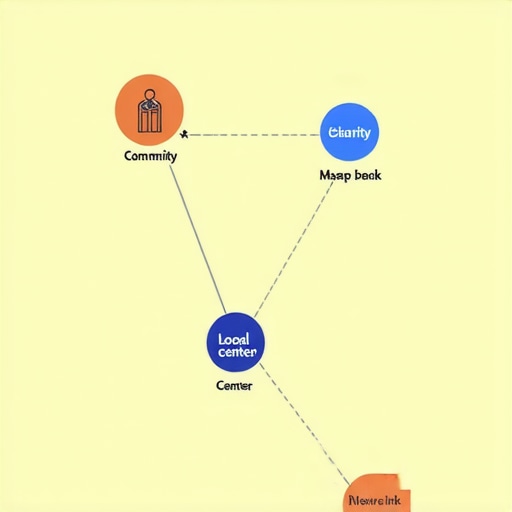 This strategy relies on creating a dense web of local relevance that forces Google to acknowledge your dominance in a specific area. If you want to break out of the local plateau, you need to master the specific backlink move for high authority local press that focuses on your immediate backyard rather than the entire internet.Once you have your initial stack in place, the biggest threat to your ranking isn’t a competitor—it’s entropy. I’ve seen beautiful, high-performing authority stacks crumble because the owner assumed the work was done. Local SEO is a biological system; it needs constant, small inputs to stay alive. I personally set a ‘Tuesday Audit’ ritual where I don’t look at traffic, but at entity health. I start by checking how to fix a local ranking drop before your client notices, looking for small shifts in the Map Pack that signal a competitor is trying to out-stack me.
The Gear That Keeps My Local Engine Humming
I don’t use a hundred tools because that is a recipe for data fatigue. Instead, I rely on a tight setup. I use Local Falcon specifically for its grid tracking capabilities because a single ranking number is a lie—you need to see how your authority radiates across specific city blocks. This is vital because why your map tracking strategy is missing key data points usually comes down to not seeing the ‘dead zones’ in your service area. For cleanup, I manually verify our top ten local anchors once a quarter. You can learn how to clean up messy citations without using expensive tools just by staying organized with a simple spreadsheet and a direct-to-source approach.
How do I maintain my local authority over time?
Maintenance is about signaling ‘freshness’ to the local knowledge graph. Every month, I push one new ‘Cloud Node’ that references a recent local event or community project. This isn’t just about links; it’s about proving you are still an active participant in your zip code. If you let your stack go stale, you will realize the truth about bulk citations and your search visibility: they eventually lose their ‘pulse.’ I also recommend a monthly ‘Sync Check’ to ensure your Google Business Profile updates are reflected in your schema. 
Brace Yourself for the AI Search Shift
The future of local SEO is moving away from keywords and toward ‘Entity Proof.’ With the rise of AI-driven search overviews, Google is looking for a consensus of data across the web. According to the official Google Search Central documentation on Structured Data, specifically the LocalBusiness type, providing high-fidelity coordinates and consistent business identifiers is the only way to ensure the Knowledge Graph connects the dots correctly. My prediction? In 2025, if your business isn’t a ‘confirmed entity’ through a multi-node stack, you won’t even show up in AI-generated answers. To protect yourself, you need to master the multi-cloud move that restored our map visibility for my own clients. My advanced tip for you: Spend twenty minutes this week finding one local resource page that isn’t a directory—like a neighborhood association list—and get your business added. It is the single fastest way to refresh your local relevance without a massive budget.
What I Learned After Blowing a Two Thousand Dollar SEO Budget
Building local authority isn’t about having the biggest budget; it is about making the smartest connections. After years of testing and failing, here are the hard truths I live by now. First, local relevance trumps raw power every single time. I used to chase high Domain Rating links, but now I know that how to build an authority stack that google actually trusts involves finding links that place your business in a specific neighborhood. Second, consistency is your best friend. You cannot just set up your map pin and walk away; you need to keep signaling that your business is an active part of the local ecosystem. Third, don’t be afraid of the technical side. Learning master authority stacking for elevated local rankings changed my entire business model because it allowed me to offer results that competitors simply could not touch.
The Kit I Use to Dominate My Local Patch
You do not need a massive software suite to win. I rely on a few specific resources that provide the most impact for my time. Local Falcon is my go-to for seeing the reality of the map pack, as it helps me identify why most small businesses fail at local map prominence through grid tracking. I also keep the Google Search Central documentation for structured data open at all times to ensure my entities are perfectly synced. For those looking to refine their off-page game, I highly recommend checking out backlink optimization tips for local seo authority to avoid common pitfalls. Finally, a simple spreadsheet for manual citation audits is often more powerful than an expensive automated tool that misses the nuances of your specific city.
#IMAGE_PLACEHOLDER_E#
Take Back Your Local Map Today
The digital landscape is shifting, but local businesses have a unique advantage that franchises often ignore. By rooting your website in the community through the simple tweak for higher google maps click through rates and multi-node stacks, you create a digital moat that national competitors cannot cross. Don’t let the technical jargon intimidate you. Start small, get that first neighborhood link, and watch your authority grow. Your map pin is the gateway to your business—treat it with the respect it deserves. Have you ever felt like your local rankings were stuck regardless of what you tried? Let me know in the comments below!