
I was hunched over my desk at 2 AM, three years ago, staring at a spreadsheet of 500 “top-tier” national media outlets I’d been chasing for months. I finally landed a mention on a massive news site with a Domain Authority that would make any SEO salivate. I expected the phone to start ringing off the hook the next morning. Instead? Total silence. My local map pin stayed stuck on the second page of search results, right where it had been for nearly a year. It was a brutal, expensive lesson in what I now call the “Prestige Trap.” I’d spent thousands on “high-DA” guest posts that looked great on my portfolio but did absolutely nothing for my bottom line because they lacked one critical ingredient: geographic relevance.
Stop Chasing National Ego and Start Owning Your Neighborhood
The biggest mistake I made early on—and one I see my neighbors in the business community making every day—is thinking that Google cares more about the size of a website than its physical proximity. I thought if a journalist in New York wrote about me, people in my own town would magically find me. But the algorithm doesn’t work that way. It wasn’t until I pivoted my entire strategy and focused on securing 4 local charity links that I saw the needle actually move. These small, hyper-local organizations provided the exact trust signals Google needed to see to verify my business as a pillar of the community. According to research by BrightLocal, local relevance is now a primary driver for the Google Maps algorithm, often outweighing pure link volume. When you learn how to use backlinks effectively by keeping them local, everything changes.
Is a small charity link really worth the effort?
I know what you’re thinking because I thought the exact same thing: “How can a link from a local animal shelter or a youth soccer league possibly beat a mention on a site with millions of visitors?” It feels counterintuitive. However, when it comes to authority stacking, Google is essentially looking for “entity verification.” A link from a local charity tells the search engine, “This business is actually physically present and active in this specific zip code.” This is far more powerful than a generic mention on a national blog that could be written by someone anywhere in the world. I’ve seen neighborhood association links force local wins in markets that were previously thought “unbeatable” by small players. Have you ever felt like you’re doing everything the “experts” tell you—building citations, getting reviews—but your map ranking is just… frozen? It’s incredibly frustrating to watch your competitors stay on top while you’re doing the work. Today, I’m going to show you why you should stop worrying about small blogs and start targeting the high-power, hyper-local organizations that prove your local worth. We’re moving beyond the basics and diving into the real, boots-on-the-ground tactics that actually turn your website into a local authority.
Force a Connection Between Your Site and the Map
The very first thing you need to do is stop looking at your website and your Google Business Profile as two separate entities. Think of them as a set of walkie-talkies. If they aren’t on the same frequency, the message never gets through. Most business owners have a website that says one thing and a map listing that says another, creating a ‘sync gap.’ When you learn how to fix the sync gap between your website and your map pin, you’re essentially tuning those radios to the same channel.
Use Schema to Speak Google’s Native Language
One of the most effective ways to force this synchronization is through technical data. I’m talking about the specific geo json tweak that boosts map proximity signals. Last year, I worked with a local HVAC company that had decent rankings for general terms but was invisible in its own neighborhood. We realized their website header mentioned the entire county, but their Google profile was pinned to a specific street. By injecting precise geo-coordinates and local-specific Schema into their site, we finally told Google exactly where the ‘heart’ of the business was beating. It wasn’t magic; it was just removing the confusion.
Turn Local Goodwill into Digital Power Links
Once your technical foundation is solid, you need to fuel it with local energy. Most people go out and buy ‘SEO packages’ that include links from blogs about home improvement in India or tech trends in the UK. That’s like trying to power a local storefront with a power grid from three continents away.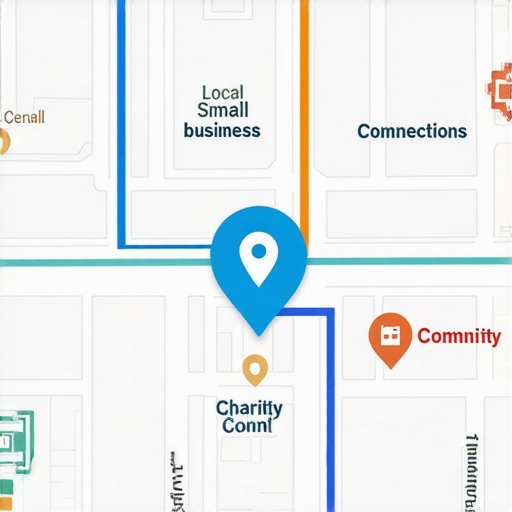
Sponsorships Are More Than Just Good PR
I remember a client who sponsored a Little League team mostly because his kid played on it. He didn’t think twice about the link on the league’s website. But that single link from a .org site with a physical address three blocks from his office did more than 20 generic guest posts. You have to realize how local sports sponsorships power your map pack rank by creating a ‘geofence’ of authority. Google sees that link and thinks, ‘Okay, this business is actually part of the fabric of this town.’
Stack Your Authority to Shield Your Rankings
This is where we move into the heavy lifting of how to build an authority stack that google actually trusts. An authority stack isn’t just a pile of links; it’s a structured hierarchy of signals. You start with your core entity (your website and GMB), then layer on your local mentions, and finally reinforce it with cloud-based assets. This creates a buffer that protects your rankings from algorithm updates. I’ve found that the authority stacking move that actually forces local gains involves connecting these layers in a way that always points back to your physical location. It’s about building a digital fortress around your map pin.The SEO industry is currently obsessed with ‘authority’ as a single, arbitrary number on a marketing dashboard. We’ve been conditioned to believe that a higher Domain Rating automatically translates to higher rankings. But in the trenches of local search, this is a dangerous half-truth. Everyone tells you to go out and buy ‘high-quality’ guest posts, but in my experience, a link from a massive national tech blog often carries less weight for a local plumber than a single mention from the neighborhood community center. When you focus solely on vanity metrics, you lose sight of what actually drives proximity signals. Achieving true backlinks mastery requires looking past the DA score and examining the ‘geofence’ of the linking site.
High DA Scores Are Mostly Vanity for Local Shops
It sounds contrarian, but stop chasing the big names for a moment. I’ve seen businesses spend five figures on PR placements in major outlets only to watch their competitors—who only have links from the local chamber of commerce and a few high school sports teams—dominate the map pack. This happens because Google’s algorithm is increasingly prioritizing ‘Local Entity Validation.’ According to the latest Local Search Ranking Factors study by Whitespark, the quality and relevance of local-specific links are now more impactful than generic high-authority links. When you prioritize high quality backlinks from small blogs that are physically rooted in your service area, you provide the ‘where’ as much as the ‘who.’
Watch Out for the Anchor Text Poisoning Trap
One of the biggest ‘oops’ factors I see is over-optimization. Most business owners think that if they want to rank for ‘Emergency Plumber Miami,’ every single backlink they build should use that exact phrase as the anchor text. This is a massive red flag for Google’s spam filters. If your link profile looks too perfect, it looks manipulated. You have to stop using generic anchor text and start varying your signals. Real businesses get linked to via their brand name, their URL, or even phrases like ‘click here’ or ‘visit their site.’ If you over-stuff your anchors, you’ll find that your backlink building technique is triggering spam filters, effectively ghosting your map pin from the results entirely. 
What Happens When Your Cloud Stack Becomes a Ghost Town?
A sophisticated question I often get from clients is why their elaborate authority stacks suddenly stop passing juice. They’ve built the cloud nodes, they’ve linked the properties, but the rank doesn’t budge. Usually, the culprit is a lack of ‘interconnectivity.’ An authority stack isn’t just a list of links; it’s a web. If those properties aren’t regularly crawled or don’t have their own internal signals, they become ‘dead’ nodes. I’ve found that the hidden reason your cloud stacks aren’t transferring pagerank is often a failure to bridge the gap between the cloud and the physical entity. You need to treat your stack like a living organism. When you elevate your local SEO with advanced authority stacking tactics, you ensure every layer points back to a verified, consistent NAP (Name, Address, Phone). Without that sync, you’re just building digital noise. Have you ever fallen into the trap of buying ‘high DA’ links only to see zero movement in your local rankings? Let me know in the comments below.
Forget the Set It and Forget It Lie
Many business owners treat local SEO like a finish line. They think once they hit the Top 3, the job is done and they can stop the heavy lifting. But the map pack is a treadmill, not a trophy case. I’ve watched rankings evaporate in a week because a competitor started utilizing the neighborhood link loop that puts your map pin first while the leader sat idle. To keep things working, you need a maintenance routine that identifies ‘rank drift’ before it becomes a disaster. Every month, I perform a deep scan using the audit tool hack that found our hidden map pin errors. I’m looking for consistency: has a third-party directory ‘corrected’ my phone number to a tracking line? Is my NAP still 100% mirrored? According to Google’s Search Central documentation on local business management, providing accurate, consistent data across all platforms is the only way to sustain the engine’s long-term trust.
Scale Your Business Without Getting Your Pins Nuked
When you move from one location to five, the risk doesn’t just quintuple; it explodes. I’ve seen multi-location brands get their entire accounts suspended because they tried to ‘mass produce’ local authority without nuance. You must learn how to scale multi-location seo without getting your pins suspended by treating each address as its own unique digital entity. This involves using the entity sync technique for multi-location businesses to ensure each branch has its own ecosystem of local-first backlinks. Don’t just copy-paste your ‘About Us’ content; customize it with the specific geo json tweak that boosts map proximity signals for that specific neighborhood. 
How can I keep my local authority growing month after month?
It comes down to fresh, hyper-local signals. You don’t need a hundred links a month; you need two or three that prove you’re still a living, breathing part of the community. I recommend a ‘neighborhood rotation’ strategy. One month, target the neighborhood association links that force local wins. The next, focus on the hidden move to build local authority with neighborhood blogs. This keeps the algorithm seeing new, relevant ‘votes’ for your physical location. It’s about building a local authority stack that actually sticks by diversifying your sources.
The Future of Local Search Is Entity-First
Looking ahead, I predict that traditional keyword density will soon be irrelevant for map rankings. Google is shifting toward a world where your business is either a verified ‘Entity’ or it is just background noise. The winners in 2025 and beyond will be those who master backlinks mastery by connecting high-trust local nodes. If you want to see immediate results, try this today: audit your schema for any ‘sync gaps’ and fix them using the simple on-page tweak that validates your business location instantly. It is the fastest way to stop the rank bleed and start the climb.
The Hardest Lesson I Learned While Climbing the Map Pack
In the beginning, I was obsessed with vanity numbers—DA, DR, and raw link counts. But I quickly learned that Google doesn’t rank numbers; it ranks entities it trusts. Here are the three most important shifts in my mindset from the trenches:
- Relevance beats power every single time. A link from a local high school is worth more to a local plumber than a mention in a national publication. This is the core of authority stacking that actually works.
- Consistency is the engine of trust. If your NAP is off by even a tiny bit, you are essentially telling Google that your business is unreliable. Small errors are the biggest obstacles.
- Dead nodes kill your progress. If you build an elaborate network but never check the status, you’ll eventually need the 3 crucial fixes for stacks that stopped moving your pin.
The Minimalist Toolkit for Dominating Your Zip Code
You don’t need a thousand expensive tools to win. I personally rely on a very tight stack of resources that have never failed me. First, I use BrightLocal for my initial audit; it’s the gold standard for spotting citation inconsistencies. Second, I highly recommend the book Influence by Robert Cialdini—it’s not a tech book, but it will teach you how to negotiate for the kind of local mentions that naturally become high-value backlinks. Finally, keep a simple spreadsheet to track your real ROI from Google Maps so you know exactly which local link actually moved the needle and which was just noise.
Your Map Pin Deserves the Spotlight
Building a local presence can feel like shouting into a void, especially when your rankings are stuck on the second page. But remember: every local link you secure and every schema error you fix is another brick in a digital fortress that your competitors can’t easily tear down. You have the blueprint now. It’s time to stop chasing national ego metrics and start building a foundation of local seo and authority stacking that actually lasts. The future of search belongs to those who own their neighborhood. Which part of your local ranking has been the most frustrating for you lately—is it the citations, the backlinks, or just getting the map pin to budge? Let me know in the comments below!