I’ll never forget the sinking feeling in my chest when I opened that monthly SEO report and saw ‘Domain Authority 70 Guest Post’ right next to a $500 invoice. I clicked the link. It was a blog about ‘Lifestyle’ that hadn’t been updated in three months, and my local service business was sandwiched between a crypto review and a guide to vegan cat food. It was a ghost town. My rankings hadn’t budged, and my phone was as silent as a tomb. That was the day I realized that the big agency link-building machine is often just a high-priced paperweight for small business owners.
Stop Chasing Global Clouds and Start Winning Your City Block
I spent years thinking that if I could just get a mention on a big national site, my local map rankings would skyrocket. I was wrong. In fact, why generic guest posts fail your local seo test is a lesson I learned the hard way after burning through thousands of dollars. The truth is, Google’s local algorithm cares far more about where you are than how ‘famous’ your link source is. After I fired that agency, I had to figure out how to fix your local backlink profile after a bad agency had cluttered it with irrelevant junk. I stopped looking for high DR and started looking for high proximity. Today, I am going to show you exactly how to bypass the middlemen and secure four specific types of links that actually move the needle in your neighborhood.
Is building your own links actually worth the extra sweat?
You might be worried that doing this yourself takes too much time. I get it. You have a business to run. But consider this: BrightLocal’s research consistently shows that local relevance is a top-three ranking factor for the map pack. A single link from your local Chamber of Commerce or a neighborhood resource list carries more ‘geo-weight’ than ten guest posts from a site based in another country. Have you ever felt like you were paying for SEO results that never actually showed up in your bank account? We are going to change that by focusing on the high power backlink hiding in your local chamber of commerce and three other ‘unfair’ advantages your competitors are ignoring. This isn’t about being a tech wizard; it’s about being a visible part of your community.
Steal the Spotlight with Hyper-Local Resource Lists
Think of your local link profile like a neighborhood barbecue. You don’t need a celebrity from three states away to show up; you need the guy next door who everyone trusts to vouch for you. The most overlooked goldmine in local SEO is the neighborhood resource list. These are often messy, hand-curated pages on community sites, local libraries, or even ‘neighborhood watch’ blogs. I remember a specific project for a local plumber where we stopped obsessing over national metrics and focused on how to find untapped neighborhood links your competitors missed. By getting him listed on a ‘trusted local contractors’ page run by a neighborhood association, his map pin jumped from the second page to the top three in less than a month. It wasn’t about the power of the site; it was about the proximity of the signal.
Leverage the Authority Hiding in Plain Sight
Most business owners treat their Chamber of Commerce membership like a sticker for the front window. In reality, it is a high-octane fuel source for your digital presence. When you understand the high power backlink hiding in your local chamber of commerce, you realize it is one of the few places where you get a high-trust, geo-relevant link that Google actually rewards. Don’t just take the default directory listing. Offer to write a community update or provide a member-to-member discount that requires a dedicated landing page on their site. This creates a contextual link that signals your business is a pillar of the local economy.
Chain Your Digital Assets Together for Maximum Power
If you want to dominate the map pack, you have to stop thinking about links as isolated islands. You need to build a bridge between them. This is where authority stacking strategies to dominate local search come into play. Imagine your business as the center of a spiderweb. Every social profile, directory listing, and local mention needs to point back to your main entity in a way that reinforces your location.  When we implemented this for a struggling landscaping company, we didn’t just build links; we synced their data across multiple nodes. This is the map pack move that forces google to trust your service area because it provides consistent, redundant proof of your physical location.
Connect Your Business to the City with Technical Precision
Beyond just links, you need to tell the search engine’s ‘brain’ exactly where you are through code. Using the specific schema move that connects your business to the city involves more than just a NAP (Name, Address, Phone) update. It’s about embedding your geographic coordinates and service area directly into your site’s header in a way that correlates with your local backlinks. If you are seeing a dip in your positions, learning how to use authority stacks to combat negative rank trends can save you from a complete visibility blackout. You are essentially building a digital fortress around your local reputation that is much harder for competitors to knock down than a simple list of keywords.It is a common misconception that SEO is just a high-stakes numbers game. In my experience, ten links from your own city’s high school sports boosters and local nonprofits will outrank a hundred ‘niche edits’ from irrelevant sites every single time. This is where why google ignores your backlinks the context problem becomes a painful reality for most business owners. If the search engine cannot see a clear, logical path between your physical location and the source of the link, it simply discounts the power entirely. Most ‘experts’ tell you to chase high Domain Rating (DR), but I have seen businesses dominate the map pack with links from sites that barely have a metric to their name, simply because they were hyper-relevant to the local community.
Stop Obsessing Over Domain Rating
Everyone says you need a DR 50+ link to see movement, but in my experience, proximity beats power. A research piece by Whitespark on local search ranking factors confirms that while citation volume is declining in importance, the quality and ‘localness’ of those mentions are more critical than ever. When you buy a generic guest post, you are often falling into the hidden danger of cheap link packages for small businesses. These links are frequently hosted on ‘link farms’ that Google has already flagged. Instead of boosting you, they act as a red flag that your site is trying to manipulate the algorithm without providing actual local value. This is why I advocate for authority stacking the game changer in local seo because it builds a layer of trust that cannot be faked with a credit card.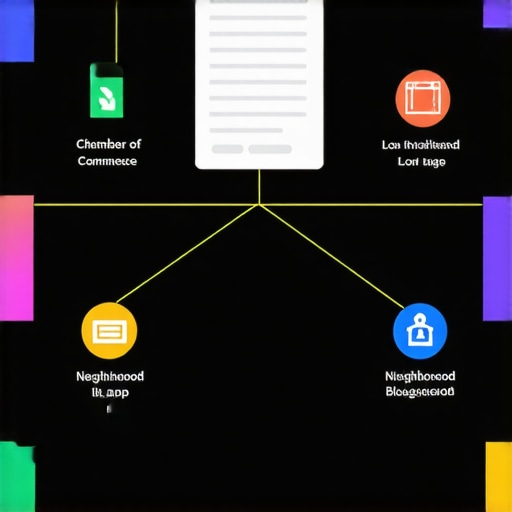
The Invisible Trap of Generic Anchor Text
I have seen countless local campaigns stall because the business owner used ‘Plumber in Chicago’ for every single backlink anchor. This looks incredibly unnatural. To stay safe, you need to stop using generic anchor text for local link campaigns and move toward branded or naked URL anchors that appear organic. If every site pointing to you uses the exact same keyword phrase, you are practically begging for a manual review. You have to learn how to build an authority stack that doesnt get flagged by diversifying the way other sites talk about you. The goal is a digital footprint that looks like a community of people recommending a neighbor, not a bot farm spinning keywords.
Does your digital footprint actually prove you are on Main Street?
This is the advanced question most people forget to ask. It is not enough to just have links; those links need to be part of a validated data loop. Many campaigns fail because why your local entity sync is failing to validate your data is a mystery to the business owner. If your Google Business Profile says one thing, your Chamber of Commerce link says another, and your local library mention has an old phone number, the ‘stack’ crumbles. This lack of synchronization creates a trust gap. Have you ever fallen into this trap where your information was scattered and inconsistent across the web? Let me know in the comments, and let’s discuss how to clean it up.Cleaning up a messy backlink profile is just the beginning of the fight. If you want to maintain those hard-earned rankings, you need a system that doesn’t crumble the moment you stop paying attention. I’ve seen businesses hit the top three and then vanish because they treated their SEO like a one-time project rather than a living ecosystem. To prevent this, you have to master the art of growing your presence without alerting the ‘spam’ sensors. You need to understand how to scale your map authority without getting banned, which usually happens when you try to expand into new neighborhoods too fast with low-quality signals. Instead, I advocate for a slow-drip approach that reinforces your physical location while gradually reaching into adjacent zip codes.
Keep your map pin from fading into the background
Maintaining a dominant position requires what I call a ‘Local Data Loop.’ This isn’t just about getting new mentions; it’s about ensuring the information Google sees is constantly being refreshed and validated. This is exactly why the local data loop strategy for sustainable map rankings is the backbone of my long-term campaigns. If you let your data go stale, Google begins to lose confidence in your entity. If you notice your positions slipping, you often need the specific move to restore authority to a stagnant map pin, which usually involves a fresh injection of hyper-local relevance from a neighborhood source you haven’t tapped yet.
The tech stack I actually use every morning
I don’t believe in having fifty different subscriptions. For my personal workflow, I focus on tools that reveal the ‘why’ behind a ranking drop. I rely heavily on the local seo audit tool that actually finds map errors because generic SEO crawlers often miss the nuanced NAP (Name, Address, Phone) discrepancies that happen at the directory level. When I’m looking for new opportunities, I don’t just look at DR; I look at geographic proximity. This is where backlink optimization tips for local seo authority become practical—I use tools to map out where my competitors are getting their ‘neighborly’ links and then I go get them too. 
How do I keep my authority stack healthy for the long haul?
The secret to longevity is consistency over intensity. You are better off getting one high-quality, local mention per month for a year than getting twelve in a single week and then doing nothing for eleven months. I recommend a monthly audit of your ‘nodes.’ If you find that why your local entity sync is failing to validate your data is a recurring issue, it usually means a third-party aggregator is pushing old info. According to research by Joy Hawkins at Sterling Sky, even small inconsistencies in how your business is mentioned across the web can dampen your ‘local trust score’ over time. Use a dedicated tracker to ensure your main authority stack remains synchronized.
Why the future of local search isn’t about keywords at all
I’m calling it now: we are moving toward an entity-based search era where Google cares less about ‘Plumber + City’ and more about the historical ‘footprint’ of your business. In the near future, AI-driven search engines will prioritize businesses that have the most verified, multi-dimensional data points. This means your ‘stack’ needs to be wider and deeper than just a few links. Stop worrying about keyword density and start worrying about how many trusted local sources are vouching for your physical location. My challenge to you? Go audit your top three competitors’ citations today using the neighborhood-level gap analysis I’ve described and find the one link they have that you don’t.
What the Big Agencies Never Told Me About Ranking
If I could go back to my first year in business, I’d stop trying to impress Google with big numbers and start impressing my neighbors. I used to think a massive national press release was the ultimate move, but I eventually found that the specific backlink move for high authority local press is actually about telling real community stories that people actually read. Another lightbulb moment for me was realizing why most small businesses overlook local library backlinks—they aren’t ‘sexy’ or high-DR in the traditional sense, yet they provide a rock-solid geographic trust signal that is almost impossible to fake. Remember, your authority stack is only as strong as its weakest link; keep your nodes tight and your location data consistent across every single mention.
Where I Go to Find the Real Data
I don’t leave my map rankings to chance or guesswork. To keep my profile clean, I regularly perform a manual check for how to audit your local backlink profile for spam gaps so I’m never caught off guard by a sudden algorithmic shift. I also live by my master authority stacking for elevated local rankings blueprint whenever I launch a new service area. For tracking map movement, I prefer tools that look at hyper-local, neighborhood-level data rather than just city-wide averages. The ‘near me’ factor is where the real local leads are hiding, and having a clear view of your proximity strength is vital.
#IMAGE_PLACEHOLDER_E#
Claim Your Spot at the Top of the Map
Building a dominant local presence isn’t an overnight task, but it is undoubtedly the most rewarding long-term investment you can make. When you finally stop chasing global vanity metrics and focus on the ultimate guide to building backlinks for local authority, you’ll find that the results aren’t just graphs on a screen—they are real phone calls and growing revenue. It’s time to stop being a digital ghost in your own city and start becoming the pillar of the community that search engines can’t ignore. Have you ever found a weirdly effective local link from a source everyone else was ignoring? Share your win in the comments below!