I was sitting in my home office, three cups of coffee deep, staring at a search result that didn’t make sense. My client—a local HVAC guy with twenty years of experience—was nowhere to be found. We had the citations, the reviews, and a beautiful website. Yet, his map pin had essentially ‘ghosted’ the entire neighborhood. It’s a gut-wrenching feeling when you know the business is real, but the internet treats it like a phantom. I’ve spent years tinkering with local SEO, and this was the moment I realized that the old-school way of just ‘submitting to directories’ was dead. I made the classic mistake of thinking more was better, buying cheap citation packages that only cluttered our data and confused the bots. Today, I’m showing you exactly how we brought that pin back from the dead by focusing on one thing: Local Entity Syncs.
Stop Blaming the Algorithm for Your Vanishing Pin
It is so easy to throw your hands up and say Google is just being difficult. But usually, the reason your business map pin is drifting away or disappearing altogether is a lack of validation. Google is looking for a ‘consensus’ about who you are and where you are. If your website says one thing, your social profiles say another, and your local data nodes are disconnected, the search engine gets confused. When Google gets confused, it plays it safe by not showing you at all. I learned the hard way that repairing a broken entity connection is far more powerful than just adding more backlinks. We needed to prove to the algorithm that our business wasn’t just a digital listing, but a physical pillar of the community. Have you ever logged into your dashboard only to find your rankings dropped overnight for no apparent reason?
Can Entity Syncing Really Beat a Massive Backlink Budget?
It sounds a bit like ‘SEO magic,’ and I was skeptical too. I used to think you needed a massive budget and thousands of links to compete with the big franchises. However, industry data from experts like Whitespark confirms that citation consistency and local signal accuracy remain top-tier ranking factors for the local pack. You don’t need to outspend the competition; you just need to out-sync them. We used a simple audit tool trick to find where our data was mismatched, and once we aligned our local nodes, the pin didn’t just reappear—it jumped to the top three. We’re going to dive into the specific steps to make your business data ‘talk’ to itself in a way that Google can’t ignore.
Stop the Identity Crisis with a Clean Data Loop
Think of your business data like witness testimony in a high-stakes court case. If one witness says the getaway car was blue and another says it was red, the judge throws the whole thing out. That is exactly what happens when your digital footprint is fragmented. I once worked with a family-owned bakery that was invisible despite having incredible cupcakes and three hundred reviews. We discovered they had four different phone numbers floating around from an old Yelp account and an abandoned Groupon campaign. To fix this, you have to learn how to clean up messy citations without starting over. You need to create a feedback loop where your website, your social profiles, and your map pin all whisper the same exact details into Google’s ear. When you provide this level of clarity, you stop the confusion that leads to your pin vanishing. Usually, why your local entity sync is failing to validate your data comes down to tiny discrepancies that humans ignore but bots flag as high-risk.
Build Your Authority Stack Without Getting Flagged
The real secret to staying at the top of the local pack isn’t just a single backlink; it is the structure of your data nodes. This is where authority stacking comes in. I like to think of it as building a digital fortress around your business. You aren’t just putting up a website; you are creating a network of high-authority assets that all point back to your core location. When we started building these for clients, we initially tried to go too fast and almost got a service-area business suspended. The key is knowing how to map out your authority stack for maximum node power without looking like a spammer.  By utilizing different cloud properties and indexing them strategically, you create a ‘consensus’ of authority. This is specifically effective in crowded markets because how multi-cloud stacks bypass local competition in high-density areas is by providing Google with more ‘votes’ of confidence than any standard directory listing ever could. It is about creating a massive footprint that feels organic and unshakeable.
Why High School Booster Club Links Beat Standard Citations
If you want to move the needle, you have to stop thinking about global authority and start thinking about neighborhood trust. I remember a small law firm that was getting crushed by national giants. They were spending $5,000 a month on ‘premium’ guest posts that did nothing. We switched their strategy to hyper-local placements. We sponsored a local little league team and a high school drama club. It sounds simple, but why high school booster club links beat standard citations for maps is because those links come from domains that Google knows are physically tied to your specific city. These are ‘un-fakeable’ signals. When a local school district site with twenty years of history mentions your business address, Google treats that as a gold-standard validation of your location. It’s the ultimate proximity fix because it proves you aren’t just a digital ghost, but a tangible part of the local community.Most experts will tell you that a backlink from a high-authority tech blog is the holy grail of SEO. But here is the hard truth I’ve learned after years in the trenches: Google doesn’t care about a link from a New York tech site when you are a plumber in small-town Ohio. In fact, why generic guest posts fail your local seo test is usually down to a complete lack of geographic relevance. I’ve seen businesses pour thousands into ‘premium’ link building only to watch their map pin stay frozen. The real power comes from what I call ‘contextual proximity.’ If the local library or a neighborhood historical society links to you, it signals to Google that you are a legitimate entity within that specific zip code. This is why google ignores your backlinks when they lack the necessary local flavor.
Why do competitors with fewer reviews still sit at the top?
It drives my clients crazy. They have 500 reviews, but the guy with 50 is beating them. According to the 2023 Local Search Ranking Factors survey by Whitespark, while review quantity matters, ‘sentiment’ and ‘keywords in reviews’ often carry more weight in the local algorithm. But beyond that, it’s often because that competitor has a more robust local data loop. They aren’t just getting reviews; they are building an authority stack that validates their physical location across multiple nodes. If you find yourself in this position, it’s likely why your competitor ranks higher with fewer reviews—they have better entity synchronization and stronger neighborhood ties. 
Avoid the trap of exact match anchor text
One of the biggest mistakes I see advanced SEOs make is over-optimizing their local links. They want every link to say ‘Best Plumber in Chicago.’ That is a massive red flag for the algorithm. In my experience, using your brand name or a ‘raw URL’ from a local news site is infinitely more effective than a keyword-stuffed anchor. This is why you should stop using generic anchor text for local link campaigns. You need to look natural. Google is looking for a pattern of organic growth, not a manufactured SEO campaign. If you go too heavy on the keywords, you end up with the ghost backlink problem killing your local domain authority. Have you ever fallen into this trap of over-optimizing? Let me know in the comments. We also have to be careful with how we connect our cloud properties. I’ve seen entire networks get burned because the connections weren’t masked correctly or the inter-linking was too aggressive. You need to know how to connect your cloud nodes without triggering a spam filter to ensure your authority stack remains a long-term asset rather than a temporary boost. By focusing on these nuances, you move from being a ‘directory submitter’ to a true local authority.Maintaining this digital fortress isn’t just a weekend project; it’s a constant process of refining and checking for ‘node drift.’ I’ve seen too many businesses build a beautiful setup only to let it rot by ignoring simple maintenance. I personally swear by grid-based tracking tools to keep an eye on things because they reveal the truth that a standard ranking report hides. When I use the local seo audit tool that actually finds map errors, I’m looking for the exact point where my client’s pin loses its ‘gravity’ in a specific neighborhood. This level of granularity is what separates the pros from the people just guessing. If you aren’t seeing your ranking strength in a 13×13 grid, you are flying blind. Experts like Mike Blumenthal at Near Media have long argued that the health of your digital entity—the ‘consensus’ Google forms about your business—is the primary driver of map visibility today. This means mastering authority stacking for elevated local rankings requires a toolset that goes beyond just checking if your website is live.
How do I keep my authority stack from crumbling over time?
The biggest threat to your rankings is actually ‘link rot’ and data decay. Over time, Google might lose confidence in a particular cloud node or a local citation if it hasn’t been updated or if the surrounding data changes. I make it a habit to perform a quarterly ‘Entity Health Check.’ This involves revisiting our primary nodes to ensure the inter-linking is still intact. Learning how to repair a broken entity connection in your authority stack is much easier when you catch it early. 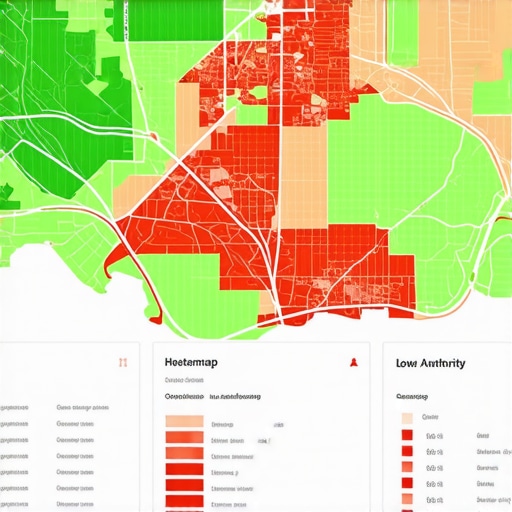 You should also be looking at how to build a authority stack that actually survives algorithm shifts by diversifying the platforms you use. If you rely on just one cloud provider, you’re vulnerable. Spread your nodes across different high-authority domains to ensure that if one goes down, the rest of your digital fortress stays standing.
Why the Future of SEO Is Local Entity Validation
As we look toward 2025 and beyond, I predict that ‘Search Generative Experience’ (SGE) will make entity validation even more critical. Google’s AI won’t just look for links; it will look for the ‘logic’ behind your business’s existence. This is why multi-node stacks are the future of local authority. The algorithm wants to see a web of evidence that spans social media, local news, and specialized cloud properties. To stay ahead, you need to start treating your local SEO like a data science project rather than just marketing. Grab a grid-tracking tool this week and run a scan for your most important keyword. You’ll likely find that the proximity fix isn’t about more links, but about cleaning up the nodes you already have.
Lessons from the Local SEO Trenches
Looking back at years of trial and error, I’ve realized that the biggest hurdle isn’t the competition—it’s the noise. Early in my career, I thought quantity was the goal, but I quickly learned about the hidden danger of cheap link packages for small businesses. They don’t just fail; they pollute your data. Another major realization was that consistency is more valuable than volume. One solid neighborhood link beats a hundred random directory entries every single time. Most importantly, I learned that if you don’t monitor your connections, you won’t know how to fix a broken authority stack before it hurts your rank until it’s too late. The ‘lightbulb moment’ for me was seeing that Google doesn’t just want data; it wants a story that makes sense across every platform.
The Tools That Saved My HVAC Client’s Ranking
You don’t need a thousand tools, but you need the right ones. For tracking, I rely heavily on grid-based visualizers. You absolutely have to use the local seo audit tool that actually finds map errors because standard ranking reports hide the proximity gaps. When it comes to building your fortress, building a cloud stack for your local service business using platforms like Amazon S3 or Google Cloud is a tactical move that provides the ‘un-fakeable’ authority Google craves. I also highly recommend keeping a simple spreadsheet of every niche citation you’ve ever built to prevent the data decay that leads to phantom map pins.
Stop Being a Digital Ghost and Own Your Street
The digital landscape is shifting, and the businesses that will survive are the ones that prove their physical relevance daily. Embracing authority stacking the game changer in local seo isn’t just about a temporary ranking boost; it’s about future-proofing your brand against every algorithm update Google throws our way. It’s time to stop guessing and start validating. By mastering authority stacking for elevated local rankings, you aren’t just a dot on a map—you are the local authority that customers trust. Go out there, clean up your nodes, and claim the top spot you’ve worked so hard for.
Have you ever seen your rankings drop after a simple website update or a minor address change? Let me know your experience in the comments below!