
I’ll never forget the Tuesday morning my phone rang, and a very confused lady told me she was standing in the middle of a park looking for my office. According to her Google Maps app, I was located right next to a duck pond. I wasn’t. I was three blocks away in a brick-and-mortar building that hadn’t moved in ten years. My heart sank. I had spent months trying to rank, only to realize my “digital signpost” was wandering around the neighborhood like a lost tourist. It’s a gut-punching feeling to know you’re losing real money because a piece of software thinks you’ve moved.
Your Pin is Playing Hide and Seek With Your Customers
It turns out, map pins don’t just “drift” because of a satellite glitch. Most of the time, it’s because Google is receiving conflicting signals about where you actually exist. Early in my journey, I made the classic mistake of thinking a single update on my Google Business Profile would fix everything. I was wrong. I ignored the messy trail of old addresses and inconsistent phone numbers scattered across the web. If you’ve ever felt like your business is invisible despite being right there, you probably need the specific move to restore authority to a stagnant map pin. Today, I’m going to show you how to anchor that pin so it never wanders off again. We are going to look at the “entity validation” process that forces Google to trust your physical coordinates.
Is this technical stuff actually worth the headache?
You might be thinking, “Can’t I just drag the pin back in the dashboard?” You can, but without fixing the underlying data, it will just drift back. It’s like putting a band-aid on a broken pipe. Data from BrightLocal suggests that 68% of consumers would stop using a local business if they found incorrect information online. That’s a huge chunk of change to leave on the table just because of a shaky digital footprint. I learned the hard way that you have to use entity stacks to validate your business location properly. If you don’t, you’re essentially telling Google you aren’t sure where you are, so why should they be? Have you ever checked your own listing only to find yourself located in the wrong zip code or on the wrong side of a highway?
Fix the Data Mess That Confuses Google’s AI
When I finally sat down to fix the citation gaps keeping me off the top 3, I realized my business was listed with three different suite numbers across four different directories. To a human, “Ste 100” and “Suite 100” look the same. To a localized search algorithm looking for precision, those are two different locations. This creates a “trust gap.” When Google’s bots crawl the web and find these discrepancies, they lose confidence in your location data. To protect the user experience, they might move your pin to a more “generalized” area or stop showing it altogether for high-intent searches. We need to create a unified front.
Clean Your Digital Footprint Before It Buries You
To get that pin to stick, you need to think of Google like a detective. If the detective finds three different versions of your story, you’re a suspect, not a local authority. I remember working with a local roofer who couldn’t break the top 10 despite having fifty 5-star reviews. We found a rogue Yelp listing from 2014 and a Chamber of Commerce link using an old landline number. We had to how to clean up messy citations without starting over to unify his identity. It’s about creating a single source of truth that the algorithm can’t ignore. This isn’t just about fixing typos; it’s about eliminating the digital noise that makes the AI second-guess your physical existence.
How Authority Stacking Actually Works
Once the data is clean, you start building the stack. Think of this as a signal amplifier. You don’t just want one megaphone; you want a whole stadium of speakers shouting the same coordinates. This is where you master authority stacking for elevated local rankings by using high-authority platforms like Google Drive, Amazon S3, or Microsoft Azure to host your business data. These nodes act as a buffer of trust. 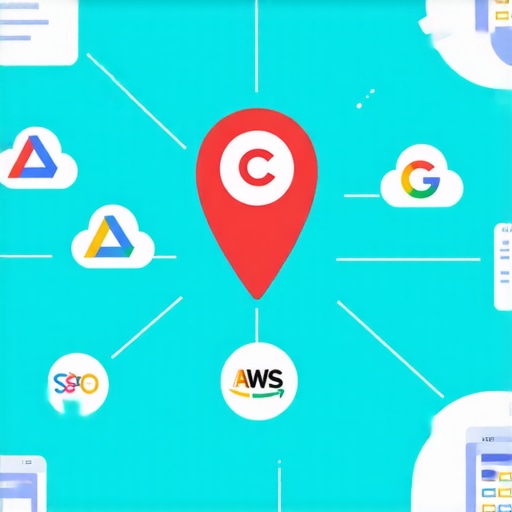
The Multi-Cloud Layer Strategy
When I first tried this with a dental clinic, I manually mapped out their service area on a custom Google Map and embedded it into a multi-layer cloud stack. Within two weeks, their pin didn’t just move; it expanded its reach across three neighboring zip codes. You aren’t just building links; you are building a fortress of relevance. You need to follow backlink building blueprints for local SEO success to ensure every external signal points back to that same geographic center. If the cloud signals don’t align with your on-site data, the stack collapses.
The Specific Schema Move That Seals the Deal
Then comes the technical handshake. You need to tell the bots exactly what your coordinates are in a language they speak fluently. By executing the specific schema move that connects your business to the city, you are hardcoding your latitude and longitude into the DNA of your website. It’s the difference between telling someone I am near the park and giving them exact GPS coordinates. You want to turn your business address into a search power node that vibrates with local relevance. I once spent three nights manually auditing a landscaping company’s profile because their pin was showing up in the middle of a lake. We discovered they had ghost citations from a previous owner. After we implemented the specific move to restore authority to a stagnant map pin, the lake location disappeared, and they reclaimed the top spot in their actual neighborhood. This level of precision forces Google’s AI to stop guessing and start ranking.Most people think the secret to ranking in the map pack is just a numbers game—more reviews, more citations, and more backlinks. But if you’re only focused on volume, you’re missing the forest for the trees. In my experience, the biggest mistake is treating local SEO like traditional organic search. I’ve seen countless businesses spend thousands on high-DR guest posts that do absolutely nothing for their map visibility. Why? Because why your authority stack fails to connect with local search nodes usually comes down to a lack of geographic intent. Google’s AI doesn’t just want to see that you are popular; it wants to see that you are relevant to a specific street corner.
Quantity is the noisy neighbor of local SEO
Everyone tells you to go out and get the highest Domain Authority links possible, but a link from a global tech blog doesn’t tell Google you’re the best plumber in Phoenix. In fact, why generic directory backlinks are hurting your map rank is a conversation I have almost weekly with frustrated business owners. They’ve filled their profile with ‘noise’ that dilutes their local signal. A study by Whitespark on local search ranking factors confirms that while link signals are critical, the proximity and local relevance of those links are what actually move the needle in the map pack.
Does your link profile actually look like a local business?
If a real local business exists in a community, it leaves a specific type of digital footprint. It’s mentioned by the local Chamber of Commerce, it sponsors a high school football team, and it’s listed in niche-specific regional directories. When you ignore these and opt for ‘power’ packages, you fall into the hidden danger of cheap link packages for small businesses. You end up with a backlink profile that looks manufactured by an algorithm rather than built by a local pillar of the community. 
The trap of over-optimized anchor text
Another massive ‘oops’ factor I see is the obsession with exact-match anchor text. If every single link pointing to your site says ‘Best Roofer in Chicago,’ you are begging for a manual review or an algorithmic filter. Real people link to businesses using the brand name, the owner’s name, or even just ‘click here.’ To stay safe and effective, you must stop using generic anchor text for local link campaigns and start mimicking natural patterns. This is why why your local seo strategy needs a focus on entity authority is the shift you need to make. You aren’t just building links; you are validating an entity. Have you ever fallen into this trap of chasing big numbers while ignoring your own backyard? Let me know in the comments.I used to think that once you hit the top 3, you could just coast and watch the leads roll in. I was dead wrong. Local SEO isn’t a trophy you win; it is a territory you have to defend every single day. If you stop pushing, your competitors will eventually find a way to out-stack you. To stay on top, you need to transition from ‘building’ to ‘maintenance and scaling’ mode. This starts with using the local seo audit tool that actually finds map errors before they become ranking killers. I personally use Local Falcon to run geo-grid reports every two weeks. Why? Because a standard rank tracker might tell you that you are #1 in your office, but it won’t tell you that you’ve dropped to #7 just two blocks away.
Why your rank tracking needs a geographic grid
If you are only looking at a single data point, you are flying blind. You need to see the ‘heat map’ of your authority. When I see a cold spot developing in a specific neighborhood, I don’t just throw more random links at it. I look for the multi-cloud move that restored our map visibility in similar situations. By deploying a targeted cloud node that specifically references that zip code and local landmarks, you can ‘re-heat’ that area and push your pin back into the top 3. This is about surgical precision, not brute force. 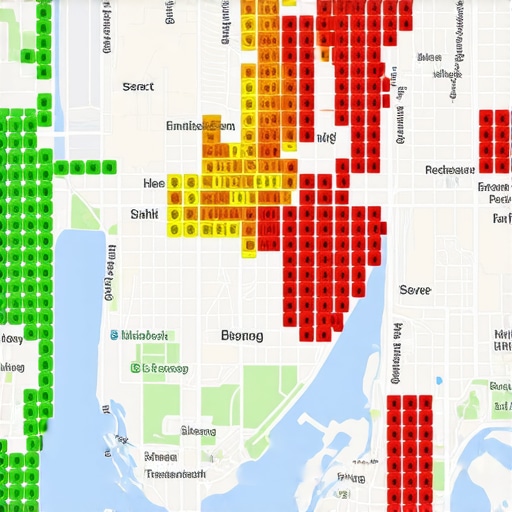
How do I keep my rankings from dropping next month?
The secret is what I call the local data-loop strategy for sustainable map rankings. You have to keep feeding the beast fresh, localized signals. This means regularly updating your Google Business Profile with geo-tagged photos and posts that mention specific street names or local events. As local search expert Joy Hawkins from Sterling Sky often notes, Google’s algorithm is increasingly sensitive to ‘category dilution’ and proximity, which is why keeping your core entity data clean is non-negotiable. If you let your data get stale, Google starts to wonder if you’re still the most relevant answer for a local user.
Scaling your reach without triggering a suspension
Once you’ve dominated your immediate backyard, the natural urge is to expand. But be careful. If you try to rank for a city 20 miles away without a physical presence or a legitimate service area proof, you’re asking for a suspension. I’ve learned how to scale your map authority without getting banned by using ‘edge nodes.’ These are high-authority local mentions and niche-specific directory links that bridge the gap between your office and the target city. I predict that as AI-driven search (like Google’s SGE) matures, the ‘proximity’ factor will become less about miles and more about ‘entity proof.’ This is why multi-node stacks are the future of local authority. They create a mesh of trust that covers a wider area than a single website ever could.
Take the 90-day stack audit challenge
My biggest tip for anyone reading this is to stop looking at your SEO once a year. If you want to stay relevant, you must audit your stack every 90 days. Check for broken cloud links, outdated schema, and rogue citations that might have popped up. If you haven’t done it yet, try this: go to your Google Business Profile and see if your primary category still matches the most profitable service you offer. Sometimes a simple category shift combined with a fresh authority stack is all it takes to jump-start a stagnant listing.
Three Myths About Local SEO That Held Me Back
I spent years chasing high Domain Authority scores, thinking they were the magic pill for my local visibility. The truth is much messier. Local relevance beats general authority every single time. One of the biggest eye-openers was realizing that unlocking the power of authority stacking for top local seo results isn’t about volume; it’s about the connection between your digital entities. I also learned that small, precise changes often yield the biggest rewards—like the specific on-page tweak that boosted our local visibility almost overnight by just clarifying our geographic coordinates to the bots. Finally, don’t ignore the technical foundation. If your schema is broken, your stack is just a house of cards. #IMAGE_PLACEHOLDER_E#
Tools I Trust to Keep My Map Pins Anchored
When you’re ready to stop guessing and start measuring, you need the right gear. I rely on Local Falcon for my geo-grid audits because it reveals the ‘cold spots’ in my ranking map. For citation management, BrightLocal remains a staple for keeping my NAP data clean across the web. To truly master the structure of your strategy, I recommend studying how authority stacking—the game changer in local SEO—actually functions at a nodal level. These resources aren’t just software; they are your eyes and ears on the ground.
Your Turn to Claim the Map Pack
The digital landscape is constantly shifting, but the fundamentals of local trust remain the same. You have the blueprints, the tools, and the strategy to stop being a ghost in your own city. Success in the map pack is about persistence and precision. Start with one small audit today, and within 90 days, you’ll be the authority everyone else is trying to chase. Your business deserves to be found, and local SEO is the key that unlocks that door. Have you ever noticed your rankings drop as soon as you move just a few miles away from your office? Let me know your experience with the ‘proximity’ struggle in the comments below.