I was staring at my rank tracker at 2 AM, and honestly, I wanted to put my head through the monitor. I had just dropped a few hundred dollars on a ‘premium citation blast’—you know the ones I mean—and my business was still stuck on the third page of the Map Pack, lagging behind a competitor who didn’t even have a decent website. It felt like I was shouting into a void. I followed all the standard advice, filled out every local directory from here to Timbuktu, and yet, nothing changed. That was my big ‘aha’ moment. I realized that Google doesn’t really care how many times you list your address on generic sites; it cares about who in your actual neighborhood knows you exist. I’d fallen into the trap of thinking volume equaled authority, which is exactly the real cost of cheap local citation packages that most small business owners don’t realize until it’s too late. I decided to stop chasing digital ghosts and instead wrote a check to the local high school football booster club. Within three weeks, my map pin started moving. It wasn’t just a coincidence; it was a signal. Today, I’m going to show you why these hyper-local links are the absolute heavyweight champions of local SEO and how you can stop wasting time on the generic noise that’s holding your rankings back.
Why your five hundred dollar citation package is collecting digital dust
I’ve been in the trenches of local SEO for years, and the biggest mistake I made early on was treating Google like a phone book. I thought if I just got my Name, Address, and Phone number (NAP) onto enough websites, I’d be the king of the mountain. But here’s the cold, hard truth: a link from a massive, generic directory carries almost zero ‘neighborhood weight.’ When I finally looked at my analytics, I realized that niche-specific citations beat generic yellow pages every single time because they provide actual context. Google’s algorithm is incredibly sophisticated now; it looks for ‘prominence’ as a core ranking factor. According to research cited by Search Engine Journal, local relevance and community engagement are becoming more critical than sheer link volume. When you get a link from a local high school booster club, you aren’t just getting a backlink; you are getting a ‘geographical validation’ that no offshore citation service can replicate. It tells Google that you are a pillar of that specific community.
Does a simple high school link actually move the needle?
I know what you’re thinking because I thought the same thing: ‘Is a tiny link on a high school sports page really going to outrank a massive directory?’ The answer is a resounding yes. These are what I call neighborhood links that actually move the needle because they are nearly impossible for your competitors to fake. You can’t just go to a freelancer site and buy 50 booster club links from five different countries. You have to actually be there. Have you ever spent weeks building out directory profiles only to see your map ranking stay exactly where it was? If so, you’re not alone, and it’s probably because your ‘authority’ lacks a local heartbeat. We are going to dive into how to identify these local gems and why they are the key to building backlinks for local authority that actually lasts.
Scour the digital footprint of your own backyard
To find these high-impact links, you need to think like a local resident rather than an SEO bot. Most business owners spend hours on generic directories, but the real power lies in how to find untapped neighborhood links your competitors missed by looking at who is actually sponsoring the local Little League or which community centers have ‘resource’ pages. Think of your backlink profile like a physical neighborhood: if everyone on the street knows you, the mailman (Google) doesn’t have to guess where you are. I remember a few years ago, I was working with a struggling family-owned bakery. We ignored the big ‘SEO lists’ and spent three days manually searching for every community meetup within a five-mile radius. It was a messy process of sending manual emails and even making a few phone calls, but once we secured the neighborhood watch link strategy for hyper-local growth, their ranking jumped from the bottom of page two to the top three in less than a month. It wasn’t about the quantity of links; it was about the undeniable geographical proof those links provided.
Why the local library and small charities are your secret weapons
Most people overlook the most obvious nodes of authority in their town. Local libraries, historical societies, and small neighborhood-specific charities often have high domain authority and even higher local relevance. When you get a mention from these entities, you are leveraging the secret to building backlinks from local historical societies which provides a level of trust that no guest post on a general blog can touch. These sites are essentially ‘trust hubs’ for Google. If you can contribute a useful resource—like a guide to local landmarks or a community service project—you earn a link that is geographically tethered to your service area. 
Stack your digital assets to survive algorithm shifts
Securing the link is only half the battle; you have to make sure Google understands the context. This is where building a cloud stack for your local service business becomes a tactical game-changer. Think of authority stacking as building a protective wall around your main site. You aren’t just getting one link; you are creating a network of interconnected nodes that all point back to your physical location. By using cloud properties to mirror your local data, you create a feedback loop that reinforces your proximity to the searcher. It’s the difference between having one person say they know you and having an entire crowd chant your name.
Force Google to see your real-world location
To make this work, you must be surgical with your data. You need to how to sync your website metadata with your business profile so that every local link you earn is tied to the exact same set of coordinates. When a local chamber of commerce links to you, and that link lands on a page with perfectly synced schema, it creates a ‘search power node.’ I’ve seen businesses with far fewer reviews than their competitors dominate the map pack simply because they had the high power backlink hiding in your local chamber of commerce properly integrated into their stack. It’s about building a digital map that perfectly matches the physical one. Don’t just collect links; build an infrastructure that validates your existence at every corner of the neighborhood.
Most SEO agencies will try to sell you a package of ‘high DR’ guest posts, claiming that a link from a massive tech blog is the holy grail for your local plumbing business. In my experience, that is a complete waste of your budget. The hard truth is that why Google ignores your backlinks often comes down to the context problem: a global link provides zero geographical validation. If you are trying to rank in a specific zip code, a link from a local neighborhood blog with a ‘low’ authority score will almost always outperform a generic high-power site because it tells Google exactly where your business ‘lives’ in the physical world.
The indexation trap that kills your cloud stacks
When you start moving into more advanced territory, you’ll likely hear about ‘cloud stacking.’ This is a powerful method where you use high-authority cloud properties to host your business data. However, there is a specific ‘oops’ factor that ruins most campaigns: Node Isolation. I’ve seen countless business owners build these elaborate networks only for them to sit invisible in the search results because they failed to understand how to fix a broken authority stack before it causes a ranking stagnation. If your nodes aren’t properly crawled and interconnected, they don’t pass any power. You must learn how to map out your authority stack for maximum node power to ensure every digital asset you create is actually being counted toward your map prominence. Have you ever fallen into this trap where your ‘secret’ links just never seem to show up in your backlink audit? Let me know in the comments.
Why does your competitor rank higher with half the reviews?
It is incredibly frustrating to see a competitor sitting in the number one spot of the Map Pack with 10 reviews while you are sitting at number five with 100. This isn’t a glitch; it’s a signal that their local entity is more tightly ‘bound’ in Google’s knowledge graph. According to the 2023 Local Search Ranking Factors survey by Whitespark, the quality and local relevance of inbound links are now among the top differentiators for businesses that outrank more ‘popular’ competitors. They are likely using why your competitor ranks higher with fewer reviews as a roadmap to dominate through authority stacking rather than just review volume. They are probably bypassing the automated junk and realizing why citation aggregators are failing your local map pack strategy by focusing on manual, high-intent local connections instead. To beat them, you have to stop thinking about quantity and start thinking about the architectural integrity of your local data. Don’t just exist online; force Google to recognize your physical authority by connecting the dots between your site, your map pin, and your local community nodes.
Stop guessing and start auditing
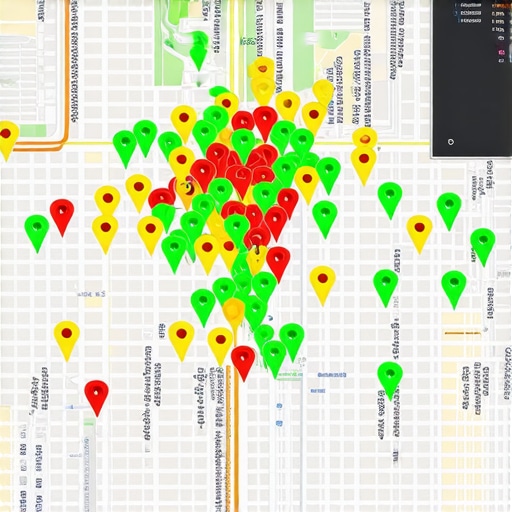
I don’t trust most automated SEO reports that land in my inbox every Monday morning. Most of them are just fluff designed to make an agency look busy. In reality, why most local seo reports focus on the wrong metrics is a systemic issue in the industry. I personally rely on a ‘Local Search Grid’ audit every fourteen days. This isn’t just a rank tracker; it’s a heat map of your city. If I see my map pin is strong in the north but invisible in the south, I know I need to hunt for the specific neighborhood backlinks that outrank industry directories in that specific southern zip code. I use tools like BrightLocal specifically for their grid visualization, but the real work happens when I cross-reference that data with my cloud nodes to see where the signal is dropping off.
How do I maintain my local authority over time?
The biggest trap you can fall into is thinking your authority stack is a ‘one-and-done’ project. Local SEO is a living entity. If you stop feeding it fresh geographical data, your competitors will eventually crowd you out. I recommend a monthly ‘Sync Check’ to ensure your metadata hasn’t drifted. I’ve seen cases where a simple website update accidentally stripped out Geo-JSON schema, and why your local ranking drops every time you update your site usually traces back to these small technical breaks. You need to implement the local data loop strategy for sustainable map rankings to keep your business at the forefront of Google’s knowledge graph. This means regularly updating your multi-cloud nodes with fresh, geo-tagged content and ensuring your entity remains tightly bound.
Scale up by building multi-node empires
Once you’ve dominated your immediate neighborhood, the next step is scaling into adjacent high-density areas. This is where how multi-cloud stacks bypass local competition in high-density areas becomes your primary weapon. I don’t just build one stack; I build a network of nodes that represent every service area I want to capture. This isn’t about spamming; it’s about providing local relevance at scale. According to the official Google Search documentation on location prominence, Google explicitly states that prominence is based on information that Google has about a business from across the web, including links, articles, and directories. By creating these high-authority clusters, you are essentially feeding that prominence algorithm exactly what it wants. If you find your rankings are stalling, you might need to learn how to repair a broken entity connection in your authority stack before adding new layers. I predict that in the coming years, ‘Entity Reliability’ will become the single most important factor for the Map Pack, even outweighing raw review counts. Take action today: Go to your Google Business Profile and verify that your service areas perfectly match the geographical nodes in your current backlink profile. If there is a gap, fill it with a local sponsorship link immediately.
Hard-Earned Truths from the Neighborhood SEO Trenches
The biggest lightbulb moment I ever had was realizing that a link from a local pizza joint’s community partners page did more for my rankings than a generic guest post on a high-traffic tech site. It taught me that relevance is geographic, not just topical. If you’ve been burned by empty promises before, you might need to fix your local backlink profile after a bad agency messed up your digital signals. Don’t let a history of low-quality links keep your business invisible.
Another lesson learned: stop obsessive-compulsive rank checking and start looking at the data loop. Rankings fluctuate, but authority is built through consistency. I’ve found that implementing the local data loop strategy for sustainable map rankings is the only way to keep your pin from drifting when Google runs a core update. Also, never underestimate the power of real world mentions; even if a local paper mentions your name without a direct link, it still reinforces your entity status in Google’s Knowledge Graph.
The Toolkit I Use to Keep My Map Pin Pinned
I don’t believe in using fifty different tools. I keep it lean and focused on what actually provides neighborhood weight. For visualizing where my authority is strong or weak across a city, I rely on grid-based tracking tools like BrightLocal or Local Falcon. They allow me to see the Map Pack performance from every street corner, which is the secret to dominating the map pack without paid ads. When I’m planning my next move, I always refer back to the ultimate guide to building backlinks for local authority to ensure I am not missing any low-hanging community fruit like local libraries or neighborhood watch sites. These resources provide the tactical blueprint for stacking nodes of influence that are impossible for competitors to fake.
#IMAGE_PLACEHOLDER_E#
Your Path to Becoming the Local Authority
Local SEO isn’t about outsmarting a machine; it’s about proving to that machine that you are an integral part of your community’s fabric. When you focus on how to use backlinks effectively to enhance local search presence, you aren’t just building SEO value; you are building a reputation that lasts longer than any algorithm trend. Don’t be afraid to start small with a single local sponsorship or a high school booster club link. Those tiny seeds grow into a massive wall of authority that competitors simply cannot climb. Start stacking your digital assets today and watch your business become the neighborhood landmark it deserves to be. Have you ever found a weird local link—like a community garden or a specific neighborhood blog—that unexpectedly boosted your rankings? Let me know in the comments below!