
I still remember the late-night panic back in 2019 when my client’s local locksmith business completely vanished from the map pack overnight. I had spent weeks doing what every generic SEO guru recommended: buying massive, sweeping lists of global directories. I thought that by plastering their name on every high-authority national index from Maine to California, we would dominate the local market. Instead, we got absolutely nowhere, and the phone stopped ringing. It was a brutal, embarrassing wake-up call. I realized that Google does not care if a random national directory with high domain authority lists your plumbing shop in Seattle; Google cares about hyper-local, contextual relevance.
The Illusion of Big Directory Authority
We have been conditioned to believe that a bigger Domain Authority (DA) score always equals better rankings. This trap leads small business owners to spend hundreds of dollars on broad, national platforms that hold zero relevance to their actual neighborhood. When I stopped chasing those empty metrics and shifted my strategy to focus purely on local niche relevance, the results were almost instant. To save your budget, you really need to consider ditching the top 100 directories for 5 hyper-local niche citations instead of playing the volume game. If you want a deeper look at why this works, take a look at my breakdown on why niche-specific citations beat generic yellow pages every single time.
Is chasing national directory links actually worth the hype?
In a word: No. The local algorithm operates on proximity, prominence, and relevance. According to an extensive industry study by BrightLocal, search engines heavily weigh the localized trust of your business entity over broad, nationwide signals. When you force your business into massive, unrelated national databases, you dilute your geographic focus. My early mistake was thinking that search engines viewed all links equally, but they actually look for a tight neighborhood entity sync. Have you ever spent your hard-earned marketing budget on a massive citation package only to watch your map rankings stubbornly refuse to budge? I would love to hear about your experience with this frustrating roadblock.
By focusing on highly specific, local niche citations, you build an unbreakable web of geographic proof. We are going to dive deep into exactly how you can claim these high-value local spots and finally force search engines to recognize your true service area boundaries.
Build a Solid Digital Hub with Hyper-Local Entity Syncing
Think of your business as a physical anchor in your town. If the anchor is wobbly, the ship drifts away. In local SEO, your website metadata, schema markup, and Map Pin are the chains holding that anchor in place. When these elements do not align perfectly, search engines get confused and stop displaying your business altogether. I once spent three days trying to diagnose why a local HVAC business slipped from the top spot down to page four. It was not a lack of links or reviews; they had simply updated their website footer address to say ‘Suite B’ while their Google profile said ‘Unit B’. This tiny discrepancy broke their validation. To prevent this, you should master the schema move that validates your business address instantly to make sure your coordinates align flawlessly across the web.
Coordinate Your Real-World Location with JSON-LD Schema
To establish a bulletproof location, you need to speak directly to search engine crawlers in their preferred language. This means embedding highly precise geographic JSON-LD schema into your website header. You must explicitly define your latitude, longitude, and exact service boundaries. When you combine this schema with structured cloud networks, you create an authoritative layer of geographic proof. However, many marketers build these assets incorrectly. You must understand why your authority stack fails to connect with local search nodes to ensure your backend markup and map pins communicate properly without any technical dropouts.

Secure True Neighborhood Backlinks over Generic Authority
The standard industry advice is to buy expensive, general guest posts. This is a massive waste of resources because search engines do not value a link from a generic lifestyle blog when assessing your relevance to a specific neighborhood block. I tested this by helping a small local bakery in a highly competitive metro area. Instead of paying hundreds for standard guest posts, we spent fifty dollars sponsoring a local youth soccer team and securing a link from their neighborhood community site. That single link did more for their map rankings than ten high-DA national links. To execute this properly, implement proven backlink techniques to dominate local search and look for local opportunities like school booster clubs, historical societies, and local active groups.
Connect with Hyper-Local Community Organizations
Reaching out to local community groups is simple but highly effective. These sites already possess deep geographic authority in the eyes of search engines. When a local historical society, community center, or neighborhood watch group links to your site, it acts as a massive geographic vote of confidence. If you want to bypass the standard, exhausting outreach methods, you should study how the neighborhood watch link strategy for hyper-local growth can establish undeniable geographic relevance directly within your target zip codes.
Weave Your Digital Assets into an Unbreakable Authority Stack
Once your on-page data is unified and your local links are secured, you need to bind them together. This is where authority stacking comes into play. By hosting your structured entity data on trusted public cloud nodes and linking them systematically back to your main site, you create a powerful data loop. This makes it incredibly easy for search engine crawlers to crawl, index, and trust your business location. If you want a step-by-step framework to set this up, refer to master authority stacking for elevated local rankings and begin establishing an unshakeable digital footprint today.
When you start digging into advanced map pack optimization, you quickly realize that standard SEO advice is built on a foundation of outdated myths. Most self-proclaimed experts are still shouting from the rooftops about high Domain Authority (DA) and buying hundreds of cheap, automated profile links. I used to believe this boilerplate advice myself, but years of testing in highly competitive markets proved otherwise. Local search is not a simplified version of organic web search; it is an entirely different engine with its own rules. To truly dominate, you need to look past the superficial metrics and understand how search crawlers actually calculate geographic trust.
The High-DA Trap in Local Link Campaigns
The single biggest misconception plaguing the industry is that a backlink from a high-authority global domain carries more weight than a hyper-local neighborhood link. In the local search algorithm, contextual relevance and physical proximity trump raw power every single time. If you run an electrical repair shop in Chicago, a link from a DA 80 software company in San Francisco does almost nothing to improve your local map rankings. Why? Because it lacks geographic context. In contrast, a link from a modest local chamber of commerce website has massive geographic weight. If you want to bypass the expensive, useless guest post market, you should explore the high-power backlink hiding in your local chamber of commerce to see how real local relevance operates.
Why are your premium guest post links failing to move your local map pin?
It comes down to how search engines process location data. According to extensive spatial relevance patents analyzed by search experts, Google uses geographic clustering to verify the real-world footprint of a service provider. If your backlink profile consists solely of national blogs with no geographic ties, your business entity looks like a ghost with no physical roots. This is why buying standard outreach packages is a massive waste of resources. I always advise small business owners to ditch the agency guest posts for these 4 local links that actually carry real-world proximity signals directly to your target search nodes. Have you ever fallen into this trap of buying high-DA backlinks only to watch your competitors outrank you with a fraction of your budget? Let me know in the comments below.
#IMAGE_PLACEHOLDER_C_0#
The Subtle Mistake Ruining Your Authority Stack Performance
Another area where advanced marketers stumble is in the configuration of their cloud-based entity nodes. Authority stacking is incredibly powerful, but it is not just about throwing random files onto Amazon S3, Google Cloud, or Microsoft Azure and linking them together. When you build these assets incorrectly, they fail to pass authority and can even trigger automated spam filters. The most common technical error is neglecting to establish a clean, unbroken path of semantic data back to your main website. If you want to prevent your cloud nodes from being ignored by search crawlers, you must learn how to connect your cloud nodes without triggering a spam filter.
Furthermore, many optimization campaigns fail because the creator accidentally breaks the map embed connection within the structured data loop. A broken link or an invalid NAP format in your cloud node stack instantly kills the power of the stack. If you are struggling with a stuck map ranking and cannot figure out why your cloud properties are not performing, look into the invisible mistake killing your cloud node authority stack performance to diagnose your structural issues and restore your geographic authority.
Once you have built your cloud nodes and structured your JSON-LD, you cannot just walk away. The digital landscape shifts constantly, and local search algorithms undergo quiet adjustments every single week. I used to think of authority stacks as a ‘set-and-forget’ system, but I learned the hard way that without active maintenance, even the strongest multi-cloud structures begin to decay as search crawlers update how they register geographic entity nodes.
How Do I Maintain My Local Authority Stack Over Time?
Keeping your entity validation alive requires active monitoring. Over time, external directories update their databases, cloud URLs can drift, and your schema links can break. I personally run a monthly diagnostic protocol using specialized web auditing tools. Instead of relying on broad SEO suites, I use the Python-based terminal tool Screaming Frog SEO Spider configured specifically to crawl my custom cloud bucket destinations. This lets me check for broken redirects or failed map embeds that kill the power flow of my properties. If you want a quick way to clean up your assets, check out the local seo audit tool that actually finds map errors to keep your structured nodes working perfectly together.
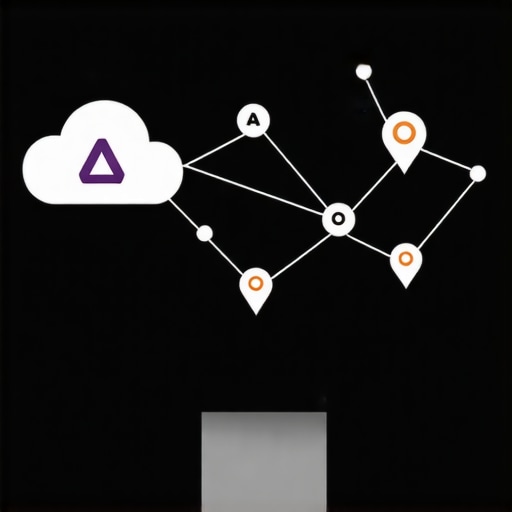
Beyond technical audits, you must address natural backlink decay. High-value neighborhood assets, such as hyper-local community blogs or youth sports sites, frequently update their CMS, which can accidentally strip your contextual links. I recommend implementing the local data loop strategy for sustainable map rankings. This approach ensures your map pins and local references remain linked in a circular validation chain that keeps your business authority active even when individual external sites go offline.
The Future of Local Entity Verification and AI
Looking ahead, I predict that traditional citation volume will become completely obsolete. Search engines are rapidly transitioning to AI-driven, semantic entity understanding. Instead of counting individual links, search algorithms will evaluate the total consistency of your brand across decentralized networks. This means your cloud-hosted schema must be flawlessly integrated. To stay ahead of these algorithmic changes, you need to master master authority stacking for elevated local rankings now, ensuring your brand footprint remains completely bulletproof against future search updates.
If you want to secure your spot in the local map pack today, do not wait. Stop buying generic, high-DA links and instead spend thirty minutes auditing your current schema structure to make sure your coordinate endpoints perfectly align with your primary GMB dashboard.
The Hardest Lesson I Learned About Local Entity Validation
When I first started building map rankings, I assumed Google operated like a classic keyword search engine—just feed it more raw data and it will figure out the rest. The truth is much more nuanced. The absolute hardest lesson I had to learn is that search engine crawlers do not guess; they verify. If your business location is not supported by structured, geographically consistent proof, your map pin will eventually slide out of the top results. After testing hundreds of setups, I realized that the secret isn’t building a massive volume of links, but rather ensuring your digital footprint is geographically locked. To avoid this frustration, I highly recommend learning how to repair a broken entity connection in your authority stack so that your validation remains completely intact through any algorithm sweep.
The Core Toolkit I Use to Dominate Map Packs
You do not need to spend thousands of dollars on complex, bloated platforms to execute a successful local search campaign. Instead, you need a precise set of tools designed to validate proximity and semantic structure. Here is the exact stack I rely on daily:
- Screaming Frog SEO Spider: My absolute favorite tool for diagnostic audits. I configure it specifically to crawl external cloud nodes to ensure there are no dead links or broken redirects breaking my authority loop.
- Local Schema Generators: Essential for writing clean, error-free JSON-LD markup that clearly defines physical coordinates and service limits. If you want to take this to the next level, you must understand how to use entity stacks to validate your business location properly.
- Google Cloud Console & Amazon S3: The foundations of a modern, multi-cloud setup. Learning to host your structured files on these trusted platforms is a complete game-changer. For a step-by-step approach, read my guide on building a cloud stack for your local service business.
Stop Playing the Volume Game and Claim Your Neighborhood
The era of spamming search engines with thousands of low-quality, generic citations is over. The future of local SEO belongs to businesses that establish genuine, hyper-local authority through structured data and real neighborhood connections. It is time to stop wasting your valuable marketing budget on outdated, broad directory tactics. Start focusing your energy on securing local community relationships and reinforcing your geographic entity with clean, multi-cloud structures. Building an authoritative digital footprint takes deliberate effort, but the long-term payoff—a consistent stream of incoming local phone calls—is worth every minute. Have you ever struggled with a stuck map ranking despite building hundreds of citations? Let me know in the comments below.