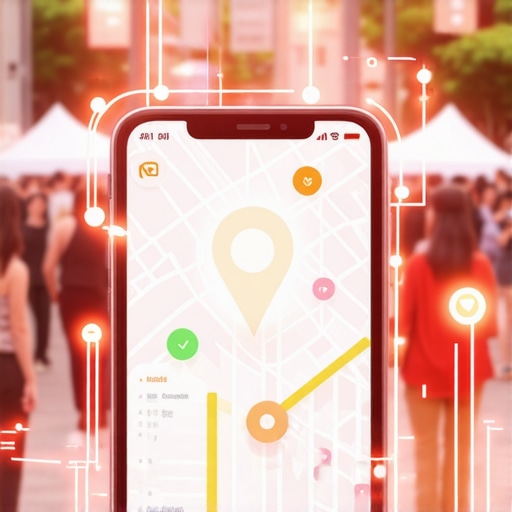
I still remember the sting of that cold Saturday morning in November. I had spent three weeks organizing a community craft and local food pop-up market, expecting a bustling crowd of neighbors. Instead, the parking lot was a ghost town. When I pulled out my phone and searched for local weekend activities, my competitor’s event—a tiny garage sale three blocks over—was proudly featured right in the Google Event pack with a shining map pin. My beautiful, meticulously planned event? Nowhere to be found. I realized right then that simply pinning your location on a map isn’t enough when you are practically invisible to the local algorithms. I was making a classic mistake, relying on basic business listings while completely ignoring how modern search engines connect physical locations to real-time local happenings.
The Critical Link Between Your Map Pin and Real-Time Gatherings
Today, we are going to fix this disconnect once and for all. If you have ever felt like your business is a hidden gem that the search engines are actively trying to hide, you are likely suffering from a fractured digital entity. We are going to walk through exactly how to bind your physical coordinates directly to your local event listings. This strategy forces the algorithm to recognize your storefront as an active, bustling community hub rather than just a dormant point on a digital map. By the time you finish reading, you will understand how to leverage structured data to boost your local footprint and make sure your next gathering actually draws a crowd.
Does Event Schema Really Move the Needle for Local Foot Traffic?
I get the skepticism. You might be thinking that structured markup is just nerd jargon that has no real impact on your bottom line. I used to think the exact same thing. In my early days, I spent hours manually submitting my events to random, generic online directories, thinking more was better. It was a massive waste of time and energy. It wasn’t until I stopped using spammy shortcuts and actually connected my physical coordinate data to clean, structured schema that things changed. In fact, search engines rely heavily on explicit markup to understand physical context; Google’s official documentation on Event Structured Data confirms that proper markup directly influences how events are visually displayed to users in search results. When you bridge this gap, you are giving search engines the exact trust signals they crave to elevate your presence.
Have you ever hosted a local workshop, sale, or community gathering only to have absolutely nobody show up because search engines buried your listing? It is incredibly frustrating to feel like you are shouting into an empty void. If you want to dive deeper into why these digital connections fail, take a look at why your authority stack fails to connect with local search nodes. Getting these virtual entities in perfect alignment is the first major step toward reclaiming your local market dominance.
Step-by-Step Blueprint to Connect Event Schema to Physical Coordinates
Binding your physical coordinates directly to your local event listings is like building a digital bridge between a physical storefront and a virtual billboard. If search engines do not understand that your event is happening at your exact location, you are essentially throwing time and money out the window. To make this work, you must get your hands dirty with your website’s code and manually sync your business entity details.
The Schema Code That Bridges the Gap
Think of schema markup as a digital translator. Your website speaks human, but Google’s crawlers speak database. When you insert a clean JSON-LD script, you are providing a direct translation that says, ‘This event is happening exactly where this business exists.’ I remember a messy weekend project where I tried to run a promotion for a boutique fitness studio. I simply copied and pasted a generic template without specifying our exact geographic coordinates. The result? The event was listed twenty miles away in a neighboring town’s index. Once I learned the hidden schema tweak for better map pin accuracy, everything snapped into place. By explicitly declaring the latitude and longitude inside the Place schema nested within the Event schema, Google aligned our event directly with our physical storefront overnight.

Leveraging Local Authority Stacks to Power Your Events
Once your website contains the correct markup, you need to broadcast this data across the web to build trust. This is where authority stacking comes in. Think of authority stacking like an megaphone; your website whispers the message, but your stacked nodes shout it across the internet. By linking your structured event pages to secure cloud-hosted assets, you establish an iron-clad digital footprint. If you are new to this concept, you can discover the fundamental mechanics of how these networks function by exploring authority stacking unveiled: the hidden power for local seo. The key is to ensure that your event’s name, address, phone number, and coordinate data match perfectly across every single cloud document and map node you deploy.
Why Standard Citation Packages Will Fail Your Event Strategy
Many local business owners assume they can just buy a cheap list of directory submissions to promote their next big gathering. This is a critical mistake. Standard directories are designed for static businesses, not time-sensitive events. In fact, relying on outdated lists of generic directories can dilute your overall map authority. If you want to bypass this trap completely, you should start how to leverage local event pages for authority links which naturally pass hyper-local relevance. Instead of submitting to hundreds of spammy platforms, focus your energy on securing a handful of high-quality links from community calendars, local newspapers, and neighborhood blogs. These platforms already possess the localized trust that search engines crave, which instantly validates your event’s physical location.
The Great Backlink Delusion in Modern Local Search
Everyone in the marketing space tells you to build as many niche-relevant guest posts as possible to skyrocket your search rankings. But in my experience, chasing those expensive, high-metric industry blogs often does absolutely nothing for your physical storefront’s map pack position. The algorithms governing localized search results do not value a link from a global industry portal in the same way they value a digital nod from a business down the street. When you over-optimize your anchor text with generic industry terms, you are sending a signal that completely ignores your physical footprint. If you want to stop spinning your wheels, you must realize why your backlinks are being ignored by the local map algorithm and shift your strategy toward building regional relevance.
The classic trap—what I call the “oops” factor of local campaigns—is building dozens of links with aggressive anchor texts like “best plumber in Dallas” instead of focusing on clean, brand-centric localized mentions. A the real cost of cheap local citation packages is that they flood your profile with low-grade, inconsistent physical address formats and unnatural links. This sudden surge of low-quality data actually triggers spam filters within the local ranking algorithm, forcing search engines to suppress your map pin entirely rather than reward it. Have you ever fallen into this trap of buying a quick boost only to see your search presence disappear? Let me know in the comments below.
Why Do Multi-Cloud Authority Stacks Fail to Pass Local Trust Signals?
Many advanced marketers understand that cloud-hosted networks can pass immense power, yet they wonder why their complex stacks still fail to move highly competitive map pins. The secret lies in the entity sync. If your cloud documents contain the slightest discrepancy in your business name, address, or phone format, search engines cannot reconcile that data with your official Google profile. Furthermore, search engine crawlers require explicit geo-coordinates and schema-mapped relationships to bridge the gap between abstract cloud authority and physical storefront presence. According to a landmark local search ranking factors study by Whitespark, local relevance and proximity signals are heavily weighted over global domain authority metrics; this confirms that an un-synced cloud network is essentially throwing away its link equity. To resolve this disconnect, you must discover why your local entity sync is failing to validate your data before building your next cloud stack.

If you want to truly dominate high-competition neighborhoods, you have to transition your linking strategy from standard directories to localized trust nodes. By prioritizing neighborhood blogs, community event calendars, and historical society pages, you create a natural, localized backlink profile that competitors cannot easily copy. Dive into backlink optimization tips for local seo authority to learn how to structure your target anchors safely, ensuring your digital footprint remains clean, powerful, and permanently aligned with your physical location.
Keeping the Local Engine Humming Without Losing Your Sanity
Building a robust authority stack and syncing your local entity data is only half the battle. If you treat your local search ecosystem like a static set-it-and-forget-it asset, you are going to watch your hard-earned rankings slowly drift away. Search engine algorithms constantly refine how they interpret physical boundaries, meaning a connection that works perfectly today might quietly disconnect next month. To prevent this decay, I personally rely on a strict maintenance routine and a few highly specialized tools rather than bloated agency software packages that charge hundreds of dollars for basic monitoring.
How do I maintain my local authority stack over time?
Every single month, I run a manual audit using specialized local API tools like Geocoding API by Google Maps Platform to verify that our coordinate strings exactly match what is rendered in our schema. Even a tiny micro-decimal shift in your latitude and longitude values can break the critical trust loop between your website and your digital map pin. I also use simple cloud-indexing checkers to ensure that our various cloud storage nodes remain accessible to search engine spiders. If Google’s crawlers cannot access your hosted HTML documents, those powerful trust signals vanish from the indexing pipeline.
For those looking to safeguard their digital assets against sudden shifts in search technology, understanding how to build a authority stack that actually survives algorithm shifts is the exact blueprint I follow to ensure permanent stability. This strategy relies on building decentralized nodes across highly resilient web properties that do not rely on a single single-point-of-failure domain.

The Future of Local Entity Search
As search engines shift heavier focus toward semantic search and artificial intelligence engines like Google’s Gemini, the importance of traditional keyword-stuffed anchor text will continue to decline. In the very near future, the algorithm will evaluate your business based on real-world entity associations, physical presence, and conversational brand mentions rather than the sheer volume of links pointing to your homepage. This means that securing authentic digital relationships with local community assets will become the ultimate competitive advantage.Instead of chasing expensive, low-quality guest posts, you should adapt early by implementing the neighborhood watch link strategy for hyper-local growth. This method aligns your brand directly with local neighborhood entities, forcing search systems to recognize your business as the logical choice for proximity-based search queries.
My Personal Challenge to You
Do not let your local search presence wither away on the second page. I want you to take one specific action today: go to your website, copy your exact address format, and compare it to the address listed on your official Google Business Profile down to the punctuation. If you find a discrepancy, update it immediately to establish a clean entity baseline. Once your foundational data is aligned, implement a simple schema update to lock those coordinates in place, and watch how quickly your map visibility responds.
What Experts Won’t Tell You About Local Entity Syncing
Over the years, I have learned that search engines do not care about how pretty your website looks if your core digital data is fractured. The biggest lightbulb moment for me was realizing that search engines value consistent, physical data loops far more than raw domain metrics. When you tie your digital event assets directly to your geographical coordinates, you are feeding the algorithm the exact validation signals it needs. I used to think that scattering backlinks across arbitrary national blogs was helping, but it actually diluted our geographic relevance. The real breakthrough came when I started treating every digital mention, map embed, and event listing as a single unified entity. If you want to bypass the typical stagnation most businesses face, you must ensure your virtual identity matches your physical footprint without a single millimeter of deviation.
My Essential Toolkit for Local Authority Domination
You do not need a massive enterprise budget to maintain a dominant local search footprint. Instead, focus on tools and strategies that solidify your geographic relevance. Here are the core assets I personally rely on to keep our clients ahead of the curve: Use the Google Maps Platform Geocoding API to verify that your exact physical coordinates match your website schema perfectly. Leverage clean, structured networks built through authority stacking strategies to boost local seo in 2025 to distribute your synchronized entity data across resilient cloud networks. Rather than buying generic link packages, focus on cultivating high-value neighborhood connections. I highly recommend looking into the neighborhood watch link strategy for hyper-local growth to establish deep regional relevance that competitors cannot easily duplicate.
Your Path to Local Search Dominance
Now is the time to take control of your physical footprint online. Local search algorithm changes will continue to penalize businesses with sloppy, disconnected data, while heavily rewarding those that actively sync their digital and physical entities. Do not let your competitors walk away with the traffic that should be landing on your doorstep. If you want to dive deeper into optimizing your backlink anchor texts and clean up your link profile, check out my comprehensive guide on backlink optimization tips for local seo authority. Get your hands into your site’s schema today, lock down your coordinates, and watch your local authority rise.
Have you ever struggled with getting your event listings to actually appear in the Google Event pack for your local area? Let me know what happened in the comments below!