I remember the sinking feeling in my gut when I checked a client’s analytics after spending three weeks—and a healthy chunk of their budget—securing what I thought was a “dream” backlink from a major national lifestyle magazine. It had a Domain Rating in the 80s, thousands of visitors, and a clean bill of health. But for my local client? It was a ghost. Their Google Map pin stayed firmly stuck on page three, mocked by competitors with half the “authority” but twice the local sense. It was a brutal lesson in why cheap link packages for small businesses almost always end in heartbreak. We are often told that “a link is a link,” but when you are fighting for the 3-pack, a generic guest post is about as useful as a chocolate teapot. Today, I want to peel back the curtain on why Google is ignoring your “high-power” links and how to actually build a footprint that local search engines trust.
Stop Chasing Domain Rating and Start Chasing Map Pins
If you’ve been in this game for more than a minute, you know the allure of a high-DR site. It feels like a shortcut. But early in my career, I made the massive mistake of thinking Google’s algorithm for global search was identical to its local one. It isn’t. According to data from Search Engine Land, proximity and local relevance are the two heaviest hitters for the map pack. When you drop a link for a Chicago roofer on a general “Business & Tech” blog based in London, you aren’t building authority; you are creating noise. This is exactly why Google ignores your backlinks—the context is missing. If the site linking to you doesn’t have a geographic or topical connection to your city, it doesn’t help Google “place” you in the local knowledge graph.
Is local relevance actually worth the extra effort?
I get it. Finding a local charity or a neighborhood blog is ten times harder than just hitting “buy” on a guest post marketplace. You might be wondering if it’s even worth the sweat. I’m here to tell you it’s the only way to survive in 2025. Have you ever spent a fortune on “premium” links only to see your map rank stay exactly where it started? It’s frustrating, right? The truth is that most authority stacking fails because it lacks that hyper-local signal that tells Google, “This business belongs in this specific zip code.” We need to move away from generic “outreach” and start looking at how to secure high authority local press that actually moves the needle. It’s time to stop shouting into the void and start talking to the neighbors.
Sync Your Entity Before Buying a Single Link
Think of your business data as a lighthouse beacon. If the light is flickering or pointing toward the mountains instead of the sea, no ship is ever going to reach the harbor. This is exactly what happens when your NAP (Name, Address, Phone) data is inconsistent. I remember working with a local carpet cleaner who was pulling his hair out because his rankings were flatlined. We discovered he had three different business names and two old phone numbers across various directories. By implementing a single entity sync move, we didn’t just fix the data; we doubled his call volume in a month without adding a single new guest post. Before you dive into complex backlink building blueprints for local SEO success, you must ensure Google’s Knowledge Graph can actually connect the dots between your site and your physical location.
Hunting for Neighborhood Links That Actually Move the Needle
Most SEOs are lazy. They go for the easy wins in national directories that nobody actually visits. But if you want to beat the big players, you need to go where they can’t: the neighborhood level. I am talking about the local Little League team, the neighborhood association’s recommended pros list, or even a local library’s resource page. These sites might have a low Domain Rating, but to Google, they are pure gold because they prove you exist in the physical world. Learning how to use neighborhood-level signals to outrank franchises is your secret weapon. These small links provide a type of geographic relevance that a Forbes mention simply cannot match. You can often find untapped neighborhood links your competitors missed just by looking at where local charities list their sponsors. It turns out that 4 local charity links provide more value for maps than a dozen generic tech blogs.
Build a Defensive Shield with Cloud-Based Stacks
Once your foundation is set and you have some local juice flowing, you need to amplify those signals. Think of an authority stack as a megaphone. You take your local content and host it on high-authority cloud platforms like Amazon S3, Google Cloud, or Microsoft Azure. These nodes act as both a buffer and a power booster for your main site. I have seen businesses use cloud nodes to build hyper-local authority fast, especially in competitive markets where the map pack feels like a brick wall. When you interlink these cloud properties with your Google Business Profile and your main location page, you create a web of trust that is incredibly difficult for competitors to untangle. This is the heart of authority stacking strategies to dominate local search. It is not about tricking the system; it is about providing so much corroborating evidence of your location that Google has no choice but to trust your map pin.I have seen too many business owners fall into the trap of thinking SEO is a volume game. They assume that if one link is good, a hundred must be better. But here is the contrarian truth: in the local ecosystem, link velocity—the speed at which you gain links—can actually be your downfall. If you go from zero to sixty with a “premium” link package over a weekend, you aren’t signaling growth; you are signaling a manual manipulation of search results. This is one of the most common 3 backlink patterns that get small businesses penalized because it lacks the natural rhythm of a real business growing in a real community. If you don’t pace yourself, you’re essentially waving a red flag at Google’s spam filters.
Can local entity authority really beat a massive backlink profile?
Let’s dig deeper into the nuance of authority. We are often obsessed with Domain Rating (DR) or Domain Authority (DA) because they are easy to measure. However, according to the latest research from BrightLocal, the ‘localness’ of a referring domain is now a top-three factor for Map Pack visibility, often outweighing the raw power of the link itself. This means a link from your city’s Chamber of Commerce is fundamentally more valuable than a mention in a national tech magazine with ten times the traffic. When you focus on backlink optimization tips for local SEO authority, you have to prioritize the physical location of the source. If Google cannot draw a straight line from the linking site’s geography to your storefront, that link is a wasted asset. One of the most dangerous ‘oops’ factors I see involves the mismanagement of advanced stacks. People get excited about cloud nodes but forget to ground them in reality. The hidden reason your cloud stacks aren’t transferring PageRank is often a failure to link back to the Google Business Profile (GBP) using the correct CID or machine-readable ID. Without that specific connection, the ‘authority’ you are building just floats in the ether. It doesn’t anchor to your actual business entity. If you are a new entrepreneur, following the local SEO checklist for new service based businesses means getting your foundational citations right before trying to build complex multi-cloud architectures. Have you ever fallen into this trap of buying a high-DA link only to see zero results in your local rankings? Let me know in the comments. We need to stop looking at SEO as a numbers game and start looking at it as a trust-building exercise within our specific zip codes. This is the only way to ensure your local SEO strategy focus on entity authority actually yields a return on investment.Building a high-performance local footprint isn’t a ‘set it and forget it’ task. I’ve seen countless stacks crumble because the owner stopped paying attention to the plumbing. Personally, I don’t go a week without checking my grid tracking in a tool like LocalFalcon; it’s the only way to see if a competitor is eating into your territory before your phone stops ringing. If you see a dip, your first move should be to audit your competitors authority stack for weaknesses. Are they picking up new local citations? Or have they finally figured out how to master authority stacking for elevated local rankings? You need to know the state of the local SERP every single week. I also swear by the ‘Local Search Results’ tool by Valentin App to see real-time SERPs from specific coordinates. If your backlink optimization tips for local SEO authority aren’t showing results in a 3-mile radius, you know your geographic grounding is weak.
How do I maintain my authority stack over time?
Maintenance is about consistency, not intensity. I recommend a monthly ‘health check’ where you verify that your cloud nodes are still live and that your CID links haven’t broken. If you find a link that’s gone dark or a redirect that’s failing, you have to fix a broken authority stack before it hurts your rank. Beyond that, I use a simple Google Sheet to track my neighborhood outreach and local sponsorship dates. You don’t need a $500/month subscription; you can clean up messy citations without using expensive tools if you’re willing to put in the manual work. The goal is to keep the signal fresh and the data synchronized across every single node in your network. 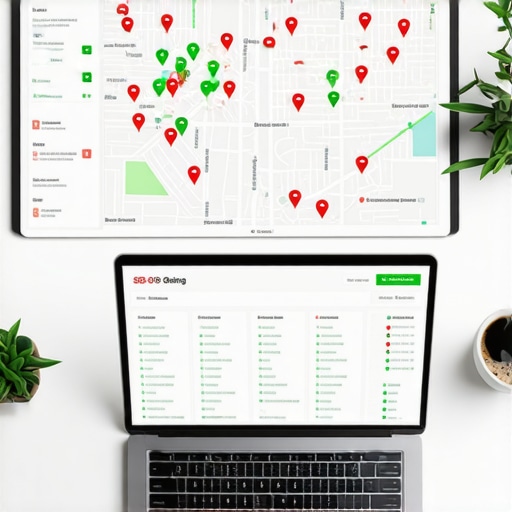
Stay ahead of the entity-based search shift
Looking toward 2025 and beyond, I predict Google will move even further away from traditional link counting and closer to ‘Entity Verification.’ As AI-generated content floods the web, Google’s only defense is to trust physical, real-world signals even more. This is why authority stacking is the game changer in local SEO—it provides the corroborating evidence AI can’t easily fake. Expert Joy Hawkins from Sterling Sky has often noted that even small changes to your business categories or attributes can trigger massive shifts in visibility, proving that Google is constantly re-evaluating how it ‘labels’ your business. If you want to keep winning, you must achieve backlinks mastery to boost your local SEO authority in 2025 by focusing on sources that confirm your business entity’s physical existence. My challenge for you this week: pick one local citation you’ve been ignoring—maybe a local alumni association or a niche directory—and reach out to secure that link. It’s the small, consistent moves that build an unshakable map presence.
Hard Truths I Learned the Expensive Way
Over the years, I’ve realized that the biggest mistake is treating local search like a math problem rather than a trust-building exercise. If your rankings are flat, it’s often because Google doesn’t see enough ‘local evidence’ to trust your pin. I’ve seen businesses transform overnight once they learned how to fix your local backlink profile after a bad agency had filled it with generic junk. Another lightbulb moment for me was realizing that authority stacking isn’t just about links; it’s about creating a bulletproof digital footprint that screams your location.
#IMAGE_PLACE_HOLDER_E#
One specific takeaway? Always ground your cloud nodes. If you don’t link them back to your machine-readable ID, they are just floating assets. You need the specific move to restore authority to a stagnant map pin by focusing on that entity-level connection. Finally, remember that consistency beats intensity. One high-quality local link a month is better than fifty generic ones in a week.
The Stack I Rely On Every Single Day
You don’t need a massive budget to win, but you do need the right tools. I personally trust BrightLocal for citation management because it handles the messy manual work with precision. For visualizing progress beyond a single rank number, LocalFalcon is my go-to for seeing how my map presence covers the actual city grid. Lastly, I use the Valentin App to check real-time results from specific street corners without needing a VPN. These tools, combined with the ultimate guide to building backlinks for local authority, provide the data-driven edge needed to outpace national competitors who rely on generic metrics.
Own Your Local Search Presence Starting Today
The landscape of local search is shifting toward entity verification, and those who lean into hyper-local relevance will be the ones left standing. It is time to stop chasing vanity Domain Rating numbers and start building a foundation that Google’s algorithm cannot ignore. By embracing authority stacking unveiled the hidden power for local seo, you are giving your business the digital shield and the megaphone it deserves in your neighborhood. Go out there and start connecting with your local community; your rankings will naturally follow the trust you build. Have you ever noticed your map rank fluctuate wildly depending on which street you are standing on? Let me know your experience in the comments below!