I’ll never forget the Tuesday afternoon I sat in a coffee shop, refreshing my browser until my finger literally started to cramp. I had just finished what I thought was a masterclass in local SEO for a friend’s landscaping business. I’d done the citations. I’d optimized the profile. But instead of seeing his name at the top, I saw Yelp. Then Yellow Pages. Then three more directories that don’t even have a physical office in our state. It was infuriating. I realized then that generic directory listings are failing the very local people they’re supposed to serve. I was following an outdated playbook, and it was getting me nowhere. Today, I’m going to show you exactly how to bypass these giants using a strategy they simply can’t replicate because they aren’t ‘on the ground’ like you are. [IMAGE_PLACEHOLDER_1]
Stop Letting National Directories Steal Your Local Leads
The problem is that Google sees these massive aggregators as high-authority ‘safe’ bets. They have millions of backlinks and decades of data. If you want to win, you have to prove you aren’t just another business in a list, but a local entity that is more relevant than a database. I spent years messing this up, thinking that more links always equaled better rankings. My biggest mistake was focusing on sheer volume instead of local proximity signals. I even fell into the trap of using the same boring, generic keywords everywhere. But I’ve learned you need to stop using generic anchor text if you want the algorithm to actually notice your specific street address and neighborhood. We are looking for those hyper-local signals that the big guys can’t fake with a scraper. By building a layer of trust that connects your site directly to the local community, you create a signal that is far louder than a generic directory entry.
Can a small local shop really beat a billion-dollar directory?
I get it. It feels like taking a plastic slingshot to a tank fight. You look at their domain authority and think, ‘Why even try?’ But here’s the thing: Google is actually desperate for local relevance. According to research from BrightLocal, over 87% of consumers use Google to find local businesses, and the search engine is constantly tweaking things to favor the most helpful local result. This means that while Yelp has more total links, you can have more local weight in your specific zip code. This is where authority stacking becomes the game-changer. We’re going to look at the aggressive moves to steal the top spot from those national giants and keep it for the long haul. Have you ever felt like no matter how much work you do, those big directories just won’t move out of your way? Let me know, because that frustration is the first step toward finding a better way to rank.
Sync Your Entity Data So Google Doesn’t Guess
Think of Google as a skeptical investigator. It won’t just take your word for it that you’re the best plumber in town; it needs corroborating evidence from sources it already trusts. This is why the local entity sync move that forces hyper-local rank jumps is so critical. You have to ensure that every mention of your name, address, and phone number (NAP) is 100% identical across the web. I once worked with a boutique gym where we couldn’t figure out why their map pin stayed frozen despite dozens of new reviews. It turned out they had ‘Suite 101’ on their website but ‘#101’ on their Yelp profile. That tiny discrepancy was enough to create a ‘trust gap.’ Once we executed 3 trust signals that force Google to verify your service area fast, their visibility skyrocketed within a week.
How to build an authority stack that Google actually trusts
To win, you need to build what we call an authority stack. Imagine this like a pyramid where the base is made of your foundational citations and the top is your high-power cloud nodes. You aren’t just getting a backlink; you are creating a network of properties that all point back to the same conclusion: your business is the most relevant entity in this specific geography. By following backlink building blueprints for local SEO success, you create a shield against algorithm updates. You are essentially teaching the algorithm how to categorize you by surrounding your site with hyper-local context that national directories simply can’t match.

The Multi-Cloud Move That Finally Pushed Our Client Over the Threshold
Standard backlinks are fine, but if you want to crush a competitor who has been sitting in the top spot for years, you need to look at the multi-cloud move that finally pushed our client over the threshold. This involves hosting small, hyper-focused landing pages on high-authority cloud platforms like Amazon S3 or Google Cloud. These pages contain your local keywords, map embeds, and links back to your main site. Because these domains have massive inherent authority, Google crawls them constantly. I remember a specific project for a roofing company in a brutal market. We were stuck at position five for months. We built a three-tier cloud stack and linked it to 5 hyper-local niche citations that move the needle. Within twelve days, we didn’t just hit the top three—we took the number one spot and haven’t let go since.
Ditch the generic directories for niche citations
If you are still spending hours on generic ‘Yellow Page’ style sites, you’re wasting your breath. Google knows those are pay-to-play or easy-to-spam. Instead, you need to ditch generic directories and find 5 specific niche citations that work for your industry. For example, if you’re a lawyer, a link from a local neighborhood blog or a regional legal directory carries ten times the weight of a generic business listing. This is how you how to build an authority stack that Google actually trusts. You are looking for the ‘digital neighborhood watch’—those sites that are truly ‘on the ground’ in your city. This strategy forces the algorithm to recognize your proximity and relevance over the raw domain power of national giants.
High Domain Authority Won’t Save You in Your Own Backyard
Here is a hard truth that many ‘experts’ won’t tell you: a backlink from a high-authority national tech blog is often less valuable than a link from your local little league team’s website. Most people obsess over Domain Authority (DA) as if it’s the only metric that matters. But in the world of local search, proximity and relevance are king. I’ve seen businesses pour thousands into guest posts on major sites, only to find that most local SEO packages fail to move your map position because they lack geographic context. If Google can’t find a digital ‘breadcrumb trail’ leading back to your specific city, all that raw power is just noise. You need to focus on advanced authority stacking tactics that prioritize local entity signals over generic metrics.

The Cheap SEO Trap That Kills Your Map Visibility
One of the biggest ‘oops’ factors I encounter is the temptation of low-cost, bulk backlink services. It’s the ultimate trap. These services often use automated scripts to blast your URL across ‘private blog networks’ that Google flagged years ago. This doesn’t just stop your growth; it can lead to a manual penalty that wipes you off the map entirely. You have to stop wasting money on toxic backlinks and start looking for quality indicators like local IP hosting and community engagement. According to the Whitespark Local Search Ranking Factors report, local link signals remain one of the top three drivers for map pack success. If your links aren’t coming from sources that are geographically relevant, you are essentially building a house on a foundation of sand.
Why is my map pin still stuck despite a massive backlink profile?
This is the question that keeps business owners up at night. If you’ve built the links and synced your NAP, but your pin won’t budge, you likely have a ‘stagnant stack’ issue. This happens when your authority nodes aren’t properly interlinked, or when your schema data is sending mixed signals. You need to identify the 3 crucial fixes for stacks that stopped moving your pin to restart the flow of authority. Often, the missing piece is a lack of ‘hyper-local’ validation. This is where neighborhood association links become your secret weapon. These aren’t just links; they are digital endorsements from the very community you serve. By implementing backlink optimization tips that focus on these niche connections, you bridge the gap between being a ‘business on the internet’ and a ‘pillar of the community.’ Have you ever fallen into the trap of buying cheap links only to see your rankings vanish? Let me know in the comments, because understanding those mistakes is the only way to build a real, lasting strategy.
The Audit Tools That Find Where Your Map Pin Is Bleeding
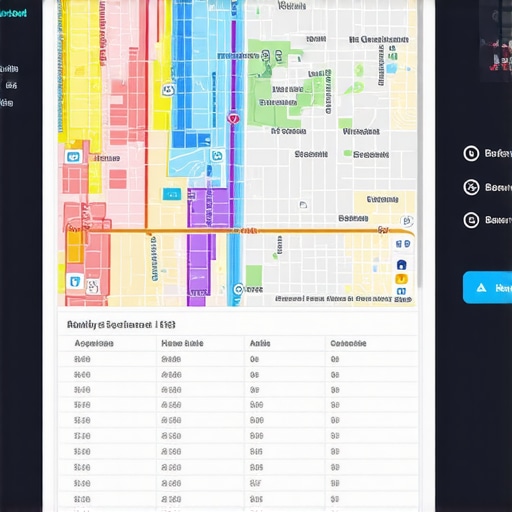
Building the stack is only half the battle. If you aren’t monitoring the health of your nodes, you’re flying blind. I personally rely on grid-tracking tools like Local Falcon because standard rank trackers are too broad. They might tell you that you’re #1 in the city, but the audit tool hack that found our hidden map pin errors showed me that we were actually #10 just two blocks away. To fix this, I look for the specific local schema tweak that validates your entity across the entire service area. This isn’t just about NAP; it’s about using the ‘sameAs’ property in your JSON-LD to tell Google exactly which high-authority profiles represent your business. As detailed in the official Google Search Central documentation for ‘Local Business structured data’, specifying these unique identifiers helps the algorithm disambiguate your shop from competitors with similar names.
How do I maintain my authority stack over time?
Maintenance is the part everyone ignores until their rankings tank. I make it a habit to how to audit your backlink profile before a major search update every single quarter. You have to look for ‘link rot’ or nodes that have been de-indexed. If a cloud page goes down, your whole stack loses its anchor. I’ve had to apply 3 entity sync fixes that save failing search authority stacks more times than I care to admit simply because a client changed their office phone number without telling me. You also need to keep an eye out for ‘ghost links’—mentions that Google has stopped counting. By using 4 ghost backlink fixes to save your competitive rankings, you ensure that the power continues to flow from your stack to your main site without interruption.
Take the City by Storm One Neighborhood at a Time
Once you’ve dominated your immediate neighborhood, the next step is scaling. But be careful: Google is sensitive to rapid, unnatural expansion. I’ve seen businesses get their entire profile nuked because they tried to rank for twenty cities at once without any real presence. You need to learn how to scale local map rankings without triggering a suspension by building unique authority nodes for each new geographic target. This is where authority stacking unveiled the hidden power for local SEO on a regional level. You aren’t just duplicating content; you are building a new digital footprint for every specific community you serve. This localized approach is much more sustainable than blasting the same backlink profile across different zip codes.
Why the Future of Search Depends on Real World Entities
Looking ahead, the game is shifting from ‘who has the most links’ to ‘who is the most verified entity.’ With the rise of AI-driven search results, Google wants to see undeniable proof of your physical existence and community impact. This is what agencies won’t tell you about the 2026 maps shift: the search engine will eventually stop relying on messy web signals and start relying almost entirely on verified entity graphs. My advice? Start deepening your hyper-local roots now. Try auditing your own local schema tonight. Look for the ‘sameAs’ attribute and point it at your most trusted authority node—you might just see your pin move by morning.
The Brutal Truth About Why Most Map Pins Stay Frozen
Over the last decade, I’ve realized that the biggest enemy of local growth isn’t your competition—it’s actually inconsistency. You can buy a thousand links, but if your data is fractured, Google will never grant you that top spot. I’ve seen businesses fail because they ignored the invisible citation error blocking your business from the top 3. My biggest lightbulb moment happened when I stopped chasing raw power and started chasing ‘entity validation.’ When you apply 3 entity sync fixes that save failing search authority stacks, you aren’t just doing SEO; you are building a digital identity that the algorithm can actually trust. Trust is the currency of the map pack, and it’s earned through precision, not volume.
Tools That Actually Move the Needle in My Daily Workflow
I don’t believe in bloated software, but there are a few essentials I never start a project without. First, you need a way to see the ‘invisible’ map grid, because a single ranking number is a lie. I always recommend getting the local search report that actually makes sense to owners so you can visualize your actual reach. I also live by the only checklist you need to measure real roi from google maps to ensure my efforts are translating into actual phone calls, not just vanity metrics. These tools help you see where the ‘leaks’ are in your authority stack before they become ranking disasters.
[IMAGE_PLACE_HOLDER_WRAPUP]
Build Your Digital Fortress and Own Your Zip Code
Local search isn’t about being the biggest company in the world; it’s about being the most relevant one in your neighborhood. You have the ‘on the ground’ advantage that national directories can never replicate. By utilizing authority stacking unveiled the hidden power for local seo, you are effectively planting a flag in your city and telling Google exactly who you are. Don’t let the technical complexity scare you off. Start with one small sync fix today, and watch how the algorithm begins to reward your efforts. Your community is looking for you—make sure they can find you. Have you ever noticed your rankings change after fixing a tiny address error on one of your profiles? Let me know in the comments below!