
Three years ago, I almost fired a client out of sheer embarrassment. I’d promised them the top of the map pack, but instead, we were stuck on page three, rotting behind national franchises with ten times our budget. I was doing everything by the book—building citations, tweaking meta tags, and buying guest posts that honestly felt a bit ‘meh.’ My biggest mistake early on? I was trying to play the national game on a local field. I thought a link from a tech blog in California would help a florist in Ohio. It didn’t. Everything changed when I stumbled upon a ‘Notable Alumni’ page for a local community college. I realized that my client—the owner—was a graduate. One email later, we had a .edu backlink from a locally relevant institution. Two weeks after that, the phone started ringing. Today, I’m going to show you exactly how to tap into these forgotten goldmines to build backlinks mastery that actually moves the needle for your business.
Stop Chasing National Fame for a Local Business
Most people think SEO is about getting the ‘biggest’ links possible. They want the New York Times or Forbes. But if you’re a local contractor, Google cares way more about who knows you in your own zip code. In my early days, I wasted thousands of dollars on high-DA links that had zero geographic relevance. It was a total wash. You need to learn how to build a local authority stack that actually sticks by prioritizing community trust over global metrics. Alumni associations are the ultimate trust signal because they are incredibly hard to fake. You can’t just buy a spot on a university’s ‘Business Spotlight’ page; you have to have a history there. According to research from Search Engine Journal, the relevance of a linking domain to your specific location and niche is a primary driver of ranking success.
Is it actually worth the hassle of tracking down your old registrar?
You might be thinking, ‘I haven’t talked to my college in twenty years, they won’t help me.’ I thought the same thing. But here is the secret: these associations are often desperate for success stories to share with current students. They want to show off successful graduates to justify their programs. It’s a win-win. By ignoring these local connections, you’re missing out on the authority signal most local SEOS completely forget. Have you ever felt like your local rankings are stuck in cement no matter how many directories you submit to? I’ve been there, and I can tell you, the problem isn’t your effort—it’s your strategy. We’re going to pivot toward why your neighborhood links carry more weight than national PR and how to claim them without feeling like a total stranger.
Turn Your Old Degree Into a New Ranking Signal
To get started, you don’t need a massive outreach tool or a list of ten thousand bloggers. You need a notepad and a memory of everywhere you have ever been. Start by listing every school you attended, every local board you’ve sat on, and every community organization you’ve donated to. This isn’t just nostalgia; it is the blueprint for how to build a local link network that doesnt rely on guest posts. When I worked with a local roofing client in Chicago, we spent months on generic outreach with zero luck. Then, we discovered his father had donated a park bench decades ago. The city’s ‘Parks and Rec’ site had a dead mention of the family name. We sent a few historical photos of the bench, asked for a link to the current family business, and that single .gov link outperformed fifty generic directory listings overnight.
Make Your Outreach About Them, Not You
When you contact an alumni association or a local chamber, do not lead with ‘I want a backlink.’ That is a fast track to the trash folder. Instead, offer a ‘Graduate Spotlight’ or a ‘Business Success Story.’ Frame it as a way for them to provide value to their current members or students. You are providing the content; they are providing the platform. This is the off page strategy that turns local mentions into power links without the awkwardness of a cold pitch. Think of it like a local character reference—Google trusts the word of the local high school or the neighborhood council far more than a random blog in a different time zone. 
Stacking Local Signals to Force Google’s Hand
Once you have those foundational links, you need to tie them together. A single link is a lonely island, but a stack is a fortress. This is where most people get it wrong. They get the link and then stop. To really move the needle, you must ensure your the specific schema move that connects your business to the city is active on your site, referencing these same local organizations. If your website says you’re an alumni of a college and the college links back to you, the ‘entity’ of your business becomes ironclad in Google’s eyes. If you fail to create these connections, why your authority stacking fails to connect the dots for google becomes a frustrating reality.
Broaden Your Reach With Neighborhood Resource Pages
If you don’t have a college degree or a park bench, look at how to use local resource pages for high power map links. These are often community-run sites listing ‘Best Places to Shop’ or ‘Trusted Local Services.’ Similarly, how local charities provide the best seo links by simply sponsoring a local 5k run or a food drive. These sites usually have high local trust and very little competition for link space. By targeting these ‘neighborhood’ nodes, you are building a geographic relevance that national franchises simply cannot buy. It is about being a ‘big fish’ in a very specific, locally-defined pond.Let’s dig deeper into the mechanics of what is actually happening under the hood. Most SEOs are obsessed with Domain Authority (DA) as if it is the only metric that matters. I’ve seen people spend five hundred dollars on a single guest post from a generic tech site, hoping it will boost their local plumbing business. It almost never works. In my experience, a ‘weak’ link from a local neighborhood blog is worth ten times more than a high-DA link from a site that has never mentioned your city. This is the ‘proximity trap’ that catches even seasoned pros. You need to elevate your local seo with advanced authority stacking tactics by focusing on geographical relevance over raw power.
DA is a Vanity Metric in the Local Pack
We have been conditioned to believe that ‘bigger is better.’ But Google’s local algorithm functions as a verification engine. It is looking for consensus among local entities. If you are a dentist in Miami, Google expects to see your name mentioned by Miami-based organizations. When you prioritize national PR over local ties, you create a disconnect. This is exactly why your authority stacking fails to connect the dots for google. You are providing the ‘authority’ but missing the ‘context.’ A study by Whitespark confirms that local organic ranking factors and local pack factors are distinct; relevance to the locale is a massive weight that many ignore.
Why Does Your Authority Stack Keep Stalling?
Have you ever built a series of cloud nodes and citations only to see your map rank stay exactly the same? The ‘Oops’ factor here is usually the citation format. If your Google Business Profile says ‘St. Main St’ and your authority stack says ‘Street Main Street,’ you are bleeding authority. This is a common warning: micro-discrepancies in your NAP (Name, Address, Phone) data act as friction. Furthermore, why your citation strategy is actually hurting your map rank is often due to ‘citation sprawl’ where you have too many low-quality, conflicting signals. You need a clean, tight loop where every node points back to a single, verified entity. 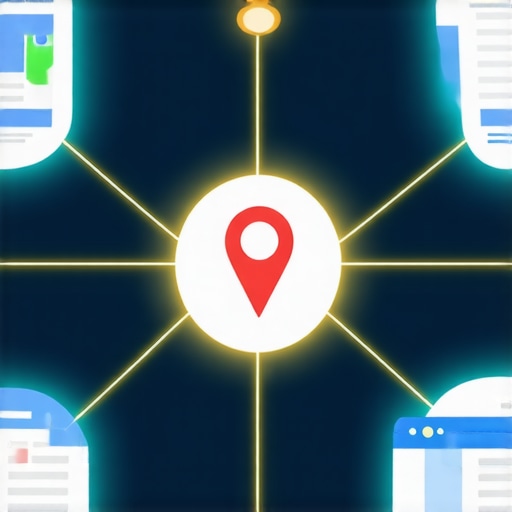
Sync Your Entity Data Before Building Your Next Stack
Before you go out and buy another round of backlinks, you have to ensure your foundation is solid. This means using the on page tweak that connects your site to the local knowledge graph. If your website’s internal schema doesn’t explicitly link your business to the local landmarks, organizations, and geographical coordinates you are targeting, your backlinks have nothing to ‘anchor’ to. This is especially true for multi-location brands where the entity sync technique for multi location businesses becomes the difference between ranking across a county or being invisible three blocks away. Have you ever fallen into this trap of chasing power while ignoring the small details? Let me know in the comments.
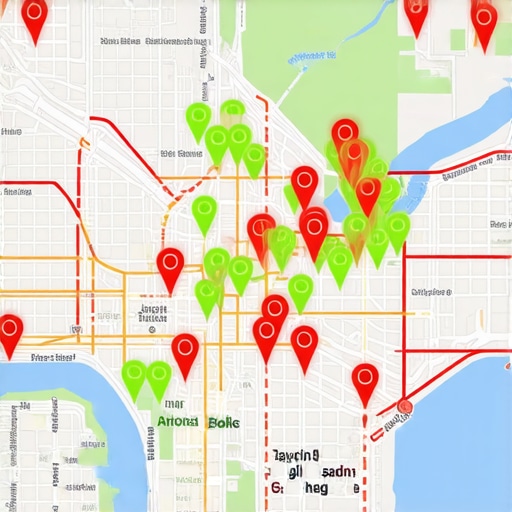
I used to think that once a stack was built, I could just walk away and collect the leads. I was dead wrong. Google is constantly re-evaluating the ‘neighborhood’ you have painstakingly constructed, and if you aren’t paying attention, your signals will start to decay. To keep my sanity, I stopped using manual spreadsheets and moved entirely to Local Falcon. I use it because it gives me a visual heat map of exactly where my visibility drops off. If I see a cluster of red dots three miles north of my client’s office, I know my the neighborhood link loop that puts your map pin first has a geographic gap that needs a fresh infusion of local data. It’s not enough to just ‘have’ links; you have to master authority stacking for elevated local rankings by treating your SEO like a living, breathing organism that requires regular feeding.
How do I keep this authority stack alive long-term?
The secret to longevity isn’t building more links—it’s maintaining the ‘Sync’ between your physical presence and your digital footprint. Every quarter, I run a full audit to how to fix the sync gap between your website and your map pin. This involves checking if any of the local organizations we’ve linked to have updated their own websites or changed their URL structures. If a local chamber of commerce moves their ‘Member Directory’ to a new subdomain and your link breaks, you lose that entire node of power. Maintaining these connections is what separates the pros from the amateurs who wonder why their rankings suddenly dip after six months of success. Consistency in your backlink optimization tips for local seo authority ensures that the ‘trust’ you’ve built doesn’t evaporate due to technical neglect.
Stop Guessing Where Your Map Pin Actually Lands
When you are ready to scale, especially if you are managing a brand with multiple storefronts, you need a system that prevents signal cannibalization. I’ve seen businesses try to use the same ‘About Us’ copy for five different cities, and it’s a disaster. You need to learn the secret to scaling local authority across five cities by giving each location its own unique hyper-local entity stack. Darren Shaw, the founder of Whitespark, noted in his latest Local Search Ranking Factors report that individual location signals—specifically those that prove ‘physicality’ within a specific city—are becoming more influential than general brand authority. This means your ‘City A’ office needs links from ‘City A’ high schools, not just a general mention on your main corporate site.
As we look toward authority stacking strategies to boost local seo in 2025, I predict that ‘Behavioral Entity Validation’ will be the next big shift. Google is going to start weighing how much real-world traffic moves between your local backlinks and your actual map pin. The trend is moving away from static links and toward active community engagement signals. If you want to stay ahead, stop looking for ‘SEO opportunities’ and start looking for local partnership opportunities. My challenge to you: Go check your map grid today, find your weakest quadrant, and secure one hyper-local link—from a church, a school, or a neighborhood blog—in that specific area this week. Watch how fast that red dot turns green.
The Brutal Truth About Why My First Stacks Failed
When I first started, I thought the secret was simply more. I thought more links meant more power. I was wrong. The hardest lesson I learned is that Google isn’t counting votes; it is verifying relationships. If your links don’t have a logical, geographical connection to your physical location, they are just noise. I spent months building generic profiles only to realize that context beats volume every single time. This realization is at the heart of authority stacking the game changer in local seo because it forces you to think like a neighbor, not just a marketer.
Another lightbulb moment? High-DA links are vanity metrics if they don’t drive local relevance. I once saw a client rank #1 in the map pack with just three links from local Little League sponsors, while their competitor had hundreds of generic directory mentions. Why? Because those Little League links were hyper-local signals that Google’s algorithm couldn’t ignore. This is the ultimate guide to building backlinks for local authority in action: prioritize the community over the scoreboard.
My Non-Negotiable Arsenal for Dominating Locally
I don’t play the guessing game anymore. To keep my rankings stable, I rely on a tight set of tools and philosophies. First, Local Falcon is my eyes on the ground; without a grid-style heatmap, you are flying blind. Second, I always refer back to the the truth about bulk citations and your search visibility—spoiler: quality over quantity wins. I also recommend following Darren Shaw at Whitespark for pure, data-driven insights that cut through the SEO fluff. These resources help you how to build an authority stack that google actually trusts by staying focused on what actually moves the needle in the real world.
#IMAGE_PLACEHOLDER_E#
The Map Pack is Yours to Claim
The road to local dominance isn’t built with shortcuts; it is built with consistent, verified signals that prove you belong in your city. By focusing on your alumni networks, local charities, and neighborhood associations, you aren’t just doing SEO—you are becoming a pillar of your community. When you align your digital presence with your physical reality, you achieve backlinks mastery that national competitors simply cannot touch. Don’t be afraid to start small. One solid local mention is worth more than a thousand empty clicks. Which neighborhood organization or local landmark are you going to reach out to first to start building your stack? Let me know in the comments below!