I remember sitting in my home office at 2 AM, the blue light of the monitor searing my eyes as I watched my third Google Business Profile of the month flip to that dreaded red “Disabled” status. I had tried to expand my service from my home turf in Austin into four neighboring cities, but I did it the lazy way. I used template pages, generic phone numbers, and cheap citations. It was a total train wreck. I felt like a fraud, and the algorithm knew it. Expanding your reach shouldn’t feel like you are playing a high-stakes game of poker where the house always wins, yet that is exactly where I found myself three years ago. I had to learn the hard way that Google doesn’t just want to see your name; it wants to see your digital roots.
Stop Fighting the Map and Start Building a Real Presence
Most of us start small. We dominate our own backyard, and then we get ambitious. We want the next city over, then the one after that. But here is the cold, hard truth I realized during my recovery phase: what works for one zip code usually falls flat when you try to 10x it across a region. You cannot just buy a handful of directory listings and expect to beat the guy who has been the local hero in that city for twenty years. You need to understand the entity sync technique for multi-location businesses if you want the search engine to actually believe you exist in those other markets. My biggest mistake early on was thinking a local area code was a silver bullet. It wasn’t. I ended up with a mess of inconsistent data that took me six months of manual cleanup to fix.
The secret to growth isn’t just doing “more SEO.” It is about creating a web of trust that bridges the gap between your main hub and these new territories. We are going to look at how to build that bridge today so you do not end up with a “suspended” badge on your dashboard. According to research cited by Search Engine Land, nearly 46% of all Google searches have local intent, yet most businesses remain invisible just five miles outside their front door. It is a massive opportunity if you know how to leverage authority stacking as the game changer in local SEO. Have you ever tried to push into a new city only to find your map pin stuck on page ten? It is frustrating as hell, and I want to help you skip that headache.
Can you really rank without a physical storefront in every city?
I hear this concern every single week from business owners who are terrified of the “proximity” filter. They think if they do not have a physical lease in all five cities, they are dead in the water. I am here to tell you that is just not true, but you have to stop acting like a robot and start acting like a neighbor. You can win the map pack without a massive real estate budget, but it requires a very specific approach to how you connect your digital assets. I want to know, have you ever had a listing ghost you just as things were starting to pick up momentum? That is exactly what we are going to fix by learning how to scale multi-location SEO without getting your pins suspended through smarter, hyper-local tactics that actually stick for the long haul.
Sync your digital identity before you spend a dime
Think of your digital presence like a GPS system. If one satellite says you are at the coffee shop and another says you are in the middle of a lake, the system loses trust and stops giving directions. Google works the same way. Before you try to conquer a new city, you must ensure your business name, address, and phone number (NAP) are identical everywhere. I once worked with a plumber in Round Rock who was invisible on the map despite having fifty reviews. We found that half his listings used “Suite 102” and the other half used “#102.” It sounds trivial, but it was enough to trigger a validation error. You have to fix the NAP discrepancy Google won’t tell you about before you even think about aggressive expansion.
The on-page tweak that connects your site to the local knowledge graph
Your website needs to act as the “source of truth.” This isn’t just about putting your address in the footer. You need to use the on-page tweak that connects your site to the local knowledge graph by embedding specific Schema markup that references local landmarks and geo-coordinates. This is how you prove to the algorithm that you aren’t just a “ghost” office. When I finally applied this to my Austin-based agency, I saw my “service area” map expand by three miles in a single weekend. It is about creating a digital breadcrumb trail that leads straight to your door.

Build a neighborhood link loop that sticks
Backlinks are often treated like a popularity contest, but for local SEO, they are more like a character reference from a neighbor. A link from a local high school booster club is often worth more than a generic link from a tech blog in another country. You need to understand how to use backlinks effectively to enhance local search presence by focusing on hyper-local relevance. I started reaching out to local charities and small neighborhood blogs to build these relationships. This created the neighborhood link loop that puts your map pin first because it signals to Google that you are a vital part of that specific community’s ecosystem.
How to build a local authority stack that actually sticks
If you want to move the needle in a competitive market, you cannot rely on a single website. You need a multi-layered approach. This involves how to build a local authority stack that actually sticks by using cloud-based assets to mirror your business data. It is like building a series of guardrails around your main listing to protect its relevance. I remember a client in the carpet cleaning niche who was getting crushed by national franchises. We implemented the local entity sync move that forces hyper-local rank jumps, and within thirty days, they were outranking the big box stores because their local “authority stack” was more robust and geographically relevant than the generic corporate pages.
Let’s dig deeper into why most businesses hit a plateau after the initial setup phase. Everyone tells you that you need ‘more backlinks,’ but in the hyper-local arena, that advice is often toxic. I have seen countless business owners dump thousands into high-DR guest posts on generic tech blogs, only to see their map pin stay frozen in place. The reality is that Google’s local algorithm treats a link from a national news site differently than a link from your city’s Little League team. If the link doesn’t have a ‘geographic footprint,’ it does not help you dominate the local pack. You have to stop chasing vanity metrics and start looking for the authority signal most local SEOs completely forget to build.
Stop Chasing High-DR Links That Don’t Move the Needle
The biggest myth in the industry is that ‘all juice is good juice.’ In my experience, a Domain Authority 20 link from a local Chamber of Commerce will outperform a DA 80 link from a generic directory every single time. Why? Because search engines use links to validate your physical existence in a specific community. If your backlink profile is 90% national and 0% local, Google gets confused about where you actually serve customers. This is why many find that your backlink building technique is triggering spam filters instead of boosting your rank. You are building a digital identity that looks like a global affiliate site rather than a local service provider.
The Toxic Trap of Cheap Bulk Citations
Here is an ‘oops’ factor I see monthly: the $59 bulk citation package. Business owners think they are saving time, but they are actually creating a massive cleanup job for the future. These services often use automated bots that create duplicate listings or use slightly varied business names, which destroys your entity’s ‘sync.’ If you aren’t careful, your citation strategy is actually hurting your map rank by diluting your local authority. According to the Moz Local Search Ranking Factors survey, local relevance and NAP consistency are top-tier signals that outweigh pure link volume. If you haven’t been auditing your mentions manually, you might be feeding the algorithm conflicting data. Have you ever fallen into this trap? Let me know in the comments.
Does link velocity actually matter for a single-location shop?
Many advanced practitioners worry about ‘link velocity’—the speed at which you acquire new links. For a local plumber or lawyer, a sudden spike of 50 links in a week looks incredibly suspicious. Real local growth is slow and steady. You are much better off focusing on the ultimate guide to building backlinks for local authority which emphasizes quality over raw speed. When you layer these over a solid foundation, you begin to see the power of authority stacking for top local SEO results without triggering any red flags. It’s about building a digital fortress that competitors can’t easily replicate with a credit card and a few cheap orders.
Scaling your local reach is exhilarating until the first time you see a sudden drop in calls and realize your digital footprint is shrinking. I have learned that the biggest threat to your local dominance isn’t a savvy competitor—it is your own complacency. You cannot just build a stack and walk away; you need to know how to fix a local ranking drop before your client notices because, by the time they see it, you have already lost a week of revenue. I personally use a local search grid tool to track my ‘proximity heat map.’ It tells me if I am losing ground in the north or south of my target city, which is far more actionable than a simple ‘number one’ ranking report that doesn’t account for the physical distance between the searcher and my shop.
How do I maintain local authority over time?
Maintaining authority is about continuous validation of your entity. I make it a habit to audit my business health once a quarter. This doesn’t mean spending thousands on a consultant or a subscription you don’t use. You can learn how to clean up messy citations without using expensive tools just by spending a Saturday morning with a spreadsheet and some manual outreach to the core directories. The key is to keep the connection between your site and the map pin alive with fresh data. If you neglect this, you will eventually find that 3 crucial fixes for stacks that stopped moving your pin become your only option to save a sinking listing.
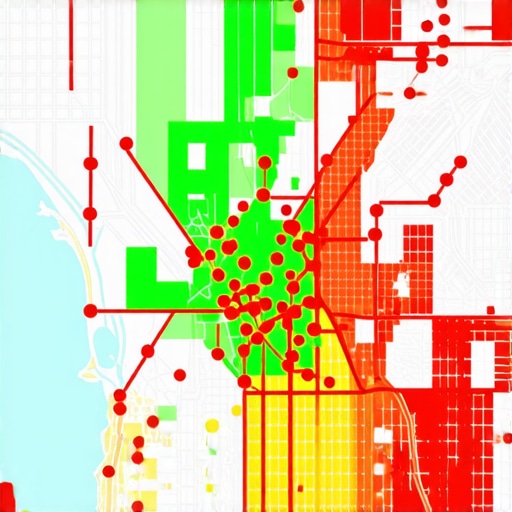
I predict that the future of local search will shift away from text-based queries toward ‘multi-modal’ search where your geo-tagged photos and neighborhood mentions matter more than your meta descriptions. Google is already getting better at recognizing the ‘vibe’ of a business through user-generated content. To protect against these shifts, I have started using cloud nodes to secure your local search presence. This creates a buffer of high-authority assets that the algorithm cannot ignore, even when it changes its mind about what it likes. It is all part of authority stacking unveiled as the hidden power for local SEO.
If you want to stay ahead, stop looking for ‘hacks’ and start looking for patterns. Niche experts like Greg Gifford often emphasize that local SEO is about proving ‘prominence’ through consistent signals. One tool I swear by is the Local Search Grid from BrightLocal; it is the only way I can see my actual reach across a specific zip code without driving around in a truck with a laptop. If you haven’t yet, you need to start mastering authority stacking for elevated local rankings to ensure your foundation is solid enough to handle the next core update. Go audit your three most important neighborhood links today and see if the sites they are on are still active and relevant. If they are dead links, replace them immediately.
Hard Truths I Learned While Rescuing Failing Map Listings
Over the years, I have realized that the flashy metrics most agencies sell you are often just smoke and mirrors. If you want to really win, you need to internalize a few lightbulb moments I had in the trenches. First, local proximity is not a permanent barrier; it is a challenge you can overcome by showing Google your business is more relevant than the guy next door. Second, I’ve seen that 3 entity sync fixes that save failing search authority stacks are often more valuable than a hundred generic blog comments. Third, never underestimate the power of a single, well-placed mention on a neighborhood association site. If you can achieve backlinks mastery to boost your local SEO authority in 2025, you won’t just survive algorithm shifts—you will thrive in spite of them.
#IMAGE_PLACEHOLDER_E#
The High-Authority Toolkit That Actually Moves the Needle
I don’t believe in hoarding secrets, and I definitely don’t believe in using tools just because they are popular. For anyone serious about this, I recommend BrightLocal specifically for their grid tracking—it’s the only way to see if you are actually winning the street corner across town. For citation cleanup, I’ve found that cleaning up messy citations without using expensive tools is a skill every owner should master before they outsource. Finally, if you are looking for a blueprint, check out authority stacking strategies to dominate local search. These are the frameworks I use to ensure every link and every cloud node works together instead of fighting for attention.
Stop Dreaming of the Top 3 and Start Building Your Fortress
The transition from invisible to indispensable doesn’t happen overnight, but it does happen with consistent, intentional effort. You have the tools, the logic, and the examples of how to turn a dead GMB listing into a high-volume lead machine. Now, it is up to you to stop being a passive observer of the algorithm and start becoming the authority that search engines cannot ignore. Remember, local SEO is about the long game of trust. Go out there, audit your citations, and build that first high-power neighborhood link today. Have you ever felt like your map pin was invisible despite having great reviews? Let me know in the comments below and let’s troubleshoot it together!