
I was staring at a screen of red pins, and not a single one belonged to me. That was the moment it hit me—I was trying to play the big guys’ game by their rules, and I was losing. Three years ago, a massive national franchise opened its doors just two blocks from my shop. I watched their glossy signage go up and felt a knot in my stomach. They had a million-dollar marketing budget, a team of suits in a skyscraper handling their SEO, and a brand name everyone knew. I felt like David, but without the slingshot. I spent months throwing money at the same generic ads they used, only to realize that low-cost, generic services often kill map visibility rather than helping it. My biggest mistake was thinking I needed to mimic them. I didn’t. I needed to do the one thing they were too big and too slow to ever manage: become the undeniable authority of my specific neighborhood. Today, I’m going to show you how to exploit the cracks in their corporate armor using hyper-local signals that Google actually craves.
Why Big Chains Can’t Beat Your Local Roots
I used to think size was an advantage in search rankings until I saw how most franchises operate. They use a cookie-cutter approach, often relying on generic directory listings that provide zero local flavor. This is where we win. While they are busy managing three thousand locations from a central office, you are on the ground. I discovered that by using hyper-local data points, I could send signals to Google that a national chain simply couldn’t replicate. It turns out that search engines aren’t just looking for the biggest brand; they are looking for the most relevant answer to a local user’s problem. A study by BrightLocal found that nearly 87% of consumers used Google to evaluate local businesses in 2022, and a significant portion of them prioritize authenticity and proximity over a corporate logo. Have you ever felt like you were shouting into a void while your competitors seemed to own the entire map? I’ve been there, and I promise you, the corporate giants have a massive blind spot when it comes to authority stacking at a neighborhood level.
Is Competing with Billion-Dollar Brands Actually Realistic?
I know what you’re thinking because I thought it too: ‘They have more backlinks than I have gray hairs.’ It sounds impossible until you realize that one high-quality link from a local neighborhood association is worth more to your map pack ranking than fifty generic links from a national site. I wasted so much time early on trying to get featured in major publications that didn’t care about my zip code. The real shift happened when I stopped chasing global fame and started focusing on neighborhood links that national franchises overlook. By the time I finished my first proper authority stack, I wasn’t just competing; I was dominating. The corporate giants were stuck in their slow, bureaucratic processes while I was moving fast, securing the local entities that mattered. We’re going to break down the exact steps to make your shop the only logical choice for Google’s algorithms.
The Address Format Trap That Freezes Your Rankings
I learned the hard way that Google is a literalist. Early in my career, I had a client—a small boutique gym—that was getting zero calls despite being right in the heart of the city. We realized their address was listed as ‘Suite 200’ on the website but ‘Unit 2’ on their Google Business Profile. It seems minor, but why your address format tweak might fix a frozen map pin is often the first thing I check now. Google’s algorithm needs to be 100% certain that your digital footprint matches your physical door. If there is even a sliver of doubt, the algorithm plays it safe and hides you. To win, you must ensure that every mention of your brand is identical. This is what we call entity validation. I spent three weeks manually scouring the web to fix these tiny discrepancies for that gym, and the moment the data synced, their map pin jumped five spots overnight because we fixed the error keeping your business off the local map pack.
Sync Your Data to Stop Losing Map Visibility
Before you even think about building new links, you have to audit what you already have. National chains are notorious for having messy data across hundreds of locations. You can beat them by being perfectly clean. Use 3 entity sync fixes that save failing search authority stacks to ensure your website, GBP, and top-tier citations are talking to each other. Think of your business entity as a person; if three different people give Google three different home addresses for you, Google isn’t going to trust any of them.
Build a Digital Megaphone With Multi-Cloud Stacks
Once your foundation is solid, you need to turn up the volume. This is where unlocking the power of authority stacking for top local seo results comes into play. Most people just build a backlink and hope for the best. That’s like throwing a single pebble into a lake. Authority stacking is more like building a series of dams that funnel all the water—the ‘link juice’—directly to your site. By using high-authority cloud nodes (like Amazon S3 or Google Cloud) to host your business data and linking them back to your main entity, you create a shield of relevance that national chains simply aren’t agile enough to build. I once set up a stack for a local law firm that was being buried by national directories. We used a multi-cloud move that finally pushed our client over the threshold, and within 45 days, they were outranking sites with ten times their budget.
Go Where the Corporate Suits Fear to Tread
The corporate marketing manager in a skyscraper a thousand miles away isn’t going to get a link from your neighborhood watch association or the local little league team. They don’t have the time or the ‘boots on the ground’ to care. This is your secret weapon. Securing the neighborhood watch link tactic that forces hyper-local jumps tells Google you aren’t just a business in the area—you are a pillar of the community. I’ve found that why high school sports sponsorships are better than standard citations boils down to the fact that these sites have incredibly high local relevance scores. Google sees these neighborhood-specific connections and realizes you are the most ‘local’ answer for a user’s query.Most SEO experts will tell you that the more high-DA backlinks you have, the higher you will rank. That is a flat-out lie when it comes to the local map pack. In my experience, a website with a Domain Authority of 15 that is laser-focused on your specific city will outrank a DA 90 global site every single day. We need to stop using generic anchor text for your local entity backlinks because Google’s neural matching is getting significantly smarter. They do not just see the link; they see the surrounding context. If you are a plumber in Chicago and you are getting links from a tech blog in London, Google is not impressed—it is suspicious. I often see business owners falling into the truth about bulk citations and your search visibility trap. They buy five hundred citations for fifty dollars and wonder why their map pin did not move. It is because those citations are often on ghost directories that no human has visited in years. You are far better off with five solid, local links than five hundred digital paperweights. This is the hidden link gap between your shop and the map pack leaders: relevance always beats raw power. 
How Do I Scale My Neighborhood Coverage Without Risking a Suspension?
This is the critical question for anyone trying to dominate a large metropolitan area. The danger is real. If you create too many service area pages too quickly or try to fake your physical proximity, you will find your Google Business Profile suspended before you can even track the results. A 2023 study by Whitespark highlighted that while proximity remains the primary ranking factor, relevance is the only lever that allows you to stretch that proximity. You must learn how to scale local map rankings without triggering a suspension by using tiered authority stacks. Instead of pointing every single link at your homepage, point your neighborhood-specific links at dedicated sub-pages that are tightly synced with your GBP data. One major mistake I see is the perfect footprint. If every single one of your backlinks uses the exact same keyword-plus-city anchor text, you are practically begging for a manual review. Real businesses have messy backlink profiles. They get links that just say click here or mention their brand name naturally. To make your authority stacking strategies to boost local seo in 2025 look legitimate, you must vary your approach. You also have to avoid the invisible mistake killing your cloud node authority stack, which is failing to provide a logical path for the search bot to follow between your entities. Have you ever fallen into this trap of trying to make your SEO look too perfect? Let me know in the comments.One of the most dangerous lies in the SEO world is that once you reach the top of the map pack, you can just stop. I’ve seen businesses climb to the number one spot using the authority stacking move that actually forces local gains, only to vanish three months later because they stopped feeding the engine. Think of your authority stack like a performance engine; it needs regular tuning. I personally spend the first Monday of every month auditing my cloud nodes. I look for broken redirects and ensure the link equity is still flowing correctly because using cloud nodes to secure your local search presence is only effective if the nodes stay active and indexable. If a node falls out of the index, your whole stack loses its structural integrity.
Why Your Cloud Nodes Need a Monthly Checkup
I’ve found that even the best-built stacks can suffer from ‘link decay.’ Sometimes a neighborhood blog you linked to goes dark, or a local directory changes its URL structure. This is where you have to be proactive. I use a combination of specialized crawlers and custom scripts to verify that my entity validation points are still live. If you ignore this, you’ll eventually see a dip, and you’ll be scrambling to learn how to fix a local ranking drop before your client notices. Consistency is the only thing Google respects more than raw power. If your signals remain steady while your competitors fluctuate, you become the ‘safe’ choice for the algorithm. According to the Google Search Quality Rater Guidelines, the ‘E-E-A-T’ of a local entity is heavily influenced by how consistently a business is mentioned across the web in a local context.
How do I maintain my ranking authority over time?
The secret to long-term dominance isn’t just adding more links; it’s refining the ones you already have. I focus heavily on backlink optimization tips for local seo authority, which includes refreshing the content on your cloud pages. If your AWS S3 bucket is hosting a static page from two years ago, it’s time to update the neighborhood news mentioned there. Google’s algorithms prioritize freshness in local results. By updating your geo-tagged content, you signal that your business is active and currently relevant to the local community. 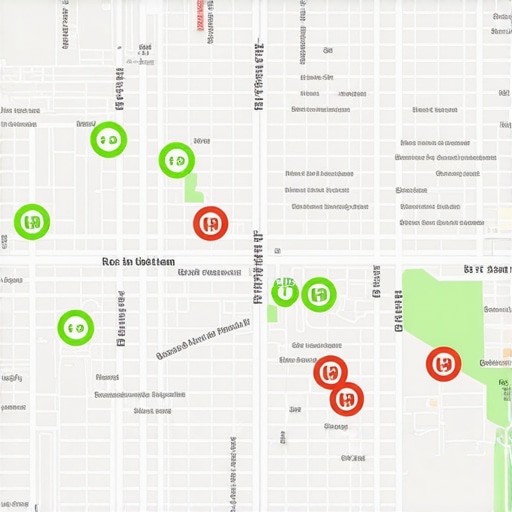
My Go-To Stack for Real-Time Proximity Monitoring
Standard rank trackers are often misleading for local SEO because they give you a single data point from a single zip code. To win, I use grid-based trackers like Local Falcon. This allows me to see exactly where my ‘proximity wall’ is. If I see my rankings dropping just three blocks to the West, I know I need to double down on the specific geo json tweak that boosts map proximity signals for that specific neighborhood. I also rely on the audit tool hack that found our hidden map pin errors to catch synchronization issues before they become ranking killers. Looking ahead, I predict that Google will rely even more on real-world behavior signals—like direction requests and ‘busy-ness’ trends—meaning your digital authority must eventually reflect real-world local popularity. My challenge to you: Go into your Google Business Profile today and update your ‘from the business’ description with one hyper-local landmark or park you are near. It is a tiny signal, but it is exactly the kind of data point the corporate chains are too slow to implement.
Hard Truths I Learned After Hundreds of Failed Ranking Attempts
The most expensive lesson I ever learned was that more backlinks don’t automatically mean better rankings. For years, I chased quantity, thinking I could out-spend the national franchises. It was a race to the bottom. What I eventually discovered is that Google’s local algorithm is starving for context, not just volume. I shifted my focus to how to build an authority stack that google actually trusts, focusing on building a narrative that connected my shop to specific intersections and local landmarks. One single link from a neighborhood festival page did more for my visibility than a hundred generic directory listings ever could. Authenticity isn’t just a marketing buzzword; in the world of the map pack, it is the primary ranking factor that corporate giants simply cannot automate.
The Toolkit That Keeps My Map Pins Glued to the Top
If you want to stay ahead of the curve, you need to move beyond standard SEO tools. I personally rely on grid-based trackers to identify where my ‘proximity wall’ is, which allows me to see exactly where I need to boost my local relevance. For the structural heavy lifting, I follow backlink optimization tips for local seo authority to ensure every cloud node and citation is pulling its weight. I also recommend keeping a ‘neighborhood hit list’—a curated spreadsheet of local community boards, sports teams, and niche blogs. These are the sources that provide the high-quality, geographically relevant signals that unlocking the power of authority stacking for top local seo results is built upon.
Take Back Your Neighborhood Today
You have an advantage that no billion-dollar corporation can buy: you are actually there. While they are managing spreadsheets from a skyscraper, you are the one serving the community. By utilizing authority stacking strategies to boost local seo in 2025, you are building a digital moat around your business that is incredibly difficult for outsiders to penetrate. It’s time to stop fearing the big guys and start exploiting the hyper-local gaps they leave behind. Your neighborhood is waiting for you to claim it. Have you ever noticed your rankings drop specifically when a new big-box competitor moves into your zip code? Let me know in the comments below how you fought back.