
I remember sitting in my home office at 2 AM, staring at a spreadsheet of five-hundred-dollar ‘power’ backlinks that had done absolutely nothing for my client’s local ranking. It was embarrassing. I had promised this local baker the moon, but all I gave him was a lighter wallet and a link from a Swedish tech forum. That was my ‘lightbulb moment.’ I realized that Google didn’t care about the Domain Rating of a site halfway across the world; it cared about who the neighbors were talking to.
The Day I Stopped Chasing Big Media and Started Looking Next Door
I used to think that a mention on a massive national news site was the holy grail. I was wrong. In fact, why high-quality backlinks from local charities beat national media is a lesson I learned the hard way. When I finally convinced that baker to stop buying spam and instead sponsor a local youth shelter’s annual fundraiser, his map pin jumped four spots in a week. My biggest mistake early on was ignoring the ‘locality’ of a link. I treated SEO like a global popularity contest instead of a neighborhood reputation game. Local charities are the unsung heroes of backlink optimization tips for local SEO authority because they provide what no national site can: a rock-solid geo-signal that validates your business entity. According to research from Search Engine Journal, local relevance is often a more significant ranking factor for ‘near me’ searches than raw link equity from non-local sources. Today, I am going to show you how to find these local gems and why they are the secret sauce for authority stacking.
Are these charity links actually worth the effort?
You might be thinking that it is just easier to buy a link from a directory and call it a day. Sure, it is easier, but it is also a great way to get flagged. If you have ever wondered why your backlink building technique is triggering spam filters, it is usually because your link profile looks like a robot built it. Charity links look—and are—human. They carry a sentiment signal that machines cannot fake. Have you ever spent a fortune on ‘premium’ backlinks only to see your local rankings stay exactly where they were? If so, you’re not alone, and we’re going to fix that right now. [image]Think of a backlink like a character witness in a local court case. A celebrity in Los Angeles saying you are a great plumber in Chicago doesn’t mean much to the local jury. However, if the neighborhood priest or the high school football coach vouches for you, that testimony carries immense weight. This is exactly why 4 local charity links that provide more value than big media can revolutionize your visibility. Google looks for these local endorsements to verify that you actually exist where you say you do.
Find the Community Hubs That Google Already Trusts
Start by looking for organizations within a five-mile radius of your office. I’m talking about animal shelters, little league teams, and food banks. These sites often have high ‘trust’ scores but low ‘technical’ SEO knowledge, which is your opportunity. When you donate or sponsor, you aren’t just doing a good deed; you are securing a geo-relevant anchor. I once spent three weeks trying to get a plumber into the ‘Map Pack’ for a high-competition suburb. We were stuck at position seven. We didn’t need more reviews; we needed a better neighborhood footprint. We found a local historical society needing a website update. In exchange for a small donation, they featured him as a Heritage Sponsor with a full NAP mention. This is the neighborhood link loop that puts your map pin first. Within ten days, he was sitting at number two. 
How to Build a Local Link Network That Doesn’t Rely on Guest Posts
Most people fail because they think every link needs a five-hundred-word article attached to it. That is a waste of time for local SEO. You should focus on how to build a local link network that doesn’t rely on guest posts by targeting sponsorship pages and resource lists. Look for the ‘Support Us’ or ‘Our Partners’ pages on local non-profit sites. These pages are naturally crawled by Google and provide a direct entity connection. When you get listed, ensure your business name, address, and phone number are formatted exactly as they appear on your Google Business Profile. This consistency is the local entity sync move that forces hyper-local rank jumps because it resolves any identity confusion the search algorithm might have.
The Simple Tweak for Higher Google Maps Click Through Rates
Once you have these local links pointing to your site, you need to make sure the traffic they send—and the way Google sees them—is optimized. Always ask your local partners to include a map embed if possible. A link is good, but a link next to a Google Map embed of your location is a massive relevancy signal. This is often the simple tweak for higher google maps click through rates because it helps Google’s proximity filter understand your reach. If the charity website is too basic for a map, even why your business name on a pdf still passes seo value becomes relevant; if they host a PDF flyer of their sponsors, Google’s crawlers can still extract your NAP data from that document to verify your business entity. Stop over-complicating it with global metrics and start winning the trust of your own zip code.Most SEO agencies will show you a spreadsheet of high Domain Rating (DR) links and tell you you’re winning. But here is the truth: a DR 80 link from a generic guest post site is often worthless compared to a DR 10 link from your local high school football team’s booster club. I’ve seen businesses spend thousands on ‘premium’ packages only to wonder why most local seo packages fail to move your map position. The problem is that Google’s local algorithm is increasingly suspicious of ‘perfect’ link profiles. If your local plumber only has links from tech blogs in Silicon Valley, it triggers a massive red flag. This is exactly why your backlink building technique is triggering spam filters. You aren’t building a local identity; you’re building a digital paper trail of manipulation.
Stop Obsessing Over Domain Authority for Your Local Shop
In my experience, ‘relevance’ is the new ‘authority.’ I would take one link from a neighborhood association over ten national directories any day. Why? Because the neighborhood link carries a proximity signal that national sites cannot replicate. This is why your neighborhood links carry more weight than national pr. When you focus solely on big numbers, you miss the granular data points that actually move the needle in a 5-mile radius. A study by BrightLocal recently highlighted that ‘local relevance’ and ‘NAP consistency’ are far more predictive of Map Pack success than traditional link equity alone.
Is your anchor text actually too perfect for Google?
This is the biggest ‘oops’ factor I see with advanced users. They use ‘Plumber Chicago’ as the anchor text for every single local link. That is not how humans link to things. Real local organizations link to your business name or just your website URL. Over-optimizing your anchors is the map ranking mistake that most small businesses make. To truly dominate, you need to use natural, branded anchors that reinforce your entity. If you aren’t sure how to balance this, look into stop using generic anchor text for your local entity backlinks to find the right ratio. 
The Entity Sync Gap That Breaks Your Rankings
You can have the best links in the world, but if your website’s Schema doesn’t match the data on those links, Google gets confused. This ‘sync gap’ is a silent killer. It’s why 3 entity sync fixes that save failing search authority stacks are so critical for my clients. If a local charity lists your old phone number, but your Google Business Profile has a new one, the authority from that link doesn’t ‘stick.’ This is why your authority stacking fails to connect the dots for google. You must treat your local link building as a verification process for your business entity, not just a way to pass ‘juice.’ Have you ever fallen into this trap of chasing high metrics while ignoring the local data sync? Let me know in the comments. I’ve been there, and I want to help you fix it. If you’re struggling with a pin that won’t move, you might be dealing with the invisible mistake killing your cloud node authority stack. It usually comes down to one or two minor data discrepancies that are confusing the algorithm’s trust in your physical location.Once I have the links and the entity sync in place, my job isn’t done. I spend about 15 minutes a week using Screaming Frog. I don’t just use it for standard site crawls; I use the ‘Custom Extraction’ feature to scrape the specific sponsorship pages I’ve secured. I’m looking for any change in my NAP (Name, Address, Phone). If a charity updates their site and accidentally drops my suite number, the link loses half its power. This is how I manage to fix the sync gap between your website and your map pin before it impacts the rank. I also rely heavily on Local Falcon to track my geo-grid. If I see a specific corner of the neighborhood turning red, I know exactly where my proximity signal is weakening.
How do I maintain my authority stack over time?
Consistency is the enemy of entropy. I treat my stack like a garden. Every quarter, I audit the ‘cloud nodes’ I’ve built. If you aren’t sure what those are, you should look into using cloud nodes to secure your local search presence. I make sure the internal linking between these nodes is still active and that the redirects hasn’t broken. 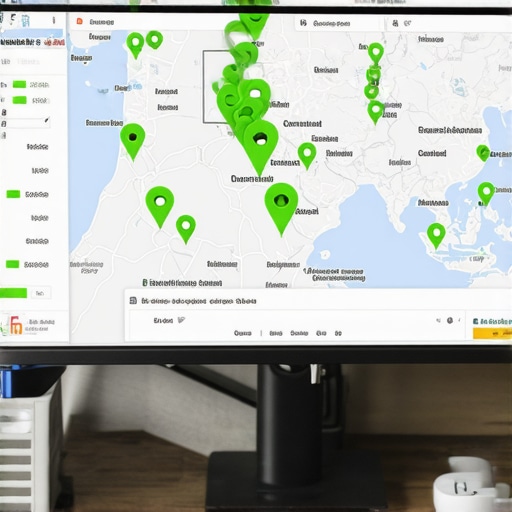 For my multi-location clients, the stakes are even higher. You have to learn how to scale multi-location seo without getting your pins suspended because Google’s ‘Vicinity’ filter, as noted by local SEO expert Joy Hawkins, is increasingly aggressive at filtering out businesses that look like they’re ‘gaming’ the radius.
Why Google’s future is about movement not just mentions
I predict that by 2026, the weight of a backlink will actually decrease in favor of ‘Real World Signals.’ Google already tracks mobile device location data. If they see people visiting your shop after visiting the local charity you sponsor, that’s a 10x stronger signal than any hyperlink. This is the ultimate evolution of authority stacking strategies to boost local seo in 2025. We’re moving from ‘digital mentions’ to ‘entity validation through physical proximity.’ If you want to stay ahead, stop thinking about robots and start thinking about how to get your brand into the physical path of your local customers. My advice? Take one of your high-performing local links this week and add a specific UTM-tracked map link to it. See if the interaction changes your insights data. It’s a small move, but it’s the authority stacking move that actually forces local gains.
The Hard Lessons That Moved My Map Pin When Nothing Else Would
Looking back, the biggest shift in my strategy happened when I realized that Google views your local business as an entity, not just a collection of keywords. One major lightbulb moment was discovering that how to use backlinks effectively to enhance local search presence is actually about quality over quantity. I spent years chasing high DR numbers only to find that a single link from a local high school booster club did more for a client’s ranking than ten guest posts on generic tech blogs. I also learned that patience is a weapon; backlinks mastery boost your local seo authority in 2025 requires watching how your neighborhood interacts with your brand, not just how many links you can buy. Finally, never underestimate the power of the ‘unoptimized’ link. A simple mention of your business name in a local news story often carries more weight because it feels—and is—natural.
The Gear and Communities I Use to Stay Ahead of the Algorithm
If you want to build a bulletproof presence, you need the right tools in your belt. I personally swear by Local Falcon for visualizing the geo-grid; it stops you from guessing where your visibility ends. For those who want to how to build an authority stack that google actually trusts, I recommend using Screaming Frog to audit your NAP data on your sponsorship pages monthly. I also frequently check the BrightLocal blog for their latest studies on local consumer behavior. For those ready to level up their technical game, I highly suggest mastering master authority stacking for elevated local rankings to ensure your digital footprint is cohesive across every platform you touch.
Own Your Zip Code Before the Giants Do
The window for easy wins in local SEO is closing as national brands catch on to these neighborhood tactics. However, they can’t fake the authentic local connections you already have. By implementing authority stacking and focusing on hyper-local signals, you are building a moat around your business that no algorithm update can easily wash away. Start small, pick one local charity to support this week, and ensure your link points back to a page that proves you are the local expert. Check out the ultimate guide to building backlinks for local authority to map out your next thirty days. Your future self—and your bottom line—will thank you for the effort you put in today. Have you ever struggled with getting a local organization to actually link to your site after a donation? Let me know in the comments below!