
I still remember the exact Tuesday morning my stomach dropped. I sat at my desk, staring at a screen that told me a harsh truth: my competitor down the street had just passed me in search rankings. The kicker? They had half my experience, but triple my customer reviews. Desperate, I immediately drafted a mass email to every customer I had served in the last six months. It was a pushy, desperate plea for five stars. The result? Two unsubscribes, one awkward phone call from a regular client, and exactly zero new reviews. I felt like a digital panhandler, and it was a massive, embarrassing mistake. I realized that begging doesn’t work, and being a nuisance only pushes people away.
The Fine Line Between Helpful Follow-Ups and Digital Harassment
We have all been on the receiving end of that relentless business owner who sends three texts, two emails, and an automated voice mail just because we bought a coffee or had a quick consultation. It is exhausting. Yet, we know that customer sentiment and active feedback loops are critical for local search visibility. The secret isn’t in the frequency of your requests, but in your timing and positioning. When you learn the exact way to ask for reviews without being annoying, you stop chasing people and start inviting them to share a genuine story. It is about turning a transactional moment into a relational one, which naturally feeds Google’s hunger for fresh user signals.
Are customer reviews actually worth the social awkwardness?
Absolutely, and the data backs it up. According to a landmark consumer survey by BrightLocal, 98% of consumers read online reviews for local businesses. This isn’t just a minor marketing tactic; it is the modern equivalent of personal trust. But if you are like me, you dread that awkward moment of asking. You worry you are burning goodwill. You might even have a stellar business but find yourself wondering why your competitor ranks higher with fewer reviews overall. The truth is, Google values the quality, recency, and organic velocity of your feedback over a stale mountain of old five-star ratings. Have you ever felt that hesitation to ask a happy customer for a review because you didn’t want to ruin the vibe? Let me know in the comments below, because I want to show you how to break that mental barrier once and for all.
Asking for feedback is not about begging; it is about establishing a systematic, repeatable process that turns standard transactions into powerful digital signals. Think of local SEO like a campfire. Your website content is the wood, but reviews and local signals are the oxygen that makes the fire roar. If you do not feed the fire with consistent, fresh user experiences, the flame dies out, leaving your business buried under pages of search results.
How to Build a Seamless Feedback System That Works
To break the cycle of awkward requests, you need a process that feels completely natural to your customer. I remember when I first tried automating this in my own business. I set up a clunky email sequence that triggered the moment an invoice was paid. It was cold and clinical, and for three weeks, nothing happened. The breakthrough came when I shifted the timing. Instead of sending an automated email late at night, I started sending a personalized text message exactly one hour after the service was completed, while the positive experience was still fresh in the customer’s mind. The response rate shot up by forty percent overnight because the request was timely and personal.
Create a frictionless path for your clients
The biggest reason customers fail to leave reviews is friction. If they have to search for your business name, click through multiple menus, and figure out where to write their thoughts, they will simply close the tab. You must provide a direct, single-click link that opens the review box immediately. This eliminates the middle steps and preserves their enthusiasm. Reducing friction is the absolute foundation of organic growth, much like how utilizing authority stacking strategies to dominate local search streamlines how search engines understand your business identity across the web.

Incorporate review requests into your daily workflow
Instead of treating feedback as an afterthought, make it a natural part of your service delivery. Train your team to mention the review process before the job is even finished. For example, a simple phrase like, ‘I want to make sure you are completely satisfied with our work today, as we rely on client feedback to improve,’ prepares the customer for the incoming request. When you combine this active approach with strong digital signals, such as using the one local link that outperforms 100 generic citations, you build an unshakeable foundation for your local search presence.
Analyze the true performance metrics of your business profile
Once the reviews start flowing, you must monitor how Google interprets these new signals. Many business owners make the mistake of looking at superficial metrics that do not actually translate to more customers. It is easy to get distracted by impressions and views, but these numbers can be highly misleading. If you want to understand how your feedback velocity is actually impacting your bottom line, you need to dissect your dashboard analytics and learn why your google business profile insights are lying to you about leads so you can make smarter, data-driven decisions.
I used to believe that local search was a simple numbers game. I bought into the industry consensus that more backlinks and a higher volume of citations would naturally force my business to the top of the map pack. But after watching countless campaigns flatline despite massive citation counts, I had to face a hard truth: the traditional playbook is broken. Google’s algorithm has grown incredibly sophisticated, and the old-school methods of blasting generic directory profiles no longer move the needle.
The Proximity Myth and the Illusion of Raw Link Volume
Everyone in the local marketing space tells you to build hundreds of citations and chase high-domain authority guest posts. In my experience, focusing on raw volume is a fast track to wasting your budget. A single, hyper-targeted local reference is worth more than a hundred generic directory listings that carry zero geographical relevance. When you rely on mass-produced profiles, you actually dilute your brand entity, making it harder for Google to understand where your business physically operates. If you want to break through the noise, you have to shift your focus from generic metrics to localized prominence.
Why are your high-authority national backlinks failing to move your local map pin?
This is the question that keeps sophisticated business owners up at night. They spend thousands on guest posts with high Domain Rating (DR) scores, yet their local rankings remain completely frozen. The answer lies in geographical entity verification. According to search authority studies by Moz and industry experts, Google’s local algorithm heavily prioritizes geographical relevance over standard link metrics. If a high-authority site has no semantic connection to your specific city or neighborhood, Google largely discounts its influence for local map queries. Instead of chasing national blogs, you need to understand the one local link that outperforms 100 generic citations to anchor your business to a specific physical location.
The Trap of Toxic, Multi-Cloud Spam Stacks
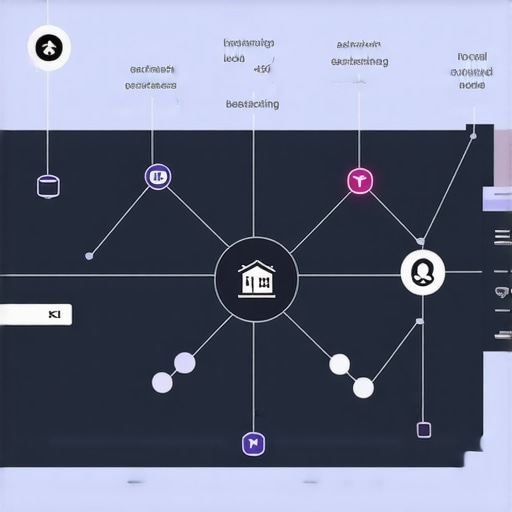
Another dangerous pitfall is the rise of automated authority stacking packages. Business owners buy cheap, automated setups thinking they are building a powerful digital fortress. In reality, these automated systems create messy, un-indexed loops of chaotic data that Google’s algorithm flags as spam. When you build these structures incorrectly, you end up triggering a filter that ignores your map listing entirely. To make this tactic work, you must learn how to structure a node stack that Google actually trusts, ensuring every single node represents a clean, verified connection to your primary entity.
Have you ever fallen into this trap of buying cheap link packages only to watch your rankings drop? Let me know in the comments below. If you want to build a truly resilient local brand, stop chasing shortcuts. Instead, focus on building clean, geo-relevant entity signals that prove to Google you are the definitive authority in your community. To take your strategy to the next level, start utilizing proven backlink techniques to dominate local search and watch your organic map visibility soar.
Maintaining a dominant local search presence isn’t about running an endless marathon of manual link hunting. It’s about building a machine that runs on autopilot while you focus on serving your clients. Once you have built your initial digital foundation, the key is execution and routine maintenance. When I first started, I wasted hours every single week manually scanning directories and double-checking maps. Now, I use a highly streamlined stack of specialized tools and strict monthly routines to keep my business anchored at the top of the local pack.
The Diagnostic Tools I Actually Open Every Single Week
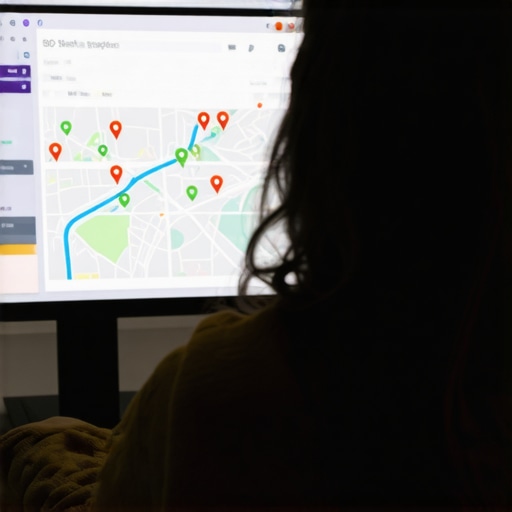
I don’t believe in vanity metrics or bloated, expensive SEO suites that try to do fifty things poorly. Instead, my weekly routine revolves around targeted diagnostics. I start with Local Falcon to run localized grid tracking, which shows me exactly how my map pin performs block-by-block. If I notice a sudden drop in a specific neighborhood, I immediately open the local seo audit tool that actually finds map errors to search for underlying data inconsistencies. Usually, a minor NAP mismatch or a rogue duplicate listing is the culprit, and finding it early prevents a minor dip from turning into a complete ranking collapse.
How do I maintain my authority stack over time?
The secret is treating your digital assets as a living network rather than a set-it-and-forget-it project. Every month, I perform a quick entity sync. I review my main cloud storage nodes to ensure they are still fully indexed and pointing directly to my updated business profile. If a node falls out of Google’s index, I use specific pinging techniques to force a re-crawl. To prevent long-term decay, you need to understand how to build a authority stack that actually survives algorithm shifts. This means keeping your external nodes contextual, clean, and directly tied to your primary schema markup.
My Future Predictions for Local Search and Entity Validation
Looking ahead, the local search landscape is shifting rapidly toward strict entity validation and AI-driven trust scores. Google is moving away from counting raw links and moving toward measuring real-world user engagement and verified offline signals. In the near future, I predict that businesses relying on automated citation spam will be completely filtered out of the map pack. To survive, you must anchor your business to verified local data sources, such as public registries and community events. If you want to future-proof your digital presence, I highly recommend that you stop chasing generic directory links and learn how to use public data to boost your local search presence to build an unshakeable, algorithm-resistant foundation. My challenge to you this week is simple: audit your three closest cloud nodes, verify their indexation status, and clean up just one broken entity connection.
I used to believe that local search was a simple numbers game. I bought into the industry consensus that more backlinks and a higher volume of citations would naturally force my business to the top of the map pack. But after watching countless campaigns flatline despite massive citation counts, I had to face a hard truth: the traditional playbook is broken. Google’s algorithm has grown incredibly sophisticated, and the old-school methods of blasting generic directory profiles no longer move the needle.
The Proximity Myth and the Illusion of Raw Link Volume
Everyone in the local marketing space tells you to build hundreds of citations and chase high-domain authority guest posts. In my experience, focusing on raw volume is a fast track to wasting your budget. A single, hyper-targeted local reference is worth more than a hundred generic directory listings that carry zero geographical relevance. When you rely on mass-produced profiles, you actually dilute your brand entity, making it harder for Google to understand where your business physically operates. If you want to break through the noise, you have to shift your focus from generic metrics to localized prominence.
Why are your high-authority national backlinks failing to move your local map pin?
This is the question that keeps sophisticated business owners up at night. They spend thousands on guest posts with high Domain Rating (DR) scores, yet their local rankings remain completely frozen. The answer lies in geographical entity verification. According to search authority studies by Moz and industry experts, Google’s local algorithm heavily prioritizes geographical relevance over standard link metrics. If a high-authority site has no semantic connection to your specific city or neighborhood, Google largely discounts its influence for local map queries. Instead of chasing national blogs, you need to understand the one local link that outperforms 100 generic citations to anchor your business to a specific physical location.
The Trap of Toxic, Multi-Cloud Spam Stacks
Another dangerous pitfall is the rise of automated authority stacking packages. Business owners buy cheap, automated setups thinking they are building a powerful digital fortress. In reality, these automated systems create messy, un-indexed loops of chaotic data that Google’s algorithm flags as spam. When you build these structures incorrectly, you end up triggering a filter that ignores your map listing entirely. To make this tactic work, you must learn how to structure a node stack that Google actually trusts, ensuring every single node represents a clean, verified connection to your primary entity.
Have you ever fallen into this trap of buying cheap link packages only to watch your rankings drop? Let me know in the comments below. If you want to build a truly resilient local brand, stop chasing shortcuts. Instead, focus on building clean, geo-relevant entity signals that prove to Google you are the definitive authority in your community. To take your strategy to the next level, start utilizing proven backlink techniques to dominate local search and watch your organic map visibility soar.
Maintaining a dominant local search presence isn’t about running an endless marathon of manual link hunting. It’s about building a machine that runs on autopilot while you focus on serving your clients. Once you have built your initial digital foundation, the key is execution and routine maintenance. When I first started, I wasted hours every single week manually scanning directories and double-checking maps. Now, I use a highly streamlined stack of specialized tools and strict monthly routines to keep my business anchored at the top of the local pack.
The Diagnostic Tools I Actually Open Every Single Week
I don’t believe in vanity metrics or bloated, expensive SEO suites that try to do fifty things poorly. Instead, my weekly routine revolves around targeted diagnostics. I start with Local Falcon to run localized grid tracking, which shows me exactly how my map pin performs block-by-block. If I notice a sudden drop in a specific neighborhood, I immediately open the local seo audit tool that actually finds map errors to search for underlying data inconsistencies. Usually, a minor NAP mismatch or a rogue duplicate listing is the culprit, and finding it early prevents a minor dip from turning into a complete ranking collapse.
How do I maintain my authority stack over time?
The secret is treating your digital assets as a living network rather than a set-it-and-forget-it project. Every month, I perform a quick entity sync. I review my main cloud storage nodes to ensure they are still fully indexed and pointing directly to my updated business profile. If a node falls out of Google’s index, I use specific pinging techniques to force a re-crawl. To prevent long-term decay, you need to understand how to build a authority stack that actually survives algorithm shifts. This means keeping your external nodes contextual, clean, and directly tied to your primary schema markup.
My Future Predictions for Local Search and Entity Validation
Looking ahead, the local search landscape is shifting rapidly toward strict entity validation and AI-driven trust scores. Google is moving away from counting raw links and moving toward measuring real-world user engagement and verified offline signals. In the near future, I predict that businesses relying on automated citation spam will be completely filtered out of the map pack. To survive, you must anchor your business to verified local data sources, such as public registries and community events. If you want to future-proof your digital presence, I highly recommend that you stop chasing generic directory links and learn how to use public data to boost your local search presence to build an unshakeable, algorithm-resistant foundation. My challenge to you this week is simple: audit your three closest cloud nodes, verify their indexation status, and clean up just one broken entity connection.
Hard Truths I Learned Trying to Force Google Maps Rankings
When I first jumped into authority stacking, I believed the common myth that more connections meant faster results. I spent sleepless nights manually mapping out node structures that resembled chaotic spiderwebs. Here are the core insights that saved my business from algorithmic oblivion:
- Complexity is the enemy of crawlability. Google’s bots have limited crawl budgets. A simple, clean path that connects your site directly to high-tier nodes is always more effective than a convoluted multi-tiered maze.
- Verification beats raw volume. Getting one high-quality, indexed node acknowledged by the search engine does more for your local prominence than running automated scripts on hundreds of unindexed, low-authority domains.
- Entity alignment requires constant tracking. Minor discrepancies in your NAP data across your digital properties can freeze your ranking momentum faster than any competitor activity. Regular checkups are mandatory.
- Local contextual anchors outperform high metric scores. A link from a low-DA local neighborhood association or chamber of commerce carries more geographic relevance than a DA-80 national blog post.
The Diagnostic Tools in My Active Rotation
You do not need to empty your wallet on complex enterprise platforms to get actionable local search insights. These are the practical resources I trust to analyze my digital footprint:
- Local Falcon: My go-to choice for visual map tracking that shows real-time rank positions across specific neighborhoods rather than single static points.
- Google Search Console: The ultimate diagnostic tool directly from the source. I use it weekly to monitor core search terms, analyze impressions, and see which nodes are actively generating organic clicks.
- Structured Data Testing Tool: A crucial utility to verify that my custom address schema is properly formatted and successfully connected to our Google Business Profile node.
Claim Your Space in the Top Three
Taking control of your search rankings does not require a massive agency budget. It takes systematic, intentional execution. By shifting your perspective away from empty vanity metrics and focusing instead on hyper-local entity verification, you will build an organic search strategy that naturally commands authority. Clean up your node links, align your local schemas, and watch your business dominate the map pack using proven backlink techniques to dominate local search.
Have you ever watched your local search rank drop after updating your business information? Let me know about your experience in the comments below.