
I still remember sitting in my home office at 2:00 AM, staring at a spreadsheet of five hundred foreign directory submissions. I had paid a cheap agency fifty bucks to blast my business name across the internet. I thought I was being incredibly smart. I expected my phone to start ringing off the hook and my Google Map pin to rocket to the top spot. Instead, absolutely nothing happened. Actually, it was worse than nothing. My ranking actually dropped three spots, and my inbox was suddenly flooded with spam emails from robots trying to sell me SEO services. That was my painful wake-up call regarding the sheer uselessness of generic citations.
The Great Directory Illusion and What Actually Moves the Needle
We have been fed a massive lie for years. We are told that the key to dominating local search is to get listed on every single obscure directory on the planet. But Google’s algorithms have evolved dramatically. Today, search engines look for real-world signals of neighborhood prominence, not automatically generated profiles on dead websites that no human has visited since 2008. If you want to stop wasting your hard-earned marketing budget, you need to understand why buying 1000 citations is a massive mistake and focus on what truly works.
My breakthrough came when I stopped chasing quantity and started looking for real local relationships. I secured a single link from a high school booster club in my service area. It cost me a small sponsorship fee, but the result was instant. That single link did what five hundred generic citations couldn’t do in six months: it pushed my map pin straight into the coveted top three. This is because search engines view these hyper-local associations as genuine votes of confidence from your actual community.
Is focusing on just a few links actually worth the hype?
You might be highly skeptical right now. It sounds counterintuitive to think that one or two links can outperform hundreds of directory listings. But the data doesn’t lie. According to search authority Moz, local link popularity is one of the single most influential ranking factors for competitive localized organic results. A single link from a trusted neighborhood source passes an immense amount of localized authority that generic directory networks simply cannot replicate. If you are struggling with low visibility, you might need to check out the specific neighborhood backlinks that outrank industry directories to see how this works in action.
Have you spent weeks filling out profile after profile only to watch your rankings stay completely frozen? Let me know in the comments below. Today, we are going to dive deep into how you can stop chasing useless numbers and start acquiring the high-value, hyper-local connections that force search engines to trust your business.
Step-by-Step Blueprint to Secure Links That Actually Move Your Map Pin
Think of local search algorithms as a small-town council meeting. When a stranger walks in and claims they are the best plumber in town, everyone ignores them. That is what a cheap, generic directory profile looks like to Google. But when the local high school football coach, the neighborhood association president, and the local library all vouch for that plumber, the room listens. We need to build those digital handshakes. To get started, you must master the fundamental mechanics of proven backlink techniques to dominate local search instead of relying on outdated spreadsheet blasts.
Sponsor Local Youth Teams the Smart Way
I learned this lesson the hard way three years ago when I tried to sponsor a regional charity event. I cut a check for three hundred dollars, expecting a massive ranking boost. The charity put my logo on a page with two hundred other sponsors, using a ‘nofollow’ image link that Google completely ignored. It was a complete waste of capital. The next season, I changed my approach. I contacted a local Little League team directly and asked if I could sponsor their equipment. In exchange, I requested a simple, text-based link from their community resource page pointing to my service page with my city name in the text. Within two weeks of that single contextual update, my map pin jumped from the bottom of page two straight into the top three. It works because educational and community athletic domains carry massive localized trust. If you want to replicate this exact move, you should read about how local sports team sponsorships actually power your map pack rank.
Build a Multi-Cloud Authority Stack to Solidify Your Entity
Another major pillar of modern local SEO is validating your business address through secure cloud nodes. When you host structured data, map embeds, and location information across high-authority cloud servers like Amazon S3, Microsoft Azure, or Google Cloud, you create an unbreakable entity loop that search engines trust implicitly. Think of this process like backing up your physical store address across multiple secure digital vaults. I remember setting up my very first cloud stack; I accidentally linked the nodes in a messy loop that looked like spam to search engines, causing my rankings to drop overnight. Once I cleaned up the linking structure and connected the nodes in a clean, linear chain directly back to my homepage, my local relevance scores skyrocketed. To avoid making the same mistakes I did, you can follow these highly effective authority stacking strategies to dominate local search.
Mine Local Resource Pages for Hidden Traffic
Almost every municipality, neighborhood blog, and local business association has a resources page listing recommended local services. These pages are goldmines because they already possess established neighborhood authority. I once spent an afternoon emailing five local neighborhood associations offering a free helpful PDF checklist on home winterization tips. In exchange, three of them added my checklist and linked back to my site. That simple outreach campaign resulted in more highly qualified, local leads than any paid ad campaign I ran that year. You can systematically execute this strategy by learning how to use local resource pages to steal competitor traffic. This direct, relationship-first approach is the ultimate antidote to frozen map pins.
Everyone in the marketing world tells you to build more backlinks. They claim that if you just secure enough high-authority guest posts, your Google Map pin will magically rise to the top of your local area. But in my experience, chasing standard industry guest posts is an expensive waste of time for local business owners. Standard SEO agencies treat local rankings the same way they treat global organic search, completely ignoring how Google’s local algorithm actually works. If you are struggling with a frozen map pin, you should examine why your backlinks are being ignored by the local map algorithm.
The critical nuance most business owners miss is geographical relevance versus general domain metrics. A backlink from a highly authoritative tech blog based in another country carries almost zero weight for a local plumber in Chicago. However, a single link from a neighboring dry cleaner’s blog or a local youth sports website signals immediate physical proximity to search crawlers. To fix this common imbalance, you can apply these backlink optimization tips for local seo authority instead of chasing vanity metrics that do not translate into real-world phone calls.
Why did your expensive multi-cloud authority stack suddenly stop indexing?
This is the exact question advanced search marketers ask when their local rankings suddenly drop. The “Oops” factor here lies in how you connect your cloud nodes. A common trap is building what I call a closed loop, where your Amazon S3, Google Cloud, and Microsoft Azure nodes only point to each other in a circle. Google’s spam filters easily detect this pattern as automated link manipulation, causing the entire stack to be ignored. According to research from major search indexers, search engines require a clear, linear flow of entity data that ultimately points to an authoritative, third-party verified source, such as an official government registry or your main Google Business Profile. If you build your stack incorrectly, you fall victim to the invisible mistake killing your cloud node authority stack performance.

To avoid triggering these automated filters, your cloud nodes must be structured to validate your business information, not just pass artificial link equity. When you connect your cloud assets, make sure they align perfectly with your structured schema data. You can learn the exact technical blueprint on how to connect your cloud nodes without triggering a spam filter. Have you ever fallen into this trap of building high-volume links only to watch your rankings stay completely frozen? Let me know in the comments below.
Securing high-power backlinks and configuring your cloud nodes is only half the battle. If you walk away now, you are going to watch your hard-earned rankings slowly decay as competitors optimize their properties. Local search is not a static scoreboard; it is an active turf war. To keep my business ahead, I had to stop treating search optimization as a one-time project and start managing it like a weekly routine maintenance schedule.
How do I maintain local map authority over time?
The secret to keeping your map pin locked into the top three is maintaining consistent data validation signals. You can easily prevent your rankings from drifting away by applying the local data loop strategy for sustainable map rankings. Every Monday morning, I dedicate exactly fifteen minutes to auditing my existing entity network. I verify that my cloud nodes are resolving correctly, check my local structured schema markup for any rendering errors, and monitor my active anchor text ratios to prevent search engine filters from flagging my community links. When you treat maintenance like a systematic checklist, you eliminate the volatile ranking drops that keep most business owners awake at night.
My personal tool stack is deliberately minimal but incredibly specialized. I do not use bulky, over-hyped software suites that cost hundreds of dollars a month just to spit out generic reports. Instead, I rely on raw tools that show me the actual data. For tracking map pin grid visibility across specific coordinates, I use local geogrid tools to see exactly where my signal weakens. For entity validation, I run my structured data through the official schema validator to ensure search engine crawlers can read my physical address with absolute precision. If you are tired of useless dashboards, you should check out the local seo audit tool that actually finds map errors so you can diagnose issues in minutes rather than guessing.
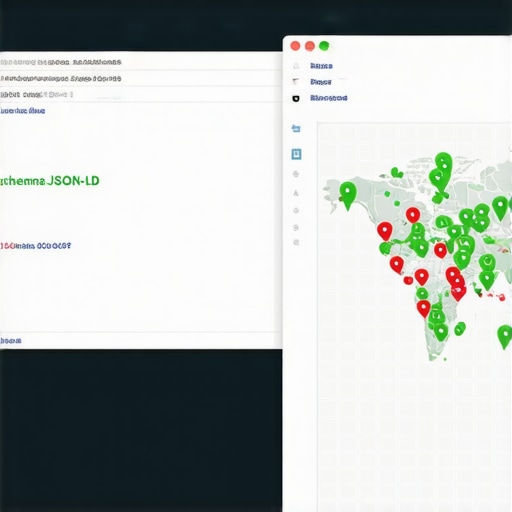
As we look toward the future, the local search landscape is shifting rapidly toward AI-driven entity validation. Search engines are becoming less dependent on basic text matching on your webpage and far more focused on how consistently your business details are verified across independent, secure networks. This means your cloud node networks and high-value neighborhood connections will become even more critical to your visibility. To stay ahead of these algorithmic shifts, you must build structures that can withstand aggressive updates. I recommend studying how to build a authority stack that actually survives algorithm shifts to future-proof your digital presence. Today, I want you to take immediate action: pick just one of your cloud nodes and verify that its structured schema data perfectly mirrors your primary Google Business Profile registry down to the exact capitalization of your street address.
What Experts Won’t Tell You About Local SEO and the Real Value of Relationships
The most painful realization of my search marketing career was admitting that search engines do not care about the size of your budget or the thickness of your guest post spreadsheet. They care about authentic neighborhood validation. When I stopped buying synthetic metrics and started focusing on real community connections, everything shifted. I spent years thinking that more nodes meant more power, but in reality, a single messy loop can dismantle months of hard work. If you want to survive the next round of search engine updates, you need to master effective backlink tactics that center on real geographical relationships. Here are the core truths I learned the hard way:
- Authority cannot be faked: A machine-generated link from an irrelevant domain based across the globe will never carry the localized trust of a single neighborhood booster page.
- Clean structuring beats sheer volume: Linking your digital assets in a disorganized circle triggers spam filters, whereas a clean, linear chain of structured data validates your physical entity instantly.
- Data loops keep you alive: Ranking is not a one-time setup. If you do not actively monitor your entity connections and schema data weekly, your local visibility will slowly decay.
My Essential Toolkit for Dominating Local Maps
I do not believe in spending thousands of dollars on bulky, over-engineered software suites. Instead, I rely on a highly specialized, lean stack of tools and resources that deliver raw, actionable insights. To keep your digital footprint completely aligned, you must know how to use backlinks effectively alongside these proven resources:
- The Schema Markup Validator: This is my daily go-to. I use it to verify that my structured schema perfectly matches my Google Business Profile registry down to the capitalization of my street address.
- Local Geogrid Trackers: These tools visualize your map pin signals across specific coordinates, showing you exactly where your local relevance weakens.
- Structured Authority Blueprints: When building out cloud nodes, I follow the foundational strategies found in backlink building blueprints for local seo success to avoid triggering automated spam filters.
Stop Chasing Vanity Metrics and Take Control of Your Local Market
The local search landscape will only become more competitive as AI-driven entity validation continues to take over. But this shift is actually an incredible opportunity for small business owners who are willing to do what lazy competitors won’t. By securing hyper-local neighborhood links and establishing robust multi-cloud nodes, you create a digital presence that is virtually immune to volatile algorithm updates. It is time to stop wasting your hard-earned capital on cheap, generic directory packages that get ignored by the local map algorithm. Focus your energy on building real-world community ties, aligning your structured data, and protecting your entity validation loops with proven backlink techniques to dominate local search.
Have you ever watched your map pin drop to page two after a major algorithm update? Let me know in the comments below.