
I remember sitting at my kitchen table three years ago, staring at a laptop screen that seemed to mock me. I had just launched my local service business, my savings were practically gone, and my Google Business Profile was buried somewhere on page eight. Every SEO agency I called quoted me thousands of dollars a month for fancy outreach campaigns and high-end guest posts. I didn’t have thousands of dollars; I had exactly zero dollars. In my desperation, I made a massive mistake: I bought a cheap pack of five hundred automated directory links off an online forum. Within two weeks, my rankings did not go up—instead, my profile completely vanished from the local map pack. It was a brutal lesson in how easily search algorithms can spot and punish low-grade, generic spam. That painful failure forced me to figure out how the local algorithm actually works when you cannot buy your way to the top. Today, we are going to solve the ultimate small business puzzle: how to build powerful local digital equity and outrank competitors with massive budgets, without spending a single dime. We will look at how to leverage hyper-local assets that big corporate agencies completely overlook.
Is free link building actually worth the hassle?
You might be highly skeptical right now. We have all been told that you get what you pay for, and that building links without a budget is a one-way ticket to wasting hundreds of hours on tedious outreach that gets ignored. But here is the truth: local search algorithms do not care about the size of your bank account; they care about hyper-local relevance. A massive corporate competitor might buy a backlink from a national business blog, but a single link from a local neighborhood group or youth sports team down the road carries a completely different type of geographical trust signal. In fact, search engines rely heavily on localized geographical data to determine real-world proximity and authority. If you are tired of watching your business get buried by big spenders, you do not need a bigger budget. You just need to change your strategy and start focusing on assets you already control. Have you ever spent weeks trying to get your business listed on high-priced directories, only to see absolutely zero movement in your local map rankings? If so, you are definitely not alone. The secret to breaking through is building a foundation that connects your digital footprint directly to your physical community. To understand how to align your digital presence with local geographic nodes, it is critical to look at how authority stacking unveiled can turn standard business listings into a powerful web of local trust. Once you stop chasing expensive national placements and start focusing on the local relationships right in front of you, everything changes.
How to Anchor Your Business Directly Into the Local Grid
Think of the local search algorithm as an over-cautious local detective. If you tell the detective you operate a plumbing shop in a specific neighborhood, they do not just take your word for it. They look for physical footprints, community chatter, and validation from trusted local institutions. Most businesses fail because they try to convince this detective using generic national directories that hold zero geographical weight. To build real authority, you must feed the algorithm local data loops that it cannot ignore.
A few years ago, when I was struggling to rank my first local client, I realized that standard directories were a dead end. In desperation, I spent a weekend mapping out every neighborhood association, youth sports league, and local community group in our city. I reached out to a small neighborhood watch group and offered to fix a technical bug on their community site in exchange for a simple resource link. Within ten days of that single, hyper-local link going live, our frozen map pin jumped from position eighteen to position four. It was messy, it took manual effort, but it proved that why neighborhood backlinks are better than niche guest posts is not just theory—it is a ranking reality.
Ditch the National Databases for Hyper-Local Clusters
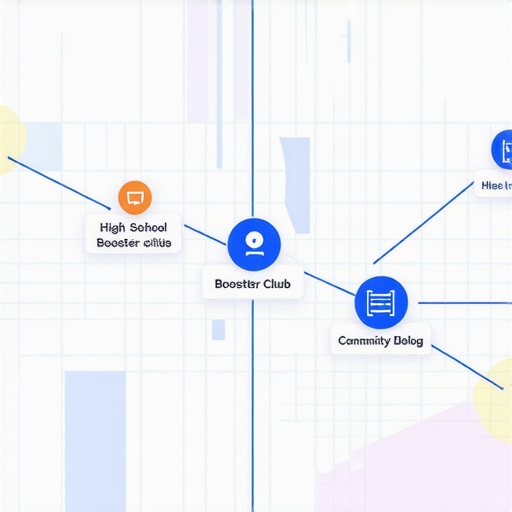
Stop wasting hours submiting your NAP (Name, Address, Phone number) to generic platforms that have nothing to do with your town. Instead, you need to seek out highly localized digital nodes. Look for local school booster clubs, neighborhood watch pages, or regional hobbyist blogs. These sites might have lower domain authority metrics on SEO tools, but they possess immense geographical relevance. When Google crawls a local high school website and finds a link pointing to your business, it registers a massive geographic trust signal that no national directory can replicate. You can easily target these high-value hubs by utilizing practical how to use local high school booster clubs for authority strategies to outpace your competitors.
Connect Your Digital Assets into an Unbreakable Stack
If you want to survive sudden search updates, you cannot rely on isolated links. You need to connect your assets so they reinforce one another. Think of this like building a digital spiderweb: if one thread gets hit, the rest of the web holds the structure in place. By linking your Google Business Profile to your local press releases, your local event pages, and your geo-targeted landing pages, you build a unified entity. Many business owners build these assets but keep them completely separated, which is why your authority stack fails to connect with local search nodes properly.
Use Digital Map Embeds and Geo-JSON to Prove Your Location
Do not expect search engines to guess your service boundaries. You have to explicitly define your service area using technical markups that search crawlers read instantly. By embedding customized Google Maps on your location pages and pairing them with structured schema data, you remove all ambiguity. However, you must avoid lazy copy-paste methods. Implementing this correctly means learning how to use local geo-json to clarify your service boundaries so that the map algorithm knows exactly where your trucks roll and which neighborhoods you serve every single day.
Why high domain authority metrics are lying to your local search campaigns
Everyone in the SEO industry seems obsessed with Moz’s Domain Authority (DA) or Ahrefs’ Domain Rating (DR). We are told that a link from a DA 80 site is always superior to a link from a DA 15 site. But in my experience, the local algorithm operates on a completely different set of rules where geographical proximity trump’s raw power metrics. A link from an authoritative national food blog might look great on paper, but a single link from your local little league team or town library tells the search engine exactly where your physical business operates. If you are constantly chasing high-DR guest posts and ignored by local customers, you are suffering from a disconnect. This is precisely why your backlinks are being ignored by the local map algorithm and why raw national authority often fails to move local map pins.
A fascinating study by Whitespark on local ranking factors confirmed that local relevance signals—such as geo-specific links and neighborhood citations—have a disproportionately higher impact on the local map pack than general organic search rankings. When you build links, prioritize geographical closeness over high-DR metrics. If a local business or organization is within a five-mile radius of your office, their link is gold, regardless of how ‘weak’ their website metrics appear in generic SEO software tools.
What is the silent trap destroying your local link-building campaign?
The most dangerous trap you can fall into is the ‘ghost backlink’ or orphaned authority stack. Business owners often build beautiful cloud-based stacks, Google Drive entities, and custom maps, but they leave them floating in the digital ether. If the search crawlers cannot discover, index, or trace those assets back to your primary domain, those hours of work are completely wasted. This common architectural error is the ghost backlink problem killing your local domain authority before your campaigns even get off the ground. You must actively link these entities together and index them if you want search engines to associate them with your business entity.
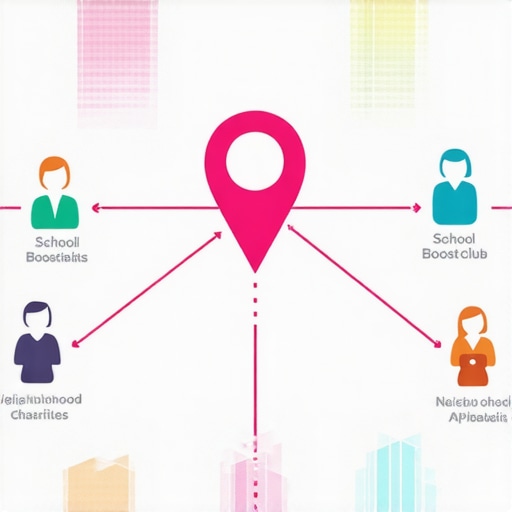
Furthermore, avoid buying cheap citation packages that promises thousands of automated listings. These low-grade services use automated scrapers that create duplicate listings, mess up your address formatting, and trigger spam filters. Understanding the real cost of cheap local citation packages will save you from the painful process of cleaning up hundreds of inconsistent NAP records later on. Have you ever fallen into this trap? Let me know in the comments. Let’s discuss how you can systematically repair these broken connections and execute a flawless authority stacking strategy to boost local SEO without triggering search engine penalties.
How do I maintain local map pack rankings over time?
Building a powerful network of geographical nodes is only half the battle; the real challenge is keeping the system healthy and preventing decay. Think of your digital assets like a fleet of service trucks. If you do not change the oil, check the tire pressure, and run diagnostics, they will eventually break down on the side of the road. Over time, external websites change their structures, local organizations update their resource pages, and search algorithms shift. To prevent your map rankings from slipping, you must establish a systematic maintenance schedule. Once a month, I manually verify that my core geographic connections are active and resolving correctly. This proactive approach is exactly how you can focus on stopping the map pack rank drop before your phone stops ringing and protect your hard-earned local market share.
The Hyper-Specific Toolkit I Use to Keep Maps Locked
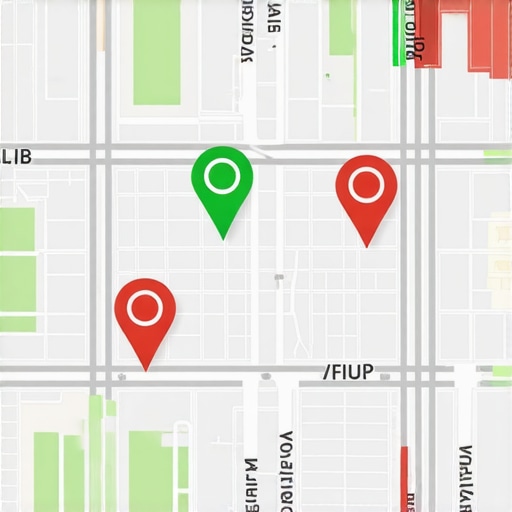
I do not use expensive, bloated enterprise SEO suites for local tracking. Instead, I rely on a highly targeted, lightweight stack of tools that give me raw, unfiltered geographic data. First, I use Local Falcon for my geogrid tracking. It allows me to see my map rankings from specific GPS coordinates down to the neighborhood block, rather than relying on generic city-wide searches. Second, for technical schema validation, I completely bypass third-party checkers and go straight to the source using the Schema.org Validator alongside the official Google Rich Results Test. This ensures my geographical code is flawless and readable.
For diagnosing indexing issues across multi-cloud stacks, I run a simple manual crawl using Screaming Frog SEO Spider. I configure the spider to follow external CDNs and cloud storage URLs to ensure my entity links are not orphaned. If you discover that your cloud-based nodes are not being crawled, you need to understand the invisible mistake killing your cloud node authority stack performance to quickly restore their link juice. According to local search expert Darren Shaw, search engines are increasingly ignoring standard, low-engagement web directories in favor of active, verified physical entity signals. This is why keeping your tools focused on real-world local signals is so critical.
Where the Future of Local Search Authority is Heading
The days of tricking the map algorithm with keyword-stuffed business names and cheap PBNs are rapidly drawing to a close. As machine learning models become more sophisticated, search engines are shifting heavily toward real-world verification. In the near future, I predict that local algorithms will heavily weigh actual real-time user behavior, mobile device proximity signals, and conversational sentiment analysis over traditional backlink profiles. This means that having a secure, interconnected web of local digital assets will no longer be an advanced trick—it will be the baseline requirement for entry. To prepare your business for these updates, you must learn how to build a authority stack that actually survives algorithm shifts by grounding your brand in hyper-local, physical reality.
My challenge to you today is simple: do not just read this and close the tab. Go open your Google Business Profile, pull up your website metadata, and ensure your service area boundaries are technically defined. Take thirty minutes to implement a custom Geo-JSON schema on your primary location page. It is a small, advanced technical move that forces search engines to recognize exactly where your physical business operates and who you serve.
3 Myths About Local Authority Stacking That Held Me Back For Years
When I first started trying to force my way into the competitive map packs, I bought into the mainstream search engine optimization dogma. Over time, I had to unlearn almost everything to actually get results. Here are the biggest misconceptions that will stall your progress if you let them:
- Myth 1: Raw power metrics are everything. I used to believe that a backlink from a massive national news site was always superior. In reality, the local algorithm operates on geographical proximity. A single link from a neighboring dry cleaner’s community page will often do more to lift your map pin than a high-end guest post from a blog hosted three states away.
- Myth 2: You need hundreds of links to compete. Quantity is a trap. I have watched competitors spend thousands of dollars on massive automated citation runs, only to see their rankings completely freeze. Using highly targeted, hyper-local nodes means you can easily outrank businesses with ten times your backlink budget. For a deeper look at this dynamic, read about why your competitor ranks higher with fewer reviews.
- Myth 3: Set-it-and-forget-it works for local SEO. Your digital footprint is a living entity. If you leave your custom maps, schema markups, and local assets to sit in isolation without maintenance, search engines eventually stop crawling them. Keeping your network active is the absolute key to long-term placement.
My Essential Toolkit for Keeping Maps Locked
You do not need an expensive, enterprise-level marketing suite to dominate local search. Over the years, I have trimmed my workflow down to a few highly specific tools that focus strictly on geographical relevance and entity verification:
- Local Falcon: This is my go-to tool for tracking map pack performance. Instead of giving you a generic, city-wide ranking, it tracks your visibility block-by-block using exact GPS coordinate grids.
- Schema.org Validator: I completely bypass bloated SEO plugins and paste my custom geo-JSON markups directly into this official tool to ensure search crawlers can read my physical boundaries with zero friction. You can learn how to implement this correctly by checking out my guide on how to use local geo-json to clarify your service boundaries.
- Screaming Frog SEO Spider: I run a manual crawl every month specifically configured to track external CDNs. This ensures my cloud-based authority assets never get orphaned or ignored by search engines. If you are worried your setups are falling offline, check out my diagnostic tips on the invisible mistake killing your cloud node authority stack performance.
Your Turn to Rule the Local Map Pack
The local landscape is changing rapidly, but the core principle remains the same: search engines want to show real, trusted local businesses to real users. By anchoring your brand into your physical community through hyper-local links and structured technical schema, you build an asset that no national competitor can easily buy. Stop worrying about their massive budgets and start focusing on the authentic neighborhood connections right in front of you. Taking action on these fundamentals is the absolute best way to execute authority stacking strategies to boost local SEO and secure your spot at the top.
Have you ever struggled to get your Google Business Profile out of the dreaded neutral zone? Let me know in the comments below, and let’s get your map pin moving!