
I’ll never forget the pit in my stomach when I opened that email back in 2018. It was a Tuesday morning, coffee still steaming, and a local HVAC client—someone who’d trusted me with his entire livelihood—was calling to ask why his phone had suddenly stopped ringing. I’d spent the previous month ‘optimizing’ his site by blasting his URL across hundreds of generic business directories. I thought I was being efficient. I thought I was saving him money. Instead, I had effectively buried his business on page ten of the search results. I had triggered a filter I didn’t even know existed, and watching that traffic flatline was a wake-up call I’ll never forget.
The Day My Rankings Disappeared into Thin Air
That failure taught me a brutal lesson: Google doesn’t care how hard you work if your link profile looks like a robot’s fever dream. Most small business owners I talk to are still making these same mistakes today, often because they’ve been told the lie that ‘any link is a good link.’ It is a trap that leads straight to a manual action or, even worse, a silent algorithmic suppression that leaves you wondering why your map pin is stuck while your competitors breeze past you. Today, I’m pulling back the curtain on the three specific backlink patterns that act as immediate red flags for modern spam filters. We are going to fix your strategy so you can build the kind of specific link profile that triggers Google local trust rather than suspicion.
Is the risk of a penalty actually real for a small shop?
You might think Google only goes after the big fish, but their ‘SpamBrain’ AI is now incredibly efficient at identifying unnatural patterns even in small, local markets. According to Search Engine Journal, Google’s AI-based prevention system can now detect both the sites buying links and those selling them with startling accuracy, often nullifying the value of those links instantly. I learned the hard way that the map ranking mistake that most small businesses make is trying to shortcut the process with high-volume, low-quality noise. I once thought that getting 500 links for fifty bucks was a steal; it turned out to be the most expensive mistake of my career. Have you ever noticed your rankings suddenly dip right after you tried a new SEO ‘hack’?
Your Current Link Profile Might Be a Ticking Time Bomb
The biggest issue isn’t just having a few bad links—it is the pattern they create over time. When you lean too heavily on generic directory listings that are failing your local goals, you aren’t building authority; you are building a footprint that shouts ‘manipulation’ to search engines. Google looks for a natural ‘neighborhood’ of digital connections. If your only friends are empty websites with no traffic and no local relevance, Google assumes your business is just as irrelevant. We need to stop focusing on the raw number of links and start looking at how those links connect to your actual physical location. If you aren’t careful, your backlink building technique is triggering spam filters before you even get a chance to show up in the coveted Map Pack.
Stop Chasing National Links and Start Finding Your Neighbors
Think of Google as a local sheriff who is skeptical of outsiders. He doesn’t care if a high-traffic tech blog in California mentions your plumbing business in Ohio; he wants to see that the local hardware store, the neighborhood high school, and the city chamber of commerce are talking about you. This concept is exactly why the neighborhood link loop that puts your map pin first is more effective than generic outreach. I remember a roofing client in Phoenix who spent thousands trying to get featured on national home improvement sites. His rankings didn’t budge. It wasn’t until we pivoted to why high-quality backlinks from local charities beat national media that his map pin finally started moving into the top three. We secured a link from a local food bank we sponsored, and that single geo-relevant signal carried more weight than ten national guest posts combined. 
Build a Foundation That Actually Sticks
If your links are the bricks, your authority stack is the mortar. You can’t just scatter links around the internet and hope they stick; you need a logical structure that funnels power toward your business entity. This is how to build a local authority stack that actually sticks without looking like a spam bot. Use cloud-based assets to act as a buffer. By hosting geo-relevant content on high-authority cloud nodes, you create a shield that protects your main site while pushing massive relevance. If you skip this organizational layer, you’ll likely find why your authority stacking fails to connect the dots for Google when your rankings hit a ceiling. I once saw a landscaping company try to ‘stack’ by just interlinking random social profiles; it did nothing because they lacked the node logic required to pass real power.
The Multi-Node Method for Geographic Dominance
To really expand your reach, you need to use how to use cloud nodes to build hyper-local authority fast. Each node should represent a specific service-city pair. For example, if you serve three different suburbs, create a dedicated cloud page for each that links back to your main city page and your Google map. This creates a ‘web’ of relevance that tells Google exactly where you operate.
Bridge the Gap Between Your Website and Your Map
A common mistake is having a disconnect between the data on your site and the data on your Google Business Profile. If Google senses a ‘sync gap,’ it will lower your visibility to be safe. You must implement the entity sync technique for multi-location businesses to ensure your NAP (Name, Address, Phone) and service data are identical everywhere. If you are struggling with a frozen listing, how to fix the sync gap between your website and your map pin should be your first priority. Use advanced schema markup to explicitly tell search engines that ‘This Website’ is owned by ‘This Local Business’ located at ‘This Latitude and Longitude.’ When these signals align, the trust scores of your backlinks are multiplied because Google finally knows exactly who they are vouching for.
Stop Thinking Local Links Are All Created Equal
Everyone tells you that you need more backlinks, but what they don’t say is that national domain authority is often a vanity metric when it comes to the local map pack. I’ve seen businesses with a Domain Rating of 70 get absolutely crushed by a local mom-and-pop shop with a DR of 12. Why? Because the smaller shop understood that geographic relevance is the king of the local algorithm. If you are blindly following generic backlinks mastery boost your local seo authority in 2025 advice without considering where those links are physically ‘located’ in the digital world, you are spinning your wheels. I’ve found that a single link from a local neighborhood blog often carries five times the weight of a mention in a national publication because it confirms your physical presence to Google’s proximity filters.
The Anchor Text Trap That Triggers Manual Reviews
One of the biggest ‘oops’ factors I see in advanced SEO is over-optimization of anchor text within a stack. If every single link in your cloud node or directory profile uses the exact keyword ‘Plumber in Chicago,’ you aren’t building authority; you are building a target for a spam penalty. Real local businesses get linked to by their brand name, their owner’s name, or even just ‘click here.’ When you ignore backlink optimization tips for local seo authority and get too greedy with your keywords, you break the illusion of a natural link profile. According to the BrightLocal 2024 Local Search Rankings Factors survey, while keywords in the business title and link anchors remain powerful, the risk of ‘over-optimization’ is higher than ever as AI-driven filters look for unnatural repetition. Have you ever fallen into this trap? Let me know in the comments.
#IMAGE_PLACE_HOLDER_C#
Can you actually have too much local relevance?
The short answer is no, but you can definitely have too much artificial relevance. The nuance most people miss is that your authority stack needs to ‘breathe.’ If your entire off-page strategy exists only on cloud nodes and web 2.0s, Google sees a closed loop that never touches the real world. This is exactly the authority signal most local seos completely forget: the bridge between digital assets and real-world mentions. You need those messy, unoptimized links from local church bulletins or high school football sponsorships to ground your high-power stacks. Without that foundation of ‘noise,’ your high-authority nodes look like a lab experiment rather than a legitimate local business. If you aren’t seeing the results you expected, you might be dealing with the hidden reason your cloud stacks arent transferring pagerank, which usually boils down to a lack of Tier-2 diversity that ‘proves’ the stack is part of a real community.
The Tools That Actually Save My Sanity
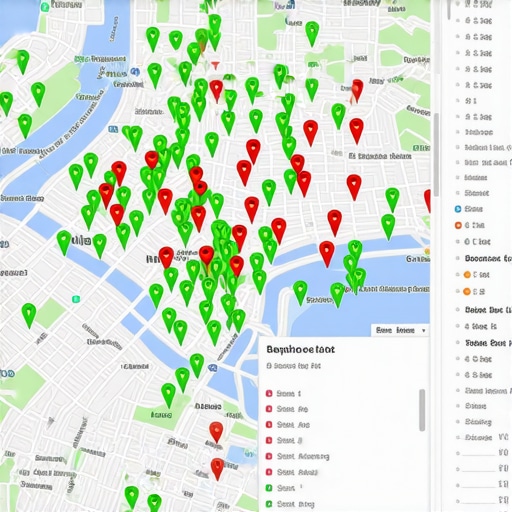
Building a stack is a one-time project, but maintaining it is a lifelong commitment to your business’s digital health. I’ve seen too many people put in the grueling work of setting up cloud nodes only to let them rot. Personally, I rely on tools like LocalFalcon or BrightLocal not just for the reports, but for the geo-grid visualization. If I see my ‘green’ pins starting to turn orange at the edges of town, I know my map authority needs scaling before the competition swallows my perimeter. I use these tools because they show me exactly where the ‘proximity filter’ is kicking in, allowing me to deploy surgical strikes of geo-relevant content right where I’m losing ground.
Why Your Rankings Will Tank Without Weekly Checks
You can’t just set and forget your off-page assets. Google’s algorithm is a living thing, and your competitors are constantly trying to out-stack you. I make it a habit to check the indexing status of my top-tier cloud pages every Sunday night. If a node drops out of the index, the whole chain loses its tension. This is why you must master authority stacking for elevated local rankings by creating redundancy. If one node fails, three others should be there to hold the line. I’ve found that using a simple uptime monitor on my most powerful cloud URLs ensures that my ‘money site’ never loses that high-velocity juice because of a technical glitch on a third-party host.
How do I maintain my local authority stack over time?
Maintenance is about fresh signals, not just more links. Every month, I go back into my existing cloud nodes and update them with a new local news snippet or a link to a recent community event. This keeps the crawl frequency high. If you are managing several areas, you need to know how to scale multi-location SEO without getting your pins suspended, which usually involves keeping your activity levels looking human. According to local search expert Joy Hawkins of Sterling Sky, Google is increasingly focused on ‘real-world’ signals, meaning your digital stacks must reflect actual business updates, like new service photos or updated holiday hours, to remain credible in the eyes of the AI filters.
What the Future of Local Link Building Looks Like
I predict that by 2026, the ‘vouch’ system will be entirely entity-based. Google won’t just look at the link; it will look at the ‘Commonality of Interest’ between the two entities. If you’re a plumber, a link from a local hardware store will be worth more than a hundred generic blog posts because the ‘Entity Relationship’ makes sense. We are moving away from raw power and toward hyper-specific relevance. To stay ahead, you should start elevating your local SEO with advanced authority stacking tactics that prioritize these logical connections now. If you haven’t yet, go and find one local charity or non-profit this week and offer a small sponsorship in exchange for a mention on their ‘Supporters’ page. It is the single most effective way to ground your digital authority in the real world.
The Brutal Truth About Why Your First Stack Might Fail
If there is one thing I’ve learned from years of trial and error, it’s that a stack is only as strong as its weakest connection. You can have the most powerful cloud nodes in the world, but if they don’t logically flow back to your entity, you are just shouting into a void. I’ve realized that the authority signal most local seos completely forget is the human element—those small, messy interactions that prove your business actually exists in a physical space. Don’t let the technicality of the process blind you to the goal: building trust.
#IMAGE_PLACEHOLDER_E#
- Velocity isn’t everything: Blasting links too fast is a shortcut to a manual review. Slow, steady, and relevant always wins.
- Relevance beats power: I would take a link from a local rotary club over a high-DR fashion blog every single day of the week.
- Consistency is the engine: Your map pin won’t stay at the top if you stop feeding the beast once you hit #1.
How I Keep My Local SEO Edge Without Burning Out
I don’t do this all by hand anymore, and you shouldn’t either. To stay organized, I lean heavily on a few trusted resources. First, I always keep the ultimate guide to building backlinks for local authority bookmarked for my team; it serves as our north star when we get too deep into the weeds. For tracking, I use LocalFalcon to visualize proximity shifts in real-time. I also recommend studying authority stacking the game changer in local seo to understand the high-level philosophy behind these moves. These aren’t just tools; they are the safeguards that prevent me from making the same expensive mistakes I made years ago.
Stop Planning and Start Stacking
The biggest hurdle isn’t the algorithm; it’s the hesitation. You now have the blueprint to move from generic directory noise to a high-powered, multi-node strategy. This year is the perfect time to commit to backlinks mastery boost your local seo authority in 2025 because the competition is still stuck in the old ways of thinking. Your business deserves to be seen, and your community is looking for you. Go build something that lasts.
Which part of the authority stacking process feels the most overwhelming to you right now—is it the cloud node setup or finding those local neighborhood links? Let me know in the comments below!