
I’ll never forget the time I practically chased a client to his truck just to ask for a five-star rating. It was humiliating. I stood there, clipboard in hand, stuttering through a “if you have a moment…” speech while he fumbled for his keys and avoided eye contact. That was the day I realized that if you don’t catch them while the “wow” factor is still fresh, you’ve probably already lost the review.
Stop Treating Review Requests Like a Debt Collection Call
Most of us are terrified of looking desperate. We do the work, we provide the service, and then we whisper a tiny request for a review that gets ignored 90% of the time. I spent years making that exact mistake, thinking that if I just did a “good enough” job, people would naturally flock to my profile. They don’t. They’re busy, they have groceries to buy, and kids to pick up. My biggest failure was assuming that “good service” was enough of a trigger for a customer to spend five minutes of their life writing about me. Today, I’m showing you how to flip that script so that asking for feedback becomes a natural extension of your handshake.
Is asking for reviews in person actually worth the hype?
You might be wondering if it’s even worth the sweat. According to a study by BrightLocal, 76% of consumers “always” or “regularly” read online reviews when searching for local businesses. If your map pin is looking empty, you’re basically invisible to your neighbors. We’re going to fix that today without making you feel like a pest. I’ve found that using a specific review request script that triples your google feedback can take the pressure off both you and the customer. Have you ever felt that stomach-turning cringe right before asking a happy customer for a favor? I’d love to hear if you’ve ever just let a perfect opportunity walk out the door because it felt too weird to bring up. We need to move beyond just hoping for the best and start using specific review response scripts and in-the-moment triggers that feel like a conversation, not a sales pitch. It’s about building a system where you automate reviews without looking like a spammer, even before the customer leaves your premises. [image_placeholder]
Capture the Moment While the Paint is Still Wet
The biggest mistake I see small business owners make isn’t forgetting to ask for a review—it’s asking at the wrong time. If you wait until the invoice is paid and you’ve driven away, you’re just another notification on their phone. You need to identify the peak excitement phase. This is the exact moment the customer sees the finished result and lets out that first ‘Wow.’ I call this the psychological green light. Last summer, I was working with a landscaper named Dave. He was a wizard with a shovel but had a ghost town for a Google profile. We stopped him from sending ‘follow-up’ emails and instead had him show the client a high-res photo of the finished yard on his tablet right there on the lawn. When they beamed with pride, he simply said, ‘I’m trying to show more neighbors what we can do; would you mind putting that same smile into a quick Google comment?’ He went from two reviews to fifteen in a single month. It wasn’t magic; it was just timing. Using 7 non-awkward ways to get customers to leave a google review before they leave ensures you never feel like a salesperson, but a professional asking for a fair exchange of value.
Turn a Handshake Into a Digital Signal
Once you have the timing right, you need to remove every possible hurdle. If a customer has to search for your business name, they’ve already checked out. I carry a laminated card with a custom QR code that links directly to my review landing page. It’s a physical trigger that bridges the gap between the physical world and the digital one. This isn’t just about getting a star rating; it’s about improving your engagement metrics. Every time someone clicks that link while standing at your place of business, it sends a powerful proximity signal to Google. This is part of the map pack ctr fix that actually moves your pin higher because it proves real humans are interacting with your entity at its physical location. 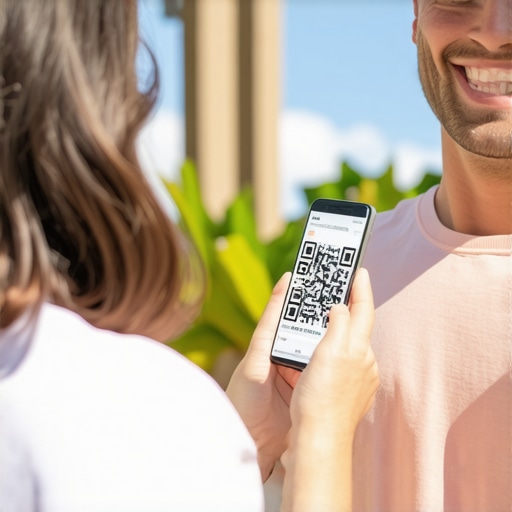
Local Trust Beats Generic Backlinks Every Time
Think of your reviews as the foundation of a house. You can buy the fanciest windows in the world—which in this analogy are expensive, generic backlinks—but if the foundation is cracked, the house won’t stand. Google views local sentiment as a massive trust signal. When you combine high-quality reviews with 7 neighborhood backlink sources that move the needle for local plumbers, you create a digital fortress. You’re telling the algorithm that not only do people like you, but the local community’s digital infrastructure recognizes you too.
Your Neighborhood is Your Best SEO Weapon
I once saw a local shop try to outrank a national chain by buying ‘high authority’ links from tech blogs in another country. It failed miserably. Why? Because Google knew those links had zero relevance to a shop in Ohio. Instead, we focused on authority stacking the game changer in local seo. We synced their local reviews with mentions on neighborhood blogs and ensured their technical data was flawless by applying the specific local schema tweak that validates your entity for google. This created a ‘loop’ of authority: the customer confirms the location via a review, the neighborhood blog confirms the service via a link, and the schema code ties it all together for the crawler. This triple-threat approach turns a simple ‘thank you’ into a permanent ranking advantage that competitors can’t simply buy their way past.
Most SEO experts will tell you that a backlink from a high-authority tech blog is the holy grail of ranking. I’m here to tell you that for a local business, that logic is often flawed. In my experience, a link from a neighborhood community center or a local high school sports page carries more weight for your map pin than a generic mention from a website across the globe. This is where most people get it wrong: they chase prestige instead of proximity. If you want to dominate your area, you need to prioritize backlinks mastery to boost your local seo authority in 2025 by focusing on hyper-local relevance.
Why your anchor text is screaming ‘Spam’ to Google
A common trap I see is the over-optimization of anchor text. If every single link pointing to your site says ‘Best Plumber in Chicago,’ you are waving a red flag at the algorithm. Real people don’t link like that; they link to your brand name or use natural phrases. I always tell my clients to stop using generic anchor text for your local entity backlinks because it looks unnatural and can actually suppress your rankings. According to a study by Whitespark, local signals and citation consistency remain paramount, but unnatural link profiles are the fastest way to get filtered out of the top 3 results. Have you ever fallen into this trap where you tried to ‘over-optimize’ and saw your rankings drop? Let me know in the comments.
Can authority stacking actually backfire if your entity data is messy?
This is the advanced question I get from people who have tried everything. The answer is a resounding yes. If your name, address, and phone number (NAP) are inconsistent across the web, you are building a skyscraper on quicksand. You have to implement the local entity sync move that forces hyper local rank jumps before you even think about complex stacks. 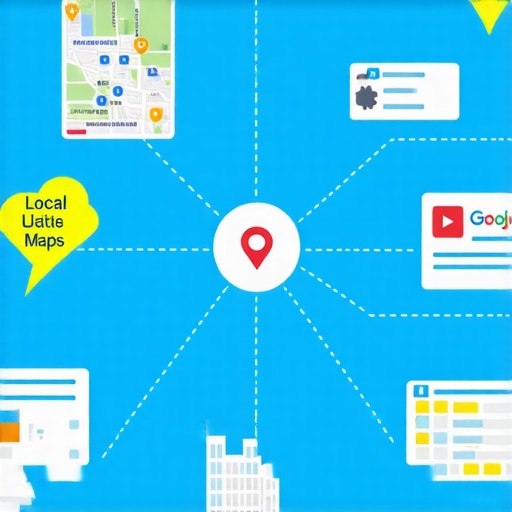 When you finally move into authority stacking the game changer in local seo, you are essentially creating a digital mirror of your physical reputation. If that mirror is cracked with bad data, you’re just magnifying your errors. I’ve seen businesses waste thousands on backlink building blueprints for local seo success only to realize their Google Business Profile was pointing to a slightly different address than their main website. It’s these tiny, hidden nuances—the ‘invisible’ mistakes—that separate the winners from those stuck on page two. You need to verify every signal with the specific local schema tweak that validates your entity to ensure Google’s crawlers aren’t getting mixed messages. It’s about building a cohesive story, not just a pile of links.
Building the stack is only half the battle; keeping the engine running is where most business owners fall off. I’ve seen guys spend a fortune on a massive push, hit the top three, and then vanish two months later because they thought the work was “done.” Local SEO isn’t a trophy you win; it’s a garden you water. You need to stop relying on generic map trackers that miss local proximity shifts. If your tracker is just giving you a single average ranking for the whole city, you’re flying blind. I personally use grid-based tracking because it shows me exactly where my “influence” stops. If I’m ranking #1 at my office but #8 three blocks away at the local park, I know my geo-relevance is weak in that direction.
Stop trusting the automated reports that lie to you
Most software just pings a server from a single data center and tells you “you are #1.” But are you #1 for a customer standing in their driveway? Probably not. I rely on the audit tool hack that found our hidden map pin errors to see the reality of my proximity reach. I use specific tools like Local Viking for heatmaps and GMB Everywhere to peek at the categories my competitors are using behind the scenes. It’s all part of the 5 map seo tools we use to spot competitor weakness faster. If I see a competitor’s proximity shrinking, I don’t just celebrate; I analyze why. Are they losing reviews? Is their website speed tanking? I use that data to send my next round of hyper-local signals exactly where they are failing.
#IMAGE_PLACE_HOLDER_D#
How do I keep my map pin at the top for the long haul?
Maintenance isn’t about doing more work; it’s about being consistent with the right signals. You need a rhythm that Google’s algorithm can trust. Every week, I check for “suggested edits” from competitors who might be trying to change my phone number or mark my business as “permanently closed.” It happens more than you’d think. As Joy Hawkins, a renowned expert in local search, often emphasizes in her Sterling Sky research, Google’s proximity filter is more aggressive than ever, making hyper-local signals the only way to stay relevant. You can’t just set a stack and forget it. I follow the only checklist you need to measure real roi from google maps to ensure my time is actually turning into phone calls, not just vanity metrics. If the calls aren’t coming in, the ranking doesn’t matter.
Scale your business and avoid the ban hammer
When you start seeing success, the temptation is to replicate it across ten more cities overnight. This is the fastest way to get your account suspended. Google’s spam filters are tuned to catch rapid, unnatural expansions. You need to know how to scale local map rankings without triggering a suspension by using unique entity data for every single location. I predict that by 2026, text-based search will be secondary to visual and voice-driven proximity queries. We are heading toward a “Zero-Click” future where what agencies wont tell you about the 2026 maps shift becomes the standard reality for every small business. If you aren’t building a deep, multi-cloud entity now, you won’t even be in the conversation when AI starts picking the “best” local provider for users. I challenge you to run a manual audit on your top three competitors today using one of those tools I mentioned. You’ll be shocked at the gaps you find—and those gaps are your biggest opportunities.
Lessons I Learned the Hard Way While Chasing the Map Pack
After a decade in the trenches, I’ve realized that the most dangerous thing you can do is treat your digital presence like a set-and-forget billboard. One major lightbulb moment for me was discovering that Google cares more about the ‘why’ than the ‘how many’ when it comes to your links. If you aren’t using authority stacking the game changer in local seo, you are basically trying to win a marathon with one shoe. I spent months building generic profiles that did nothing until I realized that a single mention from a local rotary club or a neighborhood blog carries ten times the weight of a high-DA tech site.
Another lesson? Patience is a ranking factor. I used to panic when a map pin didn’t move after 48 hours. Now, I know that the algorithm needs time to digest the the local entity backlinks that actually push your rank up. If you rush the process by buying cheap links, you’re just inviting a manual review that you won’t win.
Where I Turn for Data When the Algorithm Shifts
I don’t make moves based on ‘gut feelings’ anymore. I rely on a tight circle of resources that cut through the noise. For tracking the real-world impact of my efforts, I always keep the only checklist you need to measure real roi from google maps pinned to my desktop. It keeps me focused on phone calls instead of vanity rankings. For deep dives into technical changes, I follow the Sterling Sky forums religiously—they spot shifts weeks before the ‘big’ SEO blogs even notice.
When it comes to execution, I prioritize backlinks mastery-boost-your-local-seo-authority-in-2025 because the landscape for 2025 is already shifting toward hyper-local relevance over traditional authority. If you’re feeling overwhelmed by the technical side, don’t hesitate to reach out via our contact-us page for a second pair of eyes on your stack.
#IMAGE_PLACEHOLDER_E#
Build a Business That Neighbors Actually See
Your business deserves to be the first choice for your neighbors, but they can’t choose you if they can’t find you. Mastering local seo isn’t just about technical dominance; it’s about making sure the hard work you put into your craft is reflected in the digital world. Don’t be afraid to start small. A single high-quality review today and one local link tomorrow is better than a thousand ‘spam’ signals next month. You have the tools, the scripts, and the strategy—now it’s time to put your pin on the map where it belongs. Have you ever felt like you were doing everything right but your map pin just wouldn’t budge? Let me know your biggest hurdle in the comments below!