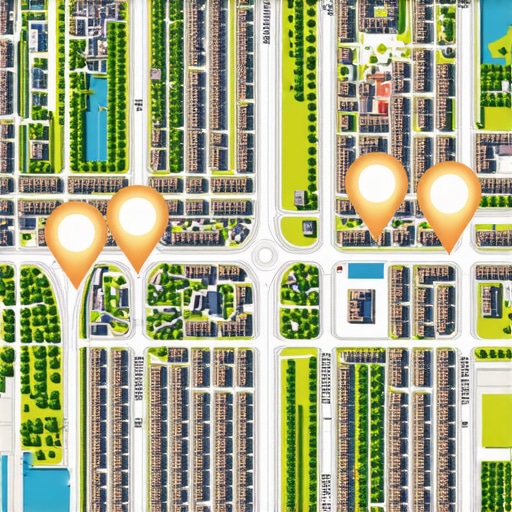
I’ll never forget the sinking feeling of realizing my “perfect” SEO strategy was actually a localized failure. I had a client—a hardworking HVAC tech—who dominated the search results within a half-mile of his shop, but the moment you crossed the bridge into the high-end residential district, he was nowhere to be found. I was doing everything by the book, or so I thought. I was building links, but I was building them for the wrong “where.” It was a massive wake-up call that taught me local SEO isn’t a single target; it’s a collection of tiny, hyper-local battles.
Stop Chasing City-Wide Rankings and Own Your Neighborhood Instead
For a long time, I made the classic mistake of thinking a broad “city” keyword was the holy grail. I wasted thousands on cheap citation packages that did nothing to signal my client’s relevance to the specific streets that mattered. Today, we are going to fix that. I’m going to show you how to expand your digital footprint so that your business doesn’t just “exist” in a city, but actually owns the map in multiple neighborhoods. We’ll dive into the multi-node approach and how to use local signals to bridge those proximity gaps that keep your map pin drifting into the abyss of page two.
Is this actually worth the effort for a small business?
You might be thinking that trying to rank in five different neighborhoods sounds like a full-time job you don’t have time for. I felt the same way until I realized that proximity is the #1 ranking factor in the local pack, according to industry data from Whitespark. If you don’t proactively signal your presence in those surrounding areas, Google will default to the business closest to the user, regardless of how much better your service is. I once tried to shortcut this by “ghosting” addresses—a mistake that nearly got my client banned—and I’ve learned the hard way that mastering authority stacking is the only sustainable path. Have you ever felt like you’re trapped in a “ranking bubble” where you can’t seem to reach customers just a few miles away? It’s frustrating, but it’s a solvable puzzle. By shifting our focus from generic backlinks to neighborhood-specific relevance, we’re going to break those barriers down once and for all.
Reclaim Your Territory with Local Search Nodes
Think of your local authority like a wireless router. The further you get from the source, the weaker the signal. To fix a ‘drifting’ map pin, you need to install range extenders in the form of digital nodes. You start by identifying the specific neighborhood boundaries that surround your shop. I learned this the hard way with a client in a coastal town; we were invisible just two miles away because of a physical hill. We had to map out our authority stack to specifically target the residential pockets on the other side of that ridge. By creating content and local signals that pointed back to those specific street names and landmarks, we told Google that our ‘service area’ wasn’t just a circle on a map, but a lived reality in those specific zip codes. This is where using entity stacks to validate your location becomes the difference between being a ghost and being a local titan. 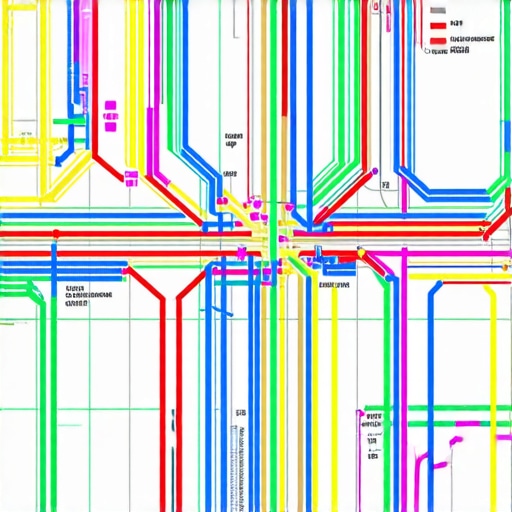
The Micro-Link Tactic That Beats Generic Guest Posts
I once spent four months and a small fortune chasing high-DA guest posts for a local plumber. The traffic was ‘okay,’ but his map ranking didn’t budge an inch. Out of desperation, I helped the owner sponsor a local little league team and a neighborhood-watch newsletter. That single link from a ‘.org’ neighborhood site with barely any traffic outperformed every $200 guest post we bought. Why? Because it provided geographic relevance that a generic blog simply cannot. This is why you should ditch the agency guest posts in favor of hyper-local placements. You need to use local resource lists to gain that specific neighborhood trust. Look for the lists of ‘best parks’ or ‘community resources’ hosted by local historical societies or civic groups.
Force Google to See Your City Connection
Most businesses just slap their address in the footer and hope for the best. That’s like whispering your name in a crowded stadium. To really cut through, you need to use the specific schema move that ties your business entity to the actual city’s machine-readable data. By explicitly linking your business to the Wikidata or DBpedia entries for your specific neighborhood, you are speaking Google’s native language. If you are struggling with a map pin that refuses to move, you might be suffering from a specific NAP error that confuses these data nodes. It’s not enough to have ‘good’ SEO; you need to signal neighborhood relevance through every available digital touchpoint. This creates a web of local trust that the algorithm simply cannot ignore, effectively expanding your ‘proximity’ far beyond your physical front door.Let’s dig deeper into why the standard SEO advice often fails at the street level. Most ‘experts’ will tell you that a high Domain Authority (DA) link is the ultimate prize. In my experience, that’s a total myth for local businesses. A link from a DA 80 national blog usually carries less weight for a local plumber than a DA 15 link from the neighborhood community center. This is why Google ignores your backlinks when they lack geographical context. When you treat authority stacking as a numbers game rather than a relevance game, you lose.
Stop worshiping Domain Authority and start valuing local proximity
The ‘Oops’ factor often comes down to over-optimization. I’ve seen businesses get flagged because every single backlink used the exact same ‘Service + City’ anchor text. It looks like a robot did it because, well, usually a robot did. You need backlink optimization tips that prioritize natural language over keyword density. Specifically, there are 3 backlink patterns that get small businesses penalized which involve aggressive exact-match anchors that scream ‘spam’ to Google’s spam-fighting AI, SpamBrain. According to the Whitespark Local Search Ranking Factors survey, local relevance is increasingly outweighing pure link quantity in the proximity-based algorithm.
Why does your map ranking stall even with great backlinks?
If you’ve built the links and fixed the technical errors but the needle won’t move, you’re likely facing an entity synchronization failure. This is often why your authority stack fails to connect with local search nodes. You have the ‘authority’ in a vacuum, but Google hasn’t successfully tied that authority to your specific GPS coordinates.  You need to transition into backlinks mastery by ensuring your stack uses Map Embeds and Geo-Coordinates in the metadata of your cloud properties. This forces the association between your digital power and your physical location. Have you ever fallen into this trap of chasing big metrics while ignoring the local map? Let me know in the comments.
Stop Blindly Trusting Your Ranking Software
I’ve seen it a thousand times: a business owner pulls a report that says they are “Rank #1,” but they don’t realize they are only #1 for the person standing in their own parking lot. Today, I don’t move a finger without a geo-grid tool. It is the local SEO audit tool that actually finds map errors by testing rankings from dozens of specific points across a zip code, not just one. This granularity is non-negotiable because it reveals the exact ‘holes’ in your authority. If you see a cluster of red dots three miles East, that’s exactly where you need to plant your next localized node or neighborhood-specific page. 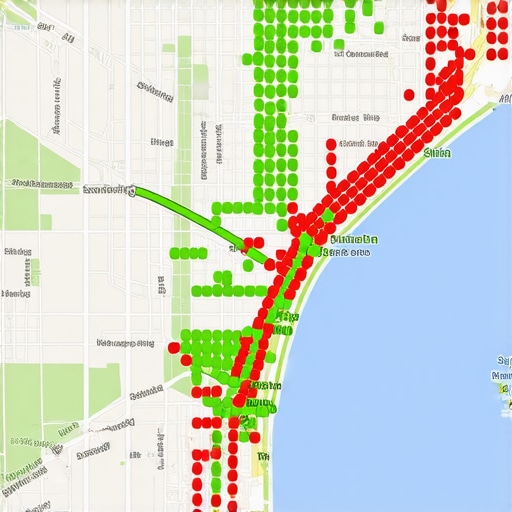
How do I keep my authority stack from crumbling over time?
The biggest mistake I see is the ‘set it and forget it’ mentality. Digital authority isn’t a trophy you win once; it’s a garden you have to tend. You need to implement the local data loop strategy for sustainable map rankings to keep your momentum. This means every month, you should be verifying that your cloud properties are still indexed and that your map embeds haven’t broken due to an API update. I personally schedule a quarterly session to audit your local backlink profile for spam gaps. If a local directory you previously relied on changes its structure or gets flagged for spam, your entire stack can lose its tether to the physical world, causing that dreaded pin drift.
Prepare for the AI Shift in Local Search
We are moving rapidly toward an era where Google’s Search Generative Experience (SGE) will prioritize entity relationships over simple keyword matches. Niche expert Mike Blumenthal has long argued that ‘Google is your new homepage,’ meaning the data Google has about you in its knowledge graph is often more important than your actual website. This makes authority stacking: the game-changer in local SEO for the long haul. You aren’t just building links anymore; you are building a machine-readable identity. In the next few years, I predict we’ll see the algorithm rely almost entirely on these verified entity nodes to fight the flood of AI-generated local spam. To achieve true backlinks mastery, you must focus on how your business is digitally connected to other physical-world entities—like the local chamber of commerce or a historical society—rather than just chasing ‘high DA’ scores. If you’re ready to expand, make sure you know how to scale your map authority without getting banned by focusing on slow, authentic node expansion. My challenge to you: find one local nonprofit or community group this week and offer a genuine resource or sponsorship in exchange for a mention. That single, high-trust node will do more for your local credibility than a hundred generic guest posts ever could.
Why Your Strategy Must Pivot Every Three Miles
After a decade of local search battles, I’ve realized that the ‘city-wide’ mentality is what kills most campaigns. You can’t treat a sprawling metro area like a single target. The hardest lesson I learned was that Google views a city as a patchwork of distinct entities, and if you don’t speak the language of each specific neighborhood, you’ll never truly dominate the Map Pack. First, realize that entity validation is more powerful than any backlink; if Google can’t verify you exist at a specific coordinate, it won’t show you to the person standing there. Second, local relevance is a perishable resource. You need to keep feeding the machine with fresh signals or your pin will eventually drift. Finally, never underestimate the power of the ‘small’ link. A mention from a local rotary club is often worth ten times more than a generic directory because it proves your physical presence in a way an algorithm can’t ignore. This is why your local SEO strategy needs a focus on entity authority rather than just traditional metrics.
Tools That Keep My Map Pins From Drifting
To stay ahead of the curve, I rely on a very specific set of resources that prioritize geography over generic authority scores. I personally trust Whitespark for citation audits because they understand the nuance of local data better than anyone else. For visual proof of my progress, I use geo-grid tools to see exactly where my ‘ranking bubbles’ end. I also spend a significant amount of time on Wikidata to research how neighborhoods are categorized by search engines, ensuring my authority stacking follows the same logic. If you want to see how these pieces fit together in a real-world scenario, I recommend checking out the secret to dominating the map pack without paid ads. These tools aren’t just luxuries; they are the diagnostic equipment you need to fix a broken local presence.
Take Back Your Local Market Today
The transition from being an ‘invisible’ business to a local titan doesn’t happen overnight, but the path is clearer than it has ever been. By shifting your focus from broad keywords to hyper-local nodes and neighborhood relevance, you are building a moat around your business that competitors can’t simply buy their way across. Authority stacking is about creating a digital reflection of your physical importance to the community. As we look toward the future, the businesses that win will be those that master backlinks mastery by connecting with the entities that define their local area. Don’t let your business get lost in the noise of page two. Start building your first neighborhood node this week and watch how quickly the map responds to your presence. Have you ever struggled with a specific neighborhood where you just can’t seem to rank? Let me know in the comments below!