I remember sitting in my home office at 2 AM, squinting at my screen until my eyes burned. I had just finished copy-pasting the same Google Maps iframe code onto forty different local landing pages. I was absolutely certain that tomorrow, I’d wake up and find my business dominating the Map Pack. Spoiler alert: it didn’t happen. In fact, my rankings stayed as flat as an old soda. It was a gut-punch moment. I had done what every “guru” told me to do, yet my phone stayed silent. That was the day I realized that most map embeds are essentially white noise to Google’s algorithm. If you’ve been doing the same thing, don’t beat yourself up; we were all sold the same outdated dream. I spent way too long thinking that volume was a substitute for quality. It isn’t. In the world of local search, a single, high-powered connection is worth more than a hundred weak ones.
Stop Copying and Pasting Your Way to Local Failure
The biggest mistake I made early on was treating a map embed like a magic stamp. I thought if I put it everywhere, Google would have no choice but to notice me. But here is the hard truth: a generic iframe doesn’t tell a story, and it certainly doesn’t prove relevance. When you’re just dumping raw code without a strategy, you’re likely falling into the same trap I did—wasting time on signals that get ignored by the local map algorithm. According to a report by Search Engine Land, relevance and prominence are far more important than just having a map on your footer. You need to validate your business location through a web of signals that feel organic to your specific neighborhood. I once even messed up my address format on a few high-profile embeds, which essentially told Google I was located in two places at once. Talk about a self-inflicted wound!
Does Google Even Care About Your Map Pins?
You might be wondering if map embeds are even worth the effort anymore. I’ve asked myself that same question after seeing zero results from weeks of manual work. The short answer is yes, but the old-school “embed and pray” method is dead. One of the most frustrating things I discovered was that a specific geo-tagging mistake was actually confusing the algorithm about where my shop was actually located. We often focus on the quantity of pins while completely missing the “node” power that connects our site to the physical world. If your data isn’t synced, you’re basically invisible. Today, I’m going to show you how to stop the “ghosting” and start making moves that actually force Google to trust your service area. We’ll look at how to move beyond simple embeds and start building a real authority stack. Have you ever felt like you’re doing everything right for your local SEO but your map pin is still stuck on page four despite your best efforts? Let me know, because I’ve been in that exact same boat, and it’s a lonely place to be.
Turn Your Business Into a Search Engine Landmark
The secret to winning the local game isn’t found in a single map embed; it’s hidden in how you connect your digital dots. Think of your business location like a lighthouse. If the light is dim or flickering, ships—your potential customers—can’t find you. Most people focus on the bulb, the map pin itself, while ignoring the power lines that feed it. To force Google to see you as a dominant force, you have to move toward authority stacking, a method that layers signals from different high-trust platforms back to your entity. It’s about building a fortress of relevance that makes it impossible for an algorithm to ignore your physical presence.
Why Consistency Is More Than Just Spelling Your Name Right
I learned this the hard way with a plumbing client in Phoenix. His rankings were dead in the water for six months despite having hundreds of reviews. When I finally dug into the site’s code, I found that his website listed his office as ‘Suite 200’ while his Google profile used the ‘#’ symbol for the same unit. It sounds like a minor detail, but to a pattern-matching machine, those are two conflicting locations. We implemented a single address format tweak that synchronized every mention of his business across his digital assets. Within three weeks, he jumped from the bottom of page two to the middle of the Map Pack. Google hates ambiguity. If you don’t sync your website metadata perfectly with your profile, you are essentially telling the algorithm to guess your location. In local search, guessing leads to invisibility.
Connect Your Nodes Outside the Map Pack
Once your data is clean, you need to start building what I call ‘Cloud Nodes.’ This is where you use high-authority properties like Google Cloud, AWS, or Azure to host simple, relevant content that points back to your business. By building a cloud stack, you aren’t just getting a backlink; you’re borrowing the massive trust those domains already have with search engines. I’ve seen so many people fail here because their authority stack fails to connect properly, leaving their nodes floating in space without passing any power. You have to interlink these properties in a specific loop so that the authority circles back to your main site and your Google Map pin. It’s like setting up a series of mirrors to reflect sunlight into a dark room; if one mirror is tilted the wrong way, the light never reaches the target.
Local Backlinks That Actually Move the Needle
Forget the generic guest posts on sites that have nothing to do with your city or industry. If you want to rank in a specific neighborhood, you need neighborhood-level power that search engines can verify. I always tell my readers that high school booster club links are often worth ten times more than a standard directory link. Why? Because a high school site is geographically locked to your service area and carries high domain trust. It provides the localized signal that tells Google you are a legitimate part of the community fabric. You should also be looking at neighborhood watch link strategies or local charity sponsorships. These connections create a web of local relevance that a global competitor simply cannot fake. It’s about being the most relevant local entity, not just the one with the most links.
I used to believe the lie that ‘a link is a link.’ I spent thousands of dollars on high-DR guest posts thinking they would catapult my local shop to the top of the Map Pack. But here is the contrarian truth I learned after months of stagnation: most high-authority backlinks are actually useless for local SEO if they lack geographic relevance. If you are getting a link from a tech blog in California for your plumbing business in Florida, Google sees the authority, but it doesn’t see the local intent. This is exactly why generic guest posts fail your local SEO test every single time. You need to prioritize specific neighborhood backlinks because proximity is the silent killer of rankings. According to the BrightLocal Local Search Rankings Factors report, proximity remains the #1 ranking factor, and your backlink profile needs to mirror that physical reality, not just a digital one.
Why does your multi-cloud stack stop indexing after two weeks?
This is the ‘Oops’ factor that catches almost everyone off guard. You build a beautiful series of cloud nodes on AWS and Google Cloud, but ten days later, they vanish from the search results. This happens because most people fail to create a ‘closed-loop’ entity. When your nodes aren’t properly interlinked, they look like orphaned spam to the algorithm. I call this the ghost backlink problem, and it will drain your domain authority before you even realize it’s happening. You have to ensure you are building a cloud stack that utilizes ‘permanent’ indexing triggers, like internal cross-linking between the nodes and your main GMB profile.

Another nuance people miss is the danger of anchor text over-optimization. If all your local links use the anchor ‘Plumber in [City],’ you are practically begging for a manual review. In my experience, using generic anchor text or even branded terms is much safer and more effective for building long-term trust. You want to dominate local search by looking natural, not like a robot trying to game the system. If you try to force it, you’ll find that multi-cloud entity stacks often fail because the ‘footprint’ is too obvious.
Fix the connection gaps before you scale
Before you go out and buy another link package, ask yourself if your current nodes are actually talking to each other. Often, a single broken entity connection in your stack is what keeps your pin stuck on page two. It is like a circuit board; if one wire is loose, the whole machine stays dark. I once found that your backlinks are being ignored simply because the NAP (Name, Address, Phone) on the referring site was slightly different than the website metadata. It’s these tiny, advanced details that separate the winners from the people who just copy-paste their way to failure. Have you ever fallen into this trap of chasing high-DR links only to see zero movement in your local rankings? Let me know in the comments, because I’ve been there, and I want to help you fix it.
I’m going to be honest: once you get that first taste of the Map Pack’s top 3, you’ll be tempted to walk away and celebrate. But I learned the hard way that a competitive city is like a treadmill—if you stop running, you slide backward. I used to spend hours manually checking my rank from different zip codes until I discovered the audit tool trick that found our hidden map pin error in seconds. Now, I rely on automated local heatmaps to tell me where my authority is leaking. If I see a cluster of red pins where they used to be green, I know my cloud nodes need a refresh. This isn’t just about monitoring; it’s about stopping your map pin from vanishing before the algorithm decides you’re no longer relevant.
How do I keep my authority stack healthy over time?
Maintaining a local presence isn’t about doing a thousand things once; it’s about doing ten things consistently. Maintenance shouldn’t take more than an hour a month if you’ve built your foundation correctly. I personally use a ‘data loop’ to keep my entity fresh. Every quarter, I update my cloud nodes with a new local event or a neighborhood-specific tip. This forces a re-crawl and signals to Google that this entity is active and growing. By using the local data loop strategy, you turn a static stack into a living organism. I also keep a close eye on the technical side. According to Google’s patent US9213746B2, which covers ‘Ranking results based on entity importance,’ the search engine specifically looks for the ‘freshness’ of associations between a location and a business entity. If your stack hasn’t seen a new signal in six months, your ‘importance’ score drops, and your competitors will hurdle over you. You need to build an authority stack that survives shifts by constantly feeding it small, high-quality local signals rather than dumping a thousand low-grade links once a year.
Stop Your Rankings From Rotting With This Audit Hack
I’ve seen dozens of stacks crumble because the owner didn’t realize a single cloud domain changed its permissions or a local directory went offline. This is why I always recommend using the local SEO audit tool to scan for 404 errors within your stack properties. If your AWS S3 bucket link breaks or your Google Cloud node permissions reset to private, your entire ‘node power’ vanishes. It’s like a Christmas light string—one bulb goes out, and the whole house goes dark. 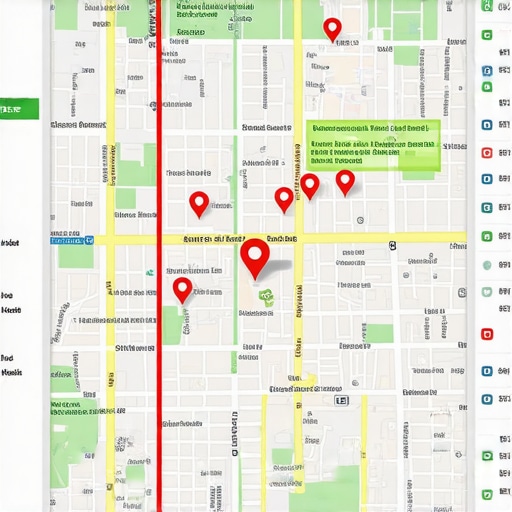 Looking ahead, I see a massive shift coming as we head toward 2025. We are moving away from simple ‘search strings’ and toward ‘entity-driven answers.’ As AI-integrated search engines like Google’s SGE become the standard, your business won’t just need to be ‘found’; it will need to be ‘verified’ as the most trusted local authority in a split second. This is why authority stacking strategies for 2025 are shifting toward multi-cloud validation. If you haven’t started building your stack yet, you’re not just behind on current SEO; you’re becoming invisible to the next generation of spatial search. I want you to try this right now: go find one local non-profit or neighborhood blog and offer a genuinely helpful resource or local guide in exchange for a mention. Don’t ask for a ‘keyword link’—just ask for a branded entity mention that links back to your map pin. It is the smallest move you can make today that has the biggest impact on your ranking tomorrow.
What I Learned After 500 Failed Map Pins
If I could go back to my 2 AM self, I would tell him to stop obsessing over the number of pins and start looking at the strength of the connections. The hardest lesson I ever learned is that Google doesn’t reward effort; it rewards clarity. I spent months building massive stacks that went nowhere because I missed one simple fact: an entity without a local soul is just spam. Now, I prioritize proven backlink techniques that focus on geographic proximity over raw domain power. My biggest lightbulb moment was realizing that backlinks mastery isn’t about getting the most links, but about being the most relevant answer in your specific zip code.
My Private Arsenal for Dominating Local Search
I don’t believe in using fifty different tools to manage one location. Instead, I stick to a few high-impact resources that provide real-world data. First, you need a way to visualize your progress; local heatmaps are essential for seeing where your authority drops off. Second, I swear by the local SEO audit tool for catching those silent NAP errors that freeze your rankings. Third, leverage the major cloud providers like AWS and Google Cloud not just for hosting, but as the foundation of your authority stacking strategies for the coming years. These tools aren’t just software; they are the power lines that feed your lighthouse.
Ready to Own Your Neighborhood?
The local landscape is changing, and the set-it-and-forget-it era of SEO is officially over. But here is the good news: while your competitors are still wasting money on generic guest posts, you now have the blueprint to build a legitimate, high-trust entity. Don’t wait for the next algorithm update to scramble for relevance. Start building your nodes today, link your data points, and turn your business into a landmark that the search engines simply cannot ignore. You have the power to take control of your local SEO and finally see your pin where it belongs—at the very top of the stack.
Have you ever spent weeks building links only to see your map rankings stay exactly where they were? Let me know in the comments below!