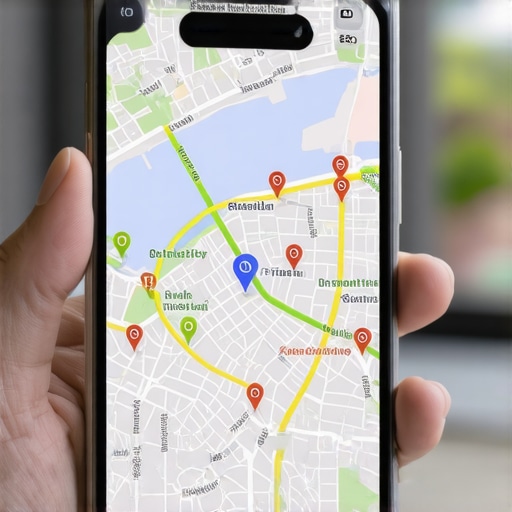
I’ll never forget the Tuesday afternoon I almost threw my laptop across the room because my General Contractor listing was buried on page four, while the guy down the street—who only does kitchen tiles—was practically printing money from his top-three spot. I thought I was being smart by casting a wide net. I figured more categories meant more eyeballs. I was wrong. Dead wrong. My profile was so broad it became invisible. Google’s algorithm loves clarity, and by trying to be everything to everyone, I became nothing to no one. It was a classic case of why your business profile category is limiting your reach. Today, I am going to show you exactly how narrowing your focus actually widens your reach, turning your profile from a vague suggestion into a local powerhouse.
The Trap of the Safety Category
Many of us fall into the trap of picking the biggest, shiniest category available because it feels safe. If you are a lawyer, you pick Law Firm. If you are a consultant, you pick Business Consultant. But here is the kicker: when you go broad, you are not just competing with your neighbors; you are competing with the massive franchises that have million-dollar SEO budgets. I learned this the hard way when I tried to rank a boutique firm under a generic tag. We got crushed. It was not until we understood how to use local directories to push niche relevance that the needle finally moved. By choosing a primary category that is too vague, you are essentially telling Google that you are a jack of all trades, which in the world of local search, often translates to a master of none. If you want to stand out, you need to realize that the specific on-page tweak that boosted our local visibility often starts with the very first box you check in your profile settings.
Does narrowing my niche actually scare away potential leads?
This is the fear that keeps business owners awake at night. You think, if I call myself a Personal Injury Lawyer instead of just a Lawyer, will the guy looking for a divorce attorney skip me? Yes, he will. And that is exactly what you want. You want Google to see you as the absolute authority for a specific problem. According to research from Moz, relevance remains one of the top three local ranking factors, often outweighing proximity and prominence when a searcher is looking for a specific solution. If your local SEO strategy needs a focus on entity authority, you have to start by telling Google exactly who you are, not a watered-down version of your business. Have you ever felt like your business is a ghost in the search results despite having a perfect profile? Reach out and let me know, because identifying the overlap is the first step to fixing the map pack stall. We are about to dive into the specific steps to audit your categories and reclaim your local authority.
Audit the Map Pack Before You Change a Single Setting
Stop guessing what category works. I once spent three weeks trying to rank a client’s HVAC business as a general ‘Contractor’ because it had more search volume. The result? Zero calls. We finally looked at the guys actually sitting in the top three. They weren’t using the broad term; they were using ‘Air Conditioning Contractor.’ We pivoted, and the map pin jumped six spots in 48 hours. Use a tool or just manual search to see the primary category of your competitors. If they all share one specific tag, Google has already decided that is the ‘intent’ for that search. You don’t fight the algorithm; you feed it what it wants. Once you identify that gap, you can leverage niche citations to fix a stuck map pin by aligning your external data with this new, specific focus.
Treat Your Primary Category Like a North Star
Your primary category is the heaviest signal you can send to Google. It’s the foundation of your entire local entity. If you get this wrong, no amount of reviews will save you. Think of it like a library: if you put a cookbook in the ‘Fiction’ section, people looking for recipes will never find it. To make this signal even stronger, you need to engage in authority stacking strategies to dominate local search. This means creating a web of properties—your website, your social profiles, and your directories—all screaming the same specific category. When Google crawls your footprint and sees ‘Roofing Contractor’ everywhere, it stops guessing and starts ranking.
Avoid the Secondary Category Bloat
It is tempting to add ten secondary categories. Don’t. Every extra category you add that isn’t perfectly aligned with your core service acts like a bucket of water diluting a shot of espresso. You want that espresso to be strong and concentrated. Only add secondary categories that represent a significant part of your revenue and have their own dedicated pages on your site. This is how you optimize your backlink profile for local SEO authority; your links should point to these specific service pages, reinforcing the categories you’ve selected.
Reinforce Your Niche With Smart Link Building
Once your categories are set, you need to prove you belong there. Google isn’t going to take your word for it just because you checked a box. This is where proven backlink techniques to dominate local search come into play. If you’ve claimed to be a ‘Boutique Law Firm,’ you need links from legal associations and local business journals, not generic global directories. I remember working with a local bakery that couldn’t break the top 5. We stopped chasing big national blogs and started getting mentions from local food critics and neighborhood event pages. That local relevance acted as a validator for their category, proving to the algorithm that they weren’t just a business, but a local landmark.Most people think local SEO is a numbers game. They believe that if they just buy enough backlinks, they will eventually force their way into the top three. I’m here to tell you that this approach is the fastest way to burn your budget and get your profile flagged. In the world of high-level ranking, authority stacking unveiled the hidden power for local seo not through volume, but through precision. The common belief is that a high Domain Authority (DA) link is always better. But in my experience, a link from a local neighborhood association or a small-town chamber of commerce will outperform a generic DA 90 guest post every single time. Why? Because Google is looking for geographic and niche proof, not just digital popularity. When you chase generic metrics, you fall into the trap of why generic guest posts fail your local seo test, leaving your business looking like a global entity rather than a local authority.
The guest post obsession that ruins local relevance
Everyone says you need to reach out to massive blogs to get ‘clout.’ But for a local contractor or lawyer, those links often carry zero ‘local juice.’ I’ve seen businesses spend thousands on guest posts that actually diluted their local signal. According to the BrightLocal Local Search Rankings Factors survey, while link signals remain incredibly important, the relevance of the linking site to your specific service area is what triggers the algorithm to trust your location. If you aren’t careful, you might fall victim to 3 backlink patterns that get small businesses penalized, such as sudden spikes in non-local anchor text that looks unnatural to a human reviewer. Have you ever fallen into this trap of buying ‘high DA’ links only to see your rankings stay exactly where they were? Let me know in the comments.
How can I tell if my authority stack is actually communicating with Google?
This is the advanced question I get most often from business owners who have tried ‘everything.’ The secret lies in how your digital nodes are connected. If your Google Cloud assets, your social properties, and your website are all pointing at each other in a messy circle, you aren’t building authority; you’re building a feedback loop that Google ignores. To fix this, you must understand why your authority stack fails to connect with local search nodes. You need a linear progression of trust that flows from high-authority public properties back to your primary location page. If even one of these ‘nodes’ has a mismatched NAP (Name, Address, Phone number) or an outdated link, the entire stack loses its power.
The broken node trap that keeps your map pin stagnant
The most common ‘oops’ factor I see with advanced clients is the broken connection. They build out these elaborate stacks on Amazon S3 or Microsoft Azure, but they forget to interlink them correctly. This is like building a massive power plant but forgetting to connect the wires to the city. Without proper interlinking, your entity never becomes ‘sticky’ in Google’s Knowledge Graph. If you’ve been burned by an agency that promised you the world but delivered a mess of disconnected links, you need to learn how to fix your local backlink profile after a bad agency. It starts with auditing your existing stack and ensuring that every single link reinforces your niche and your neighborhood. Local SEO isn’t just about being found; it’s about being verified as the most relevant answer to a searcher’s problem.
I’ve seen too many business owners reach the top of the map pack only to stop everything. They think they’ve won the game, but Google is a hungry beast that requires constant validation. If you aren’t feeding it fresh, relevant data, your competitors will eventually leapfrog you. To prevent this, you must implement the local data loop strategy for sustainable map rankings. It is not just about getting new reviews; it is about ensuring your entity remains the most logical answer to the user’s intent every single day.
Scaling Your Stack Without Getting Red Flagged
As your business grows, you will naturally want to target neighboring towns or more specific service categories. This is where most people get banned because they try to hack the system with fake addresses or spammy location pages. Instead, you should focus on how to scale your map authority without getting banned by using advanced technical signals. For instance, I have found that using SVG stacks to boost your local entity authority provides a much cleaner, more modern signal than old-school citation blasting. This is the logic behind why multi-node stacks are the future of local authority; you aren’t just one point on a map, but an interconnected web of data across the cloud.
I personally rely on a combination of Google Search Console and the GMB Everywhere Chrome extension. Why? Because it lets me see exactly which categories my competitors are testing in real-time. If they shift to a niche I haven’t claimed yet, I know about it within minutes. To know what is really happening under the hood of your profile, you need the local seo audit tool that actually finds map errors. I am a huge fan of Whitespark’s Local Citation Finder because it digs into the unstructured citations—mentions on local blogs or news sites—that most tools miss.
The Secret Weapon for Maintaining Your Edge
According to Darren Shaw’s Local Search Ranking Factors study, citation consistency remains a foundational factor, but the quality of those citations is increasingly what differentiates the top 1% from everyone else. You need to be looking for hyper-local validators that prove you are part of the community fabric, not just another digital entry. If you neglect these small signals, your entity validation starts to crumble over time.
How do I maintain my local authority over the long haul?
The key is consistent, localized activity. You need to treat your Google Business Profile like a social media feed. Answer questions, update your ‘from the business’ section monthly, and keep your services list current. I predict that within the next two years, Google will move even further toward Visual Authority, where the photos and videos you upload are analyzed by AI to confirm you are actually performing the services you claim. Try this specific tip today: Upload a 30-second, geo-tagged video of a completed job site directly to your profile. It is a small move that carries massive weight in an AI-driven search world.
The Hard Truths I Discovered While Building Local Authority Stacks
After years of trial and error, I realized that authority stacking isn’t about gaming the system; it’s about providing the undeniable proof Google craves. One of my biggest lightbulb moments was when I stopped chasing every keyword and started focusing on authority stacking unveiled the hidden power for local seo. I learned that your digital entity is only as strong as its weakest connection. If your social profiles don’t mirror your Google Business Profile categories exactly, you’re leaving money on the table. Another lesson? Don’t fear the niche. I’ve seen businesses double their leads by simply narrowing their primary category and then using backlink optimization tips for local seo authority to support that specific focus. Precision wins every time.
My Go-To Toolkit for Crushing Local Competition
You don’t need a hundred tools to win, but you do need the right ones. I personally rely on Whitespark’s Local Citation Finder because it uncovers the hyper-local links that general SEO tools miss entirely. To keep my data in sync, I use GMB Everywhere to spy on competitor categories—it is the quickest way to see why they might be outranking you. If you are serious about your stack, you also need to use the local seo audit tool that actually finds map errors regularly to ensure no broken nodes are draining your power. Finally, I always keep Google Search Console open to monitor how local intent changes over time; it’s the ultimate source of truth for what searchers actually want.
#IMAGE_PLACEHOLDER_E#
Take Charge of Your Digital Neighborhood Today
The world of local search can feel like a moving target, but the principles of trust and relevance never change. By aligning your categories and building a robust, interconnected stack, you aren’t just ranking—you’re building a digital moat around your business. It is time to stop being a ghost in the search results and start being the authority your community relies on. If you’re ready to take the next step, I highly recommend looking into elevate your local seo with advanced authority stacking tactics to truly separate yourself from the pack. The map pack is waiting for you.
Have you ever found a weird secondary category that actually boosted your rank? Share your win below!