
I still remember the night I stayed up until 2 AM, sweat dripping onto my keyboard, trying to squeeze “best plumber in Chicago” into my Google My Business description for the seventeenth time. I was convinced that if I just hit that 750-character limit with the perfect blend of keywords and persuasion, the phone would start ringing off the hook. I waited. And waited. My ranking didn’t budge an inch. In fact, my profile stayed stuck on page 4 while a competitor with a two-sentence description sat comfortably in the local three-pack. That was my “lightbulb moment.” I realized I was focusing on the window dressing while the foundation of my local SEO house was crumbling. I spent months chasing the wrong metrics, thinking that being “articulate” was the key to pleasing the Google gods. It is a trap many of us fall into when we first start trying to figure out how local search actually works.
Stop Stressing Over the Description Box
If you’ve spent hours agonizing over every comma in your “from the business” section, I have some news that might be a tough pill to swallow: Google has explicitly stated that the description does not impact your local search ranking. It is a hard truth I had to learn through months of wasted effort and constant refreshing of search results. Today, I am going to show you exactly why that is and, more importantly, where you should be spending your energy instead. [image-placeholder-1] We are going to dive into the real movers—like how proper keyword optimization actually works and why your time is better spent on things that actually signal authority to the algorithm. We will look at why your business profile needs more than just photos and a well-written blurb to break into the top 3. My early mistake was thinking the algorithm read like a human editor, but it really behaves like a logic gate searching for verified entity data.
Is the description just a total waste of time?
Early in my career, I made the classic mistake of thinking the GMB description worked like a traditional meta description or on-page SEO. I stuffed it with city names and service keywords, thinking I was outsmarting the system. It didn’t work then, and it certainly doesn’t work now. While it won’t help you climb the rankings, it is your primary sales pitch for the people who already found you. It is for conversion, not discovery. According to a study by Sterling Sky, changing the description has zero impact on rankings, yet so many business owners still get hung up on it. Have you found yourself obsessing over these details only to see your map pin stay frozen in place? If so, you aren’t alone, and it is time we fix those frozen rankings together. Instead of playing with the description, we need to talk about what actually forces Google’s hand. I am talking about things like authority stacking strategies to dominate local search and building a network of signals that the algorithm can’t ignore. In the next section, we will look at how location context and map embeds create the relevance your profile is currently missing.
To get out of the ‘page 4’ graveyard, you have to stop thinking like a writer and start thinking like a database engineer. Google isn’t reading your business description to see how ‘dedicated’ or ‘professional’ you are; it’s looking for data points it can verify across the web. I like to think of your business as a spider in the center of a web. If the silk threads—your links and citations—are broken or don’t connect to reputable anchors, the spider falls. This is where you need to learn how to use entity stacks to validate your business location so the algorithm stops guessing where you are and starts trusting your service area.
Force the Algorithm to Acknowledge Your Physical Presence
Your first move isn’t a new photo; it’s a structural sync. You need to ensure every digital footprint you leave points back to the exact same ‘entity.’ I’ve seen businesses fail because they used ‘Suite 100’ on their website and ‘#100’ on a directory. It sounds trivial, but it’s enough to create a ‘ghost’ profile that dilutes your power. You have to sync your website metadata with your business profile to create a closed loop of information. Think of it like a GPS: if two different satellites give two different coordinates, the driver gets lost. Google is that driver, and you are providing the map.
The Logic of Multi-Cloud Stacking
Once your foundation is solid, you need to amplify that signal. This is where most people get scammed by ‘cheap’ citation packages that do nothing but clutter the web. Instead, you should be looking at the specific logic behind multi-cloud map stacks. By hosting data on multiple high-authority cloud properties and linking them back to your map pin, you are essentially telling Google, ‘Look, even these giants recognize this business.’ It creates a massive wave of authority that a single GMB description could never generate. 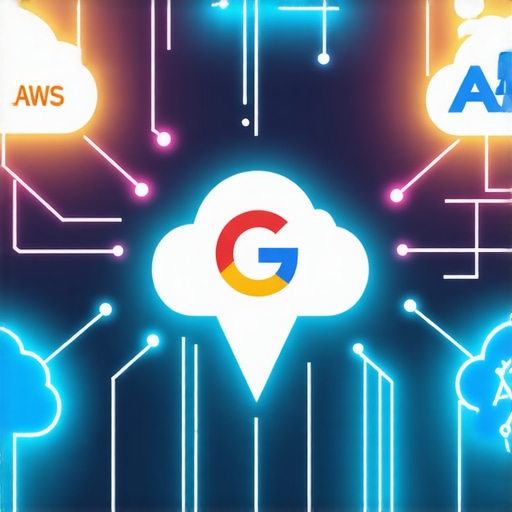
How a Single Address Tweak Saved a Client
I once worked with a local locksmith who had more reviews than anyone in his city but couldn’t crack the top 10. He was convinced his competitors were cheating or using bot farms. When I audited his stack, I found his address was formatted differently on three major local directories—one had a typo in the zip code, and the other omitted the ‘North’ in the street name. It was a classic ‘frozen pin’ scenario. We implemented the address format tweak that fixed the frozen pin and paired it with a few niche-specific links. Specifically, we went after high school booster club links because they are hyper-local and impossible for a global competitor to fake. Within two weeks, he was in the local three-pack. He didn’t write a single new word for his description; he just repaired his broken entity connections.
Ditch the Generic Guest Posts
If you’re still buying $50 guest posts on sites that talk about everything from ‘dog grooming’ to ‘crypto,’ you’re hurting your local relevance. These links lack geographic context. You need to ditch the agency guest posts and focus on what I call ‘neighborhood anchors.’ These are links from local charities, community meetups, or even the neighborhood watch. Google sees these and thinks, ‘Okay, this business isn’t just a website; it’s a physical pillar of this specific community.’ That is the kind of authority that survives algorithm updates and actually drives phone calls.
Let’s dig deeper into the nuance of digital authority. Most SEO agencies will sell you on “high Domain Authority” links as the absolute cure-all for a stuck map pin. In my experience, this is the biggest misconception in the industry today. A DA 90 link from a generic national news site is almost always less valuable for your local rankings than a DA 20 link from a local historical society or a neighborhood blog. This is the core of why Google ignores your backlinks: the context problem. If the algorithm cannot find a geographic or niche-specific anchor within that link, it is effectively dead on arrival. I have seen countless business owners spend thousands on backlink building blueprints for local seo success only to find that their expensive “power links” have no local flavor, leaving them stuck exactly where they started.
The Anchor Text Trap That Triggers Google’s Red Flags
One major “oops” factor I constantly uncover during deep-dive audits is the over-optimization of anchor text. If you are forcing every single link to use the exact phrase “Emergency Plumber Phoenix,” you are essentially painting a giant target on your profile for a manual review. This creates the ghost backlink problem killing your local domain authority, where the links exist in your search console but provide zero ranking benefit because Google has flagged them as manipulative. To avoid this, you must stop using generic anchor text for local link campaigns and prioritize branded terms, raw URLs, or long-tail neighborhood phrases that look natural to a human reader. [image-placeholder-c]
Why does my authority stack feel like it is shouting into a void?
Sophisticated users often ask me why their carefully constructed multi-cloud stacks aren’t moving the needle despite having 50-plus nodes. Usually, it comes down to “node disconnection.” If your stack doesn’t interlink in a logical, circular loop that validates your entity, the authority pools in one corner and never reaches your Map Pin. This is the invisible mistake killing your cloud node authority stack performance. You have to understand how to connect your cloud nodes without triggering a spam filter to ensure the crawling bots see a cohesive map of your business rather than a series of disconnected, suspicious islands. According to a study by BrightLocal, “relevance” has now overtaken “quantity” as the primary driver of local organic growth. If your stack is technically impressive but lacks local context, the reason why your backlinks are being ignored by the local map algorithm becomes painfully obvious. Have you ever fallen into this trap of chasing quantity over quality? Let me know in the comments.
Maintaining momentum is where the real work begins. I have seen countless stacks start strong and then slowly bleed out because the owner thought they were finished after the initial build. You have to realize that local SEO isn’t a trophy you win once; it is a garden that needs constant weeding and pruning. This is exactly how to build an authority stack that actually survives algorithm shifts—by acknowledging that Google’s understanding of your business is constantly being re-evaluated against new data points across the web. If you let your citations grow stale or ignore new local competitors entering the market, you are just waiting for a drop in the map pack. I personally rely on the local seo audit tool that actually finds map errors to scan my projects every single month. It is not just about finding broken links; it is about identifying where the ‘entity sync’ has started to fray due to external site updates or directory migrations.

One of my biggest secrets for long-term stability is what I call the local data loop strategy for sustainable map rankings. Instead of just building a stack and leaving it to rot, I constantly feed it fresh local signals. This means occasionally going back into your older cloud nodes and updating them with links to new, hyper-local content or recent community involvement. You should also be looking at how to fix the citation gaps keeping you off the top 3 on a quarterly basis. Digital entropy is a real threat; businesses move, phone numbers change, and niche directories go offline. If your stack is pointing to dead ends, the authority stops flowing to your map pin.
How do I keep my authority stack healthy over time?
The answer lies in relentless consistency and rigorous data integrity. I use a combination of automated monitoring and manual ‘sniff tests’ of my top-tier nodes. I am a huge fan of keeping a master spreadsheet of every cloud property, map embed, and niche citation I have ever created. If you do not track it, you cannot maintain it. This is why why multi-node stacks are the future of local authority—the redundancy protects your rankings from single points of failure. I also recommend following the technical specifications on Schema.org closely to ensure your structured data is perfectly aligned with your business profile. Google’s algorithms are increasingly leaning on this type of verified entity data to differentiate between a real local pillar and a thin, low-authority website.
Looking ahead, I predict that authority stacking strategies to boost local seo in 2025 will shift almost entirely toward ‘Real World Validation.’ Google is getting significantly better at spotting fake geographic signals. In the near future, the algorithm will likely prioritize stacks that can be cross-referenced with real-time local events, physical traffic patterns, or user-generated signals from within a specific service radius. It is no longer just about the quantity of links; it is about the ‘proof of presence’ that those links represent. My challenge to you: do not just read this and nod. Go open your Google Business Profile dashboard right now and check your primary category. Is it the most specific one available? If not, fix it immediately. Then, pick one local charity or community group and reach out for a partnership or sponsorship. That single ‘neighborhood anchor’ could be the piece that finally locks your stack into place and pushes you into the top 3.
The Brutal Truths I Learned While Fighting the Local Algorithm
After years of obsessing over map pins, I’ve realized that the most common mistakes are often the most expensive ones. First, stop treating your Google Business Profile like a static billboard. It is a living entity that requires a constant stream of fresh, local data to stay relevant. I learned the hard way that a single high-quality link from a neighborhood charity often carries more weight than a dozen generic backlinks from high-DA sites that have no geographic connection to your city. Second, you have to embrace the technical side. Most business owners are afraid of things like Schema or multi-cloud nodes, but that is exactly where the competitive advantage lies. This realization is what led me to discover that authority stacking is the game-changer in local seo for anyone stuck on page 2 or 3. Finally, remember that Google values consistency over volume. It is better to have ten perfectly synced citations than a hundred messy ones that confuse the algorithm. If you can master this level of precision, you will find that mastering authority stacking for elevated local rankings becomes a predictable process rather than a guessing game.
The Tools That Keep My Map Pins Glued to the Top
I don’t believe in using every tool on the market; I believe in using the ones that provide the most accurate data. For diagnosing why a profile isn’t moving, I always turn to the local seo audit tool that actually finds map errors. It highlights the tiny NAP (Name, Address, Phone) inconsistencies that humans usually miss. I also keep the Schema.org LocalBusiness documentation bookmarked to ensure my website’s structured data is speaking Google’s preferred language. For staying ahead of the curve, I regularly review the latest benchmarks from BrightLocal and keep a close eye on authority stacking strategies to boost local seo in 2025 to ensure my tactics aren’t becoming obsolete. [image-placeholder-end] These resources form the backbone of my strategy and prevent me from wasting time on outdated ‘hacks.’
Stop Reading and Start Stacking Your Authority
The biggest hurdle in local SEO isn’t a lack of information; it’s a lack of action. You now know that your business description won’t save you and that your power comes from a verified web of local signals. It’s time to stop worrying about the perfect sentence and start focusing on how to fix the citation gaps keeping you off the top 3. Every local link you secure and every cloud node you sync brings you one step closer to dominating your service area. This journey toward local authority takes patience, but the reward is a phone that doesn’t stop ringing. You have the blueprint; now go out and build your foundation. Have you ever noticed a sudden drop in your map rankings after making a minor change to your website? Let me know your experience in the comments below!