I was sitting in my home office, staring at a ranking report that refused to budge. I had done everything ‘right’—the keyword density was perfect, the website was fast, and I had even snagged a couple of links from high-authority tech blogs. But my client, a local roofing contractor, was still stuck on page two, while a competitor with a site from the early 2000s sat comfortably in the top three. It was infuriating. I realized then that I was playing the global SEO game for a local battle. That was the moment I stopped chasing ‘big’ links and started looking at the local news cycle. I learned that Google doesn’t just want to see that you are important; it wants to see that you are important *here*. If you have ever felt like your rankings are hitting a brick wall despite your best efforts, you are likely missing the geographical relevance that only hyper-local mentions can provide. Today, I am going to show you how to bridge that gap and finally make the algorithm see your business as a community pillar.
Stop Chasing Global Fame and Start Owning Your Block
It is a common trap. We get so caught up in Domain Authority and ‘prestige’ links that we forget the [neighborhood links that carry more weight than national PR](https://localseoauthoritystack.com/why-your-neighborhood-links-carry-more-weight-than-national-pr). I made this exact mistake early on, focusing on guest posts that had nothing to do with the city we were actually serving. I was building a castle in the clouds instead of a foundation in the dirt. When you start to [use local news to build high power backlinks](https://localseoauthoritystack.com/how-to-use-local-news-to-build-high-power-backlinks), you aren’t just getting a link; you are getting a massive vote of confidence from a source Google already trusts to define what is happening in your area. This is how you [beat corporate chains using hyper-local data points](https://localseoauthoritystack.com/how-to-beat-corporate-chains-using-hyper-local-data-points) that they simply cannot replicate with their massive, generic marketing budgets. You have an advantage as a local entity, and it is time we started using it.
Is a local news mention really worth the effort?
I get the skepticism. You might think, ‘I’m a plumber, why would the local paper care about me?’ or ‘Does a link from a small-town news site actually move the needle?’ The answer is a resounding yes. According to a surprising industry benchmark by Moz, local relevance often outweighs raw link power when it comes to the ‘proximity’ signals that govern the Map Pack. A single mention in a local news story about a community event or a business milestone can do more for your [backlink building blueprints for local SEO success](https://localseoauthoritystack.com/backlink-building-blueprints-for-local-seo-success) than a dozen generic directory listings. Have you ever noticed a smaller competitor suddenly leapfrog you after a local charity event? That wasn’t luck; it was a localized authority signal. I want to know—have you ever tried reaching out to a local reporter only to be met with total silence? Don’t worry, we’re going to fix your approach so that never happens again. Setting the stage for this involves more than just a press release; it’s about becoming a resource for the local newsroom.
Turn Your Everyday Data into Headlines
To win at local SEO, you have to stop thinking like a marketer and start thinking like a community reporter. I learned this the hard way with a plumbing client in a suburb of Chicago. We were trying every standard trick, but the needle wouldn’t move. Finally, I looked at his internal job data and realized he was fixing more frozen pipes in one specific neighborhood than anywhere else. We drafted a tiny, three-paragraph ‘Neighborhood Freeze Alert’ and sent it to the local community blog. They didn’t just run it; they linked to his ‘Winter Prep’ page. That one link from a site with a measly Domain Authority of 12 did more for his rankings than a dozen generic directories because it established a geographical anchor. This is the off-page strategy that turns local mentions into power links by proving to Google that you are a relevant entity in that specific square mile.
Feed the Local News Cycle What It Craves
Local journalists are understaffed and overworked; they are essentially a hungry engine that needs constant fuel. If you provide them with a pre-packaged story—what we call ‘source-ready content’—you are doing their job for them. Don’t just pitch your services. Instead, offer a unique data point or a community-focused observation. For example, if you’re a florist, share which neighborhood buys the most ‘apology’ roses. It sounds trivial, but it’s the exact kind of hyper-local human-interest fluff that small-town papers love. When you use local news to build high power backlinks, you are essentially borrowing the newspaper’s years of established trust and ‘stacking’ it on top of your own business profile.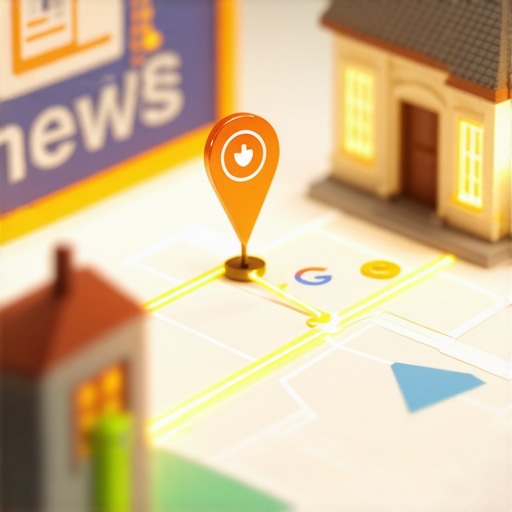
Sync Your Digital Footprint with the Story
Once the story is live, the work isn’t done. The real magic happens when you ensure your digital entity matches the press you just received. If the local paper mentions your business name and address, that data must perfectly mirror your website and Map Pin. This is where most people fail—they get a great mention, but their site and their Google Business Profile have slight discrepancies in the address format. You need to how to fix the sync gap between your website and your map pin to ensure that the credit for that news mention actually flows to your local ranking. Think of it like a circuit: the news link is the power source, but if your local entity sync is broken, the bulb never lights up. By applying the specific local schema tweak that validates your entity on the page the news outlet links to, you create a direct, unbreakable connection in the eyes of the algorithm. This isn’t just about ‘getting a link’; it is about authority stacking the game changer in local seo that forces Google to acknowledge your business as the definitive answer for your city.
You’ve likely heard that SEO is a numbers game—the person with the most links wins. In the world of local search, this is a dangerous half-truth that often leads to a ‘manual action’ or a permanent stay on page four. I see business owners dumping thousands into bulk directories, thinking they are building a wall of authority, but they are actually building a house of cards. The truth is, why generic directory listings are failing your local goals comes down to the lack of ‘geospatial relevance.’ Google isn’t just counting votes; it’s weighing the location of the voter. One link from a local little league team’s sponsorship page tells the algorithm more about your service area than fifty ‘High DA’ guest posts from a generic tech blog. Have you ever fallen into this trap? Let me know in the comments.
You Aren’t Building Authority If You Are Just Buying Links
The most common ‘oops’ I encounter isn’t just about link quality; it’s about anchor text suicide. Beginners think using ‘Best Plumber in Chicago’ for every single backlink is the way to rank. In reality, that is a massive red flag. When you stop using generic anchor text for your local entity backlinks, you start looking like a real brand. Real brands get linked by their name or their URL, not a perfect string of keywords. According to the 2023 Local Search Rankings Factors study by Whitespark, ‘proximity’ and ‘relevance’ are now the dominant signals for the map pack, often superseding raw link volume. If your link profile looks too perfect, Google assumes it’s artificial and throttles your reach.
The Anchor Text Mistake That Signals Spam to Google
This is where the concept of ‘authority stacking’ usually falls apart. Most SEOs treat a stack like a pile of links, but it should be a circuit of entities. If the links don’t lead back to a verified, synchronized profile, the energy dissipates. I have watched multi-location firms lose their rankings overnight because their citation strategy was actually hurting them rather than helping. You need an authority stacking move that actually forces local gains by connecting your social profiles, your map pin, and your website into a single, cohesive entity in the eyes of the Knowledge Graph.
Why does your map pin stay frozen while your organic rank climbs?
This is the million-dollar question for many growing firms. You might be climbing the organic search results, but your map pin refuses to move. This happens because your ‘entity sync’ is broken. You can build an impressive stack, but if you haven’t accounted for the ‘hidden link gap,’ the power never reaches your map listing. Most people ignore the hidden link gap between your shop and the map pack leaders. You need to bridge your website’s authority directly into your Google Business Profile. I’ve found that 3-svg-entity-stacks that force local rankings in tough markets are the only way to break through that glass ceiling. Don’t let your efforts go to waste by forgetting to use cloud nodes to shield your authority stack. These nodes act as a buffer, ensuring that the link juice is concentrated and focused on your local coordinates. When you master authority stacking for elevated local rankings, you aren’t just playing SEO; you are defining the digital geography of your city.
I have seen it happen a hundred times. A business hits the top three, the owner pops the champagne, and then they stop doing the very things that got them there. Three months later, they are calling me in a panic because they have slipped to page two. SEO is not a trophy you win; it is a garden you tend. To keep your position, you need to transition from aggressive building to surgical maintenance. I personally rely on grid-tracking tools like Local Falcon to see exactly where my ‘territory’ is shrinking. If I see a specific corner of the city starting to turn red on the map, I know I need to double down on localized content for that specific zip code. It is about being proactive before the drop becomes a trend.
Keep your rankings from sliding backward
One of the most effective ways to stay ahead of the curve is to constantly refine your technical data. I do not just set my schema and forget it. I am constantly looking at the specific geo-json tweak that boosts map proximity signals to ensure my entity is tied to the most relevant local landmarks. As Google’s algorithm becomes more sophisticated, it relies heavily on what Mike Blumenthal calls the ‘Local Knowledge Graph.’ If your data is static while your competitors are constantly updating their attributes and adding fresh, geo-tagged content, you are going to lose. You have to how to build a local authority stack that actually sticks by treating your digital assets as living documents, not static brochures.
How do I keep my authority stack alive month after month?
Maintenance is where the real winners are separated from the ‘one-hit wonders.’ Every month, I audit my cloud nodes. These are often the first things to break or lose their connection to the main site. By using cloud nodes to secure your local search presence, you create a buffer that protects your main site from algorithm shifts. I also make it a point to refresh the internal links within the stack. If you have built a complex network of mentions, a single broken URL can drain the ‘juice’ from the entire system. This is why you need to how to build an authority stack that google actually trusts through consistent uptime and internal connectivity checks. If you are managing multiple areas, you must learn how to scale multi-location seo without getting your pins suspended, as Google’s spam filters are increasingly sensitive to footprint patterns that look too automated.

The 2025 shift toward entity-based proximity
Looking ahead, I predict that ‘raw’ backlinks will continue to lose value in favor of ‘entity validation.’ Google is getting better at recognizing when a link is just a paid placement versus a genuine community mention. In 2025 and beyond, your ability to prove you exist in the physical world—through coordinates, local event mentions, and hyper-local data points—will be the only thing that saves you from AI-generated search results. We are moving away from keywords and toward ‘identity.’ If you haven’t yet, I strongly urge you to implement the specific geo-json tweak I mentioned earlier; it is the single fastest way to tell Google exactly where your business begins and ends. Try applying it to just one of your service area pages this week and watch the proximity shift in your tracking tools.
What I’ve Learned About Proximity After a Decade in SEO
When I first started, I was obsessed with the numbers. I thought if I just had ‘more’ of everything—more keywords, more pages, more links—I would eventually win. But I learned that in the local game, a single relevant mention from a neighborhood entity is worth more than a hundred generic ones. I realized that proven backlink techniques to dominate local search aren’t about brute force; they are about proving your physical existence and community impact. This was my ‘lightbulb’ moment: Google doesn’t rank businesses; it ranks trustworthy local institutions. I also discovered that unlocking the power of authority stacking for top local seo results requires a patient, layered approach that builds a resilient digital footprint. Finally, I understood that your digital presence is a reflection of your physical reputation. If you are active in your city, your SEO should reflect that naturally.
The Resources I Rely on Every Single Day
I don’t believe in magic bullets, but I do believe in having the right gear. For tracking my progress across the city, I use grid-based tools like Local Falcon to see exactly where my influence ends. I also spend a lot of time analyzing why some efforts fail, specifically why basic citation sources no longer push the needle in competitive markets. For entity validation, I swear by specific schema tools that help bridge the gap between my website and the Knowledge Graph. I also keep a curated list of local community boards and news editors; these relationships are the foundation of my strategy and have been instrumental in how we doubled calls with a single entity sync move for numerous clients.
Claim Your Spot as the Local Authority
You now have the framework to stop being a ghost in your own city. Local SEO can feel like a mountain, but you don’t have to climb it all in one afternoon. Start by cleaning up your data, reaching out to one local news source, and ensuring your entity sync is tight. This is the essence of **backlink building blueprints for local SEO success**. The businesses that thrive are the ones that commit to being a consistent, visible part of their community. I can’t wait to see you take these steps and watch your business become the go-to name in your zip code. Have you ever tried a hyper-local link strategy that actually worked? Let me know below!