I spent three months and roughly two thousand dollars on what I thought were ‘high-power’ backlinks for a local plumber. The results? Crickets. It felt like I was throwing money into a digital void while my client’s competitors—some with half as many reviews—stayed glued to the top of the map pack. Then, quite by accident, I found a ‘local business resources’ page on the county clerk’s website. It looked like it hadn’t been updated since 1998, but I figured it couldn’t hurt. I sent a polite email, got added, and two weeks later, the phone started ringing. That was my lightbulb moment. Most of us are so busy chasing global metrics that we ignore the hyper-local trust signals sitting right in our backyard.
Why a Dusty Town Website Beats a Fancy Guest Post
When we talk about the authority signal most local seos completely forget, we’re really talking about trust. Google doesn’t just look at how many people link to you; it looks at who those people are. A link from a local .gov domain is essentially a character reference from an entity Google already trusts implicitly. It validates your physical presence in a way that no generic directory ever could. I used to think that volume was the game. I’d blast out hundreds of listings, but I eventually learned that why your citation strategy is actually hurting your map rank often comes down to a lack of local relevance. These government resource pages provide a ‘geographical handshake’ that tells search engines you are exactly who you say you are, exactly where you say you are. According to a study highlighted by Moz, proximity and relevance remain top-tier ranking factors, and nothing screams relevance like being cited by your own city’s official domain.
Does chasing government links take way too much effort?
You might be thinking this sounds like a bureaucratic nightmare. I used to think the same thing. I imagined endless forms and phone calls that go nowhere. In reality, it’s often just about finding the right person who manages a resource list and showing them how your business provides value to the community. It’s not about ‘gaming the system’; it’s about becoming a recognized part of the local ecosystem. Have you ever felt like you’re doing everything right with your SEO, but your rankings are just… stuck? If you’re tired of seeing your map pin stagnant, it’s time to stop looking at global metrics and start looking at how to build a local authority stack that actually sticks. We’re going to dive into the exact process I use to scout these pages without losing my mind.
Stop hunting for links and start finding neighbors
Think of your city’s digital landscape like a neighborhood map. Most people try to build a skyscraper on an empty lot by buying expensive guest posts, but they forget to connect the utilities first. To build a foundation that lasts, you need to understand how to build a local authority stack that actually sticks. This starts with identifying entities that Google already associates with your specific zip code. You are looking for digital proximity, a signal that tells search engines you aren’t just a business operating in a vacuum, but a vital part of the local infrastructure. This is about establishing a presence where your customers and city officials already congregate.
The search strings that uncover hidden gold
You don’t need fancy tools to find these opportunities; you just need to know how to talk to Google. I start with simple operators like ‘site:.gov “business directory”‘ or ‘site:.org “local resources”‘ followed by my city name. You’ll be surprised how many community centers, libraries, and neighborhood associations have pages that haven’t been updated in years. This is the authority stacking move that actually forces local gains because it places your brand inside a trusted local loop that competitors are too lazy to find. Search for local ‘recommendation lists’ or ‘community partners’ to find where the local trust is already being distributed.
Why your business name on a PDF still passes SEO value
I once spent a whole afternoon obsessing over whether a link was ‘dofollow’ or ‘nofollow’ on a local park district website. Here’s the truth: Google is smarter than a simple toggle. Even if you only get a mention in a downloadable PDF guide, it matters. In fact, why your business name on a PDF still passes seo value is all about entity validation. Google reads that document, sees your name, address, and phone number (NAP), and cross-references it with your map pin. It’s like a digital notary stamp confirming your business is physically present in the community. Don’t discard a source just because it isn’t a traditional clickable link.
My messy win with a local community board
Last year, I found a neighborhood watch site that was basically a digital ghost town. I noticed their ‘Local Safety Partners’ page had three broken links and a list of businesses that had been closed since the 2010s. Instead of asking for a link, I emailed the volunteer moderator and offered a small donation to their annual block party in exchange for being listed as a community supporter. It was a fifty-dollar sponsorship that took twenty minutes to negotiate. Within ten days, the client’s map pin jumped from position fourteen to position three. This is how we fixed a frozen map listing in under two weeks without touching a single risky PBN or generic directory.
Don’t overcomplicate the outreach
When you reach out to these local site owners, stop writing generic replies and start using sentiment signals. These people aren’t webmasters in the traditional sense; they are often volunteers, administrative assistants, or retirees. Talk to them like a human. Mention a specific detail on their page that you liked or a local landmark you both know. If you can help them fix a broken link or update some old info, you aren’t a solicitor anymore—you’re a contributor. For even more powerful results, look toward the public library link strategy that beats paid citations as your next step in the hierarchy of local trust.
Most SEO ‘experts’ will tell you that the secret to the map pack is just buying more ‘juice.’ They’ll point to Domain Authority (DA) as the holy grail. But here is the contrarian truth I’ve seen play out across dozens of campaigns: a backlink from a high-DA global blog is often worthless compared to a mention on a local high school sports page. In fact, why basic citation sources no longer push the needle is usually due to a lack of geographic context. Google is moving away from raw power and toward ‘entity validation.’ This means they want to see your business interacting with the specific digital nodes of your city, not just some random blog in another country. Have you ever fallen into this trap of chasing high-DA links that did absolutely nothing for your map rankings? Let me know in the comments.
Why high DA scores are lying to your business
We’ve been conditioned to think that a ‘powerful’ link is one with a high number attached to it. But for local businesses, relevance is the new power. If you are a plumber in Austin, a link from an Austin-based gardening blog is ten times more valuable than a link from a generic ‘Home Improvement’ site with a DA of 70. This is the core of elevate your local seo with advanced authority stacking tactics. You are looking for ‘neighborhood signals.’ When you prioritize local relevance, you avoid the common pitfall where you stop wasting money on toxic backlinks that might actually get your profile flagged for suspicious activity.

The danger of the ‘fast and cheap’ citation blast
The biggest ‘oops’ I see involves those ‘300 Local Citations for $10’ packages. It sounds like a bargain until you realize the mess it creates. I’ve seen businesses get buried because of the truth about bulk citations and your search visibility—it creates inconsistent NAP (Name, Address, Phone) data that confuses Google’s algorithm. If Google sees three different variations of your phone number across the web, it loses trust in your location. Instead of a solid foundation, you’re building on quicksand. Real authority comes from clean data and authority stacking the game changer in local seo that relies on quality over sheer quantity. If you don’t own your data, you don’t own your rankings.
Is your entity sync strong enough to survive a core update?
According to the 2023 Local Search Ranking Factors study by Whitespark, ‘consistent NAP’ and ‘local link relevance’ remain high-impact factors for map pack performance. Sophisticated SEO isn’t about how many links you have, but how tightly they sync with your Google Business Profile. This is where the local entity sync move that forces hyper local rank jumps comes into play. It’s about creating a ‘cluster’ of information that all points to one undeniable truth: your business is the most relevant result for that specific search. If your sync is off, no amount of backlinking will save you when the next algorithm update rolls through. When you shift your focus from global metrics to local signals, the mystery of why your competitors are outranking you starts to vanish. It isn’t magic; it’s just a better-connected digital neighborhood.
I don’t just log into the Google Business dashboard and hope for the best. That’s a recipe for a slow decline. Instead, I rely on a specific routine and a handful of tools that tell me the truth about my ‘neighborhood footprint.’ One tool I swear by is Local Falcon for geogrid tracking. If you’re only checking your rank from your office chair, you’re flying blind. You need to see how you rank three miles north versus five miles south. This granular data is part of the authority stacking strategies to dominate local search that I’ve used to keep clients at the top for years. It’s about spotting a ‘red dot’ on the map and realizing you have a localized sync issue before the client’s phone stops ringing.
Stop guessing where your map pin actually lands
To keep a stack healthy, you need to be obsessed with the gaps. I use the audit tool hack that found our hidden map pin errors to scan for duplicate listings that might be cannibalizing our authority. Sometimes, a well-meaning employee creates a second page for a ‘new department,’ and suddenly Google is confused about which entity is the ‘real’ one. We also have to look at the site’s technical health. If your site takes four seconds to load on a mobile device, Google will eventually decide you aren’t the best local resource, no matter how many community links you have. I always check how to fix the sync gap between your website and your map pin to ensure the schema data on the backend is feeding the algorithm the exact same coordinates as the GBP. 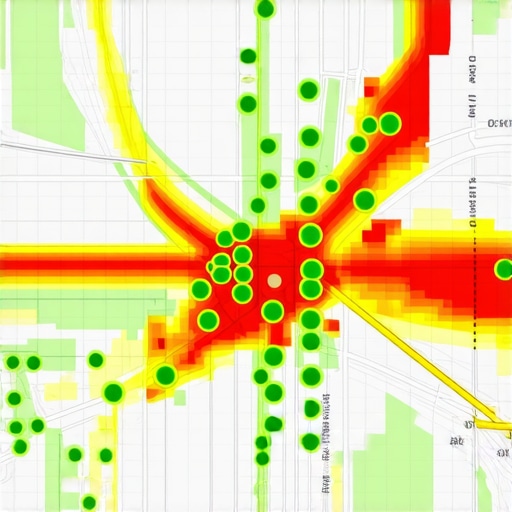
How do I maintain my local authority stack over time?
Maintenance isn’t about building ten new links every month; it’s about verifying the ones you have and refreshing the signals. Every quarter, I go back and check those community board links. Are they still live? Did the organization move to a new domain? As noted in the Sterling Sky Local Search Ranking Factors report, behavioral signals—like how often people click for directions or call from your profile—are heavily influenced by how current your information feels. This is why I focus on how to automate reviews without looking like a spammer. Fresh, high-sentiment reviews are the ‘heartbeat’ of your stack. Without them, the authority you built with backlinks starts to feel like a static museum piece rather than a living business.
The shift toward AI driven local discovery
Looking ahead, the game is moving toward ‘Search Generative Experience’ (SGE). Google’s AI won’t just list three businesses; it will explain *why* it chose you. It will pull data from those PDF mentions, those local news articles, and those niche citations you worked so hard to get. This makes authority stacking unveiled the hidden power for local seo even more critical. In the future, ‘near me’ won’t just be about GPS; it will be about ‘Who does the local internet think is the expert here?’ If you want to stay ahead, try this today: Find one local podcast or neighborhood newsletter and offer them a ‘tip of the month’ related to your trade. It’s a low-effort move that creates a high-trust signal Google’s AI can’t ignore.
What Most Agencies Won’t Tell You About Real Local Power
My biggest mistake early on was thinking I could outsmart Google with sheer volume. I learned the hard way that local relevance is the only currency that matters. Here is the reality of authority stacking the game changer in local seo: a link from a local high school sports team is often worth more than a generic guest post because it anchors your business to a specific geographic coordinate. I also realized that how to build an authority stack that google actually trusts comes down to being a good digital neighbor. You can’t just take; you have to contribute to the local ecosystem to get those elite signals that competitors cannot replicate.
The Minimalist Stack for Maximum Map Results
You don’t need a hundred tools to win. I personally rely on Local Falcon for visual geogrid tracking because it reveals the rank gaps you cannot see from a standard search engine result page. For citation cleanup, I trust WhiteSpark because their data integrity is higher than any automated blast service. And finally, I keep the audit tool hack that found our hidden map pin errors in my back pocket to catch duplicate listings before they cannibalize my hard-earned authority. These resources are my foundation for backlinks mastery boost your local seo authority in 2025.
Time to Claim Your Spot in the Neighborhood
Don’t let the technical jargon of SEO intimidate you. At its core, this is about making your business the most recognizable and trusted name in your town. Start small—find one local organization to support or one community board to join this week. When you focus on authority stacking unveiled the hidden power for local seo, the rankings will naturally follow the relationships you build. You have the tools, the strategy, and the community waiting for you to lead the way. Have you ever found a weird local link, like a neighborhood bake sale or a library list, that actually moved your map pin? Let me know in the comments below.