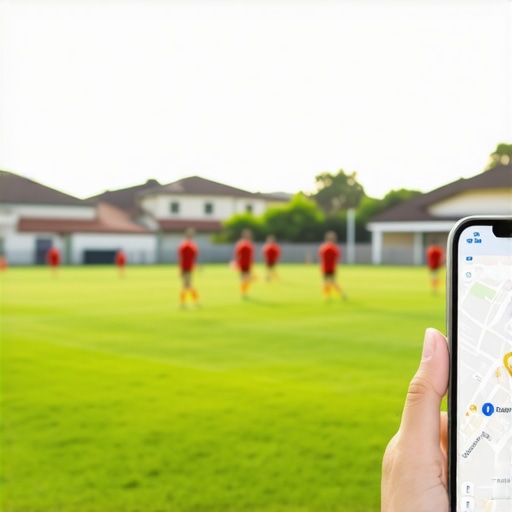
I was standing on the sidelines of a rain-soaked soccer field, watching my nephew chase a ball, when it finally clicked. For months, I had been obsessed with technical jargon, trying to fix every schema error and obsessing over my server response times. My business was invisible in the local map results, and I was frustrated. A fellow parent mentioned their kid’s team needed a new sponsor for jerseys. I wrote the check, thinking it was just a nice thing to do for the community. Three months later, my phone wouldn’t stop ringing. It turns out, that simple link from the neighborhood sports association was the missing piece of the puzzle I couldn’t find in any expert software.
The Muddy Field Moment That Changed My Local Strategy
In the beginning, I fell into the same trap many of you are in right now. I thought that if I just bought enough generic backlinks, I’d eventually force Google to notice me. I was wrong. I wasted nearly $2,000 on high DA links that had absolutely zero connection to my physical city. It was a classic rookie mistake that I see people make every single day. The truth is, Google cares more about your proximity and community relevance than a link from a blog in a different country. When I finally started focusing on invisible neighborhood backlinks, the Map Pack finally started to cooperate. Today, I am going to show you exactly how to stop overcomplicating your digital presence and start winning where it actually matters—your own backyard.
Are these tiny local links actually worth the investment?
I get the skepticism. You are probably wondering why a link from a local high school football page would carry more weight than a massive industry directory. The answer lies in hyper-local signals. Google’s algorithm is smarter than we give it credit for; it recognizes that a business active in its local sports scene is likely a legitimate, trusted entity in that specific geographic area. According to a report on local search ranking factors by Search Engine Journal, proximity and local link signals are among the most critical drivers for appearing in the top 3 results. Have you ever spent money on a local sponsorship and felt like you were just throwing cash into a void with no way to track the return?
How a Little League Jersey Outperforms a Digital Guest Post
When you sponsor a local team, you aren’t just getting your logo on a cotton shirt. You are creating a digital breadcrumb trail that points directly to your physical location. These links are often on .org or .edu domains, which carry a level of inherent trust that is hard to replicate with standard outreach. While basic citation sources no longer push the needle like they used to, a link from a local community hub acts like a massive neon sign for Google’s crawlers. It validates your business as a pillar of the neighborhood. This is a core component of authority stacking that most agencies completely ignore because it requires actual effort and local outreach. By the end of this guide, you’ll have a clear plan to use these sponsorships to finally jump over your competitors in the local results.
Stop Hunting Broad Backlinks and Start Scouting Your Neighborhood
Think of Google as the town gossip. If a massive celebrity mentions your name once, people might notice, but they won’t necessarily think you belong in the neighborhood. But if the local librarian, the high school coach, and the guy who runs the corner hardware store all vouch for you, the community accepts you as one of their own. This is exactly how to use backlinks effectively to enhance local search presence. You need to stop looking for high-traffic blogs in California if your business is in Ohio. Instead, look for the local community centers, the neighborhood blogs, and the non-profit organizations that are physically located within five miles of your office.
The Messy Reality of a Church Bake Sale Link
I remember working with a local plumber who was stuck on the second page of the Map Pack for years. We tried everything, but he wouldn’t budge. Finally, I noticed a tiny, outdated website for a local church bake sale he had donated to. The site looked like it was from 1998, and the link was buried in a list of “Friends of the Parish.” It wasn’t pretty, and most SEOs would have called it a “low quality” link because of the low domain authority. But that single link was a hyper-local signal. Within three weeks of that link going live, his map pin jumped from #14 to #2. It proved that the invisible neighborhood backlinks that actually push map pins higher aren’t about fancy metrics; they are about physical proximity.

How to Sync Your Data Before the Map Moves
A link is only as strong as the data it supports. If your neighborhood links point to a website that has inconsistent address information, you are confusing the algorithm. You need to rank map pins fast with local entity syncs by ensuring your Name, Address, and Phone number (NAP) are identical across these community sites. I call this the “digital handshake.” If the local high school mentions your business name differently than your Google Business Profile, the handshake is weak. You must also implement the specific local schema tweak that validates your entity for Google. This technical bridge tells the search engine that the “John’s Plumbing” mentioned on the soccer jersey site is the exact same “John’s Plumbing” located at 123 Main Street.
Build Your Own Hyper-Local Web of Trust
Start by making a list of every local organization you have ever interacted with. Don’t just think about business; think about your personal life. Do you donate to a specific charity? Does your kid go to a local dance studio? These are prime candidates for authority stacking the game changer in local SEO. When you reach out, don’t ask for a “backlink”—that sounds like spam. Ask if they can list you as a community supporter on their website. It’s a subtle shift that gets you past the gatekeepers and builds a foundation that competitors can’t easily replicate with a credit card and a link-building service.
Stop Chasing High DA and Start Chasing Local Relevance
Let’s dig deeper into why your current strategy might be hitting a brick wall. Everyone tells you that high Domain Authority (DA) is the holy grail, but in my experience, chasing a DA 90 link from a global tech site is often a waste of time for a local service business. Why? Because relevance is the currency of the Map Pack. Google’s local algorithm prioritizes geographic intent over raw power. I’ve seen businesses with a handful of backlinks for local authority from neighborhood sources absolutely crush competitors who spent thousands on national guest posts. If the link doesn’t scream ‘This business belongs in this city,’ it’s just digital noise. Have you ever fallen into this trap? Let me know in the comments.
The Hidden Trap in Your Anchor Text Strategy
One of the most dangerous ‘oops’ factors I encounter is the over-optimization of anchor text. When business owners finally start building links, they often use the exact same keyword—like ‘Best Roofer in Phoenix’—for every single link. This is a massive red flag for Google’s spam filters. You need to stop using generic anchor text for your local entity backlinks and start diversifying. Real local growth comes from a mix of branded terms, raw URLs, and even ‘messy’ anchors that look like they were written by a real human being, not an SEO robot. According to the Whitespark Local Search Ranking Factors study, local citation consistency and the ‘physicality’ of your link profile are far more predictive of success than traditional link-building metrics.
Why does Google ignore your most expensive backlinks?
It’s frustrating when you invest in a premium placement and see zero movement in your rankings. This often happens because of a lack of ‘node connectivity’ in your authority stacking. If a link sits on an island with no connection to your other digital assets, Google treats it as an outlier. This is why I advocate for the multi-cloud entity stack strategy for dominating local pins. By mirroring your data across cloud-based nodes, you create a reinforced web of proof that makes it impossible for the algorithm to ignore your location. It’s about building a digital ecosystem, not just collecting a list of URLs.
Don’t Ignore the Entity Sync Fixes
If your map pin is frozen, the problem is likely an entity mismatch. I’ve seen rankings jump overnight simply by implementing 3 entity sync fixes that save failing search authority stacks. When your high-authority links point to a version of your business that doesn’t perfectly match your Google Business Profile, you lose authority through ‘leakage.’ This is where backlink optimization tips for local SEO authority become crucial. It isn’t just about getting the link; it’s about ensuring the metadata surrounding that link confirms your physical presence. By cleaning up these technical nuances, you turn those silent links into active drivers of map traffic.
The most dangerous mindset in local SEO is ‘I’ve arrived.’ You might hit the top 3 today, but the algorithm is a living, breathing creature. I’ve seen businesses plummet because they stopped feeding the engine once the calls started coming in. To keep your momentum, you need to think about authority stacking strategies to boost local SEO in 2025 as a monthly routine, not a one-time setup. It’s about refreshing those signals so Google never questions your relevance.
How do I maintain local search authority over time?
Maintenance isn’t just about getting new links; it’s about auditing what you already have. I spend about an hour every month checking for ‘link rot’ or broken nodes in my stacks. If you used the multi-cloud move that finally pushed our client over the threshold, you need to ensure those cloud pages are still indexed and serving. I also keep a close eye on my proximity metrics. According to a detailed study by Sterling Sky, proximity remains the strongest ranking signal, often outweighing links if your physical location isn’t perfectly synced with the user’s search. This means you must constantly validate your local presence through fresh, geo-tagged content and neighborhood-specific mentions.
The Tools That Actually Save Me Time on the Grid
I don’t believe in bloated SEO dashboards. I use two specific things: a local grid tracker like Local Falcon and a simple uptime monitor for my entity stacks. Most people fail because your map tracking data is lying to you about local clicks if it only gives you a single rank number for a whole city. You need to see the heatmap. If you are green in a two-mile radius but red three miles out, that tells you exactly where you need more local signals. 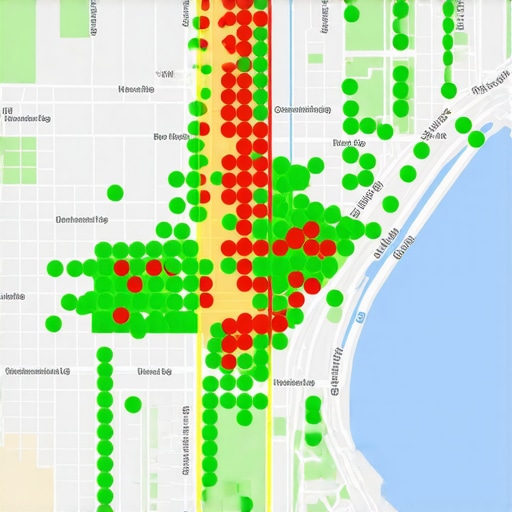
Scale Without Breaking the Rules
Once you dominate one area, the temptation is to ‘spoof’ your location elsewhere. Don’t do it. Instead, learn how to scale local map rankings without triggering a suspension by using legitimate service area expansions and multi-node stacking. We are moving toward a world where AI validates your ‘physicality’ through real-world data points. This is exactly what agencies won’t tell you about the 2026 maps shift: Google is going to rely less on what you say on your website and more on what the local ecosystem says about you. If you haven’t seen the map algorithm update Google didn’t announce, you might be missing the shift toward entity-based validation over keyword matching. My advice? Pick one cloud node you’ve built and add three high-quality, local images with embedded EXIF data this week. It’s a small move, but it’s the kind of maintenance that keeps the big guys from knocking you off your throne.
What I Learned After Auditing a Hundred Map Pins
The most surprising thing isn’t how many people fail at SEO, but how many people fail at being local. I’ve seen businesses with massive budgets get beat by a guy who sponsors the community theater. The lesson? Google wants to see that you are an integrated part of the city, not just a website with a local address. If you stop hunting broad backlinks and start focusing on backlink building blueprints for local seo success, you’ll find that the “secret sauce” is just consistent, neighborhood-level validation. One great local link often fixes what ten generic ones couldn’t, especially when you master authority stacking for elevated local rankings. It’s about being a real human in a digital world.
The Minimalist Tools I Use to Stay Ahead
I don’t believe in paying for twenty different software subscriptions. If you want to see real movement, you only need a few high-value sources. First, grab the only checklist you need to measure real ROI from Google Business Profile. It keeps your eyes on the data that actually results in money, not just vanity metrics. Second, I always recommend digging into proven backlink techniques to dominate local search to understand the nuance between a “good” link and a “local” link. Finally, if your rankings are stalled, look at 3 entity sync fixes that save failing search authority stacks to ensure your technical foundation isn’t crumbling under the weight of your outreach efforts. These tools are the compass that keeps you from getting lost in the weeds of technical jargon.
#IMAGE_PLACEHOLDER_E#
Your Map Pin Is Ready for the Spotlight
It’s easy to get overwhelmed by the jargon, but remember that at its core, local SEO is about trust. You are building a digital reputation that mirrors your real-world reputation. By using backlinks mastery to boost your local SEO authority in 2025, you aren’t just gaming a system; you’re ensuring that the people in your community can actually find the help they need. Don’t wait for the “perfect” moment to start—pick one local organization to support this week and watch how the algorithm responds to your genuine community involvement. The future of your business is built one neighborhood link at a time. Have you ever felt like your business was being unfairly hidden by a larger competitor on the map? Let me know in the comments below!