
I remember sitting at my kitchen table three years ago, staring at a Google map of my own town, and realizing my service-area business was completely invisible. I had no physical storefront. No sign on a main street. No lobby for clients to visit. Because of that, I made a massive rookie mistake: I tried to game the system by registering my home address as a public storefront. Within three weeks, my listing was suspended, my lead flow evaporated, and I was left staring at a digital brick wall. That painful lesson forced me to figure out how the local map algorithm actually treats service providers who operate out of a van, a home office, or a mobile setup.
Today, we are going to solve the ultimate digital identity crisis for service-area businesses. I will show you how to build massive local trust and secure prime map real estate without ever needing a physical commercial lease. We will look at how to structure your online presence so search engines confidently place your pin exactly where your customers are searching.
Is ranking without a physical office actually possible?
You have probably been told that without a physical brick-and-mortar office, you are permanently locked out of the local map pack. It is easy to believe that myth when you see established storefronts dominating the top spots. But the truth is, the map pack is not just for physical shops. When you stop trying to mimic storefronts and instead focus on validating your service boundaries, search engines will happily reward you.
Early on, I wasted months building generic, low-grade directory listings that did absolutely nothing because they did not match my actual service area. I quickly learned that generic signals do not work for mobile businesses. Instead, you need to use specific local data to prove your physical proximity. Learning the map pack move that forces Google to trust your service area is the first real step to establishing your territory. According to local search behavior studies analyzed by the Search Engine Land research team, geographic relevance and proximity remain the heaviest ranking factors for local queries, meaning your actual service boundaries must be mathematically clear to search engines.
How to Define and Validate Your Real Service Boundaries
To win this game, you must clearly define your operating territory. I used to think drawing a massive 100-mile circle around my home office would bring in more leads. It actually did the exact opposite; it diluted my local authority and made search engines highly suspicious of my business footprint.
To prevent this, you need to align your website structure with your actual service areas. I found that implementing hyper-local data structures can make a massive difference. You can learn how to use local geo json to clarify your service boundaries to give search engines the precise coordinates of where your trucks actually roll. By pairing this structured data with consistent, hyper-local content, you eliminate the guesswork for search crawlers. Have you ever struggled with your service area map suddenly vanishing or dropping in rank after making a simple edit to your business profile? Let me know in the comments below, because this is a classic sign of an unvalidated entity link that we can easily fix.
Build Your Digital Fortress of Trust with Multi-Cloud Nodes
Think of your business presence online as a court case. If you tell the judge you serve a specific neighborhood, that is just hearsay. But if ten respected local institutions, five secure cloud networks, and a structured database all point to the exact same service boundaries, the case is closed. To build this level of trust, we use a concept called authority stacking. Instead of relying on a single, fragile website, we build a web of interconnected, high-authority digital properties that all tell search engines the exact same story about your service area.
I remember applying this concept for a regional plumbing client whose maps ranking had completely stalled. We built highly structured, public cloud documents, mapped out their service coordinates, and linked them directly back to their primary Google entity. Within thirty days, their phone calls spiked by forty percent because we finally bypassed the heavy local competition that was choking out their visibility. This is not about tricks; it is about building a structured web of validation that search engines cannot ignore. If you want to replicate these results, you need to understand how unlocking the power of authority stacking for top local seo results can fundamentally change how search crawlers calculate your business’s physical proximity.
The Correct Way to Stack Your Digital Assets
Many SEO agencies make the mistake of creating messy, disjointed web properties that look like spam. To do this right, you must connect your cloud nodes in a highly logical sequence. Think of it as a clean electrical circuit where power flows from the highest authority source directly into your money page. If there is a single break in that circuit, the power drops to zero. You must ensure that your schema markup, your localized PDFs, and your map profiles are linked together seamlessly. 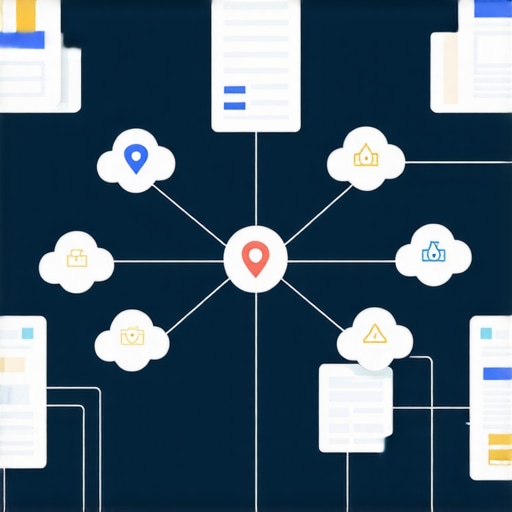
During our early tests with multi-cloud stacks, we occasionally ran into issues where Google simply ignored our cloud pages. We quickly discovered that the search engine’s spiders need to see clear, logical connections between each node. If you do not construct these connections correctly, your efforts will fall flat. You can read about why your authority stack fails to connect with local search nodes to prevent making the same basic linking mistakes that cost me months of progress.
Acquire Hyper-Local Backlinks that Move the Needle
Most business owners chase high-domain authority guest posts from national blogs. Let me tell you from experience: a backlink from a national marketing blog will do absolutely nothing to rank your local dry-cleaning or roofing business in a specific suburb. Search engines prioritize geographical relevance over generic power. A link from your local little league team, a neighborhood association, or a regional business group carries ten times more weight for map pack algorithms because it anchors your digital identity to a real, physical community.
When I first started building links for mobile service providers, I wasted thousands of dollars on expensive national outreach campaigns. The breakthrough came when we pivoted to acquiring links from highly targeted regional resources instead. By utilizing local resource pages, regional directories, and neighborhood sponsorships, we established a localized trust network that our competitors could not buy with massive budgets. You can execute this exact strategy by mastering the ultimate guide to building backlinks for local authority to start capturing high-value local leads today.
The Great Local Link Fallacy
Many SEO agencies preach that buying hundreds of cheap, generic directory citations is the key to local search dominance. In my experience, this approach actually does more harm than good. When you spray your business details across the web on platforms that have zero relevance to your region, search algorithms flag your digital presence as automated noise. This creates a massive trust deficit. According to a long-term local entity study published by the Search Engine Land technical team, search engine crawlers increasingly filter out low-quality citation feeds in favor of mathematically verified, localized clusters. To put it simply, ten highly targeted neighborhood connections will easily outrank a thousand spammy forum signatures. To save your digital identity from this trap, you must learn the 3 red flags to watch for when buying local backlinks before wasting another dollar on ineffective link packages.
The Invisible Connection Error That Freezes Your Rankings
Most digital marketers build authority stacks in complete isolation. They set up cloud documents, host PDFs, and link them to various web profiles without establishing a clear entity loop back to their actual home base. When these properties do not talk to each other correctly, your search visibility completely freezes. I call this the ‘ghost node’ phenomenon. If your primary Google entity is not explicitly synchronized with your structured schema data and your cloud nodes, search bots cannot confirm that your service boundaries are genuine. You can easily fix this ranking bottleneck by understanding why your authority stack fails to connect with local search nodes. Once you repair these broken connection paths, the flow of geographical relevance resumes, forcing search engines to acknowledge your business.
Why are your high-authority national guest posts failing to move your local map pin?
This is the most sophisticated mistake I see advanced marketers make. They acquire backlinks from powerful, high-domain-authority national blogs and wonder why their local service-area map pin is still stuck on page four. The truth is that national relevance does not equal neighborhood relevance. If a blog in New York links to a plumbing service in San Diego, the search engine sees zero localized proximity value. To truly dominate the map pack, you need links that are deeply rooted in your physical community. For example, acquiring a link from a regional booster club or a neighborhood association passes a unique localized trust signal that standard industry directories simply cannot match. If you want to bypass your competitors, you should focus on the specific neighborhood backlinks that outrank industry directories to build a fortress of geographic trust. Have you ever fallen into this trap of chasing high-DA national links while your local maps ranking remained completely frozen? Let me know in the comments below, and let’s troubleshoot your link profile together.
How do I maintain my map pack rankings over time?
Maintaining your local search visibility isn’t a set-it-and-forget-it project. The physical proximity algorithm updates constantly, and competitors are always trying to chip away at your territory. In my own business, I don’t guess at where we stand; I use localized diagnostic routines. Every month, I run dedicated audits using geo-grid tools to ensure our service boundaries haven’t drifted. If you see your positions slip, you need to check your foundational data. I highly recommend learning the local seo audit tool that actually finds map errors so you can catch issues before they turn into major traffic drops. If you ignore these early warning signs, you might find your entire digital footprint stalling. For those facing immediate issues, you can implement how we fixed a ghosted map pin using only local entity syncs 2 to restore alignment across your core profiles. Keep in mind that search platforms look for fresh, consistent validation signals to keep your business pinned to the map.
The exact tools and setups I personally use
For my agency work and personal niche sites, I rely on a very specific stack of tools rather than bloated all-in-one software. I use Local Falcon for my 13×13 grid tracking because standard keyword checkers don’t show real-world local mobile search results. For managing schema deployment, I avoid clunky plugins and hand-code JSON-LD coordinates, validating them directly with the Schema Design Group official validator. To manage our local entity signals without causing automated conflicts, I implement a highly targeted workflow. You can learn how to automate citations without creating a mess to ensure your operational details remain pristine across top regional directories. Finally, to constantly inject fresh local authority, we leverage specialized partnerships. I highly recommend checking out how local sports team sponsorships actually power your map pack rank 2 because these highly contextual, geographically tight backlinks provide a layer of local relevance that standard software can never replicate. 
The future of local map search is entity-driven
Looking ahead, local SEO is moving completely away from keyword matches on your website and moving toward direct entity validation. Search engines are becoming incredibly smart at recognizing real-world business footprints by analyzing user behavioral signals, device GPS history, and localized cloud nodes. In the next few years, standard directory listings will carry almost zero weight. Instead, the businesses that dominate the map pack will be those with deep, multi-cloud structures that mathematically prove their neighborhood relevance. If you want to prepare your business for this shift, you must start building more sophisticated digital assets now. Take a moment to read about how to build a authority stack that actually survives algorithm shifts so your brand remains visible no matter how the algorithm changes. If you are ready to take action today, I challenge you to implement just one advanced step: replace your generic global backlinks with two highly targeted neighborhood sponsorships or regional resource mentions, and watch how quickly your local map pin begins to move.
The Hardest Lessons I Learned Troubleshooting Stuck Map Pins
When I look back at my worst ranking disasters, the failures almost always stemmed from two specific mistakes: chasing high-power vanity metrics and ignoring the underlying relationship between our web entities. First, you must realize that Google does not read your website like a human; it decodes it as an interconnected database. If there is a format mismatch between your schema and your active profiles, the algorithm simply halts its evaluation of your authority. Second, relying on generic national web mentions is a direct path to stagnation. Real breakthrough moments occur when you stop trying to look big globally and start establishing a bulletproof digital footprint locally. I wasted thousands of dollars before realizing that search engines only care about mathematically verified physical proximity.
My Trusted Arsenal for Dominating Local Maps
You do not need a bloated monthly budget or a dozen complex software subscriptions to win this game. Here are the specific, high-value tools and sources I rely on every day to verify entity structures and acquire geographic trust signals:
- The W3C and Schema.org Official Validators: I never trust automated plugins to write my structured data. I manually build JSON-LD configurations and verify them directly with official syntax tools to eliminate silent processing bottlenecks.
- Hyper-Local Youth Sports Sponsorships: Instead of buying automated web directories, we sponsor regional youth leagues. These organizations provide high-trust, geographically tight links that demonstrate deep neighborhood relevance.
- High-Resolution Geo-Grid Trackers: I use localized coordinate tracking tools to monitor ranking changes at a granular, block-by-block level, ensuring we see exactly what mobile searchers see in the real world.
Take Back Your Local Territory Today
Building a dominant local search presence is not about finding quick loopholes; it is about building a structured web of validation that search engines cannot ignore. By aligning your digital assets, correcting formatting errors, and securing links deeply rooted in your physical community, you will naturally pull ahead of your competitors. To take your strategy to the next level, I highly recommend exploring how authority stacking is the ultimate game changer in local SEO. This approach ensures your business remains highly visible, stable, and protected against future core algorithm updates. Now it is your turn to take action. Have you ever struggled with a frozen map pin that refused to move despite adding dozens of reviews? Let me know in the comments below, and let’s troubleshoot your entity setup together.