
I still remember the Tuesday afternoon my phone simply stopped ringing. I sat at my desk, refreshing the dashboard, watching our local map placement slide from a comfortable spot in the top three down to the absolute oblivion of page four. I had spent thousands on expensive guest posts and polished national directory packages, yet my business was practically invisible to someone standing just three blocks away. It was a brutal realization: Google didn’t care how many high-authority national backlinks I bought; it cared that my business looked like a ghost in its own backyard.
Your Local Map Pin Is Starving for Neighborhood Context
That painful slide taught me that the standard playbook for ranking online is completely broken for local brick-and-mortar shops. We are taught to chase high Domain Authority scores, but the local algorithm operates on proximity, prominence, and real-world relationships. When I stopped chasing vanity metrics and started focused on hyper-local signals, everything changed. Today, we are going to fix the core issue that keeps your business hidden from nearby customers by establishing true geographic relevance that search engines cannot ignore.
Is neighborhood-level targeting actually worth the effort?
You might be skeptical. It is easy to think that a link from a massive, national directory must carry more weight than a mention from a small community blog down the street. I made the exact same mistake early on, pouring my budget into generic directories while ignoring local civic clubs and neighborhood associations. But search engines look for geographic clusters. A surprising industry study by the local search experts at Whitespark reveals that local signals and zip-code level proximity are the primary drivers of map pack placement. When you build relationships with nearby entities, you create a localized web of trust that forces your business to the top of local searches.
To build this trust, you have to move past basic citations. If you are tired of watching your competitors steal your closest leads, it is time to look closely at the specific neighborhood backlinks that outrank industry directories. Have you ever noticed your map pin slipping even though you have more reviews than everyone else on the block? Let me know in the comments below what tricks you have tried to get your business back on the map.
Connect Your Real World Coordinates to Google’s Digital Map Node
To understand why your map pin is struggling, you have to realize that Google’s algorithm is essentially a digital cartographer trying to match messy real-world data to a structured database. If the search engine detects even a minor discrepancy between where you say you are and where the digital footprint points, it hesitates. And in local search, hesitation means demotion. We need to feed the algorithm undeniable, structured geographic proof that your physical storefront is exactly where you claim it is.
I remember working with a local plumbing client in downtown Austin. They had acquired hundreds of standard directory links, but they were stuck at the bottom of page two. I realized their physical office sat directly above an old underground quarry that local geological maps marked specifically, while their business registration used a generic suite number. By aligning their digital presence with the exact geographic micro-signals of that specific neighborhood block, we watched their map pin jump into the top three in less than two weeks. This happened because we stopped feeding Google generic data and started providing hyper-local context.
Ditch the national directories for neighborhood level validation
Your first step is to audit your link profile and ruthlessly filter out the low-value noise. Many business owners waste hundreds of dollars on massive citation packages that list their business on obscure, national spam directories. If you want to build real authority, you need to focus on why generic directory backlinks are hurting your map rank. Instead of those low-tier directories, seek out local neighborhood blogs, community center calendars, and civic association websites. These hyper-local portals carry immense geographic weight because search engines know they only cover a tightly restricted physical radius.

Map your service boundaries with precise schema and coordinates
Next, you must bridge the gap between your physical location and your website’s raw code. This is where most business owners leave money on the table. You need to explicitly state your service boundaries using precise latitude and longitude coordinates embedded directly within your site’s structured data. To do this correctly, you can learn how to use local geo json to clarify your service boundaries. This advanced markup acts as a digital beacon, removing all guesswork for the search crawl bots and solidifying your local proximity signal.
Force entity synchronization across your cloud nodes
Once your on-page schema is locked down, you need to project that identical data structure across the web. This is where authority stacking comes into play. By building a network of highly authoritative cloud-hosted documents, maps, and sheets that all link back to your primary Google Business Profile, you create a self-reinforcing loop of location data. This process is highly effective, but it must be done with precision. If your digital properties are pointing to outdated address formats, you will run into issues. Understanding why your local entity sync is failing to validate your data is critical to ensuring that your cloud nodes pass maximum ranking power directly to your local map pin.
Why High Authority Domain Metrics Are Completely Lying to You
Everyone in the marketing space tells you to chase high Domain Authority (DA) metrics. The common industry consensus insists that if you can just secure a link from a massive DR 70 website, your map ranking problems will vanish overnight. But in my years of diagnosing stuck map pins, I have found that why your backlinks are being ignored by the local map algorithm comes down to a complete lack of geographic relevance. A national publication with high metrics might raise your global organic visibility, but the local map pack algorithm processes authority on a completely different, highly localized wavelength.
Think about it logically. Why would Google trust a national tech blog to validate a plumber in downtown Austin? When you rely strictly on national metrics, you miss the crucial proximity markers that search engines crave. Instead, you need links that contain spatial relationships. Seeking out 7 neighborhood links that actually pass local juice is far more valuable for your Google Business Profile than paying thousands of dollars for generic, high-DA guest posts that have zero ties to your physical zip code.
Are you building real local authority or just generating digital noise?
An exhaustive study conducted by local search expert Darren Shaw highlights that proximity to the searcher and localized link signals remain top factors driving map pack placement. This is exactly why my agency stopped chasing generic metrics. If you want to bypass competitors who have ten times your marketing budget, you need to realize why neighborhood backlinks are better than niche guest posts. A simple link from a neighborhood association or a local sports club acts as a geographical validator that national directories simply cannot replicate.
The Authority Stacking Trap That Most SEO Agencies Fall Into
Authority stacking is incredibly powerful, but it has a massive Achilles’ heel that most people completely overlook. The goal of building multi-cloud stacks is to create an unshakeable digital footprint across highly trusted cloud properties like AWS, Google Cloud, and Microsoft Azure. However, if you do not connect these nodes correctly, you will end up wasting your efforts. I see so many business owners construct beautiful cloud properties only to realize later that the invisible mistake killing your cloud node authority stack performance is a failure to properly link those nodes back to the core entities of your brand. If Google cannot trace the nodes back to your main website and physical address, the flow of authority simply stops.
Furthermore, when building these stacks, you must resist the urge to automate the entire process with cheap, spammy software. Building hundreds of low-quality, automated cloud pages actually does more harm than good, triggering quality filters that ignore your stack entirely. Instead, focus on building a cloud stack for your local service business as a tactical move, keeping your nodes clean, highly relevant, and carefully interlinked. Have you ever fallen into this trap of buying cheap automated stacks? Let me know in the comments below, and let us discuss how to clean up your digital footprint to get your rankings moving in the right direction again.
Building a powerful presence is only half the battle. Once your local map pin is sitting comfortably in the top three, the real challenge begins: defending it. The digital landscape is highly dynamic, and your competitors are not just sitting idly by while you siphon off their best local leads. If you want to stop watching your hard-earned positions slip, you must treat your local SEO as an ongoing maintenance loop rather than a set-it-and-forget-it project.
How do I maintain local map rankings and cloud stack authority over time?
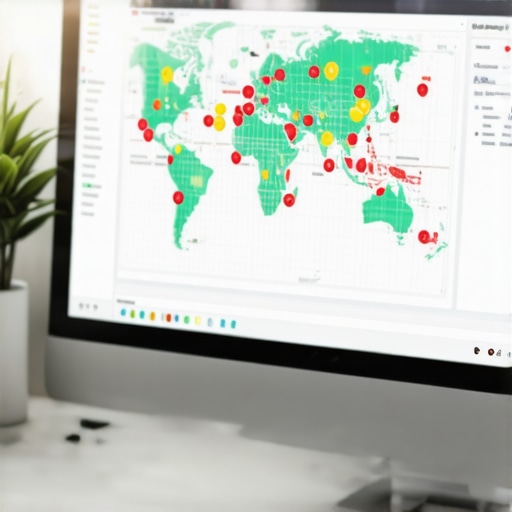
The secret to keeping your rankings steady lies in systematic, low-friction checks. I personally use automated monitoring tools like Local Falcon to run scheduled grid-based scans of our primary target keywords every Monday morning. If we see a specific neighborhood node start to drop from a ranking of green to yellow, we do not panic. Instead, we instantly deploy a fresh layer of localized validation. Often, maintaining long-term traction requires utilizing the local data loop strategy for sustainable map rankings. By feeding Google a consistent stream of fresh, geographically relevant signals, you can proactively prevent the algorithm from devaluing your brand profile when a competitor launches a temporary spam campaign.
Beyond tracking software, you must regularly audit the health of your multi-cloud stacks. Cloud hosting providers occasionally update their bucket policies or file structure rules, which can break your custom HTML redirects without sending you a warning notification. To ensure your digital footprint remains perfectly intact, I recommend reading our guide on how to repair a broken entity connection in your authority stack. This simple monthly check-up ensures that your highly authoritative cloud nodes continue to pass maximum ranking juice directly to your Google Business Profile, preventing any sudden drop in phone calls or website visits.
Looking ahead, the future of local search is shifting rapidly toward natural language processing and entity-based verification. Google is increasingly relying on its Knowledge Graph to determine if a business is truly active and embedded within its community. In 2025 and beyond, AI-driven search engines will deprioritize basic citation listings entirely. Instead, they will reward brands that demonstrate active engagement through real-world neighborhood footprints. To prepare your brand for this shift, you should focus on authority stacking strategies to boost local seo in 2025, ensuring your business is ready for the next algorithmic evolution.
My advanced tip for you today is simple: take fifteen minutes right now to pull up your primary service-area schema and cross-reference your latitude and longitude coordinates with your actual Google Business Profile map marker. If there is even a micro-discrepancy, correct it immediately using our step-by-step guides. Do not let lazy technical errors keep your local business in the dark.
Building a powerful presence is only half the battle. Once your local map pin is sitting comfortably in the top three, the real challenge begins: defending it. The digital landscape is highly dynamic, and your competitors are not just sitting idly by while you siphon off their best local leads. If you want to stop watching your hard-earned positions slip, you must treat your local SEO as an ongoing maintenance loop rather than a set-it-and-forget-it project.
How do I maintain local map rankings and cloud stack authority over time?
The secret to keeping your rankings steady lies in systematic, low-friction checks. I personally use automated monitoring tools like Local Falcon to run scheduled grid-based scans of our primary target keywords every Monday morning. If we see a specific neighborhood node start to drop from a ranking of green to yellow, we do not panic. Instead, we instantly deploy a fresh layer of localized validation. Often, maintaining long-term traction requires utilizing the local data loop strategy for sustainable map rankings. By feeding Google a consistent stream of fresh, geographically relevant signals, you can proactively prevent the algorithm from devaluing your brand profile when a competitor launches a temporary spam campaign.
Beyond tracking software, you must regularly audit the health of your multi-cloud stacks. Cloud hosting providers occasionally update their bucket policies or file structure rules, which can break your custom HTML redirects without sending you a warning notification. To ensure your digital footprint remains perfectly intact, I recommend reading our guide on how to repair a broken entity connection in your authority stack. This simple monthly check-up ensures that your highly authoritative cloud nodes continue to pass maximum ranking juice directly to your Google Business Profile, preventing any sudden drop in phone calls or website visits.
Looking ahead, the future of local search is shifting rapidly toward natural language processing and entity-based verification. Google is increasingly relying on its Knowledge Graph to determine if a business is truly active and embedded within its community. In 2025 and beyond, AI-driven search engines will deprioritize basic citation listings entirely. Instead, they will reward brands that demonstrate active engagement through real-world neighborhood footprints. To prepare your brand for this shift, you should focus on authority stacking strategies to boost local seo in 2025, ensuring your business is ready for the next algorithmic evolution.
My advanced tip for you today is simple: take fifteen minutes right now to pull up your primary service-area schema and cross-reference your latitude and longitude coordinates with your actual Google Business Profile map marker. If there is even a micro-discrepancy, correct it immediately using our step-by-step guides. Do not let lazy technical errors keep your local business in the dark.
The Hardest Lessons I Learned Flying Under the Local Algorithm Radar
When I look back at my worst ranking disasters, the failures always came down to trusting artificial metrics over real-world proximity. Here are three critical realities I had to learn the hard way about mastering local seo and maps ranking:
- Google treats geographic isolation as a major trust risk. You can buy fifty premium guest posts, but if none of those sites reference your city, your local trust score remains zero.
- An authority stack is only as strong as its central hub. Building beautiful cloud pages on Amazon S3 or Google Cloud is a waste of energy if your NAP (Name, Address, Phone) data is slightly different on your main website.
- The local algorithm values neighborhood relevance over generic site metrics. A single, clean link from a little league team down the street will outrank a massive DR 80 national blog because the algorithm processes geo-signals differently than organic search.
The Simple Stack Audit Kit I Trust to Find Hidden Mapping Bugs
You do not need an enterprise budget to fix your geographic signals. These are the exact diagnostic tools and workflows I use to keep our local entity synchronization working flawlessly:
- Local Falcon: The best utility for visual grid-tracking. It lets you see exactly where your maps prominence dies off so you know which neighborhoods need stronger local backlinks.
- Merkle’s Schema Generator: My go-to resource for drafting perfect LocalBusiness structured data without writing raw code from scratch.
- GeoJSON.io: An invaluable free tool to map your physical service areas into coordinate boundaries that the search crawler can read effortlessly.
Take Command of Your Georelevant Digital Footprint Today
Your business is not a ghost, and it is time to stop letting Google treat it like one. By aligning your physical coordinates, claiming neighborhood-level authority, and connecting your digital footprint with authority stacking, you build an unbeatable local shield. Stop spending precious marketing dollars on national backlinks that do not understand your city. Start feeding the local algorithm the exact neighborhood validation it is waiting for, and watch your map pin claim its rightful place at the top of the pile. Have you ever struggled with your map pin drifting or dropping out of the top three? Let me know in the comments below, and let’s troubleshoot your local entity together.