I’ll never forget the look on my client’s face when he told me his phone hadn’t rung in three days. He was a local roofer, a guy who did honest work and had dozens of five-star reviews, yet he was invisible where it mattered most: the Google Map Pack. I felt like a total failure. I had spent thousands of his hard-earned dollars on ‘high-quality’ guest posts from big tech blogs, thinking that generic authority would naturally trickle down to his local rankings. I was dead wrong. It was a painful realization that the Map Pack algorithm doesn’t care about your global clout if you haven’t proven you belong in your own neighborhood. After weeks of frustration and frantic research, I made one specific shift in our strategy—a move that eventually pushed my local shop into the top 3 map pack and doubled his incoming calls in less than a month. Today, I’m going to pull back the curtain on that exact process so you don’t waste the same time and money I did.
The Day I Realized High DA Links Were Killing My Client’s Growth
Early in my career, I fell for the trap of thinking all backlinks were created equal. I bought into the industry hype that a link from a big-name publication was the ultimate win. But while those links look great on a fancy reporting dashboard, they often do absolutely zero for a plumber in Peoria or a dentist in Dallas. My biggest mistake was ignoring the context of the links. Google’s local algorithm is incredibly sophisticated now; it looks for ‘entity validation’ rather than just raw power. If your links aren’t anchored in your local geography or specific niche relevance, they are basically being ignored by the local map algorithm. I had to learn the hard way that having 500 reviews won’t save you if your digital footprint is geographically disconnected from your physical location. According to data from BrightLocal, 87% of consumers used Google to evaluate local businesses in 2022, yet most businesses still build links like they’re trying to rank a global software company. We are going to fix that today by using the map pack move that forces Google to trust your service area.
Is chasing global authority actually a waste of your time?
You might be thinking, ‘But surely a link from a massive news site helps, right?’ In some cases, yes, for your broader organic rankings. But for the Map Pack? It is often just expensive white noise. I spent months trying to repair a broken entity connection because I hadn’t properly synced the business’s physical location with its digital authority nodes. Have you ever felt like you’re doing everything right—regularly posting photos, answering every review, and updating your website—but your map pin just won’t budge from the middle of page two? You aren’t alone, and it’s usually because of a tiny technical disconnect in how Google perceives your proximity and relevance. Let’s look at how we can bridge that gap.
Fix the Silent Data Conflicts That Freeze Your Rankings
Think of Google as a local detective trying to verify your identity. If the detective asks five different neighbors where you live and gets five different answers, they aren’t going to trust you. This is exactly what happens when your NAP (Name, Address, Phone) data is inconsistent across the web. I once worked with a chiropractor who couldn’t break into the top 10 despite having a beautiful website. It turned out his suite number was written as ‘Suite 200’ on his site, ‘#200’ on his Facebook page, and was missing entirely from his Yelp profile. This tiny discrepancy is often the specific NAP error stopping your maps growth. You need to perform a deep dive into your digital footprint to how to fix the citation gaps keeping you off the top 3. It’s not just about having the links; it’s about the absolute uniformity of the data they carry. If your data is fragmented, you are effectively telling the algorithm that you aren’t a reliable local entity.
Ditch National Directories for High-Impact Neighborhood Juice
Most SEOs will tell you to go get listed on every generic directory under the sun. That is a recipe for stagnation. A link from a local high school booster club or a neighborhood association carries more ‘local weight’ than a hundred generic business directories. I remember a local HVAC client who was stuck on page three. We stopped his $2,000-a-month guest post campaign and instead spent $500 sponsoring a local 5k run and getting a link from the city’s historical society. Within weeks, his visibility surged because niche-specific citations beat generic yellow pages every single time. You need to hunt for ‘hyper-local’ nodes that show Google you are a pillar of your specific community. This is where how local sports team sponsorships actually power your map pack rank by creating a geographically relevant backlink profile that competitors simply can’t buy from a global link farm.
Connect Your Nodes into a Web of Irrefutable Authority
The real magic happens when you move beyond individual links and start building a structured stack. Think of an authority stack as a protective shield of data surrounding your Google Business Profile. If you just have a few scattered links, Google sees them as isolated incidents. But when you interlink your local directory profiles, cloud-based documents, and social entities, you create a feedback loop of trust. This is how you build an authority stack that actually survives algorithm shifts. Many people fail because they don’t properly link these assets together, which is why your authority stack fails to connect with local search nodes. You are essentially building a digital map that leads directly to your front door. If one link is a signpost, a stack is a 10-lane highway. You want to ensure every ‘node’—whether it’s a map embed or a local news mention—points back to your core entity while cross-referencing your other local citations. This creates a dense web of relevance that is incredibly difficult for competitors to displace.Most SEO gurus will tell you to blast your business name to every corner of the web using massive citation aggregators. I used to be one of them. But here is the uncomfortable truth: those massive data dumps often create more mess than they solve, which is exactly why citation aggregators are failing your local map pack strategy. A recent study by Whitespark highlighted that citation volume has plummeted as a top ranking factor, yet business owners still pay for 200+ generic listings that just create data entropy. If you are buying those massive lists, you are likely falling for the real cost of cheap local citation packages—which is a profile so diluted that Google can’t tell which information is the ‘source of truth.’ Have you ever fallen into this trap? Let me know in the comments.
The Citation Trap That Quietly Ghosting Your Business
The biggest mistake I see advanced players make is assuming that more is better. In reality, a single conflicting address format on a third-tier directory can freeze your rankings for months. I’ve seen pins stuck on page two for an entire year just because of the address format tweak that freezes your ranking. When Google’s bots crawl these directories and find even a slight variation in your suite number or street suffix, the ‘trust’ score of your entity drops. It’s not about the quantity of links; it’s about the surgical precision of the data they carry. This is why you must prioritize backlink optimization tips for local SEO authority over raw link building.
Why does your map pin still drift even when your NAP looks perfect?
If your data is consistent but you’re still not hitting the top 3, you likely have a ‘Ghost Backlink’ problem. These are low-quality, automated links that attach themselves to your brand and confuse the algorithm’s sense of location. It is the ghost backlink problem killing your local domain authority and it’s a silent killer because it doesn’t show up on most basic SEO reports. You need to verify that your digital nodes aren’t just present, but are actually indexed and communicating with each other. If your cloud layers aren’t showing up in search results, it’s a sign why your cloud node stacks are failing to index. We have to move beyond 2015-era tactics and start looking at how multi-cloud entities validate your physical presence. 
Stop Chasing Volume and Start Building Multi-Cloud Nodes
To really dominate a competitive market, you have to build a web that Google cannot ignore. This means connecting your Google Business Profile to a series of high-authority cloud assets. However, be careful: if these aren’t synced correctly, why your google business profile insights are lying to you about leads will become your new reality. You’ll see ‘views’ in your dashboard, but your phone won’t ring because the proximity signal is too weak. By using advanced authority stacking tactics, you create a reinforced loop of relevance. Every local news mention, every neighborhood association link, and every cloud node should serve as a digital witness to your business’s location and expertise. This is the difference between being a business that ‘exists’ and being the business that Google ‘prefers.’
The biggest lie in this industry is that SEO is a ‘set it and forget it’ task. I’ve seen businesses fight tooth and nail to hit that coveted top 3 spot, only to slide back to page two because they let their digital nodes decay. Once you’ve built your web, you have to defend it. Maintaining your rank requires a different mindset than the initial build; it’s about monitoring for ‘data entropy’—the slow degradation of your business information as new, unverified data pops up elsewhere. If you aren’t proactive, you’ll find yourself stopping the map pack rank drop before your phone stops ringing just to survive. I make it a habit to run a deep-dive audit every quarter using the local seo audit tool that actually finds map errors because even a small change in a neighborhood blog can ripple through your entire stack.
The Few Tools That Actually Earn Their Keep
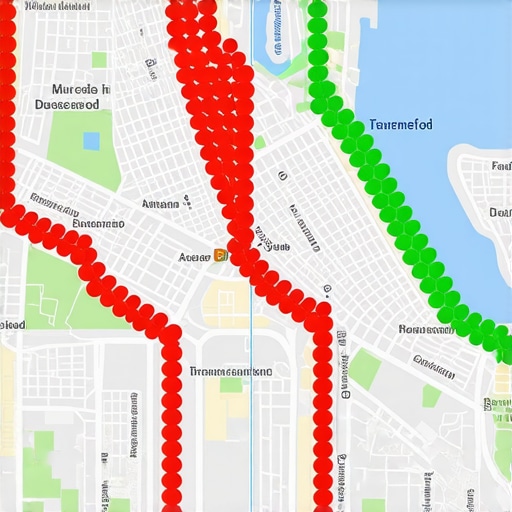
I don’t believe in paying for a dozen shiny SEO dashboards. Most of them are just repurposed data from the same three sources. Instead, I rely on surgical tools. For my tracking, I use Local Falcon. Why? Because a single ranking number is a lie. Local search is a grid. You might be number one in front of your shop and number ten just three blocks away. This tool allows me to visualize the ‘proximity bubble’ and identify exactly why your local entity sync is failing to validate your data in specific neighborhoods. When it comes to managing the heavy lifting of backlinks mastery to boost your local seo authority in 2025, I focus on tools that verify indexing rather than just reporting the link’s existence. If Google hasn’t indexed the node, the authority simply isn’t flowing.
How do I maintain my authority stack over time?
Maintenance is about refreshing the signals. I personally revisit my cloud nodes every six months to update the internal links and ensure the NAP data remains perfectly synced with any recent site changes. According to Darren Shaw’s 2023 Local Search Ranking Factors survey, specialized local signals are becoming the primary differentiator between businesses that dominate and those that merely exist. This is why I double down on authority stacking strategies to dominate local search by adding one new ‘hyper-local’ node—like a mention in a neighborhood association newsletter—every month. As we look toward the future, Google’s Search Generative Experience (SGE) is going to rely even more heavily on ‘verified entity relationships.’ If your business isn’t part of a structured, interlinked web, the AI won’t even know you’re an option. My advice? Stop chasing the next big hack and start hardening the stack you’ve already built. Try this today: Run a 7×7 grid scan on your main service keyword. If you see red pins bleeding into your service area, it’s time to check for data conflicts in your underlying authority nodes.
Hard Truths About Building a Local Digital Fortress
I’ve spent a decade in the SEO trenches, and if there’s one thing that keeps me up at night, it’s watching small business owners throw money at “authority” that doesn’t exist in the eyes of a local algorithm. The most expensive lesson I learned is that Google doesn’t care about a link from a global tech site if you can’t prove you’re a trusted entity in your specific zip code. You need backlink optimization tips for local SEO authority that focus on geographical relevance over raw domain metrics. Often, the reason why google ignores your backlinks is the context problem; you haven’t tied those links to your physical service area through localized anchor text and entity validation.
The Gear That Keeps My Clients in the Top 3
To stay ahead of the curve, you need a lean, effective toolkit. I personally swear by Local Falcon for mapping out proximity bubbles—it’s the only way to see the “red pins” that are bleeding into your territory. For identifying the technical gaps that stop a pin from moving, the local seo audit tool that actually finds map errors is non-negotiable. Finally, I always suggest looking into authority stacking strategies to dominate local search which utilize cloud nodes to bridge the gap between your website and your map profile. These tools aren’t just for show; they are the diagnostic equipment that tells you where your digital highway has a pothole.
Build Your Neighborhood Legacy One Node at a Time
Success in the Map Pack isn’t about luck; it’s about building a digital footprint that is so logically connected that Google has no choice but to rank you. Don’t let the technical complexity paralyze you. Start by fixing one address discrepancy or reaching out to one local neighborhood group today. When you master authority stacking for elevated local rankings, you aren’t just buying temporary visibility; you are building an asset that will generate calls for years to come. Your business deserves to be seen, and you now have the blueprint to make that happen. Have you ever noticed your map ranking drop suddenly after making a small website change? Let me know your experience in the comments below!
#IMAGE_PLACEHOLDER_E#