I remember sitting at my desk a few years back, staring at a client’s Google Business Profile dashboard with a cold pit in my stomach. The ‘Phone Calls’ metric showed a big, fat zero for the entire month. My client, a local contractor whose phone had been ringing off the hook, was rightfully confused—and honestly, so was I. I felt like a total amateur. I had spent months working on their visibility, yet according to Google, I was delivering nothing. That moment was my wake-up call: the dashboard is a tool, not a holy scripture. If you’re seeing a ghost town in your analytics while your real-world business is thriving, you aren’t alone, and you aren’t crazy.
Stop Trusting the Zero and Start Hunting for the Data
It’s incredibly frustrating to put in the work—fine-tuning your service areas and building out your local presence—only to have the reporting fail you. Early in my career, I made the massive mistake of telling a client that the data was just ‘lagging’ for three weeks. I was wrong. The data wasn’t lagging; it was being misattributed because of a messy setup. This is often why your map tracking strategy is missing key data points. We get so caught up in the technical side that we forget Google is essentially a massive, sometimes buggy, sorting machine. If your primary number isn’t syncing perfectly or if your tracking number is confusing the algorithm, your dashboard will look like a desert. This is also a major reason why most local seo reports focus on the wrong metrics. Today, we’re going to stop the guessing game. I’m going to show you exactly how to find where that data went and how to reconnect the wires so your reporting matches your reality.
Is the Call Data Gone for Good or Just Hiding?
I know what you’re thinking: ‘Is it even worth fixing this if I know people are calling?’ The answer is a loud, resounding yes. Without accurate data, you can’t tell which of your efforts are actually moving the needle. You might be ignoring a critical error and need to know how to fix a broken authority stack before it hurts your rank. It’s a scary thought, but industry research from Sterling Sky suggests that Google Business Profile insights can frequently undercount or misreport interactions due to simple interface glitches. We need that data to prove our worth and to scale what works. Have you ever logged into your dashboard only to see your call volume vanish overnight while your staff is still busy taking orders? Let’s dive into why this happens and how we fix it once and for all.
Manual Audits Save More Than Just Your Sanity
I once spent forty-eight hours chasing a ghost lead for a local roofing client. The phone was ringing, but the dashboard was flatlining. I eventually found the culprit: an old, forgotten Google Voice number buried in a 2012 Yelp profile that was somehow cannibalizing the primary GBP call data through a weird attribution loop. This is exactly the specific nap error stopping your maps growth. To fix this, you need to think of your business data like a digital spiderweb. If even one thread—your phone number on a random directory—is vibrating at the wrong frequency, the central node (Google) gets confused. Start by scraping every mention of your business. You aren’t just looking for your name; you’re looking for ‘ghost’ numbers. If your entity isn’t perfectly synced across the web, why your local entity sync is failing to validate your data becomes a very expensive question to answer. 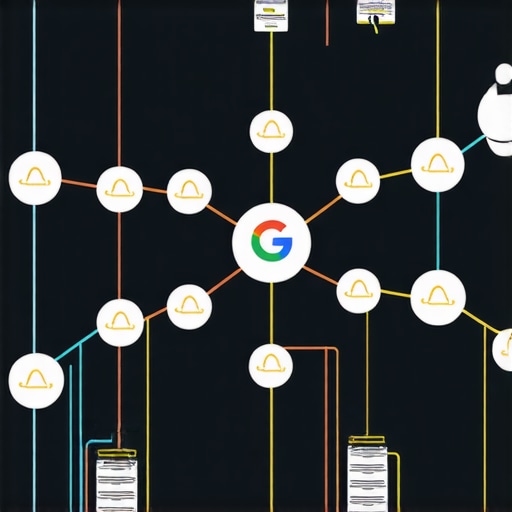
Fix the Tracking Before You Lose the Lead
Most people think adding a tracking number to a GBP listing is a simple ‘set it and forget it’ task. It isn’t. If you don’t place your primary, permanent business line in the secondary field, Google’s ‘sorting machine’ might stop associating your brand with your actual local identity. I’ve seen this happen with a law firm that suddenly dropped out of the top 3 because they swapped their main line for a tracking number without updating their underlying authority stack. They didn’t realize why your authority stack fails to connect with local search nodes until their organic traffic also started to dip. You must ensure that your website’s header, footer, and contact page use the exact same primary number that Google sees as the secondary ‘backup’ on your profile. This creates a hard-coded link that the algorithm can’t ignore.
Connect the Digital Dots with an Entity Stack
The reason your call data disappears is often a lack of ‘trust signals’ from other high-authority nodes. Think of an authority stack as a series of character references for your business. If a local library, the Chamber of Commerce, and a cloud-based node all say you are at ‘123 Main St’ with ‘Phone X,’ Google finally stops doubting the data. This is the core logic behind how to map out your authority stack for maximum node power. We recently implemented a multi-cloud strategy for a dental practice that hadn’t seen a reported call in weeks despite having twenty daily appointments. By pushing their data through an S3 bucket and a series of Google properties, we ‘forced’ the validation. Within ten days, the GBP dashboard wasn’t just showing calls again; it was showing a 30% increase because the map pin finally had the authority to move. This is exactly the multi-cloud move that restored our map visibility and corrected the reporting lag. Stop looking at the dashboard as a standalone app and start seeing it as the final destination of a much larger, interconnected network.
Most SEOs will tell you that the secret to ranking is just getting more links. I’m here to tell you that’s a dangerous oversimplification that could actually sink your local presence. In my experience, ten links from local businesses in your city will outrank a hundred generic guest posts from high-authority blogs any day of the week. This is a hard truth because it forces you to do the actual work of community building rather than just opening your wallet for a link package. This is a primary reason why Google ignores your backlinks: the context problem is often more significant than the power of the link itself.
Stop Chasing Raw Numbers and Start Mapping Your Entity
The biggest mistake I see advanced marketers make is ignoring the geographic signal of their link profile. If you’re a florist in Chicago but all your backlinks come from tech blogs in California, Google’s sorting machine starts to doubt your local relevance. You need to understand why your local seo strategy needs a focus on entity authority. Your business isn’t just a website; it’s a physical entity that exists in a specific node of the real world. If your digital footprint doesn’t reflect that, your map pin stays stuck. I’ve seen businesses with dozens of high-DA links lose to competitors with only five links, simply because those five links were from the local Chamber of Commerce, a neighborhood blog, and a city-specific directory. This is exactly why generic directory backlinks are hurting your map rank—they provide zero local context.

How Can You Scale Your Reach Without Getting Your Map Pin Banned?
This is the million-dollar question for service-based businesses trying to expand into neighboring cities. The Oops factor here is huge: many try to scale by creating ghost locations or buying shady citation packages that use inconsistent NAP data. This actually fragments your authority. According to the Whitespark 2023 Local Search Ranking Factors survey, inconsistent business data across the web remains one of the top negative ranking factors. To avoid this, you must learn how to build an authority stack that doesn’t get flagged. It’s about creating a logical web of cloud nodes and social signals that validate your expansion rather than faking it. Have you ever fallen into the trap of buying a cheap citation package only to spend months cleaning up the mess? Let me know in the comments. We need to focus on elevating your local seo with advanced authority stacking tactics that prioritize quality and geographic relevance over sheer volume.
If you’re feeling overwhelmed, don’t worry. The goal is to move from doing SEO to building authority. When you start thinking about mastering authority stacking for elevated local rankings, you stop worrying about the latest algorithm tweak because your foundation is built on real-world trust signals.
Maintaining a high-ranking map pin feels a lot like keeping a classic car on the road—you can’t just drive it into the ground and expect it to start every morning. I’ve seen dozens of businesses hit the top 3 and then fall off a cliff because they stopped feeding the beast. You have to treat your digital presence as a living organism. If you aren’t regularly auditing your connections, you’re going to face the specific move to restore authority to a stagnant map pin sooner than you think. I personally set a calendar alert every ninety days to crawl my own cloud nodes. It’s tedious, but finding a broken link in a Google Cloud bucket before the algorithm does is the difference between staying dominant and wondering why your map pin is stuck in the neutral zone.
How do I maintain my authority stack over the long haul?
Consistency beats intensity every single time. Instead of building fifty new links in a weekend, I focus on the health of the ‘data loop.’ This means ensuring that your brand mentions on high-authority sites remain active and that your NAP data hasn’t been overwritten by a rogue aggregator. This is where the local data loop strategy for sustainable map rankings becomes your best friend. As the late Bill Slawski often noted in his analysis of Google’s entity-based patents, the search engine looks for the persistence of facts across different sources. If your business facts disappear or change frequently, your authority score takes a hit. I use tools like Local Falcon to visualize this persistence across a geographic area. I don’t just look at a single ranking; I look at the ‘grid’ to see where my authority is bleeding out at the edges. This helps me identify exactly the proximity fix how to rank for near me searches in neighborhoods where I’m losing ground. #IMAGE_PLACE_HOLDER_D#
Build a Stack That Lasts Years Not Weeks
If you’re serious about scaling, you need a toolkit that prioritizes entity validation. I rely heavily on custom-coded SVG maps and multi-cloud environments—specifically Amazon S3 and Google Cloud Storage—to host my primary nodes. Why? Because Google trusts its own infrastructure and that of its major competitors more than a cheap shared hosting plan. When you host your business data there, you are essentially borrowing their massive domain authority to vouch for your local address. This is the logic behind the specific logic behind multi-cloud map stacks. Looking ahead, I predict that Google’s Search Generative Experience will rely almost exclusively on these verified entity stacks to provide authoritative answers in the map pack. If you aren’t the most ‘verified’ entity in your city, you won’t even be in the conversation. Take thirty minutes this afternoon and audit your primary cloud node. If it isn’t perfectly synced with your GBP, you’re leaving money on the table. Start mastering authority stacking for elevated local rankings today by cleaning up your existing nodes before you try to build anything new.
What Years of Map Pin Ghosting Taught Me
Looking back at my biggest SEO failures, the common thread was always over-reliance on a single platform. I used to think a well-optimized GBP was enough, but I learned that Google needs external validation to truly believe your data. One major lightbulb moment was realizing that authority stacking isn’t just about links; it’s about creating a bulletproof record of your existence across the entire web. You should also realize that a single inconsistent mention on an old directory can act like a poison pill for your rankings, which is how to clean up messy citations without starting over before the damage spreads. Finally, never underestimate the power of ‘boring’ links from your actual neighborhood. A link from the local high school’s football sponsorship is worth more than ten generic guest posts.
My Go To Stack for Entity Validation
I don’t leave my rankings to chance anymore, and neither should you. My personal toolkit starts with Local Falcon because visualizing the rank grid is the only way to see where your authority bleeds out. For hosting my core nodes, I strictly use Amazon S3 and Google Cloud because of the inherent trust Google places in these environments. I also highly recommend looking into how to use svg stacks to boost your local entity authority as a way to hard-code your location data into the map. Lastly, keep a close eye on your search console to spot any ‘ghost’ queries that aren’t showing up in your GBP insights.
Own Your Digital Neighborhood
The landscape of local search is shifting toward entities over keywords. By building a robust foundation now, you aren’t just ranking for today; you’re future-proofing your business against whatever algorithm change Google throws at us next. It’s time to stop being a passive observer of your dashboard and start becoming the most verified authority in your city. Start implementing authority stacking as your primary growth lever and watch how the ‘missing’ data begins to take care of itself. If you want to dive deeper into the mechanics, check out authority stacking the game changer in local seo to see how the pros are doing it. Have you ever seen your map ranking drop even though your actual customer calls were increasing? Let me know in the comments below!