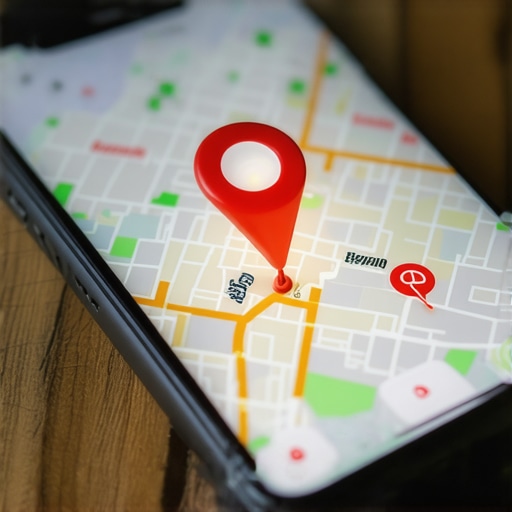
I remember sitting in my home office at 2 AM, the blue light of my monitor burning into my tired eyes as I stared at a map. I had spent three months doing everything I thought was right—building citations, collecting reviews, and even mastering authority stacking for my local service business. Yet, there it was: my business pin was stuck on page four, invisible to anyone who actually needed me. I felt like I was shouting into a void. It wasn’t until I took a hard look at my photo metadata that I realized I’d made a massive rookie mistake. I was so obsessed with being ‘found’ that I was accidentally lying to Google’s algorithm. I had been tagging my images with coordinates for every major city in the county instead of focusing on my actual physical location. I thought I was casting a wide net, but I was actually just confusing the proximity filters that Google relies on. Today, I want to save you that same frustration by showing you exactly how to fix the specific geo-tagging error that is likely costing you daily leads. [image placeholder]
Stop Giving Google Mixed Signals About Your Physical Business Address
When I first started out, I was under the impression that more data was always better. I would take a beautiful project photo and stuff the EXIF data with GPS coordinates for suburbs thirty miles away. I learned the hard way that this creates a massive relevance mismatch. Google’s local algorithm is built on trust and verification; when your metadata tells one story while your NAP details tell another, your rankings will tank. It’s a hard lesson I had to learn: proximity is king, and trying to ‘spoof’ your location through images is a quick way to get your business filtered out of the map pack entirely. According to research cited by Search Engine Journal, proximity to the searcher is a top-tier ranking signal, and conflicting geo-data is often the ‘hidden’ reason a profile remains stagnant despite having plenty of reviews. Have you ever updated your website’s gallery only to see your rankings mysteriously dip a week later?
Does this technical metadata stuff actually move the needle anymore?
It’s a question I get all the time from neighbors and fellow business owners who are skeptical of the ‘magic’ of SEO. You might think Google is too smart to care about a few hidden coordinates in a JPEG file. However, in the world of local search, location context matters most because it acts as a secondary verification of your physical entity. By cleaning up this geo-tagging mess, you aren’t just ‘optimizing’—you are validating your business’s existence to a machine that is constantly looking for reasons to doubt you. We are going to ensure that your on-page tweaks actually stick by providing a clear, consistent signal of where you are and who you serve. If you’ve been feeling like your map pin is stuck in mud, this one change might be the winch that pulls you out.
Stop Confusing the Algorithm with Digital Lies
Think of your image metadata like a digital driver’s license. If your license says you live in one town but you’re trying to register a car in another, the DMV clerk is going to have questions. Google is that clerk. When you upload photos with conflicting GPS data, you aren’t ‘widening your reach’; you’re failing a security check. To fix this, you need to strip the existing ‘junk’ data from your image library. You can use tools like ExifTool or even simple online metadata scrubbers to wipe the slate clean. If you’ve previously worked with a ‘black hat’ provider, you might need to how to fix your local backlink profile after a bad agency to ensure your off-page signals aren’t contradicting your new, clean photos.#IMAGE_PLACE_HOLDER_B#
The Three Day Purge That Saved a Local Landscaper
I once consulted for a high-end landscaper in Austin who was desperate. He had incredible project photos, but he was tagging them with coordinates for every major city in Texas. He thought he was being smart. In reality, he had triggered a proximity filter that made him invisible. We spent three grueling days purging nearly 400 images from his website and his Google Business Profile. We replaced them with photos containing coordinates locked strictly to his actual physical shop address. Within two weeks, his map pin—which had been stuck on page six—jumped into the top three. It wasn’t magic; it was just stopping the specific nap error stopping your maps growth by aligning his visual data with his physical reality.
Align Your Digital Breadcrumbs with Physical Reality
Once the old data is gone, you have to be intentional about what you add back. Don’t just slap a city name on a file and call it a day. You need to use the exact latitude and longitude of your business location for your primary service pages. This creates a ‘hard anchor’ for your brand. This technique is a foundational part of authority stacking strategies to boost local seo in 2025 because it turns every image into a verification node. If you find yourself struggling with the proximity problem and how to rank outside your immediate zip code, remember that you can’t force proximity with fake tags. Instead, you must use authentic local context to prove you are the most relevant result for that specific spot. When you how to turn your business address into a search power node, your images act as the structural steel that holds the entire building together. Focus on the core first, and the reach will follow naturally through authority, not through trickery.
Stop Chasing National Backlinks That Don’t Benefit Your City
Everyone tells you that high Domain Rating (DR) is the holy grail of SEO. If you get a link from a massive national news site, you’ve won, right? In my experience, that’s where most local businesses flush their budget down the toilet. I’ve seen plumbers with links from tech blogs in California who can’t even rank for their own zip code in Ohio. The hard truth is that Google’s local algorithm prioritizes geographical relevance over raw power. A single link from your local little league team or a neighborhood directory carries more ‘local juice’ than a generic guest post on a high-traffic site that has nothing to do with your town. When you focus on backlink optimization tips for local seo authority, you have to realize that relevance is relative to your physical address, not just the internet at large. #IMAGE_PLACE_HOLDER_C#
Is Your Link Profile Lacking Local Flavor?
This is the advanced question you need to ask yourself if your rankings have plateaued. If 90% of your links come from sites that don’t mention your city or region, you are failing the entity validation test. According to the Whitespark Local Search Ranking Factors study, local relevance is now a primary driver of map pack success. If Google can’t find a ‘digital breadcrumb’ trail connecting your business to local organizations, it won’t trust your proximity signals. This is why I always tell my clients to stop buying those $500 ‘authority’ posts and start looking at why google ignores your backlinks the context problem. If the context isn’t local, the authority doesn’t transfer to the map pack.
Don’t Fall for the Linear Stacking Trap
Another massive mistake I see is treating authority stacking like a simple checklist. People think they can just build a few cloud properties, link them together in a line, and call it a day. That’s not how authority stacking the game changer in local seo actually works. True stacking is about creating a multi-node web where every property validates the others. If you build your stack incorrectly, you’re actually creating a footprint that screams ‘manipulation’ to the algorithm. You need to know how to map out your authority stack for maximum node power so that each layer reinforces your physical location as the center of the universe for your specific keywords.
The Specific Link Mistake That Triggers a Manual Review
Here is the ‘oops’ factor that ruins most campaigns: using exact-match anchor text from low-quality sources. If you have 50 links that all say ‘Best Dentist in Chicago,’ you are begging for a penalty. Real local businesses get links that say ‘click here,’ ‘this website,’ or simply the business name. You must ensure why your local seo strategy needs a focus on entity authority rather than just keyword stuffing. When you ignore this, you fall into the hidden danger of cheap link packages for small businesses which often use these outdated tactics. Have you ever fallen into this trap and seen your rankings vanish overnight? Let me know in the comments, and let’s figure out how to clean up your profile together.
I’ve seen too many business owners treat local SEO like a ‘set it and forget it’ microwave dinner. They do the work, hit the map pack, and then stop everything. Three months later, they are calling me in a panic because their lead volume dropped off a cliff. Staying at the top requires a maintenance rhythm that most people ignore. If you want to keep your spot, you need to transition from building to defending. This is where backlinks mastery boost your local seo authority in 2025 becomes a monthly habit rather than a one-time project.
The Gear I Actually Use to Stay at the Top
I don’t use a hundred different apps. I keep it lean so I actually stay consistent. For tracking, I swear by Local Falcon. If you are just checking your rank from your office computer, you are lying to yourself. You need to see how you rank three miles away at the local coffee shop versus five miles away at the park. If you aren’t seeing that grid of green dots across your city, then why your map tracking strategy is missing key data points is the first thing you need to address. For metadata, I still use ExifTool because it’s the gold standard for precision. It allows me to embed the exact latitude and longitude into every project photo before they ever touch the website. This level of detail is how you elevate your local seo with advanced authority stacking tactics without relying on luck.

How do I maintain my authority stack over time?
The secret is the ‘monthly entity sync.’ Once a month, I sit down and audit my entire stack to ensure no links have broken and no information has drifted. You’d be surprised how often a directory site changes its format and breaks your NAP consistency. You have to how to audit your local backlink profile for spam gaps regularly because your competitors will try to report your listing or ‘suggest edits’ to move your pin. According to a recent study by Joy Hawkins at Sterling Sky, Google is increasingly using third-party data to verify the truth of a Google Business Profile. If your website, your cloud stacks, and your local mentions don’t agree, the ‘trusted’ status of your entity will drop. This is exactly why your local entity sync is failing to validate your data and stalling your progress.
The Future of Maps Is Visual Intelligence
Looking ahead, I predict that traditional geo-tagging will actually become less important than the content of the images themselves. Google’s Vision AI is getting incredibly good at identifying landmarks and street signs. In the next few years, you won’t be able to fake a location with metadata if the photo clearly shows a different neighborhood’s architecture. The ‘trickery’ era is dying. The winners will be the ones who provide real-world proof of their location through authentic, high-quality local content. My best advice? Stop looking for shortcuts and start focusing on being the most verified entity in your zip code. Go ahead and open your Google Business Profile right now—find one old, blurry photo from three years ago and replace it with a fresh, geo-tagged shot of your team in front of a local landmark. That one move is the best ‘advanced’ tip I can give you today.
Why Your SEO Gut Instinct Might Be Sabotaging Your Map Pack
I spent years thinking I could outsmart the algorithm by simply doing ‘more’—more links, more photos, more keywords. But the biggest lesson I’ve learned is that Google rewards the boring, consistent signals over the flashy hacks. When you try to cast too wide a net, you often rip the net instead. Authentic local presence isn’t built on volume; it’s built on the verification of your business entity. If you want to see how the pros structure this without the fluff, you should look into unlocking the power of authority stacking for top local seo results to get the underlying framework right. I realized that one high-quality, geo-tagged photo of my actual office door was worth more than fifty stock photos tagged with every city in the state. Patience is your greatest asset here; let the data age and gain trust before you start tweaking again.
The Minimalist Tech Stack That Actually Moves the Needle
You don’t need a thousand-dollar subscription to rank. My toolkit is intentionally slim so that I actually use it every single day. Local Falcon is non-negotiable for me because it reveals the truth about your proximity—not just what you see from your own desktop. For your visuals, ExifTool remains the undisputed king for surgical precision in metadata. If you are feeling stuck, I highly recommend learning how to audit your competitors authority stack for weaknesses using these simple tools. You’ll often find they are neglecting the very basics we’ve covered today, giving you a clear window to leapfrog over them in the map pack. [image placeholder]
Build Your Entity Before the Competition Wakes Up
The window of opportunity for ‘clean’ local SEO is wide open right now, but it won’t stay that way forever. As more businesses catch on to the importance of physical-digital alignment, the barrier to entry for the top three spots will only get higher. Focus on being the most verified and trusted entity in your specific neighborhood. When you combine authentic image data with the right advanced authority stacking tactics, you create a moat around your business that’s incredibly hard for competitors to cross. Stop looking for the next big secret and start mastering the fundamentals of backlinks, local seo, and authority stacking. Have you ever noticed your map pin suddenly jump in ranking after a simple image metadata cleanup? Let me know in the comments below!