I spent three months obsessing over every backlink, every pixel of my client’s site, and yet, the map pin sat there like a stone on page four. It was infuriating. I had used every trick in the book, from mastering authority stacking to perfecting the on-page content. I felt like a fraud. Then, I found the culprit: a suite number on a defunct yellow pages site was listed as ‘Ste 200’ while the Google Business Profile said ‘#200’. That was it. One tiny abbreviation discrepancy. In the world of local search, that is a cardinal sin. If you have been doing the heavy lifting but seeing zero movement, you likely have a secret identity problem that is confusing the algorithm. I have been in those shoes, and today, we are going to fix the specific NAP error that is acting like an anchor on your growth.
Stop Letting Tiny Typos Kill Your Revenue
When I first started out, I made the amateur mistake of using different tracking numbers for every social media profile because I wanted ‘better data.’ Big mistake. I actually ended up having to clean up messy citations for months just to recover my baseline authority. Google is essentially a giant, hyper-organized librarian. If you tell one person you live on ‘Main Street’ and another that you are on ‘Main St.’, the librarian gets suspicious. This ‘data drift’ signals to Google that your business might not be legitimate or currently active. To rank in the top three, you need total entity alignment. This means your Name, Address, and Phone number (NAP) must be identical across every single digital touchpoint. If you have recently moved or changed your business name, you might be fixing your map ranking for a long time if you do not address the foundational consistency first.
Does this tiny detail really matter that much?
You might think Google is smart enough to know that ‘Suite’ and ‘Ste’ are the same thing. In many cases, it is. But when competition is fierce, the algorithm looks for any reason to demote you. Consistency isn’t just about being tidy; it’s about signaling reliability to the local knowledge graph. A study by Whitespark confirms that citation consistency remains a foundational pillar for local search success, especially in high-density areas. If you have been dealing with a map embed error or a stagnant pin despite having great reviews, the source of the rot is almost always a data conflict in your citations. Have you ever checked your local rankings and realized you are nowhere to be found, despite having more backlinks than your competitors? It is time to look at the ‘boring’ stuff that actually moves the needle.You cannot build a skyscraper on a swamp. Before we talk about high-level tactics, we have to drain the water. Think of your digital presence as a GPS system for Google. If you give the satellite five different sets of coordinates for the same destination, the signal glitches. This is why you must begin by learning how to clean up messy citations without using expensive tools. I once worked with a local plumber who had three different business names across ten years because he kept changing his ‘branding’ to sound more professional. His map pin was practically invisible. We spent two weeks manually hunting every mention of ‘Joe’s Pipes’ and ‘Joseph’s Plumbing Service’ to align them with his current entity. The result? A 12-spot jump in three weeks without adding a single new link.
Get Your Digital House in Order
Start with a simple spreadsheet. Column A is the site name, Column B is the NAP they have, and Column C is the status. You need to be ruthless. Every ‘Rd’ vs ‘Road’ needs to be scrutinized. While you are scrubbing the data, you should also be looking at the specific on-page tweak that boosted our local visibility which often involves matching your footer text exactly to your Google Business Profile. 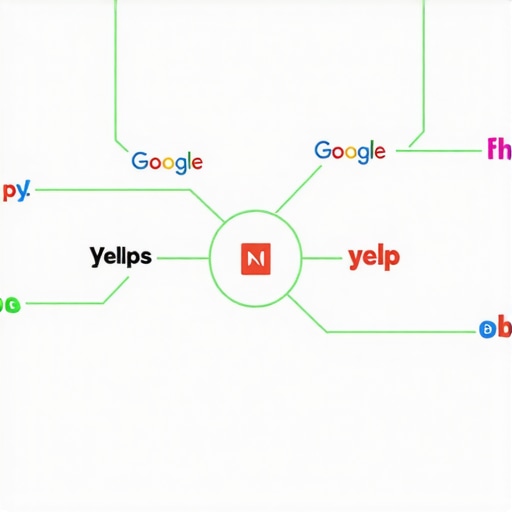
The Authority Stacking Move That Changes Everything
Once your foundation is dry, you start layering. I call this the ‘Trust Layer’ approach. You aren’t just getting links; you are building a narrative. This is where authority stacking the game changer in local seo comes into play. You want to connect your social profiles, your local directories, and your cloud-based assets in a way that points back to your main entity. Think of it like a spiderweb where your business is the center. Every strand needs to be strong and lead back to the same core data point. If one strand points to an old phone number, the whole web weakens.
How to Anchor Your Presence with Location Signals
To really force Google to recognize your area of influence, you need how to use geo-relevant content to anchor your authority stack. This isn’t just about mentioning your city name. It is about referencing local landmarks, neighborhood names, and even specific zip codes in a way that feels natural. When I was mastering authority stacking for elevated local rankings, I realized that most people forget the ‘local’ part of local SEO. They get caught up in global metrics like Domain Authority. In our world, a link from a local high school booster club or a neighborhood association is worth ten links from a generic tech blog. You are telling the algorithm: ‘I am a real part of this physical community.’ This specific shift in mindset—from quantity to proximity—is what separates the winners from the people stuck on page two.
Why High DA Links Might Be Dragging You Down
Most experts will tell you that the secret to ranking is a massive backlink profile filled with high-authority sites. In my experience, that is exactly how you get your map pin stuck in a perpetual ‘filter’ trap. I have seen businesses with half the links of their competitors dominate the map pack because they understood why google ignores your backlinks the context problem. Google isn’t looking for raw power anymore; it is looking for a local footprint that makes sense. If you are a florist in Chicago, a link from a Seattle tech blog is statistically irrelevant. According to the Moz Local Search Ranking Factors report, the relevance of the linking domain to the local area is a decisive factor that can override raw domain strength. If you ignore this, you are effectively shouting into a void. I have found that why high quality backlinks from small blogs beat big directories is a truth many SEO agencies ignore because it is harder to execute.
Avoid the Poison of Cheap Link Packages
One massive mistake I see people make—the ‘oops’ factor—is thinking they can skip the hard work by using the specific backlink move for high authority local press or, worse, buying automated citation blasts. This often results in why your backlink building technique is triggering spam filters. When you create fifty links in an hour from sites that have no geographic tie to your business, you aren’t building authority; you are building a red flag. I once spent six months helping a client how to fix your local backlink profile after a bad agency because their previous guy had ‘stacked’ them on a bunch of dead forums. It was a nightmare. You need a backlink building blueprints for local seo success that mimics a real business’s organic growth within its specific city.
Can you actually confuse Google by being too ‘local’?
This is a question I get from advanced students: is there such a thing as over-optimizing your location? The answer is a nuanced ‘yes.’ If every single piece of content on your site is just a list of zip codes and neighborhood names, you are going to trip the ‘thin content’ alarm. The key is how to use geo-relevant content to anchor your authority stack without making it look like a robot wrote it. You need to weave local history, landmarks, and real community events into your narrative to build ‘Entity Trust.’ #IMAGE_PLACE_HOLDER_C# If you are feeling stuck, check why your map pin movement has suddenly stalled. It is usually because you have hit an ‘Authority Ceiling’ where your off-page signals don’t match your on-page claims. You need to master authority stacking for elevated local rankings by creating a multi-layered shield of local relevance. This means your backlink optimization tips for local seo authority should focus on why your neighborhood links carry more weight than national pr. Have you ever fallen into this trap? Let me know in the comments.
I used to think that once you hit the top three, you could just coast. I was wrong. The moment you stop feeding the beast, a hungry competitor who just read about how to map out your authority stack for maximum node power will come for your spot. Ranking is an active state, not a permanent achievement. If you aren’t actively monitoring your ‘Authority Nodes,’ you’re essentially waiting for a site update to wipe you out. Maintenance doesn’t have to be a full-time job, but it does require a specific cadence of checks to ensure you don’t need the specific move to restore authority to a stagnant map pin later on.
Don’t let your rankings die on the vine
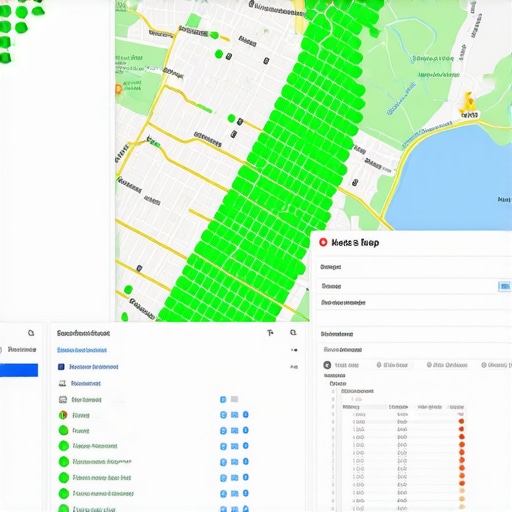
The biggest threat to your longevity isn’t a Google update; it is ‘link rot’ and data decay. Business directories change their layouts, local news sites archive their pages, and sometimes your best neighborhood links just disappear. I spend one morning every month doing a ‘Health Check’ where I use tools like LocalFalcon to see my ranking grid. If I see a cluster of red dots appearing where they used to be green, I know there is an issue with my local relevance. This is usually when I have to how to fix a broken authority stack before it hurts your rank. You should be looking for any changes in your Name, Address, and Phone number (NAP) that might have been automatically ‘suggested’ by a random user on Google Maps.
My must-have kit for maintaining local dominance
I am often asked what software I actually pay for. For me, it is a three-way split. I use BrightLocal for citation monitoring because its ‘active sync’ prevents my data from drifting. I use LocalFalcon for my map grid tracking because it gives me a visual heat map of where I am losing ground. Finally, I use a custom-built Google Sheet to track my ‘Stack Nodes.’ Why? Because automated tools often miss the nuances of how to sync your schema without breaking google search presence. As Joy Hawkins of Sterling Sky has documented, Google’s ‘Vicinity’ update means that even the strongest backlink profile can’t save you if your location signals are muddy. I manually check my JSON-LD schema every quarter to make sure it is still pulling the correct @id for my business entity. This prevents the ‘identity fragmentation’ that kills map prominence.
How do I keep my map pin from sinking next month?
Consistency is your best friend here. Instead of building fifty links in a week and then doing nothing for three months, build two or three high-quality local links every month. This creates a steady ‘velocity’ of trust. This might involve getting a mention on a the secret weapon for local seo high traffic resource pages or securing a spot on a local community college alumni page. By pacing yourself, you signal to Google that your business is a living, breathing part of the local economy. If you stop seeing progress, you might need to look at why multi-node stacks are the future of local authority to expand your footprint.
Think bigger than your home zip code
Once you dominate your immediate area, the next step is scaling. This is where most people fail because they try to use the same old tactics. Scaling requires you to understand the secret to scaling local authority across five cities. You can’t just copy-paste your content; you have to build unique ‘Local Power Nodes’ for each region. I predict that as AI-driven search becomes the norm, Google will move away from keyword matching entirely and rely 100% on ‘Entity Verification.’ This means your ability to prove your physical existence through a complex web of local mentions will be the only thing that keeps you in the map pack. If you want to stay ahead, stop obsessing over keywords and start obsessing over your digital footprint. Action step: Go to Google and search for your business phone number. If you see more than two variations of your address in the first three pages of results, go back and fix those citations immediately.
The Brutal Truth About Digital Anchors
One thing nobody tells you is that local SEO is more about defense than offense. You can build the most beautiful authority stack in the world, but if your foundation has cracks, the algorithm will eventually find them. I learned this the hard way: a single mismatched suite number can negate months of hard work. Always prioritize entity verification over raw backlink volume. My biggest lightbulb moment was realizing that why most small businesses fail at local map prominence often boils down to simple neglect. They think ranking is a one-time task, but in reality, it is a constant dialogue with Google where you must prove your relevance daily.
Never underestimate the power of ‘boring’ links. While your competitors are chasing expensive national PR, you should be focused on how to audit your competitors authority stack for weaknesses and securing those neighborhood mentions they think are too small to matter. Those hyper-local signals are what build a resilient map presence that survives algorithm updates. Automation often feels like a shortcut, but in my experience, it often leads to data drift that confuses the knowledge graph.
My Daily Arsenal for Map Dominance
If you want to stay in the top three, you need a toolkit that doesn’t just track rankings, but monitors entity health. I personally rely on BrightLocal to keep my NAP data from drifting across the web—it is the best way to prevent ‘identity fragmentation.’ For a visual reality check, I use LocalFalcon; it shows exactly where my authority drops off geographically so I can target specific neighborhoods. I also swear by the JSON-LD Playground to ensure the specific schema move that connects your business to the city is technically flawless and readable by search crawlers. Lastly, I always keep the Moz Local Search Ranking Factors report bookmarked to stay grounded in what actually moves the needle.
Claim Your Spot in the Community
Local SEO isn’t just about moving a pin on a screen; it is about reflecting the real-world trust you have built in your neighborhood. Don’t be intimidated by the technical jargon or the complex stacks. Start by cleaning up your data, then layer on local relevance through community outreach. If you find your progress stalling, take a breath and learn how to fix a broken authority stack before it hurts your rank. You have the tools, the blueprint, and the knowledge. Now, it is time to go out there and own your local market. Have you ever found a tiny NAP error that was holding back your rankings? Let me know in the comments below!