I spent three agonizing weeks staring at a frozen map listing for a local plumber friend of mine. We had the reviews, we had the fancy website, and we had the standard citations, but we were stuck on page two like we were wearing concrete shoes. Then, while doing some deep competitive research, I found a competitor’s link tucked away on a dusty ‘Local Business Resources’ page of our city’s public library website. It was a total lightbulb moment. I realized I had been chasing ‘high DA’ links from national blogs that didn’t know our town from a hole in the ground, while the ultimate neighborhood endorsement was sitting right under my nose.
Stop Chasing Big Media and Look Across the Street
Most of the advice you see online tells you to go after big-name guest posts or expensive press releases. Early in my career, I made the massive mistake of spending nearly a thousand dollars on a ‘high authority’ link for a local bakery from a tech site. You know what happened? Absolutely nothing. The needle didn’t move because Google didn’t see any geo-relevance in that connection. Libraries, however, are the literal bedrock of community information. When a library links to you, they aren’t just giving you a backlink; they are vouching for your physical presence in the community. It is a critical piece of authority stacking that most people completely ignore. By securing these hyper-local nods, you are telling the algorithm exactly where you belong. I’ve found that using local resource pages is often the missing link for businesses that feel like they’ve hit a plateau. Have you ever actually searched your local library’s website for a business directory or resource list? I’d bet most of your competitors haven’t.
Is a Library Link Really Worth the Effort?
You might be skeptical that a link from a quiet, local institution can outrank a flashy news mention. However, library domains—often .gov or .org—carry an immense amount of trust. According to research by Pew Research Center, libraries are among the most trusted institutions in America for finding reliable information. Google’s local algorithm mirrors this human trust. If you are struggling with map pin movement, this is exactly the kind of high-trust signal you need to break the stalemate. I learned the hard way that generic link building techniques can actually trigger spam filters if they don’t look natural for a local business. A library link is as natural as it gets.To actually get these links, you need to stop thinking like an SEO and start thinking like a community historian. You are looking for digital dusty corners where libraries and local governments house ‘Community Resources’ or ‘Local Business Directories.’ These aren’t your typical spammy directories; these are curated lists maintained by real people.
Dig Up the Local Gold Using Google Search Operators
You can’t just browse the homepage of a library and expect to find a ‘Submit Your Link’ button. You have to hunt for it. Think of these search operators as your metal detector. I use strings like site:.lib.state.us ‘business resources’ or site:.gov ‘local resources’ + [Your City]. This narrows the field to the exact high-trust domains that hold the hidden SEO value in local government resource pages. Most people quit after the first page of Google, but for this to work, you need to dig into the secondary pages of these specific domains.
Use Specific Strings to Find Resource Lists
Focus your search on PDF files or old HTML tables. Believe it or not, why your business name on a pdf still passes seo value is a concept many forget. If a library has a ‘Guide to Local Living’ PDF, getting your name and site listed there is like getting a gold-plated endorsement. I once spent an entire afternoon searching for ‘New Resident Guides’ in a specific county for a client. We found four different lists that hadn’t been updated in years. By offering to provide updated information for their residents, we secured three high-trust links that most competitors didn’t even know existed. 
Make Your Business a Community Asset
The librarian or city clerk is the gatekeeper, and they have a very high ‘BS’ detector. If you email them asking for a ‘backlink for SEO purposes,’ you will be deleted faster than you can click send. You have to position your business as a resource. For example, a plumber isn’t just a plumber; they are a source of information on ‘Preventing Winter Pipe Bursts for Homeowners.’ When you approach the gatekeeper, you are offering a helpful resource for their patrons. This is how you how to use local resource pages for high power map links without looking like a typical marketer.
Provide Value Beyond a Sales Pitch
I remember a messy situation where I was working with a small home-accessibility company. We targeted a local senior center’s resource page. Instead of just asking for a link, we created a simple ‘Home Safety Checklist for Seniors’ and hosted it on our site. I called the admin—a very skeptical woman who had worked there for twenty years—and explained that we had a free tool that would help her residents avoid falls. It took three weeks of back-and-forth, but once she added us to their ‘Local Help’ section, the site’s authority skyrocketed. That one link was more powerful than fifty generic guest posts. This is a core part of authority stacking because it connects your physical utility to your digital presence.
Connect the Dots to Your Map Listing
Once you’ve secured a mention on a trusted local site, you need to ensure Google’s algorithm understands the connection between that link and your map pin. This is where the ultimate guide to building backlinks for local authority comes into play. You aren’t just building links in a vacuum; you are creating a web of relevance. If you’ve been wondering how we fixed a frozen map listing in under two weeks, it was by focusing on these hyper-local nodes. You have to how to build a local authority stack that actually sticks by ensuring your NAP (Name, Address, Phone) on the library page matches your Google Business Profile exactly. Even a small discrepancy can break the ‘trust chain’ you are trying to build.
Stop Obsessing Over Domain Authority
The most common mistake I see seasoned SEOs make when moving into the local space is worshipping the altar of Domain Authority (DA). They spend months trying to land a guest post on a tech blog with a DA of 70, ignoring the local high school’s sports booster club page with a DA of 12. Here is the contrarian truth: in the eyes of the local algorithm, a link from your neighbor is worth ten links from a stranger across the country. This is where you need to elevate your local seo with advanced authority stacking tactics. Google isn’t just looking for ‘authority’ in a vacuum; it is looking for contextual proximity. If you are a plumber in Austin, a link from an Austin-based non-profit is a massive signal that you are exactly who you say you are, regardless of that site’s global metrics. This is why why your neighborhood links carry more weight than national pr in the hyper-local map pack.
The Deadly Anchor Text Trap You’re Walking Into
If I had a dollar for every time I saw a business owner get penalized for over-optimizing their local links, I’d be retired on a beach. Most ‘experts’ will tell you to use your city and service as your anchor text every single time. That is the fastest way to trigger a manual review. I once saw a promising landscaping company lose their entire map presence because every single one of their 15 local links used the exact anchor ‘Best Landscaper in Orlando.’ It looked completely unnatural. To succeed, you must understand why your backlink building technique is triggering spam filters. Real community links are messy. They use anchors like ‘click here,’ ‘our website,’ or just the business name. If you don’t vary your profile, you are signaling to Google that you are gaming the system rather than earning the community’s trust. This is a primary reason why your authority stacking fails to connect the dots for google effectively.
Does Local Relevance Trump Raw Power in the Map Pack?
It absolutely does. According to research by BrightLocal, the importance of local relevance has surged as Google’s AI becomes better at understanding geographic entities. The algorithm prioritizes the ‘trust chain’ between local nodes. If a local government site links to a local library, and that library links to you, you have effectively inserted yourself into the city’s digital infrastructure.  This is the essence of the specific link profile that triggers google local trust. Many people ignore this because it takes more manual work than buying a package of generic backlinks, but the results are much more permanent. When you focus on these hyper-local nodes, you are building a moat around your business that a national competitor can’t simply outspend. You are creating a digital footprint that is physically tied to your service area. Have you ever fallen into this trap of chasing big metrics while ignoring the local gold under your feet? Let me know in the comments.
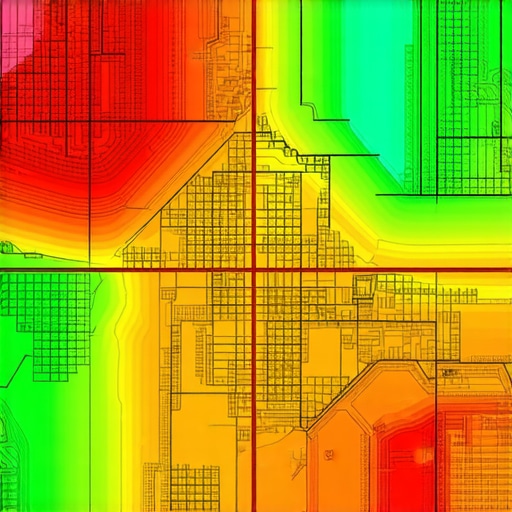
Once you’ve successfully cracked the code and see that map pin start to move, the real work begins. You can’t just walk away and expect those results to stick forever. I’ve seen businesses climb to the top of the three-pack only to vanish a month later because they thought SEO was a one-time project. To stay there, you need a diagnostic mindset and a toolkit that doesn’t lie to you. For me, that starts with moving away from generic rank trackers that give you a single ‘average’ position. If you want the truth, you need to see a localized heat map of your city. I personally use GeoGrid tools because they reveal exactly where your authority drops off. This is essential for why your map tracking strategy is missing key data points that could be costing you leads in the next neighborhood over.
Trust Your Eyes Over Your Dashboard
I remember a client who was celebrating a #1 rank on their dashboard, but when we looked at a grid search, they were actually invisible everywhere except for a fifty-foot radius around their front door. We had to how to audit your competitors authority stack for weaknesses to realize the competition had captured all the ‘high-ground’ nodes in the suburbs. To combat this, I started using what I call ‘node maintenance.’ Every quarter, I go back and check the health of our foundational links. Links break, library pages get updated, and local government sites move their resource directories to new subdomains. If you don’t how to clean up messy citations without starting over every few months, your ‘trust chain’ begins to rust. As Joy Hawkins of Sterling Sky often highlights, Google’s local algorithm is increasingly sensitive to ‘behavioral signals,’ and if your links lead to 404 pages, that trust evaporates instantly.
How do I maintain local authority over time?
Maintenance isn’t about building more; it’s about reinforcing what you already have. I recommend a ‘monthly mention’ strategy. You don’t need ten new links a month; you need one high-quality, local signal to keep the engine humming. Whether it’s a mention in a local church bulletin or a small sponsorship, these consistent pulses tell Google you are still active in the community. This is a core part of how you elevate your local seo with advanced authority stacking tactics without burning through your marketing budget. If you are looking at backlinks mastery boost your local seo authority in 2025, you have to realize that longevity is the ultimate authority signal. When you’re ready to grow, you can’t just copy-paste your strategy. You need to understand the secret to scaling local authority across five cities involves building unique community roots in each specific zip code.
The Move to Zero-Click Local Authority
Looking ahead, I predict that ‘Entity Search’ will completely take over. Google is moving away from simple keyword matching and toward understanding your business as a real-world entity with a physical footprint. This means your website might actually become less important than the ‘web of trust’ you build around it through libraries, local news, and community associations. We are heading toward a ‘zero-click’ world where Google provides the answer directly on the search page, and only the businesses with the strongest authority stacking will be featured in those AI-generated summaries. If you haven’t started yet, my best advice is to run a GeoGrid search for your main keyword today—you’ll be shocked at how much your rank drops just two blocks away from your office. Use that data to target your next local resource link.
What I’ve Learned from Chasing Map Pins for a Decade
Looking back at my failures, the biggest realization was that Google doesn’t care about how many links you have; it cares about who vouches for you. I used to think I could outsmart the algorithm with volume. Now, I know that authority stacking unveiled the hidden power for local seo is actually about quality and proximity.
My first lightbulb moment was realizing that patience is a ranking factor. Library links take time to stick, but they provide a foundation that doesn’t disappear with the next update. I also learned that manual beats automated every single time—a handwritten email to a librarian is worth more than a thousand generic blasts. Finally, trust is fragile; if your NAP data is inconsistent, you’re essentially building your authority on sand.
The Gear That Makes Local SEO Simple
You don’t need a massive budget to win. I rely on three primary things: Google Search Operators for finding those hidden .lib and .gov pages, GeoGrid visualizations to find exactly where rankings drop off, and active local relationship building. I also recommend checking out how to use backlinks effectively to enhance local search presence to understand the mechanics of scaling these efforts without looking like a spammer. These aren’t just tools; they are your eyes and ears in the local market. Using a consistent checklist to unlock local seo growth through effective backlink tactics ensures you never miss a high-value community mention. #IMAGE_PLACEHOLDER_E#
Your Community is Waiting for You to Lead
It’s easy to get overwhelmed by the technical side of SEO, but remember that you are simply trying to prove you are a pillar of your community. Start with one local resource page this week. Just one. That single move can be the spark that breaks your map pin free from page two. You have the knowledge now to elevate your local seo with advanced authority stacking tactics and outshine the national chains that don’t care about your town. Have you ever found a hidden gem of a link on a local government or library site? Let me know in the comments below!