Three years ago, I was staring at a frozen Google Maps pin, wondering why my phone wasn’t ringing. I had done what every ‘guru’ told me to do: I bought a massive blast of cheap, generic citations. It was a disaster. I was drowning in a sea of directories that don’t drive traffic, and they offered zero value to my business. Then, during a Tuesday morning meeting at a local diner, I noticed the Chamber of Commerce seal on the door. It was a total lightbulb moment. I realized that Google isn’t looking for the most links; it’s looking for the most relevant community signals. Today, I’m going to show you how to leverage that local membership to actually move the needle on your rankings. We aren’t just talking about a logo on your site; we’re talking about building the specific link profile that triggers Google local trust and makes search engines see you as a pillar of your neighborhood.
Stop Treating Your Neighborhood Like A Generic Search Result
Many business owners make the map ranking mistake that most small businesses make by thinking all backlinks are created equal. They aren’t. When a local Chamber links to you, it’s a high-trust signal that screams ‘this business is physically here and involved.’ In fact, according to a study by the Association of Chamber of Commerce Executives, consumers are 63% more likely to buy goods and services in the future from a company that they believe is a member of the local chamber of commerce. That’s a massive trust signal that search engines pick up on too. If humans trust it, Google wants to reward it. Have you ever felt like you’re doing everything right with your SEO but still getting beat by the guy down the street who doesn’t even have a blog?
Is the membership fee actually worth the SEO hype?
I’ll be honest: I used to be a massive skeptic. I hated the idea of paying hundreds of dollars a year for what I thought was just a ‘link.’ I made the mistake of ignoring these high-authority local nodes for years, opting instead for backlinks from small blogs because I thought I was being ‘smarter’ with my budget. I was dead wrong. The authority passed from a local Chamber site is often the ‘anchor’ that holds your entire local authority stack together. Without it, you’re just another floating data point in a sea of digital noise. Let’s look at how to turn that membership into a ranking powerhouse.
Fix the data disconnect that confuses Google
The very first thing you need to do isn’t building new links, but auditing the one you already have. Think of your Chamber of Commerce backlink as a radio station’s broadcast frequency; if it’s slightly off, all Google hears is static. I remember working with a local roofer in Georgia who was paying for a premium Chamber membership but his map pin was stuck on page four. When we looked closer, the Chamber site was still using an old tracking phone number and an address from three years prior. This created a massive trust gap. To fix this, you must ensure your Name, Address, and Phone number (NAP) are identical to your Google Business Profile. This is the foundation of how to fix the sync gap between your website and your map pin. Once that data is perfectly aligned, Google stops questioning your physical location and starts trusting your authority.
Use schema to bridge the physical and digital worlds
After the NAP is cleaned up, you need to tell search engines exactly why that Chamber link matters. You do this by using LocalBusiness schema on your own site to point back at your Chamber profile. It’s like providing a digital birth certificate that proves your local lineage. By implementing the specific schema move that connects your business to the city, you aren’t just getting a backlink; you’re building a semantic bridge. This tells the algorithm, ‘Hey, this high-authority local entity recognizes me as a legitimate neighborhood player.’
Target the overlooked pages with high trust
Most business owners stop at the generic member directory, which is a rookie mistake. The real power is buried in the sub-pages. I once spent a weekend digging through a client’s local Chamber site and found a ‘Local Business Resources’ page that had zero outbound links because no one had ever asked to be on it. We requested a placement, provided a helpful 200-word blurb about local regulations, and that single link from a high-utility page was the secret weapon for local seo high traffic resource pages that finally pushed them into the top 3. 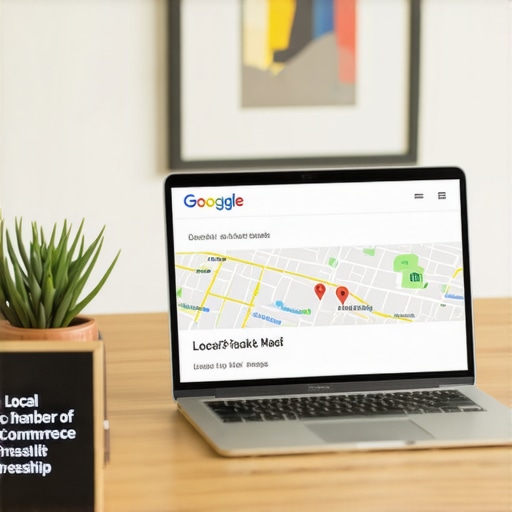
Don’t ignore the neighborhood news feed
Chambers of Commerce often have a news or ‘Member News’ section. This is a goldmine for building relevance. Instead of a generic ‘we are open’ post, send them a short press release about a local charity event you’re sponsoring. When they post that with a link to your site, you are using how to use local news to build high power backlinks to create a narrative of community involvement that Google’s proximity filters love. This is significantly more effective than a hundred generic directory submissions.
Build a link network that screams local relevance
The final step is to turn that single Chamber link into a ‘loop.’ Don’t let it be a dead-end street. Link to your Chamber profile from your social media and mention your membership in your footer. This creates the neighborhood link loop that puts your map pin first. It’s about creating a web of signals that all point to the same conclusion: you are the local expert. By focusing on these neighborhood level signals to outrank franchises, you can beat out national competitors who have bigger budgets but zero local soul. This is how to build a local authority stack that actually sticks and survives the next algorithm update.Let’s dig deeper into why so many businesses spend thousands on SEO and still find themselves invisible in the local map pack. Most people assume that ‘authority’ is a linear scale—the higher the Domain Authority (DA) of a backlink, the better. But in the world of local search, this is a dangerous oversimplification. In my experience, a link from a hyper-local, low-authority neighborhood blog often carries ten times the weight of a high-DA link from a generic national news site. Why? Because search engines prioritize geographical relevance over global popularity when calculating local rankings. If you’ve been chasing vanity metrics, you are likely missing out on why your neighborhood links carry more weight than national pr.
Stop chasing vanity metrics that don’t move the needle
The common belief is that more links equal more trust. However, the Whitespark 2023 Local Search Ranking Factors study indicates that while link quantity matters, the *locality* of those links is becoming a primary differentiator. I’ve seen businesses plummet in rankings because they focused on a massive volume of cheap links instead of quality community nodes. This is the truth about bulk citations and your search visibility: if Google cannot verify the physical and social context of those links, it treats them as noise. Instead of trying to win a popularity contest with the entire internet, you need to win the trust of your specific zip code.
The dangerous trap of disconnected cloud nodes
One of the biggest ‘oops’ factors I see in advanced strategies involves cloud stacking. People create beautiful stacks on AWS, Google Cloud, or Azure, but they treat them as isolated islands. If your cloud nodes aren’t properly interlinked and tied back to your primary entity, you’re just hosting files that no one—including Google—cares about. This is the hidden reason your cloud stacks aren’t transferring pagerank. Without a logical flow of power from the edge nodes to the core of your stack, the authority simply dissipates. I once worked with a legal firm that had thirty cloud nodes but saw zero movement because they forgot to link the nodes in a ‘loop’ that pointed back to their Google Business Profile. #IMAGE_PLACE_HOLDER_C#
How do you know if your authority stack is actually passing juice?
To verify if your strategy is working, you need to look past simple ranking numbers and examine how Google is connecting the dots. Are your branded searches increasing? Is your ‘knowledge panel’ showing more diverse information? If not, it’s likely because why your authority stacking fails to connect the dots for google involves a lack of semantic consistency. You need to ensure that every layer of your stack uses the same entity language. By understanding authority stacking unveiled the hidden power for local seo, you can move from just ‘building links’ to ‘building an entity.’
Build the entity loop that Google can’t ignore
Advanced SEO isn’t about finding a magic bullet; it’s about eliminating the friction between your digital presence and the physical world. When you learn how to use backlinks effectively to enhance local search presence, you start to see your business as a node in a larger local network. Have you ever fallen into the trap of buying ‘high DA’ links only to see your map ranking stay exactly where it was? Let me know in the comments. I’d love to hear your experiences with what actually moves the needle in your niche. Let’s stop the guesswork and start building authority that actually sticks.
Stop guessing and start measuring with a real-time grid
I use LocalFalcon every single Monday morning. Standard rank trackers show you a single number for a whole city, but that is a total lie. To truly win, you need to see how your map pin performs block-by-block. If you are struggling with the authority stack logic for multi-region service brands, grid tracking is the only way to see exactly where your ‘power’ stops and where you need to build more neighborhood-level nodes. For my stack builds, I personally lean on a combination of AWS S3 and Google Cloud Storage. Why? Because cross-cloud linking is much harder for competitors to reverse-engineer and it signals to Google that your brand has a footprint across the entire web infrastructure. It is about mastering authority stacking for elevated local rankings by creating a diverse, high-uptime hosting environment that doesn’t rely on a single point of failure.
How do I keep my authority stack from crumbling over time?
I perform a ‘link health’ audit every 90 days without fail. Links on small neighborhood blogs or community pages can die when owners forget to renew domains or change their CMS. I use Screaming Frog to crawl my own authority stack and ensure every internal redirect is a clean 301, not a broken 404. This is crucial for how to scale your map authority without getting banned; if Google’s crawlers hit too many dead ends in your stack, the trust you’ve built evaporates instantly. As the official technical Schema.org documentation for LocalBusiness emphasizes, your digital identifiers must be consistent and reachable to maintain semantic relevance within the Knowledge Graph. 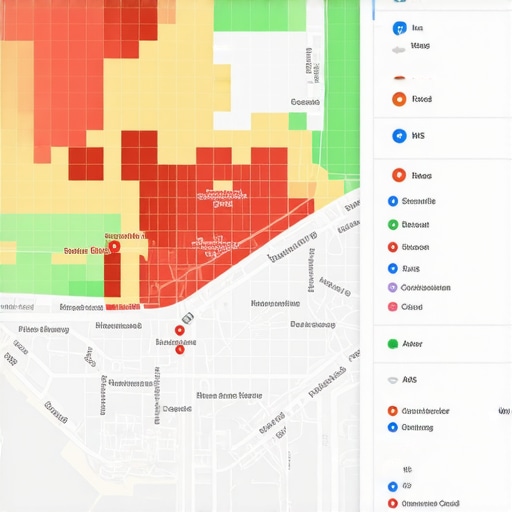
What the future of local entity search looks like
I predict that by 2026, ‘proximity’ will be less about physical distance and more about ‘interaction frequency’ within your stack. Google will increasingly reward businesses that show active engagement on their local nodes. This is exactly why map embeds from high traffic local sites win—they prove you are a living, breathing part of the community rather than just a static database record. If you want to stay ahead, stop thinking about SEO as a one-time setup and start viewing it as a neighborhood reputation you have to defend every month. My challenge to you today is this: go find one recent local news article about your industry and post a high-value, helpful comment that links back to your Chamber of Commerce profile rather than your homepage. Watch how that small move anchors your entity in a way that generic backlinks never could.
The Hardest Lessons I Learned While Building Local Trust
I’ve spent thousands on fancy tools only to realize that the most powerful signal was often a simple link from a local non-profit or a hyper-local neighborhood blog. One major lightbulb moment was discovering that Google values frequency of interaction over the sheer size of a backlink. If you aren’t refreshing your community connections, your rankings will eventually cool off. Also, don’t ignore the smaller, hyper-local nodes. I used to think they were a waste of time, but the small business guide to high authority neighborhood links proved that these are actually the ‘glue’ that keeps your map pin in the top three. Finally, remember that your stack is only as strong as its weakest link; one broken redirect can sink your whole campaign.
#IMAGE_PLACEHOLDER_E#
How I Keep My Local Rankings From Stagnating
I don’t leave my SEO to chance, and neither should you. My go-to for checking progress is LocalFalcon, because seeing a grid of green dots across a city map is the only way to know if your influence is truly spreading. To keep the technical side clean, I always run a monthly crawl with Screaming Frog to catch those pesky 404 errors in my stack. I also keep the Schema.org LocalBusiness documentation bookmarked because staying close to the source is how you master authority stacking for elevated local rankings without getting caught in the weeds of outdated advice. Lastly, I swear by a simple Google Alert for your city name—it’s the fastest way to find new community opportunities before your competitors do.
Your Neighborhood Is Waiting For You To Claim It
Building a digital presence that reflects your real-world reputation takes time, but the payoff is a business that survives every algorithm shift. You don’t need a massive budget to start; you just need to be intentional about how you connect with your community. By implementing authority stacking strategies to dominate local search, you are setting yourself up as the undeniable authority in your niche. Now is the perfect time to take that first step and stop letting national chains steal your local traffic. How has your local Chamber of Commerce membership affected your search rankings so far? Let me know in the comments!