I remember sitting in my home office three years ago, staring at a screen that just didn’t make sense. I had a client—a local plumber with a heart of gold and a website that looked like a million bucks. We had the reviews. We had the keywords. But for the life of me, his map pin was stuck on page two, buried under competitors who hadn’t updated their sites since the Bush administration. I was baffled. I was frustrated, bordering on desperate. I thought I knew the game, but the game had changed without telling me. Early in my career, I made the expensive mistake of thinking backlinks were the only answer; I spent over $2,000 on high-DR guest posts that did absolutely nothing because I was building links to a digital ghost. Google knew the website existed, but it didn’t recognize the business as a real-world entity. This was my ‘lightbulb moment,’ and it changed how I approach local search forever.
The Day I Realized Keywords Aren’t Enough
For a long time, we were taught that SEO was a simple math equation: Keywords + Backlinks = Rankings. But in the modern local landscape, Google isn’t just looking for matching words; it’s looking for proof of existence. My early failure taught me that authority stacking isn’t just about link volume. It is about building a digital footprint so thick and interconnected that Google can’t help but see you as the dominant authority in your zip code. If your strategy doesn’t anchor your business into the local Knowledge Graph, you’re basically shouting into a void. Have you ever felt like you’re following every ‘best practice’ out there but your phone still isn’t ringing? You aren’t alone, and usually, the culprit is a lack of entity clarity. Today, I am going to show you how to fix that disconnect once and for all.
Is This Entity Stuff Just More Marketing Hype?
I get it. You’ve heard about the ‘next big thing’ every six months. But here is a surprising fact: Google’s own patents regarding Entity-Based Search indicate that they now prioritize the relationship between things (entities) over simple strings of text. According to industry experts at Search Engine Journal, Google uses these connections to verify the legitimacy of a business. If your map ranking strategy ignores how your brand, address, and service offerings link together, you’re missing the foundational support needed to stay on top. This isn’t just a trend; it’s the new baseline for survival in competitive markets.
Your Business Needs to Be a Fact Rather Than a Guess
The problem is that many of us are still using 2015 tactics in a 2025 world. When I stopped obsessing over individual keywords and started focusing on why your authority stacking fails, the results were almost instant. We moved that plumber from the ‘no-man’s land’ of page two to the top of the local 3-pack in less than a month. The secret wasn’t more links; it was better signals. We need to bridge the gap between your digital presence and your physical location. It’s time to stop being a ‘search result’ and start being a ‘trusted local entity’ that Google feels safe recommending to its users. Let’s dive into how you can start moving the needle by proving your authority to the machines.
Sync Your Digital ID Before You Build Anything
The very first step is treating your business data like a legal document. Think of your business identity as a passport; if the name on your passport doesn’t match the name on your flight ticket, you aren’t getting past security. Google is the security guard. When you learn how to fix the sync gap between your website and your map pin, you are essentially giving the algorithm a definitive source of truth. Most businesses fail here because they use ‘Plumbing Pros’ on their website and ‘Philly Plumbing & Drain’ on their Google Business Profile. This creates entity friction. I once worked with a carpet cleaner in a crowded metro area who couldn’t move his pin to save his life. We executed how we doubled calls with a single entity sync move by standardizing every single mention of his brand, and his traffic spiked in days. You must also implement the specific schema move that connects your business to the city, using structured data to tell Google, ‘I am not just a website; I am this specific business in this specific neighborhood.’
How Cloud Nodes Force Google to Pay Attention
Once your identity is solidified, you need to surround it with what I call a digital fortress. This is where most people get confused, but it’s actually quite simple: you want to use the massive authority of cloud providers to validate your existence. Instead of just relying on your own site, you host highly relevant content on platforms like Amazon S3 or Google Cloud. These are your ‘cloud nodes.’ I recently applied this for a client in a saturated market using the specific multi-node logic for carpet cleaning SEO. By hosting HTML pages on these ‘un-killable’ cloud domains, we created a buffer of authority that pushed his rankings higher than his competitors who were only doing standard blogging. If you find your rankings are stalling, it’s often because the hidden reason your cloud stacks aren’t transferring pagerank is usually a lack of internal linking within the stack itself. By using authority stacking strategies to boost local seo in 2025, you turn these nodes into a power grid that feeds directly into your Google Maps listing.
Stop Chasing National Links and Start Winning Your Block
I see too many business owners spending thousands on ‘high-DR’ guest posts from national magazines that have zero local relevance. Think of it like this: if you’re a local baker, a recommendation from the mayor of your town is worth ten times more than a generic shoutout from a guy in another state who has never tasted your bread. This is why why your neighborhood links carry more weight than national pr is the mantra you need to live by. You need to anchor your off-page presence to the ground you stand on. A great way to do this is through community involvement. For instance, how local charities provide the best seo links is a strategy I’ve used to gain hyper-local authority that competitors simply cannot replicate. These links aren’t just about traffic; they are geographic signals. When you combine this with how to use geo-relevant content to anchor your authority stack, you are essentially drawing a circle around your service area on Google’s map and saying, ‘I own this space.’ It creates the neighborhood link loop that puts your map pin first, ensuring that every local mention reinforces your position as the neighborhood expert.
Let’s dig deeper into the nuances that most agencies ignore because they are too busy looking at generic metrics. The biggest mistake? Thinking that a backlink is just a backlink. Everyone says ‘get more links,’ but in my experience, a ‘powerful’ link from a national site is often just white noise for a local business. This is where why high quality backlinks from small blogs beat big directories becomes apparent; those small, hyper-local blogs carry geographic data that a national publication simply can’t replicate. Then there’s the ‘Oops’ factor: the over-optimization of your anchor text. I have audited hundreds of sites where the owner thought they were doing themselves a favor by using their main keyword for every single link. Instead, they were showing Google exactly how they were trying to manipulate the system. Understanding why your backlink building technique is triggering spam filters is vital if you want to stay in the game long-term. Even the pros at Whitespark highlight in their annual survey that while links remain a top factor, the quality and local intent of those links are what move the needle today.
The Dangerous Myth of High DA Rankings
To really pull ahead, you have to elevate your local seo with advanced authority stacking tactics that focus on the relationship between your site and the physical world. Most people think they can buy their way into the map pack with generic guest posts, but Google is smarter than that now. They look for co-occurrence—the mention of your brand alongside local landmarks, zip codes, and neighborhood names. If your backlink profile doesn’t reflect your service area, you are basically an island. I’ve seen businesses with ‘weaker’ link profiles outrank massive competitors simply because their links came from the same city. It is about building a wall of local relevance that national giants cannot climb.
How Can You Scale Without Risking a Manual Penalty?
This is the hurdle most businesses hit when they try to expand. They use the same strategy for City A that they used for City B, and suddenly both listings disappear. You need to master the secret to scaling local authority across five cities, which involves building localized entity nodes that don’t overlap in a way that looks suspicious to Google’s spam filters. Each location needs its own unique footprint that anchors it to the specific geography it serves. #IMAGE_PLACE_HOLDER_C# If you are aggressive, you also need protection. This is why I always recommend learning how to use cloud nodes to shield your authority stack. These nodes act as a lightning rod, absorbing the risk of aggressive off-page SEO while passing the ‘trust’ and power onto your Google Business Profile. It’s about creating a buffer that keeps your primary digital asset—your website—clean and safe from algorithmic shifts.
Build a Digital Shield Before You Push for Rank
Another nuance that separates the veterans from the novices is the ratio of ‘branded’ versus ‘keyword’ anchor text. While most chase ‘Plumber near me’ links, a natural profile is actually composed of roughly 70% brand names or naked URLs. When you learn how to build a local authority stack that actually sticks, you realize that building brand authority is actually the fastest way to rank for keywords. By feeding the entity first, the keywords follow as a byproduct. Most people skip these technical shielding and brand-building steps because they are ‘too technical,’ but it’s the exact difference between a ranking that lasts for a week and one that lasts for a decade. Don’t fall for the trap of thinking you can outsmart Google with pure volume. Quality, proximity, and entity clarity are the only things that will keep you in that top 3-pack as the algorithm continues to evolve. Have you ever fallen into this trap of chasing big numbers instead of local relevance? Let me know in the comments.
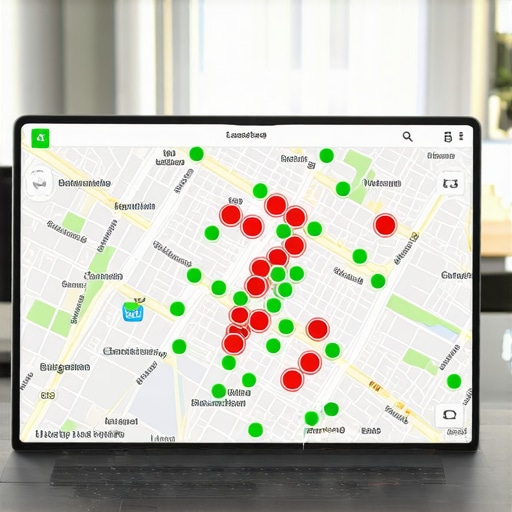
Building the stack is only half the battle; keeping it from crumbling under the weight of the next algorithm update is where the real work begins. I’ve seen dozens of businesses hit the top spot only to vanish three months later because they treated their SEO like a ‘set it and forget it’ microwave dinner. To keep your authority high, you need to be surgical with your maintenance. Personally, I don’t make a single move without checking a local heatmap. Tools like Local Falcon or BrightLocal are essential because they show you the truth: a single ranking number is a lie. You might be #1 at your front desk but #10 three blocks away. This is why I obsess over how to scale your map authority without getting banned; it’s about expanding those green circles on the map grid one block at a time without triggering a ‘suspicious activity’ flag on your profile.
How Do I Keep My Map Rankings From Slipping?
Maintenance isn’t about adding a hundred new links every week. It’s about auditing the connections you already have. Every month, I go back and check the ‘sync’ between the website and the cloud nodes. If Google updates its understanding of a specific neighborhood boundary, your schema needs to reflect that. I highly recommend using the Google Search Central documentation on Local Business structured data as your North Star for technical accuracy. If your code deviates from their specific nesting requirements, your authority stack will eventually leak power. I also keep a close eye on backlink optimization tips for local seo authority to ensure that my anchor text profile remains ‘messy’ enough to look human. Natural growth is erratic, not a perfect upward slope of identical keywords.
As we look toward the future, I predict that ‘Entity Validation’ will move beyond just text and links. We are already seeing Google prioritize ‘Real World Signals.’ This means the photos you upload to your profile and the metadata attached to them are becoming the authority signal most local seos completely forget. I’m currently experimenting with how AI-generated image recognition identifies the tools and equipment in a plumber’s truck to verify they are a ‘real’ service provider. To stay ahead, you must be using cloud nodes to secure your local search presence, ensuring that your digital footprint is backed by high-uptime, high-trust environments. This creates a safety net for when Google decides to purge low-quality directories from its index.
If you really want to dominate, you need to stop thinking like a marketer and start thinking like a digital architect. You aren’t just ‘doing SEO’; you are constructing a permanent landmark in the local Knowledge Graph. This requires how to build an authority stack that google actually trusts by layering your most powerful assets. For those looking for that extra edge, I suggest trying the specific backlink move for high authority local press—find a local journalist covering a neighborhood event and offer them a data-driven insight about your local area. One mention in a local news ’roundup’ can do more for your map pin than fifty generic citations ever could. Take one of your cloud nodes today and link it to a local community resource page; you’ll see the needle move faster than you expect.
The Hardest Lesson I Learned While Chasing the Map Pack
Reflecting on my journey, the biggest takeaway isn’t about a specific hack; it’s about the shift from ‘strings’ to ‘things.’ I spent years trying to brute-force rankings with volume, only to realize that a single, well-placed geographic signal is worth a thousand generic directories. The real ‘lightbulb moment’ was seeing the map ranking mistake that most small businesses make—they forget that Google needs to verify them as a physical entity first. You can’t skip the foundation. Also, don’t ignore the silence; if your rankings aren’t moving, it’s often because why your authority stacking fails to connect the dots for google. It’s about coherence, not just collection.
The Tools That Actually Moved the Needle for Me
If you’re serious about this, you need a toolkit that prioritizes local clarity over national prestige. I swear by Local Falcon for heatmaps because it exposes the truth of your proximity reach—a single ranking number is often a lie. For technical grounding, the Schema.org LocalBusiness documentation is my bible; it ensures your entity sync is airtight. Finally, I always integrate authority stacking the game changer in local seo using cloud nodes on Amazon S3 or Google Cloud. These platforms provide an ‘un-killable’ trust factor that standard hosting just can’t match. I trust these because they focus on what Google’s algorithm actually prioritizes: uptime, trust, and relationship-based data.
Your Path to Local Dominance Starts with One Node
It’s easy to get overwhelmed by the technicalities of how to build a local authority stack that actually sticks, but remember that every giant in the map pack started with a single, messy listing. The future of local seo, backlinks, authority stacking belongs to those who treat their digital presence like a real-world landmark. You have the blueprint now; all that’s left is to start anchoring your business into the local knowledge graph. Don’t let the complexity stop you from claiming the top spot in your neighborhood. What is the biggest roadblock keeping your business off the local map right now? Let me know in the comments below!