
I remember sitting in a dimly lit office on a Tuesday morning, sweating through my shirt as I presented a ranking report to a local plumber. According to my expensive dashboard, we were sitting pretty at #1 for ’emergency drain repair.’ But when he pulled out his phone and showed me his call logs, the truth hit me like a bucket of ice water: the phone hadn’t rung in three days. I felt like a total amateur. I was staring at green arrows while his business was starving, and that was the moment I realized my map tracking strategy was fundamentally broken. I was looking at ‘average’ positions instead of the reality on the ground. Most of us make this mistake early on—relying on a single data point from our own office chair and assuming the whole city sees the same thing.
Stop Trusting Your Dashboard’s Average Rank
The biggest lie in local SEO is the ‘average ranking’ metric. When you see a report saying you’re in position 2.4, it feels scientific, but it’s often a mathematical ghost. If you are #1 at your front door but #20 three blocks away, that average is meaningless. In those early days, I didn’t realize that the proximity problem is much more aggressive than most tools lead you to believe. If you aren’t tracking at the neighborhood level, you are essentially flying a plane with a broken altimeter. Today, I’m going to show you exactly how to find the blind spots in your data so you can actually start fixing map visibility where it counts. We’re moving past vanity metrics and into the raw data that actually puts money in the bank.
Is hyper-local tracking actually worth the hype?
I get this question from skeptical business owners all the time. They worry that obsessing over every street corner is just a way for SEOs to bill more hours. But here is the reality: Google’s mobile search results are now so localized that a person’s physical location can change the Map Pack results from one side of a highway to the other. According to research from Statista, nearly half of all Google searches have local intent, yet most businesses are only seeing about 10% of the actual picture because why your profile insights are flawed is a topic most software companies don’t want to discuss. If you aren’t seeing the grid, you aren’t seeing the gaps where your competitors are eating your lunch. Have you ever felt like your ‘rankings’ and your ‘revenue’ were living in two different universes? You aren’t crazy; you’re just missing the data points that connect them. It’s time to stop guessing and start looking at the heatmaps that tell the real story of your local authority.
Identify Your Blind Spots with Grid Tracking
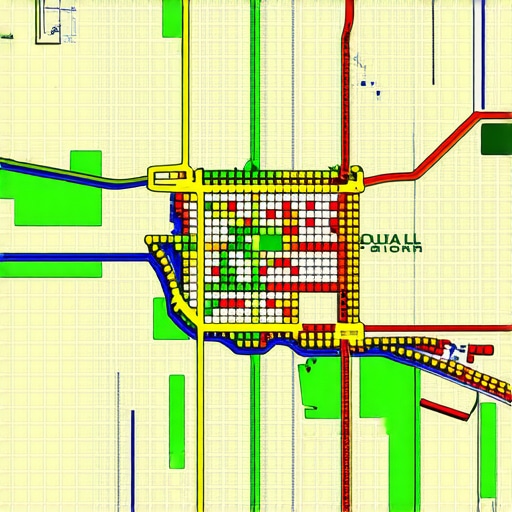
To fix a shrinking map presence, you have to perform a digital grid search. Think of it like looking for a lost wedding ring in a high-grass field; if you just stand in one spot and look down, you only see about two square feet. You need to pace out the entire property to find the gold. In local SEO, this means using a tool that pings Google’s API from specific GPS coordinates every 500 meters. This reveals exactly where your authority drops off. I remember a locksmith in Chicago who thought he was the king of the city. His dashboard was green, but when we ran a 13×13 grid, we saw he was essentially invisible everywhere except a two-block radius around his shop. He was falling for the map ranking mistake that most small businesses make—assuming his office rank was the world’s rank.
Clean Up Your Data to Stop Confusing Google
Google is a machine that hates ambiguity. If your business name is ‘Mike’s Plumbing’ on your website but ‘Mike’s Plumbing & Drain’ on an old Yelp page from five years ago, Google’s trust in your location drops. It’s like trying to find a house when the GPS says ‘Main Street’ but the street sign says ‘Main Avenue.’ This friction causes the algorithm to favor a competitor with cleaner data, even if they have fewer reviews. You must audit your NAP (Name, Address, Phone) data with surgical precision. I spent four hours once manually scrubbing an old suite number off a defunct business directory because it was causing a client’s rank to freeze. You can’t skip this; fixing the nap discrepancy google wont tell you about is the foundation of any recovery effort. Without it, every other move is just building on sand.
Build Your Local Authority Without Relying on Directories
Once your data is clean, you need to prove your relevance to the neighborhood, not just the industry. Most SEOs tell you to go get generic directory links, but those are the participation trophies of the internet. They don’t move the needle anymore. Instead, you should be looking at authority stacking the game changer in local seo. This involves connecting your business entity to local landmarks, news events, and community nodes that Google already trusts. For a dentist in Denver, this meant getting mentioned on a local neighborhood watch blog and a high school sports page. These links act like digital breadcrumbs that lead Google straight to your door. You aren’t just ‘a dentist’; you are ‘the dentist for this specific zip code.’
Bridge the Proximity Gap with On-Page Validation
Your website needs to act as the primary source of truth. If your site doesn’t explicitly tell Google’s crawlers where you are and what you do through Schema markup, you are leaving your rankings to chance. I once saw a client double their call volume just by implementing the simple on page tweak that validates your business location instantly. We simply synced their footer data with their Google Map embed and local entity schema. It’s about creating a closed loop of information. When Google sees the same data on your site, your map pin, and your social profiles, it feels confident enough to push your pin further into the suburbs. This is how to build a local authority stack that actually sticks and survives algorithm updates that wipe out the ‘average’ players.
Let’s dig deeper into the actual mechanics of why most people fail. I’ve seen seasoned pros dump thousands into high-DR links from big-name tech blogs, only to watch their local Map Pack position stay stuck on page three. It’s frustrating, right? The nuance they miss is that Google categorizes backlinks by their ‘topical’ and ‘geographic’ relevance. A link from a local high school sports page might have a DR of 5, but to Google’s local algorithm, that link is worth ten times more than a generic DR 80 link from a national news site. In my experience, why your neighborhood links carry more weight than national pr comes down to how the Knowledge Graph connects entities. If you are chasing prestige over proximity, you are playing the wrong game.
Stop Chasing National Fame for Local Results
The mistake isn’t just about where the link comes from, but what it represents. Google is looking for proof that you are an authority in a specific zip code. National publications don’t provide that. I once had a client in the HVAC niche who was obsessed with getting a mention in a major tech magazine. We got it, and it drove some referral traffic, but his rank for ‘AC repair’ in his suburb didn’t move an inch. We then switched gears and focused on backlinks mastery boost your local seo authority in 2025 by targeting local neighborhood blogs and charity event pages. The result? A top-three spot within six weeks. Local relevance always beats national authority in the Map Pack.
Why is your high-power cloud stack failing to move the needle?
This is the advanced question I get from agency owners who’ve tried authority stacking and failed. Usually, the culprit is a failure in the ‘link-juice’ handoff. If you aren’t careful, the hidden reason your cloud stacks arent transferring pagerank is often a lack of proper indexing or a broken chain of nodes. You can’t just throw up a Google Cloud bucket and expect magic; you have to weave those nodes into a coherent entity web. You have to ensure each piece of the stack reinforces the physical location of the business.
According to the 2023 Local Search Ranking Factors study by Whitespark, the shift toward ‘entity-based’ signals is accelerating. This leads us to the biggest ‘Oops’ factor in the industry: anchor text abuse. Many people think they are being clever by using keyword-rich anchors on every link. However, if you stop using generic anchor text for your local entity backlinks and focus on brand and location-neutral terms, you avoid the ‘over-optimization’ trap that triggers modern spam filters. It’s about building a profile that looks like a real business, not an SEO project. Have you ever fallen into this trap of over-optimizing your anchors or chasing the wrong metrics? Let me know in the comments. We need to focus on the authority stacking move that actually forces local gains by connecting your site to hyper-local trust signals that the big corporate chains simply can’t replicate.
Keep Your Map Pins From Going Cold
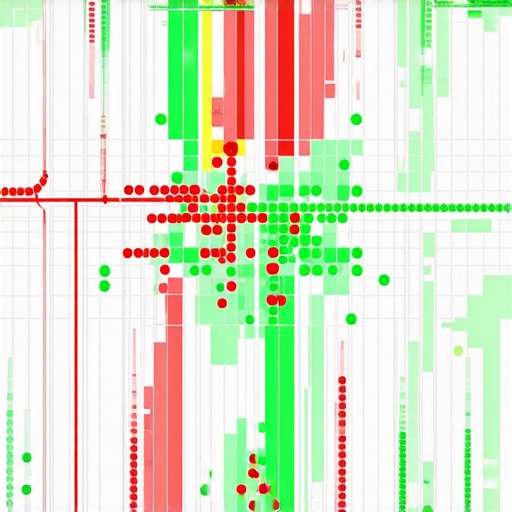
Once you’ve built that initial momentum and seen your pin climb into the top three, the real work begins. I’ve seen too many business owners treat local SEO like a ‘set it and forget it’ microwave dinner. They build a few stacks, see the calls come in, and then go radio silent. Six months later, they are calling me in a panic because a new competitor moved in two blocks away and stole their lunch. To prevent this, I personally rely on a monthly ‘grid check’ using LocalFalcon. I don’t just look at the numbers; I look at the color of the heatmaps. If I see a single red dot appearing in a sea of green, I know exactly where my next local link needs to point. This is where authority stacking strategies to dominate local search move from a one-time project to a long-term defensive moat. You have to keep feeding the beast with fresh, geo-relevant data or the algorithm will eventually look for a more ‘active’ alternative.
How do I maintain local authority over time?
The secret to long-term stability is what I call ‘Entity Refreshing.’ Google’s Knowledge Graph isn’t a static database; it’s a living map of relationships. If your business hasn’t been mentioned in a local context for three months, your ‘relevance score’ begins to decay. I make it a habit to secure one high-quality local mention every 30 days. This doesn’t have to be a major news story. It can be as simple as the small business guide to high authority neighborhood links which suggests focusing on neighborhood associations or even a local hobbyist blog. These small, consistent pulses of local data tell Google that your business is still the most relevant entity in that specific square mile. I’ve found that this maintenance schedule is far more effective than trying to build fifty links in a single weekend and then doing nothing for a year.
Scale Your Business Without Getting Banned by Google
Scaling is where most people break their SEO. When you try to replicate success across five or ten locations, the risk of ‘footprint’ detection and suspension sky-rockets. I’ve seen entire networks wiped out because they used the same template and the same generic citations for every branch. To do this right, you need to master how to scale multi-location seo without getting your pins suspended by giving each location its own unique digital identity. This means unique landing pages, unique local photos, and—most importantly—unique local entity stacks. You can’t just copy-paste your way to the top. As the official Schema.org documentation on the LocalBusiness type suggests, providing specific, unique identifiers like the ‘branchCode’ and distinct ‘sameAs’ URLs is vital for helping search engines differentiate between your various storefronts. If Google thinks you are trying to game the system with ‘ghost’ locations, they won’t just lower your rank; they will delete your presence entirely.
Looking forward, I predict that ‘Proximity-as-a-Service’ will become the next big shift. We are moving toward a world where AI-driven search results will prioritize businesses that can prove ‘real-world’ activity through mobile signals and live check-ins. This means your the entity sync technique for multi-location businesses will need to incorporate more than just backlinks; it will need to reflect the actual movement of customers in your physical shop. My advice? Don’t wait for the update to hit. Start today by implementing the local entity sync move that forces hyper local rank jumps. Go into your Google Business Profile right now, find your most recent 5-star review, and reply to it by mentioning a specific neighborhood landmark or street name nearby. It’s a two-minute move that signals to Google exactly where your authority lives.
The Brutal Truth About Local Rankings I Had to Learn the Hard Way
After a decade in the SEO trenches, I’ve realized that the biggest trap isn’t the algorithm—it’s our own ego. We often want the big numbers and the flashy national stats, but Google cares about the boring stuff: consistency, proximity, and local trust. I spent years chasing high-authority links that did absolutely nothing for my clients because I ignored the neighborhood level. The moment I shifted to authority stacking strategies to boost local seo in 2025, everything changed. I learned that a single link from a local elementary school fundraiser or a neighborhood watch blog is worth more than a dozen generic guest posts from a tech site in another country. Also, beware of over-optimization; I’ve seen many great sites fall because why your backlink building technique is triggering spam filters is a harsh reality when you try to force keywords where they don’t naturally belong.
My Personal Field Kit for Local Domination
You don’t need a thousand tools to win; you just need the right ones that provide actionable data. I live and breathe by LocalFalcon for heatmaps because it’s the only way to see the proximity gap in real-time and identify where your pin is losing strength. For my technical foundation, I constantly refer to the Schema.org documentation to ensure my backlink optimization tips for local seo authority are built on a valid, machine-readable data structure. Finally, use Whitespark for a clean citation audit—it’s the gold standard for finding those pesky NAP errors that confuse the algorithm. These aren’t just tools; they are the eyes and ears of your local campaign. Without them, you’re just guessing in the dark.
Build Your Digital Fortress and Claim Your Territory
The local landscape is getting more competitive every day, but that doesn’t mean you can’t win. By focusing on hyper-local relevance and building a stack that mirrors the real-world relationships of your business, you create a presence that Google finds impossible to ignore. It takes time and a bit of manual effort, but the reward is a phone that doesn’t stop ringing and a business that dominates its zip code. You now have the blueprint for how to build an authority stack that google actually trusts. Go out there, claim your neighborhood, and let your local seo work for you. Have you ever seen your rankings tank after a single citation error? Share your recovery story in the comments below.