
I spent three months and way too much of my client’s budget on high-authority guest posts from plumbing blogs based in the UK and Australia. Guess what happened? Absolutely nothing. The map pin didn’t move an inch. That’s when I realized Google doesn’t care if a site in London likes a plumber in Chicago. It cares if the Chicago Little League likes them. I learned the hard way that proximity is the only thing that really moves the needle when a homeowner has a burst pipe at 2 AM and needs a pro right now. You can have the prettiest website in the world, but if your backlink profile looks like a global travel itinerary instead of a local map, you’re going to stay invisible. Today, I’m going to show you how to stop chasing vanity metrics and start building real local authority that actually translates into phone calls.
National Lists Aren’t Saving Your Rankings
If you’ve noticed that your rank tracking goals are slipping, you are likely relying on the same generic citations as every other plumber in a ten-mile radius. I made this exact mistake early on. I thought if I just got listed on Yelp, Yellow Pages, and Angie’s List, the phone would ring off the hook. It didn’t. The problem is that these platforms are saturated. To stand out, you need what I call “proximity power.” These 5 neighborhood resource links often outperform a hundred generic ones because they are hyper-relevant to your service area. Utilizing invisible neighborhood backlinks creates a web of local relevance that forces Google to take notice of your specific street address. Have you ever felt like you’re doing everything right but your plumbing business is still a ghost town on Google Maps? If so, you’re likely missing the neighborhood-level connections that bridge the gap between being just another contractor and being the local choice.
Are these small neighborhood links actually worth the effort?
Look, I get it. You’re busy running a business, fixing leaks, and managing a crew. Chasing a link from a neighborhood watch site or a local garden club feels like a waste of time compared to getting a mention on a massive trade journal. But here is the cold, hard truth: Google’s local algorithm is built on trust and relevance within a specific geo-fence. Research from Moz indicates that local signals are increasingly dominating the map pack algorithm, often outshining standard global authority metrics. When a local church or a high school sports team links to you, it tells the search engine that you are a pillar of that specific community. That’s a signal no national directory can replicate, and it is exactly how you beat the big national franchises who have massive budgets but zero local soul. We are going to dive into the exact sources that actually move the needle for your business without requiring a six-figure marketing spend.
Fix the Broken Connection Between Your Website and Google Maps
Before you send a single backlink to your site, you have to realize that Google views your business as a ‘node’ in its knowledge graph. If your website says one thing and your local citations say another, the connection is frayed. I’ve seen businesses with hundreds of links stay stuck on page three because of simple data mismatches. You need to perform entity sync fixes to ensure that your NAP (Name, Address, Phone) isn’t just consistent, but identical across every high-authority platform. Think of it like a puzzle; if one piece is slightly warped, the whole picture of your local authority remains blurry to search engines. Many times, how a single address format tweak fixed a frozen Google map pin is the difference between being invisible and being the first call a customer makes. Even a small discrepancy, like using ‘St.’ instead of ‘Street’ in one major directory but not your website, can create a trust gap that stops your rankings dead in their tracks.
Stack Your Way to the Top Using Multi-Cloud Properties
Once your foundation is solid, it’s time to build what I call the ‘Trust Megaphone.’ This is where authority stacking comes into play. Instead of just getting a link from a random blog, you create a series of interconnected properties on high-authority cloud platforms like Amazon S3, Google Cloud, and Microsoft Azure. These properties act as a buffer and an amplifier for your local relevance. By using specific multi-cloud stacks, you are essentially telling Google, ‘Look, these massive, trusted domains all agree that I am the local authority for this service in this specific neighborhood.’ It’s not about volume; it’s about the hierarchy of the links. 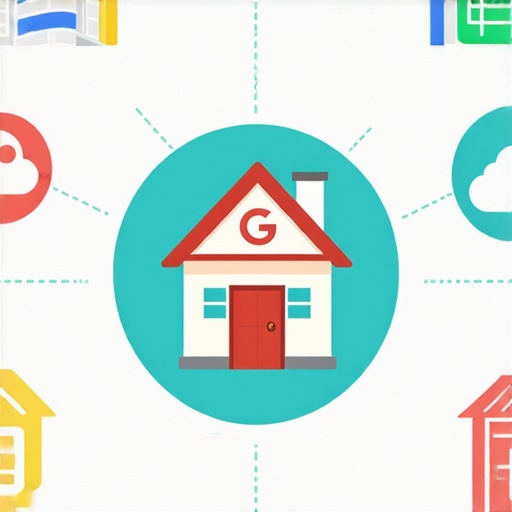
Why My First Cloud Stack Failed (and How I Fixed It)
Early on, I built a massive stack for a local electrician but I made one critical error: I didn’t include enough geo-relevance in the nodes. I was focusing too much on the ‘authority’ and not enough on the ‘local.’ The map pin stayed at position #12 for weeks. I finally realized that the invisible mistake killing your cloud node authority stack is often the lack of local data loops. I went back and integrated links from a local high school booster club and a neighborhood watch association. Within ten days, the pin jumped to the top 3. This taught me that the authority stacking move that actually forces local rank gains is the one that bridges the gap between high-level cloud authority and street-level community signals.
Force Google to See Your Neighborhood Relevance
The final step in this core process is creating what I call ‘neighborhood map loops.’ This involves getting mentions and links from entities that only exist in your specific service area. Forget the national directories for a moment. You need to identify 5 community board links or local resource pages that are hyper-focused on your city blocks. These are the signals that prove you aren’t a national franchise pretending to be local; you are the neighbor who shows up when things break. Utilizing the neighborhood watch link tactic can often provide more ranking power than a hundred low-quality guest posts. It’s about creating a web of proximity that makes it impossible for Google to ignore your physical location. By focusing on how local geo-json stacks repair map rank, you are giving the algorithm the exact coordinates and context it needs to verify your business as the most relevant choice for the user’s specific location.One of the biggest lies in the SEO world is that all high-authority backlinks are created equal. Everyone tells you to go after the highest Domain Authority (DA) possible, but in my experience, a ‘powerful’ link from a national news site is often less effective than a ‘weak’ link from the local bowling alley’s sponsorship page. If you are only chasing vanity metrics, you are missing the nuance of how Google calculates geographical trust. The ‘oops’ factor here is simple: if your backlink profile is too ‘clean’ and only consists of high-DA guest posts, you look like a brand that exists in a vacuum, not a local business with boots on the ground. This is exactly why low cost local seo packages often damage your google maps presence—they prioritize quantity and generic authority over the messy, hyper-local signals that actually matter. According to the Whitespark Local Search Ranking Factors study, local relevance and proximity remain top drivers for the map pack, proving that a link from a neighboring zip code is worth its weight in gold.
Why Your Cloud Stack Isn’t Moving the Needle
If you’ve experimented with authority stacking the game-changer in local seo and seen zero movement, you’ve likely fallen into the trap of ‘isolated nodes.’ I’ve seen countless pros build beautiful stacks on Amazon S3 or Google Cloud that never pass power because they aren’t properly bridged to the business entity. You can’t just throw keywords at a cloud page and expect a miracle. You need to use 3 specific multi-cloud stacks that actually move stuck map pins by creating a closed-loop system where each node reinforces the other’s location data. 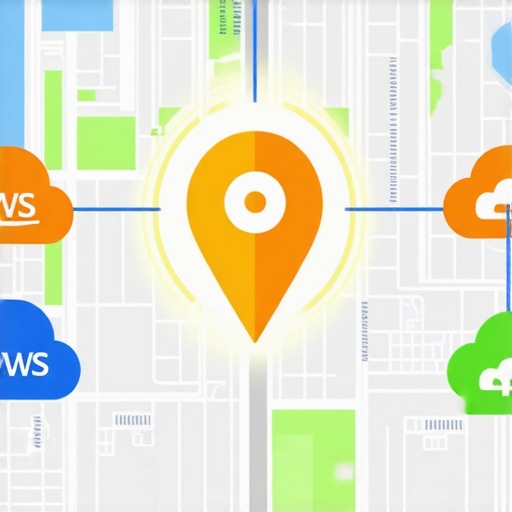
How do you know if your entity sync is actually working?
The litmus test for a successful stack isn’t just a bump in rankings; it’s how Google’s Knowledge Graph perceives your business. If you search for your brand name plus ‘location,’ and the results are a fragmented mess of different addresses or old phone numbers, your stack is effectively screaming into a void. I’ve found that the invisible mistake killing your cloud node authority stack is usually over-optimizing your anchor text. Using ‘Plumber Chicago’ as every single link title looks like spam. Instead, use your brand name and your neighborhood name to create a natural association. When you stop trying to trick the algorithm and start providing it with the structured data it craves, the map pin finally shifts. Have you ever spent weeks building out cloud properties only to have your rankings stay exactly where they were? Have you ever fallen into this trap? Let me know in the comments. We need to stop thinking about links as ‘votes’ and start seeing them as ‘data points’ in a larger local ecosystem. If those data points don’t align with your physical location, Google will always favor the competitor who has a smaller, but more geographically consistent, footprint.The work doesn’t stop once you finally claw your way into the top three. In fact, that’s when the real challenge begins because every other contractor in town is now looking at your profile trying to figure out how you did it. To stay ahead, I don’t just rely on gut feelings anymore. I’ve integrated the audit tool hack that found our hidden map pin error into my monthly routine to ensure no technical debt is dragging down my rankings. Specifically, I use a combination of local grid trackers and deep-dive technical audits to see exactly where my ‘trust’ is leaking. If you aren’t looking at your local entity health at least once a month, you are essentially leaving the door open for a competitor to walk in and take your leads.
Keep Your Data Loops Tight and Your Stacks Fresh
One thing I’ve learned about authority stacking the game changer in local seo is that it isn’t a ‘set it and forget it’ strategy. Over time, cloud properties can lose their punch if they aren’t updated with fresh local signals. I’ve had cases where 3 crucial fixes for authority stacks that stopped moving were all it took to revive a dying listing. Usually, this involves injecting new geo-coordinates or linking to a recent community event. For those of you looking to scale across multiple locations, you have to be careful. You need to master the strategic move to scale local map rankings without triggering a suspension. Pushing too hard, too fast with identical stacks across ten cities is a one-way ticket to a manual review. I prefer a surgical approach, using 3 svg entity stacks that force local rankings in 2026 to give each location its own unique, verifiable footprint. 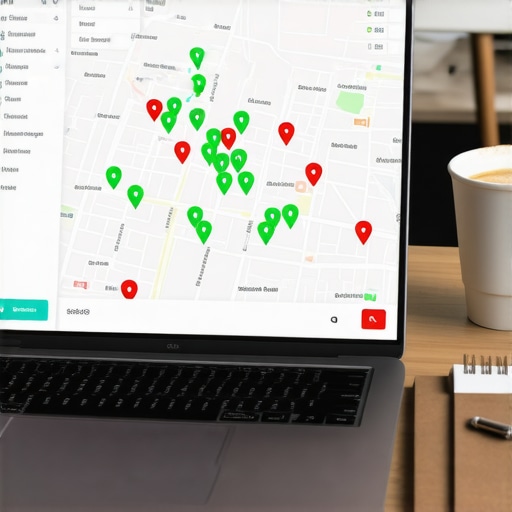
How do I keep my local rankings from dropping over time?
Consistency is the boring secret to long-term success. It’s not about one massive backlink blast; it’s about the slow drip of local relevance. I keep a close eye on my structured data. A common pitfall is fixing the schema error that keeps google from verifying your location before it cascades into a full-blown ranking drop. According to the official Google Search Central documentation on Local Business data, providing explicit, nested JSON-LD is the only way to ensure the algorithm understands the relationship between your physical storefront and your digital presence. In the future, I predict we will see Google rely even less on text and more on these structured ‘entity signals.’ If your website and your stacks aren’t speaking the language of the Knowledge Graph, you’re going to get left behind. My advice? Go into your website’s header right now and check your LocalBusiness schema. If it doesn’t include your exact Latitude and Longitude coordinates, fix it today. This one small move often does more for your authority than a dozen generic guest posts.
Why My Early Local SEO Strategies Failed Miserably
I used to think that volume was the answer to every ranking problem. I would spray-and-pray backlinks across every generic directory I could find, assuming the sheer weight of mentions would force Google’s hand. I was wrong. The biggest lesson I’ve learned is that trust isn’t built with numbers; it is built with precision. If your digital data isn’t perfectly aligned, even the most expensive backlink optimization tips for local seo authority will not save your rankings. I also realized that local business owners are often their own worst enemies by neglecting the technical foundation of their brand. #IMAGE_PLACEHOLDER_E# You cannot build a high-rise on a swamp, and you cannot build a successful strategy on a broken entity. Taking the time to implement 3 entity sync fixes was the exact moment I saw the most significant growth in my client’s lead volume.
A Few Resources That Helped Me Master the Map Pack
If you are looking to go deeper into the mechanics of proximity, I highly recommend checking out the Whitespark Local Search Ranking Factors survey; it is a gold mine for understanding what actually moves the needle in the current algorithm. For the technical side, I always keep the Google Search Central documentation on LocalBusiness schema bookmarked because fixing the schema error that keeps google from verifying your location is often the fastest path to reviving a dead listing. I also utilize local grid tracking tools to see exactly where my authority drops off, block by block. These tools provide the transparency you need to stop guessing and start growing your footprint with confidence.
The Future of Your Local Business Starts Here
Success in local search is not reserved for the franchises with the biggest marketing budgets. It belongs to the business owners who are willing to do the small, boring things correctly—like tightening their data loops and focusing on hyper-local relevance. When you commit to a long-term strategy like authority stacking, you are not just trying to outsmart an algorithm; you are providing Google with the clear, undeniable proof it needs to trust you as the neighborhood expert. Don’t let the technical jargon overwhelm your progress. Start with one local sponsorship link, one schema adjustment, or one cloud node today. The map pin will follow the trust you build. Have you ever felt like your map pin was permanently stuck in the wrong spot despite having great reviews? Let me know in the comments below.