I remember sitting in my home office, coffee getting cold, as I typed my own business name into Google. I expected to see that familiar red pin popping up on the map, signaling to the world that I existed. Instead? Crickets. It was just a dry list of text links. It felt like I’d been erased from the neighborhood I worked so hard to serve. If a customer who already knows my name can’t find me on a map, how on earth is a stranger supposed to? It’s a gut-punch moment that most business owners face at some point, and it’s exactly what we’re going to tackle today.
The Day I Realized Google Couldn’t Find My Front Door
I’ll be honest with you: I made a classic rookie move early on. I figured if I just shouted louder by buying hundreds of cheap, generic backlinks, Google would eventually “get it.” I was wrong. I fell into the trap of thinking volume beat relevance. I spent hours on directories that don’t drive traffic, and my map pin stayed invisible. This isn’t just about technical SEO; it’s about making sure your digital footprint actually points to a physical reality. When your pin doesn’t show up for your own brand, it’s usually because Google is having a bit of an identity crisis regarding your business data. My goal for this guide is to show you exactly how to clear that fog. We are going to bridge the gap between your website and your Google Business Profile so that your brand name becomes a literal beacon on the map. We’ll look at why map ranking mistakes are often just simple communication errors with the algorithm.
Is it even possible to outrank the big chains anymore?
You might be thinking that the massive franchises with their million-dollar budgets have the map locked down. I used to think that too. But the truth is, Google actually prefers local relevance over national scale—if you give them the right signals. In fact, according to a BrightLocal study, nearly 87% of consumers used Google to evaluate local businesses in the last year, which means Google is highly incentivized to show the most accurate local result, not just the biggest one. Large chains often struggle with local nuances that you can master.
Why Your Map Pin is Hiding Behind Your Own Brand Name
One of the biggest culprits I discovered during my own “invisibility phase” was a massive disconnect in how I was talking about my location. I had one address format on my contact page, another slightly different one in my footer, and a third version on a random social media profile. This creates a sync gap. If you aren’t careful, you might be dealing with invisible citation errors that act like a digital wall. I also completely neglected the power of connecting my site to the local knowledge graph. Have you ever searched for your own shop and felt that sinking feeling when the map shows your competitor instead? It’s frustrating, right? I’d love to hear if you’ve actually checked your map visibility from a different zip code recently—what did you find?
Stop Confusing Google with Messy Address Formats
To start, you need to look at your NAP (Name, Address, Phone) like a digital fingerprint. If the loops don’t match, Google assumes it’s a different person—or in this case, a different business. I spent two weeks chasing my tail once because I wrote ‘Suite 201’ on my site but used the ‘#201’ shorthand on my Google profile. That tiny difference was enough to create a sync gap that kept me off the first page. You need to learn how to fix the sync gap between your website and your map pin before you even think about building more links. It isn’t just about being tidy; it’s about providing a single, undeniable truth for the algorithm to latch onto. When every mention of your business across the web uses the exact same character-for-character address, Google’s confidence in your location skyrockets.
Fix the Data Disconnect on Your Contact Page
The first actionable step is auditing your own site. Most people have a map embed that doesn’t actually match their listed text address. I once worked with a local florist who had her old shop address buried in the footer while the contact page showed the new one. Google was paralyzed. We unified the data and applied the on-page tweak that connects your site to the local knowledge graph. Within ten days, her pin moved from page four to the top three. Check your schema markup—if your code says one thing and your text says another, you’re invisible.
Create a Digital Paper Trail That Validates Your Location
Next, let’s talk about the ‘stack.’ Think of an authority stack as a set of reinforced bridges connecting your social profiles, cloud nodes, and your website back to your Google Business Profile. If one bridge is weak, the whole structure wobbles. I remember a specific project where we had a ‘frozen’ map listing that wouldn’t move despite having fifty reviews. We built a series of cloud nodes—basically mini-sites on trusted platforms like Amazon S3 or Google Cloud—that all pointed back to the main entity. It was like shouting the same address from five different megaphones at once. This is the core of how to build an authority stack that Google actually trusts.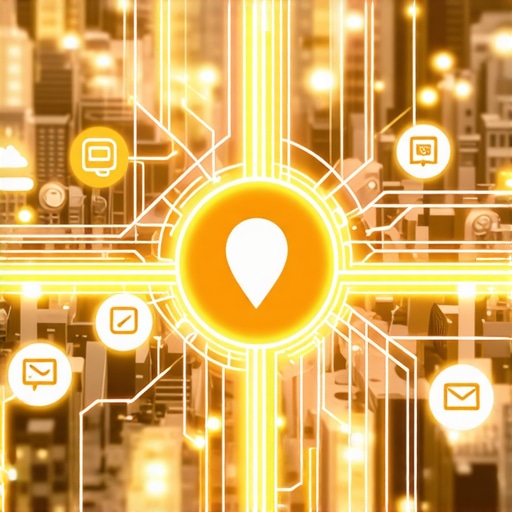
Why Cloud Nodes Act as Local Buffers
Using cloud nodes isn’t just for techies. It creates a ‘shield’ of high-authority URLs that Google already trusts. When you link these nodes together, you’re creating a web of relevance. Instead of just one link from a random blog, you have a network of signals confirming your business name, category, and service area. It’s a backlink building blueprint for local SEO success that works because it mimics how real, popular businesses are mentioned online.
Ditch the Generic Directories for Neighborhood Wins
The final layer is what I call the ‘neighborhood link loop.’ Most people think they need a mention on a massive national news site to rank. They’re wrong. Google loves seeing that the local high school, the neighborhood watch, or a local charity knows who you are. I once secured a link from a local little league team’s sponsorship page for a client, and that single link did more for his map rank than twenty generic directory listings ever could. This is why neighborhood watch link tactics are so potent; they prove you are a physical part of the community, not just a digital ghost. Stop chasing ‘DR 90’ sites and start looking at the local organizations that actually share your zip code.I see it all the time. A business owner spends a fortune on a high-DR backlink package, expecting their map pin to rocket to the top, only to watch it sink. The common belief is that ‘authority’ is a universal currency. It isn’t. In fact, if you flood a local business with national-level authority without balancing it with local signals, you can actually dilute your proximity relevance. I’ve seen sites lose their local rankings because Google suddenly thought they were an e-commerce brand rather than a local service provider. Let’s dig deeper into why this happens and how you can avoid it.
The Anchor Text Trap That Most ‘Experts’ Fall Into
The biggest ‘oops’ I see? Over-optimizing your anchor text. If every single link pointing to your site says ‘Best Plumber in Chicago,’ you’re waving a giant red flag at the spam filters. This is exactly why your backlink building technique is triggering spam filters. Real businesses get links that say ‘click here,’ ‘this website,’ or just their brand name naturally. You need to stop using generic anchor text for your local entity backlinks if you want the algorithm to trust you. Have you ever noticed your rankings drop right after a big ‘SEO push’? Let me know in the comments.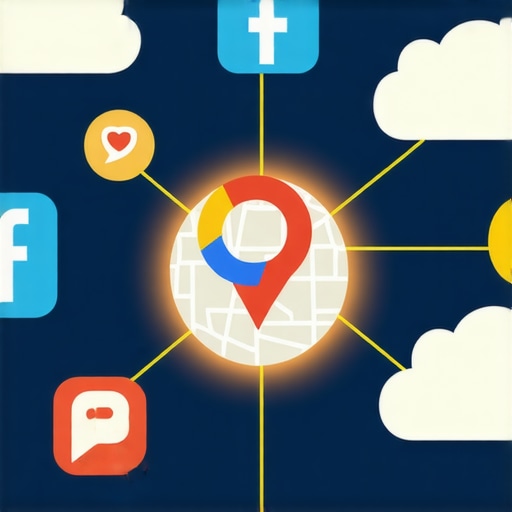
Why does my authority stack work for Google Search but ignore the Map Pack?
This is a sophisticated nuance that trips up even seasoned marketers. Your website might rank on page one organically, but your map pin is stuck on page four. This happens when there is a ‘disconnect’ in the entity sync. You might have the authority, but you don’t have the geographic validation. A study by Whitespark on local ranking factors confirms that while backlinks are huge for organic search, ‘Google Business Profile signals’ like proximity and category relevance carry much more weight for the Map Pack. If your authority stacking move that actually forces local gains isn’t specifically tied to your local NAP data, you’re just building a standard website, not a local powerhouse. This disconnect is the primary reason why your authority stacking fails to connect the dots for Google.
Fix the Hidden Leak in Your Cloud Nodes
People love cloud nodes because they’re ‘safe’ and carry high domain authority. But the trap is failing to link them in a way that actually transfers power to your local entity. Many users create these nodes in isolation, like digital islands. Without a multi-tier logic that connects each node back to your Google Business Profile, you’re wasting your time. I’ve discovered the hidden reason your cloud stacks aren’t transferring pagerank usually comes down to a lack of ‘node-to-node’ interlinking. When done right, authority stacking unveiled: the hidden power for local SEO creates a feedback loop that makes your physical address undeniable to the algorithm. Stop chasing raw power and start focusing on the logical connections that prove you are exactly where you say you are.I’ve learned the hard way that building these connections is only half the battle. If you don’t maintain them, they wither. I once built a perfect stack for a dental clinic in Austin, only to see the results evaporate six months later because they changed their phone system and forgot to update their cloud nodes. That experience taught me that local SEO isn’t a trophy you win; it’s a garden you tend. You need to know 3 crucial fixes for stacks that stopped moving your pin before the drop happens. I’m a big believer in the technical side of this, specifically using the Schema.org Validator. Google’s official Structured Data documentation emphasizes that clear semantic labeling is what allows their systems to confidently represent your business entity in search results. If your code is messy, your map pin stays buried. This is why I focus so heavily on the specific local schema tweak that validates your entity every single time I launch a new site. Looking ahead, I see Google doubling down on ‘Entity-First’ indexing. With AI-driven search, the engine won’t just look for keywords; it will look for proof that your business is a real, trustworthy entity. This means authority stacking is going from a ‘neat trick’ to a fundamental requirement for anyone who wants to stay visible in a world dominated by AI summaries. 
How do I maintain my local authority stack over time?
Maintenance is mostly about consistency. Every quarter, I go through my cloud nodes to make sure the links are still active and the NAP data is pristine. I also make sure to sync your schema without breaking google search presence during any site updates. When it comes to tools, I keep my kit lean. I don’t use those bloated monthly subscription services for everything. For citations, I prefer manual cleanup to ensure accuracy. However, I do use tools like Local Falcon to visualize exactly where my map ranking drops off at the street level. If you’re managing multiple sites, you have to learn how to scale multi-location SEO without getting your pins suspended or you’ll lose everything in one fell swoop. Using the entity sync technique for multi-location businesses is the only way I’ve found to keep Google from flagging accounts as suspicious when things get bigger. My best advice? Don’t wait for your traffic to dip. Go into your schema right now, check your local entity IDs, and make sure they match your Google Business Profile URL exactly. That one move is the difference between a temporary boost and a permanent throne at the top of the map pack.
The Hard Lessons That Fixed My Local SEO Tunnel Vision
Looking back, I realize I wasted months trying to ‘game’ the system with sheer volume before I understood the nuance of proximity. Here is what I know now: local authority isn’t about how many links you have, but how tightly those links are knotted to your physical location. I’ve seen the error keeping your business off the local map pack ruin perfectly good campaigns simply because the owner prioritized national media mentions over local relevance. You have to treat your digital presence like a physical handshake—it needs to be firm, consistent, and recognizable.
- Focus on the link quality within your zip code. A mention from a local chamber of commerce is worth ten times more than a random guest post.
- Don’t panic if results don’t show up in 48 hours. Good authority stacking needs time for Google’s bots to crawl the various nodes and verify the entity.
- The data sync is everything. If your website doesn’t match your map pin, you are essentially yelling into a void.
#IMAGE_PLACEHOLDER_E#
The Lean Toolkit I Trust for Map Domination
I don’t believe in buying every shiny new SEO software that hits the market. To really how to build a local authority stack that actually sticks, you only need a few high-quality touchpoints. I personally rely on the Schema.org Validator to ensure my code is speaking the same language as the search engine. For tracking, I use grid-based tools to visualize my reach beyond my front door. I also recommend following the small business guide to high authority neighborhood links to find the ‘hidden’ opportunities in your own backyard—like local sports teams or charity boards—that the big chains usually ignore.
Claim Your Spot in the Local Neighborhood Pack
You’ve worked too hard on your business to stay invisible in your own town. The shift from being a ‘text link’ to a ‘map pin’ leader is often just a few technical tweaks away. By mastering authority stacking and keeping your data clean, you aren’t just chasing a rank; you are building a digital asset that works for you 24/7. It’s time to how to turn a dead gmb listing into a high volume lead machine and finally get the calls your business deserves. I’ve seen this change lives, and I know it can change yours too.
Have you ever noticed your rankings change after updating your business address or phone number? Let me know in the comments below!