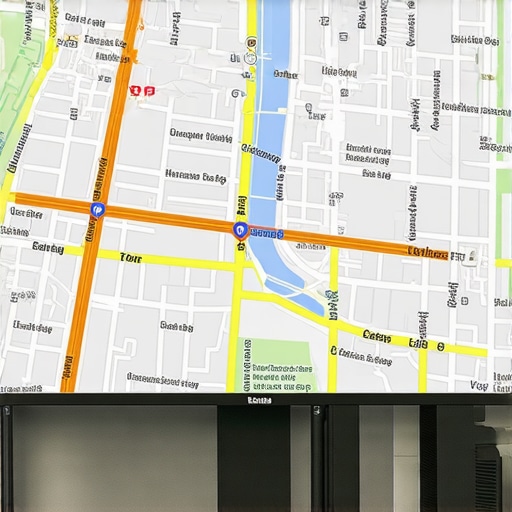
I remember sitting at my desk last Tuesday, coffee in hand, ready to check the morning’s leads, only to find my phone hadn’t chirped once. I pulled up Google Maps, typed in my service area, and my stomach dropped. My business was gone. It felt like someone had literally erased my shop from the neighborhood overnight while I was sleeping. This wasn’t just a glitch; it was a total digital blackout that threatened everything I’d built. If you are seeing your ranking drop or your pin go missing, I know that cold sweat all too well. Today, we are going to peel back the curtain on why this happens and how you can reclaim your territory before your competitors move in.
Your Business Didn’t Just Decide to Hide
It is a gut-wrenching realization when your digital storefront becomes invisible. I spent years thinking that if I just did the basics, I would stay pinned to the top. Early in my journey, I made the massive mistake of thinking a few extra reviews would save me, but having 500 reviews won’t help if your underlying data is fractured. I even botched my own NAP details once by trying to be too creative with my business name—a classic rookie move. I learned the hard way that even a tiny NAP error can freeze your growth instantly. The reality is that Google’s algorithm is getting pickier about how it validates your service area, especially if you don’t have a physical office for customers to visit.
Does Google actually hate service area businesses?
It feels like it sometimes, doesn’t it? You might be skeptical that a few technical tweaks could really bring back your map pin, but it all comes down to trust and entity validation. According to recent industry data from BrightLocal, nearly 60% of consumers find local business information through Google Maps, which means when you vanish, your revenue vanishes with it. We are going to dive into the messy reality of why stopping your map pin from vanishing requires more than just a hope and a prayer. It requires a strategy like authority stacking to prove to the algorithm that you are exactly who you say you are. Have you ever opened your Google Business Profile dashboard only to see that dreaded Not Visible status? It’s a nightmare, but it is one we can wake up from.
Stop Treating Your Map Pin Like a Static Sticker
Think of your Google Business Profile like a high-stakes game of telephone. If you tell your website one thing, your Facebook page another, and your local chamber of commerce a third, Google gets confused and hangs up on you. I once spent three weeks banging my head against a wall for a client whose map pin simply vanished. It turned out to be the address format tweak that freezes your ranking—a tiny mismatch between Avenue and Ave across two major directories. You have to sync your website metadata with your business profile so the algorithm hears the same clear message everywhere. It is the difference between a blurry photo and a 4K image; Google needs high-definition proof of where you are.
Validate Your Entity or Get Left Behind
This is where most people get scared of the technical jargon, but it is simpler than it looks. We use authority stacking to build a digital fortress around your brand. Imagine you are trying to enter a country; your website is your passport, but your social profiles, cloud nodes, and citations are the stamps that prove you have actually been where you say you have been. If you do not use entity stacks to validate your business location, you are essentially an undocumented business in Google’s eyes. I remember setting up a complex multi-cloud stack for a locksmith and missing one tiny connection. That invisible mistake killing your cloud node authority stack performance cost us two weeks of progress because the nodes were not communicating properly.
Why High School Sports Links Beat Expensive Guest Posts
If you want to rank in a specific neighborhood, you need to stop acting like a global brand. Most people waste thousands on generic guest posts, but high school booster club links beat standard citations every single time because they provide geographical relevance. When I started out, I thought I needed links from massive tech blogs. I was wrong. I secured a link from a local neighborhood watch site for a landscaping client, and that neighborhood watch link actually pushes local rank further than a mention on a national news site ever could. It is about being a local authority, not just a name on a list. You need to map out your authority stack to ensure every node points back to your specific service area, creating a loop of trust that the algorithm cannot ignore. This is how you force the map pack to recognize your territory even in high-density markets.It is a common misconception that volume equals victory. Everyone tells you to get more reviews, but I’ve seen businesses with hundreds of reviews get outranked by a competitor with a fraction of that. Why? Because your competitors are winning the map pack with something more valuable: sentiment and semantic relevance. If your reviews are just generic ‘Great job!’ blurbs, Google lacks the context to understand exactly what services you performed. This is why your business profile is stuck on page 4 despite your hard work. You need to pivot to backlinks mastery that emphasizes local relevance over raw numbers.
The Dangerous Trap of Cheap Citation Packages
Here is the ‘Oops’ factor most gurus won’t mention: the ‘citation echo chamber.’ I once watched a plumber buy 200 generic citations only to see his ranking drop. Google’s latest updates are increasingly suspicious of identical data pushed through automated aggregators. According to the Whitespark Local Search Ranking Factors study, the importance of traditional citations has actually plateaued, while ‘entity’ signals are skyrocketing. If you aren’t using advanced authority stacking tactics to differentiate your business, you’re just another data point in a sea of spam. You have to realize that the real cost of cheap local citation packages is often the long-term health of your map pin.
How do you keep a multi-cloud stack from looking like a spam farm?
This is where the real nuance lives. Most people build a ‘stack’ by just throwing up a bunch of Google Properties and calling it a day. But if those nodes don’t have a logical hierarchy, you’re asking for a manual review. You have to build an authority stack that doesn’t get flagged by ensuring each cloud node provides unique value. For example, your Amazon S3 node should host different media than your Google Cloud node, yet both must point back to the same schema-verified entity.
Fix the Broken Links in Your Digital Chain
One invisible mistake I see constantly is the broken link between the cloud node and the Google Business Profile. If your authority stack fails to connect with your local search nodes, the power just dissipates. It’s like a car with a powerful engine but no transmission; the wheels won’t turn. You need to repair a broken entity connection immediately to stop the bleed. Have you ever noticed your ranking jump for two days and then vanish? That’s a classic sign of an unstable stack. Have you ever fallen into this trap? Let me know in the comments. Stop chasing generic guest posts and start focusing on authority stacking strategies that create a closed-loop system of trust. This isn’t just about SEO; it’s about digital territorial dominance.
Stay on top with a data loop
Scaling your local presence isn’t just about building more; it is about reinforcing what you already have. I’ve found that the local data loop strategy for sustainable map rankings is the only way to prevent the dreaded ranking decay. I make it a habit to audit my connections every 90 days. If you set it and forget it, you are inviting a competitor to outmaneuver you. I’ve seen businesses climb to the top only to vanish because they stopped feeding the beast. You need to consistently elevate your local seo with advanced authority stacking tactics to ensure your digital footprint remains fresh in Google’s eyes.
How do I keep my map rankings stable for the long haul?
Maintenance is less about massive overhauls and more about micro-adjustments. I use the local seo audit tool that actually finds map errors—specifically looking for CID mismatches or category dilution. As Joy Hawkins, a renowned Google Business Profile Product Expert, often notes, the Proximity filter is the primary hurdle for service area businesses. If your entity isn’t validated through a dense network of local signals, Google will naturally default to the closest physical shop. This is why I advocate for authority stacking strategies to boost local seo in 2025; it builds a virtual perimeter around your service area that the algorithm respects.
My toolkit for keeping the phone ringing
I don’t waste time with bloated enterprise software. I prefer a surgical approach. I rely on the PlePer Chrome Extension for immediate category insights and BrightLocal for tracking local search grids. These tools allow me to see exactly where my authority is thinning out. When I notice a dip, I immediately look at my backlink building blueprints for local seo success to see if a specific node has lost its juice. I’ve found that focusing on the ultimate guide to building backlinks for local authority keeps the foundation solid. Looking forward, I predict that AI-driven search will stop caring about your keywords entirely and focus 100% on entity trust. If Google can’t verify you’re a real human helping real people, you won’t exist. CTA: Try auditing your top three competitors’ primary categories tonight—you might find they are using a niche category you’ve completely overlooked.
The Hard Truth About Why Some Stacks Fail While Others Fly
One thing I learned the hard way is that Google isn’t looking for a high volume of noise; it’s looking for a clear, undeniable signal. When you start unlocking the power of authority stacking, you realize that one strong, schema-verified node is worth a hundred generic directory listings. I’ve seen businesses obsess over the number of links, but they ignore the logic of the stack. If your nodes don’t actually talk to each other through consistent data, you’re building a house of cards that an algorithm update will easily topple.
Another lightbulb moment for me was realizing that backlink optimization tips for local seo authority often focus too much on generic metrics and not enough on neighborhood trust. A link from your local library or a neighborhood watch group is the ultimate validator for a map pin because it provides geographic context that a high-authority news site cannot mimic. It tells the algorithm you are physically present and active in that specific community.
Finally, remember that stability is a choice. You have to master authority stacking for elevated local rankings by performing regular maintenance. If you change your phone number or tweak your address format without updating the entire stack, you’ll trigger a trust drop that can take weeks to repair. Consistency across your digital fortress is what keeps your pin glued to the top of the pack.
My Go-To Arsenal for Local Dominance
I don’t keep many tools in my belt, but the ones I use are non-negotiable for anyone serious about their maps presence. I rely heavily on BrightLocal to see my local search grid; it is the only way to visualize exactly where your authority starts to thin out at the edge of your service area. For deep dives into what competitors are hiding in their backend, the PlePer Chrome Extension is my first stop for category analysis and CID detection. I also religiously follow the annual Whitespark Local Search Ranking Factors study because it is the most data-backed way to see where the Google algorithm is heading before it actually arrives. For those ready to move beyond the basics, I always recommend the strategies found in proven backlink techniques to dominate local search.
Reclaim Your Digital Territory Today
The digital landscape is constantly shifting, but the fundamentals of entity trust remain the same. Don’t let a temporary drop in rankings discourage you; it is often just a sign that your foundation needs a little reinforcement. By implementing authority stacking strategies to boost local seo in 2025, you aren’t just chasing a fleeting ranking—you’re building a permanent asset that keeps your phone ringing regardless of algorithm mood swings. You have the tools, the data, and the roadmap. Now, it is time to put that pin back where it belongs and start dominating your neighborhood again. Have you ever seen your business vanish from the map pack without warning, or are you currently fighting to get back into the top three? Let me know in the comments below!